I SOUGHT THE WOOD IN WINTER
I sought the wood in summer
When every twig was green;
The rudest boughs were tender,
And buds were pink between.
Light-fingered aspens trembled
In fitful sun and shade,
And daffodils were golden
In every starry glade.
The brook sang like a robin—
My hand could check him where
The lissome maiden willows
Shook out their yellow hair.
“How frail a thing is Beauty,”
I said, “when every breath
She gives the vagrant summer
But swifter woos her death.
For this the star dust troubles,
For this have ages rolled:
To deck the wood for bridal
And slay her with the cold.”
I sought the wood in winter
When every leaf was dead;
Behind the wind-whipped branches
The winter sun set red.
The coldest star was rising
To greet that bitter air,
The oaks were writhen giants;
Nor bud nor bloom was there.
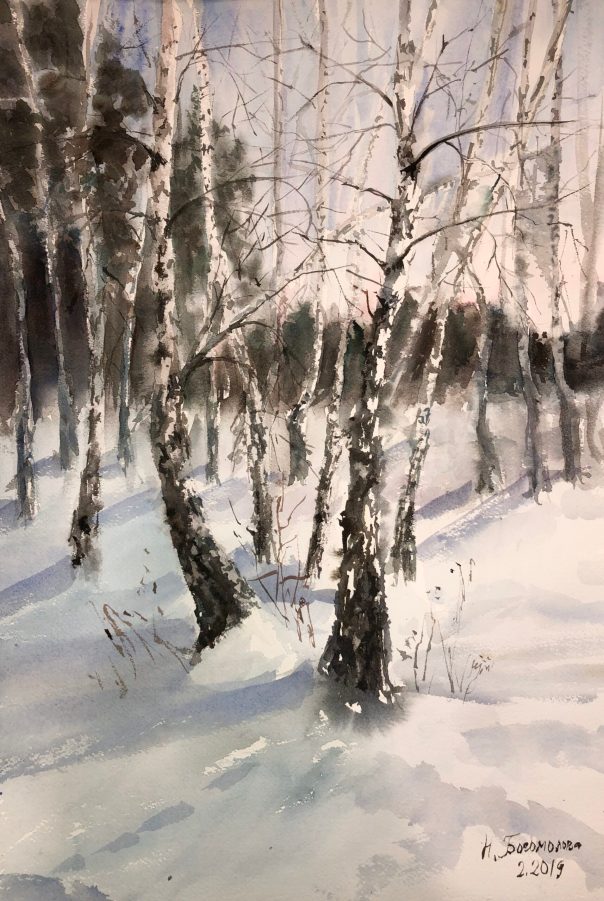
The birches, white and slender,
In deathless marble stood,
The brook, a white immortal,
Slept silent in the wood.
“How sure a thing is Beauty,”
I cried. “No bolt can slay,
No wave nor shock despoil her,
No ravishers dismay.
Her warriors are the angels
That cherish from afar,
Her warders people Heaven
And watch from every star.
The granite hills are slighter,
The sea more like to fail;
Behind the rose the planet,
The Law behind the veil.”
-Willa Cather
 suppose I would say that anyone with lighter emotions who hasn’t experienced any pain is in danger of sentiment. I trust them about as much as I trust a Thomas Kincaid painting. You know, there’s a term Tolkien coined, eucatastrophe. Eu, meaning good, so a good catastrophe, but it still has the word catastrophe in it. In some sense, the eucatastrophe at the end of the Lord of the Rings is trustworthy because we’ve been with these characters to the very edge of the crack of doom. That’s why I trust the resurrection because the church doesn’t backpedal on Good Friday.”
