More than two years ago I began to engage with Timothy Patitsas’s book The Ethics of Beauty. It’s an inconvenient book because of its unwieldiness, and I didn’t get very far into it until this summer, when I determined to read it on a regular basis, with its weight resting on my kitchen table and I hefting only a cup of tea.
Just in time for my trip earlier this month and the necessary sitting on airplanes, I discovered that the book is now on Kindle, Hallelujah! By the time I returned home I had made my way through 31% of its 729 pages, to page 224, in the middle of the chapter titled “Shame and Sacrifice.” I will start sharing my gleanings on that theme.
Father Stephen Freeman has written many times on his blog about shame, and until now I hadn’t read about it elsewhere. I particularly appreciated his explaining the toxic shame that cripples so many people in the modern world. In the last couple of years he’s written about healthy shame, too, as in the article “Can Shame Ever Be Healthy?” He credits the author John Bradshaw and his book Healing the Shame That Binds Us for clarifying the difference between the two, in an era when many people don’t want to acknowledge such a thing as the healthy version. But they are ignoring the science, according to Fr. Stephen:
“We are hard-wired for a response (one of the nine identified neuro-biological affects) that is accurately described as ‘shame.’ It is not a product of culture. It is universal, timeless, and biological. It can be compared to other effects such as the ‘surprise-startle’ effect, or the ‘distress-anguish’ effect, or the ‘interest-excitement’ effect. The ‘mechanism’ of the shame experience, whether toxic or healthy, is the same, differing only in its intensity and the issues that surround and embed themselves as complex, emotional triggers.”
Patitsas likewise sees the tendency of modern therapy to disbelieve in healthy shame, because:
“…it is so busy promoting self-regard and, ultimately, self-love, that it can’t possibly also teach us to look to the source of healthy shame outside ourselves. To replace the wrong kind of shame in us with the pure quality of shame, soul therapy must bring us face to face both with God and with other human beings who’ve seen what we’ve seen and yet have done better than us – that would be, in one person, Jesus Christ. Or, if you like, God and the saints…. Healthy shame is a fruit of deep organic processes; it is the glory upon the face of Moses when he descends from Mt. Sinai.”
 It is interesting to put the insights of these two paragraphs together and begin to understand that to deal with our neurobiology and psyche, trying to create self-esteem without any reference to our Creator and Savior is a dead end, an unworthy goal. Yes, the inner man is essential, but the true self is only revealed by the Kingdom of God within, after “deep organic processes.”
To replace toxic or unhealthy shame with healthy shame, Patitsas continues,
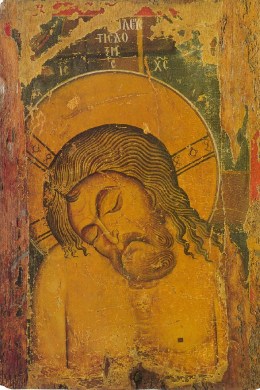
“…we must also see Christ crucified, or else we will never overcome our false ideas about what is and isn’t shameful. Without seeing ‘the King of Glory’ hanging from the cross, a person will never be able to understand those times when accepting to be shamed by others is a necessary part of receiving God’s glory.”
Fr. Stephen points out a scriptural reference to shame that lines up with this, from Sirach 4:21:
“For there is a shame that leads to sin, and there is a shame that is glory and grace.”
May the Lord strengthen us in the latter direction!

 “The death of the spirit is the price of progress. Nietzsche revealed this mystery of the Western apocalypse when he announced that God was dead and that He had been murdered. This Gnostic murder is constantly committed by the men who sacrificed God to civilization. The more fervently all human energies are thrown into the great enterprise of salvation through world–immanent action, the farther the human beings who engage in this enterprise move away from the life of the spirit. And since the life the spirit is the source of order in man and society, the very success of a Gnostic civilization is the cause of its decline.


 Gladsome Lights