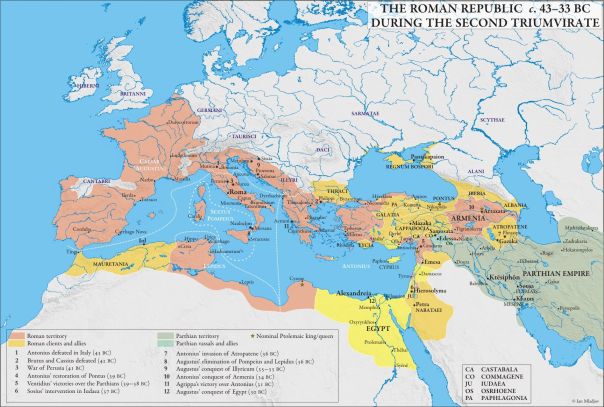
 It is believed by the Orthodox Church that our Lord’s disciple Simon the Zealot was martyred in what is now the Republic of Georgia. I’ve been looking at maps of that world from the first century, but mine is never a systematic study, when I gaze at maps. Rarely do I come away with a clearer idea of geography or topography, or in this case, history. It’s one of those cases of too-muchness, and I no more hope to retain anything in particular than when I enjoy the view of of trees and plants from a hilltop.
After I leave the map I never can visualize where Georgia or the Black Sea are. I should put a map just above my computer monitor, where I could gaze at it more frequently; I might even switch it out for another part of the world every few months.
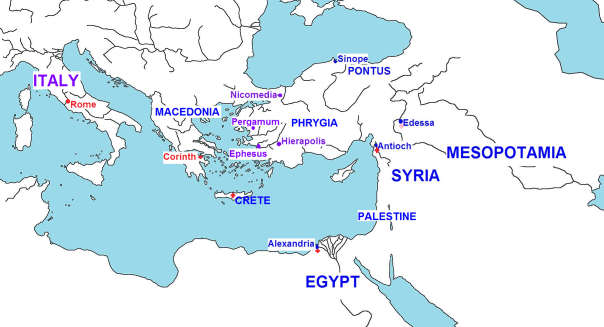
Did any of you ever see the curriculum called Mapping the World by Heart? I once bought a copy of the original hard copy version for myself, not my children, thinking that I could work on it at least once a week and learn my geography. But no.
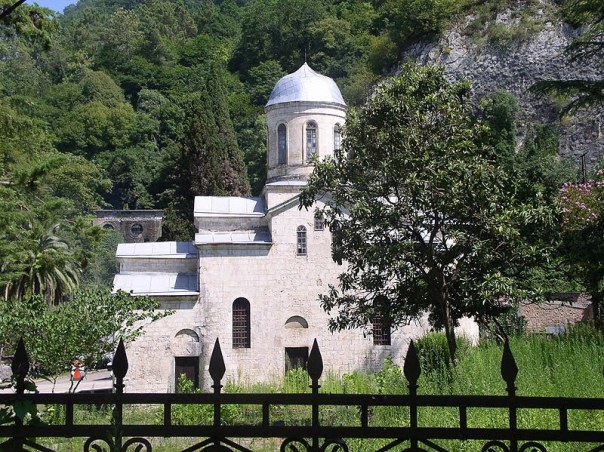
What first piqued my interest in the journeys of St. Simon was an article by John Sanidopoulos titled St. Simon the Zealot and Apostle to Georgia, in which he discusses the sources of his name Zealot and also Simon the Canaanite. He might have been the groom at the Marriage at Cana! And he is said to have traveled in Britain. There are photographs in that post of holy sites associated with the saint, like this church in Novy Afon (New Athos).
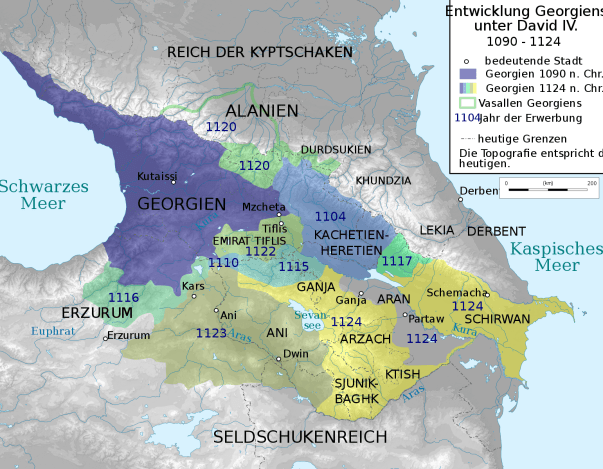
The article contains no maps, but when I set about refreshing my memory by means of a few, I came across beautiful depictions of different eras, such as this German map below, showing the 12th century in my favorite colors.
The identifying words at left, “Schwarzes Meer” are sweetly evocative of the day I swam in the Black Sea for a few hours when I was 17, near Istanbul somewhere. I wish I had a print of the picture that I took to refer to, but it is indelibly inked on my mind: A brilliant and dark cerulean sea under a cloudless sky; our feet in the warm, clean sand, and my laughing friend Viv, willowy in her swimsuit, with white-blond hair flying in the breeze.
If I ever get back to Turkey, or visit Georgia, I’d like to spend time by the Black Sea again! Whether that happens or not, it gives me joy to think about the gorgeous places on the earth, and about the many people who have lived out their lives here or there, many of them with faith, all of them by means of God’s multitude of gifts.
Sometimes when I am just walking through my house or garden I am surprised when I notice that here I am, in my place, alive and with work to do, a life to love. God put me here. I exist. Wonders never cease!
Did St. Simon feel this, as he lived out his life, doing God only knows what? There are many sometimes conflicting stories and traditions about him, but when you think of how many years he walked the earth, there had to be at least a few thousand interesting hours and events that no one ever took much account of, which only God and maybe St. Simon remember.
I ran across this stamp commemorating the saint that was issued in Georgia in the 1990’s:

The day set aside for St. Simon the Zealot in particular was back in May, so I am posting this on the day when he is remembered with all of Christ’s apostles. Rejoice, Holy Father Simon!

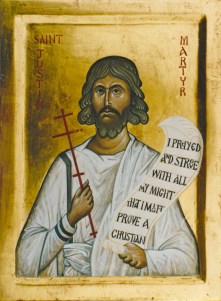
 It’s the feast of Saints Constantine and Helen, and I was blessed to attend Liturgy, and afterward to meet a new friend there. Then a young altar server needed a ride home, and on the way I encouraged him to talk about his reading. He said that he’d read 40-odd Hardy Boys books but after about 30 realized that they were mostly the same, and getting boring. To make completely sure, he read a few more. He is about to move up to The Hobbit.
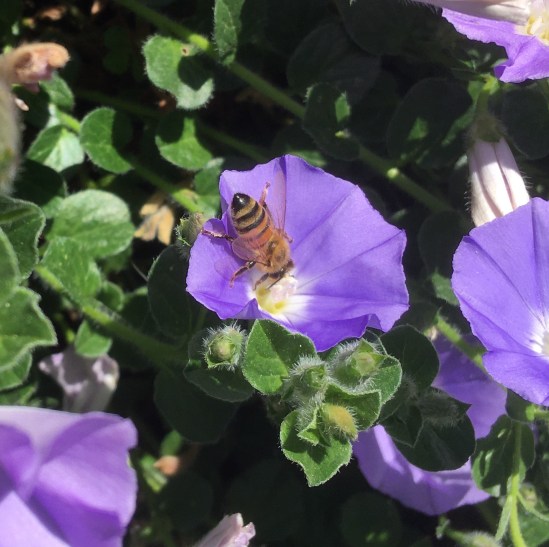
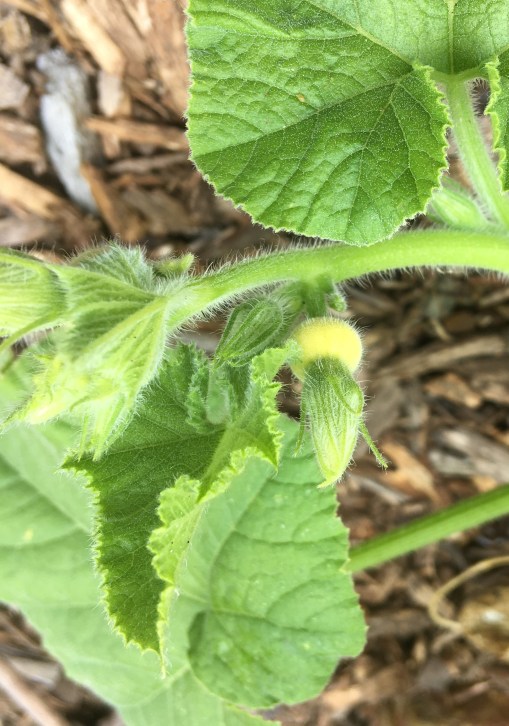

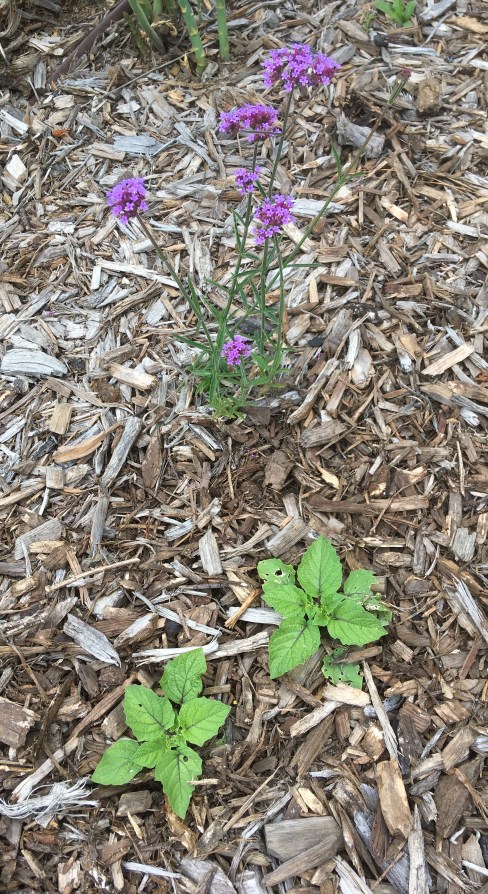
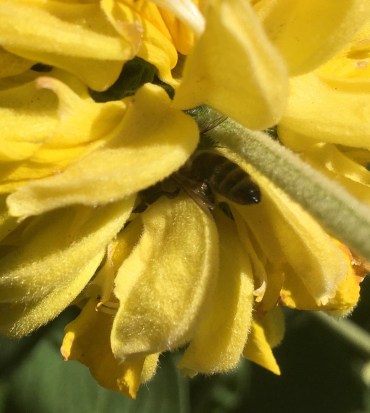 The Jerusalem Sage flowers don’t give up their nectar without a great effort from the bees, who burrow down inside and make the whole flower vibrate for a long minute or two while they finish their work and are backing out again.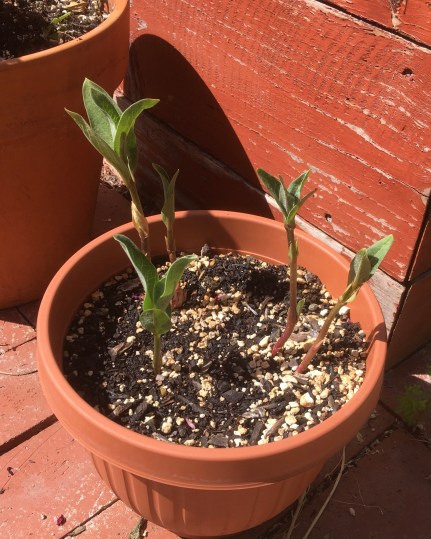



 Gladsome Lights