Category Archives: science

What method can do and is not.

Quoting again from David Bentley Hart’s The Experience of God. Hart spends a good while comparing what he calls the naturalistic vs. the theistic pictures of the world, so that he can eventually get on with describing the theistic, as in the title of the book.

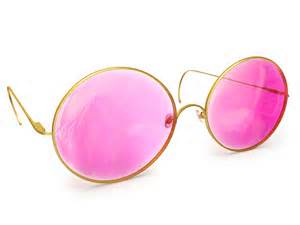
…we should not let ourselves forget precisely what method is and what it is not. A method, at least in the sciences, is a systematic set of limitations and constraints voluntarily assumed by a researcher in order to concentrate his or her investigations upon a strictly defined aspect of or approach to a clearly delineated object. As such, it allows one to see further and more perspicuously in one particular instance and in one particular way, but only because one has first consented to confine oneself to a narrow portion of the visible spectrum, so to speak. Moreover, while a given method may grant one a glimpse of truths that would remain otherwise obscure, that method is not itself a truth. This is crucial to understand. A method, considered in itself, may even in some ultimate sense be “false” as an explanation of things and yet still be probative as an instrument of investigation; some things are more easily seen through a red filter, but to go through life wearing rose-colored spectacles is not to see things as they truly are.Rosecolored-glasses

The Hungry Soul – How Science Disappoints

Previous posts on this book:

In the Introduction to his book, Leon Kass writes of his purposes: “I hope to provide evidence that the modern corporealists — those who deprecate or deny the soul — and their modern rationalist or humanist opponents –those who deprecate or deny the body — are both mistaken, both about living nature and about man. I seek such evidence in an examination of eating.”

Here the author conveys an understanding of reality that is more in line with orthodox Christianity than that of many who profess Christ, for he sees that we are unified creatures; our bodies are essential to who we are, not just shells that we hope to escape. He even goes further than what I would assent to, stating that his meaning of “soul” is “primarily not a theological but a biological notion!” (Yes, he put that exclamation point there himself.)

“You should know at the outset, however, that I use the term [soul] advisedly and without apology, even though I know that it will cause most scientists to snicker and many others knowingly to smile. These skeptics need to learn that it is only because they in fact have a soul that they are able to find such (or any) speech intelligible, amusing, or absurd. Indeed, only the ensouled — the animate, the animal — can even experience hunger, can know appetite, desire, longing.”

It is not, then, only the scientists who are giving us only part of the picture, but also the teachers of humanities (I don’t want to call them humanists, as their vision is too stunted), whom Kass and his wife would call colleagues, as they both are themselves university professors in the humanities.

“…the humanities have long been in retreat from the pursuit of wisdom. Analytical clarity, logical consistency, demystification, and refutation; source criticism, philology, and the explication of thinkers solely in terms of their historical and cultural contexts; and the devotion to theoretical dogmas – formerly romanticism and historicism, nowadays Marxism, deconstructionism, multiculturalism, feminism, and many other “isms” – all these preoccupations keep humanists busy with everything but the pursuit of wisdom about our own humanity.”

James Le Fanu

While I was in the middle of thinking about Kass’s book, I heard another writer on scientific topics interviewed on Mars Hill Audio. James Le Fanu is a physician and author whose book The Rise and Fall of Modern Medicine won the Los Angeles Prize Book Award in 2001. He was speaking in the interview about his recent book Why Us?: How Science Rediscovered the Mystery of Ourselves.

Le Fanu is also concerned about the reductionist and unsatisfying science that purports to tell us all there is to know. Before the notion of science appeared in the early 19th century the idea of the metaphysical was part of the common sense of mankind. Galileo and Newton and Kepler had an instinctive recognition that whatever science couldn’t explain, there was “something beyond.” Their study of Natural Philosophy was encompassed in the larger whole of the love of wisdom.

Nowadays, says Le Fanu, science is boring, and “to be a career scientist is to be in a very small hole,” as they are so specialized in their work, and in their education there is nothing like the older biology textbooks that were “full of awe and wonder and astonishment.” Le Fanu said that in the scientific journals he reads and in his talks with scientists, he has not noticed that any individual scientists are fully appreciating the mystery and glory of the human being.

But we assume that at least some of those scientists leave their holes each night and go home to prune the roses, eat a tasty dinner and play with their children, showing what Kass calls “the disquieting disjunction between the vibrant living world we live in and enjoy as human beings and the limited, artificial, lifeless, objectified, representation of that world we learn about from modern biology.”

As Kass is seeing the non-material aspects of our humanity demonstrated through the very material and natural activity of eating, so Le Fanu sees them revealed ever more obviously by the recent discoveries of science. Everything we learn seems to show how amazingly complex and unknowable by scientific study is “the most important part of the human experience…the nonmaterial thoughts and ideas and feelings and relationships..all the sorts of things we do the whole time….”

I loved listening to someone who is knowledgeable about the latest breakthroughs in the world of science talk about the “five cardinal mysteries” of the human experience. I ordered his book and have been relishing it on every level. Here is another man whose own soul is well-rounded and developed enough that he is a good writer, a practicing physician, and a person who can wonder at the Creation.

If we had a few more men like Kass and Le Fanu, true Natural Philosophers who don’t reduce life and reality to systems and ideologies, but who are willing to be open to that Something Beyond, the world would be a better place. Perhaps some of the upcoming homeschoolers who are getting a foundation in the kind of Poetic Knowledge that Charlotte Mason and James S. Taylor teach will have the ability to benefit from their scientific studies and to find them not boring but joyful.
 

Around the Net

When Joanne at  Seasonal Hearth  was in the Netherlands she and her family rode bicycles a lot, and they took so many pictures of bicycles of all sorts everywhere, it adds up to give a feeling for the country where the population of bikes is greater than that of people.

On this blog about Words, I learned that I possess philoprogenitiveness, and it has been one of the greatest stories of my life! I don’t always read these posts, but they come daily…Now that I’ve been so encouraged by this one, I might check in more often. If I had known the word amphibology it would have come in handy when I was grousing about grammar recently.

Some people can drink milk their whole lives seemingly without  any problem (though my husband’s chiropractor thinks it’s the worst thing for anyone) while others can’t digest it. Via Touchstone I ran into this article about population migrations and where the gene for lactose tolerance came from. I’d like to read more about it.

My favorite prize from recent web wandering is a daily posting of poems from the George Hail Library in Rhode Island, each one accompanied by a picture and brief introductory notes. It’s more reliable than the online poem-a-day I used to read, and the blog host has some pleasing parameters for the sort of poetry she likes to share. Here is a recent one that I love. If you click on the title you can see the photo and comments as well:


THE PATIENCE OF ORDINARY THINGS

It is a kind of love, is it not?
How the cup holds the tea,
How the chair stands sturdy and foursquare,
How the floor receives the bottoms of shoes
Or toes. How soles of feet know
Where they’re supposed to be.
I’ve been thinking about the patience
Of ordinary things, how clothes
Wait respectfully in closets
And soap dries quietly in the dish,
And towels drink the wet
From the skin of the back.
And the lovely repetition of stairs.
And what is more generous than a window?

~ Pat Schneider, American poet and writer

Steel and Magnets

I had been debating about whether to load up my new refrigerator with art held on by magnets. I didn’t want to risk scratching the stainless steel surface, so I had halfway decided not to decorate it. Then when sorting through all the stuff I’ve stashed here and there over the last few months, I found the darling butterfly magnets that Herm gave me for my birthday, in anticipation of my new kitchen. They have a soft backing, so I ran downstairs to put them on. But they wouldn’t stick at all!

Mr. Glad had just come home from work, and we puzzled together as he saw me try to attach them to the microwave instead. Nope. They don’t hold on there, either. Isn’t steel magnetic? Made of iron? Is this really stainless steel, or some knock-off? The magnets do stick to my powerful range fan hood, so there they sit, brightening up the back of the stove.

When I googled this subject the first article I found was written on a blog of stories by journalism grad students at Columbia University, and stated that some stainless steel appliances are not magnetic because they “are made of high-grade stainless steel and don’t contain iron.” What?? I don’t know very much, but I always thought steel was made of iron. So I went on searching.

From what I read here, it appears that various metals can be added to the steel (that is, yes, mostly iron) in small amounts, to make it rust-free. One of the metals that often goes into the alloy is nickel, which also alters the steel in a way that negates the magnetic quality. I’m guessing that my range hood doesn’t have nickel. But it does have butterflies.