Category Archives: time

Strolling by the sea.

Izmir, Internet photo

Long, long ago, I lived in Turkey for most of a summer as an exchange student. My host family lived in a house in an older neighborhood of Izmir, the district of Bayraklı. Three years later when I visited them they had scaled up and moved to a high rise apartment at the other end of the city.

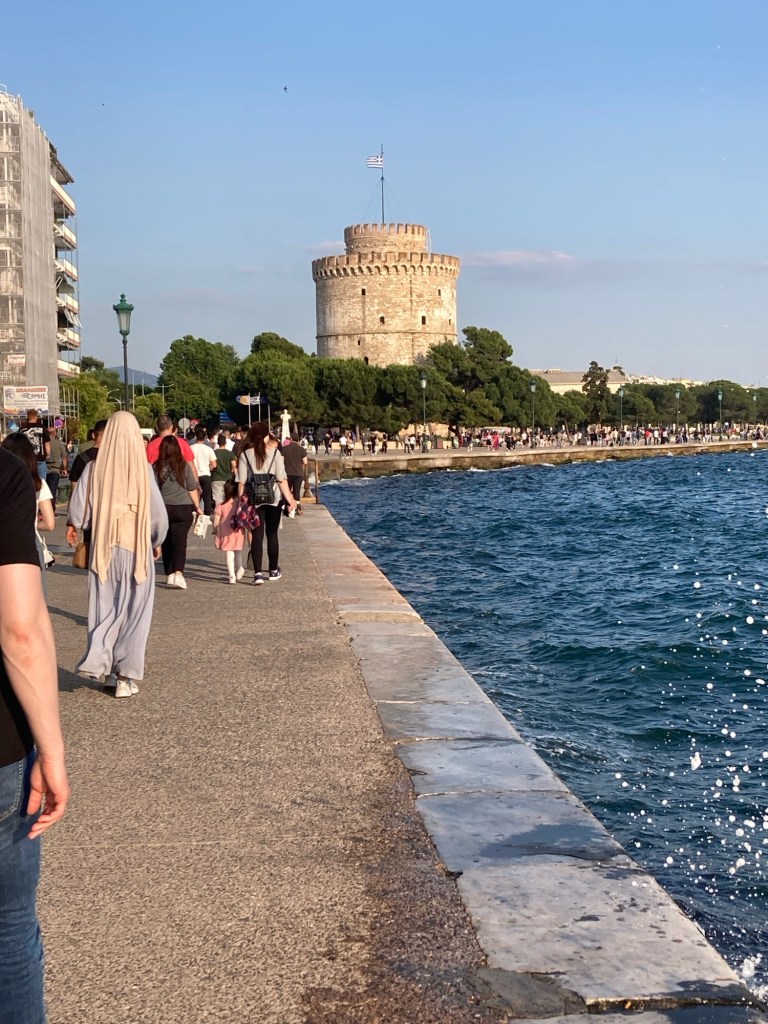
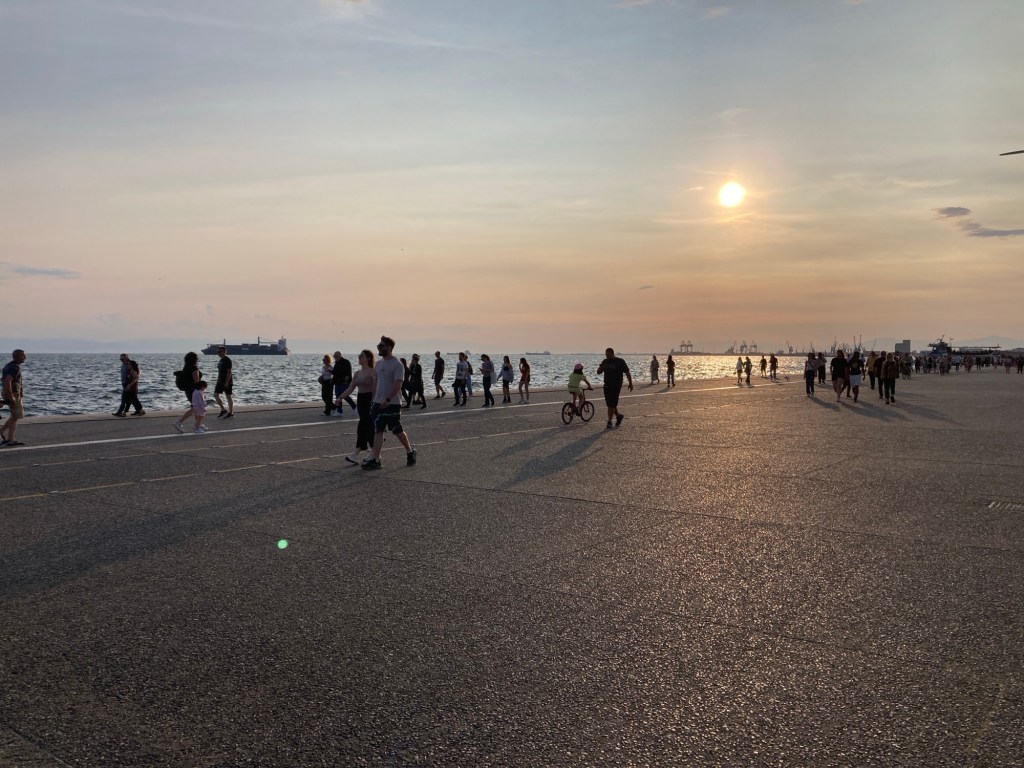
The New Waterfront in Thessaloniki

One thing that was the same both times I was there was the custom of strolling along the wide walkway next to the sea that is called the Kordon.

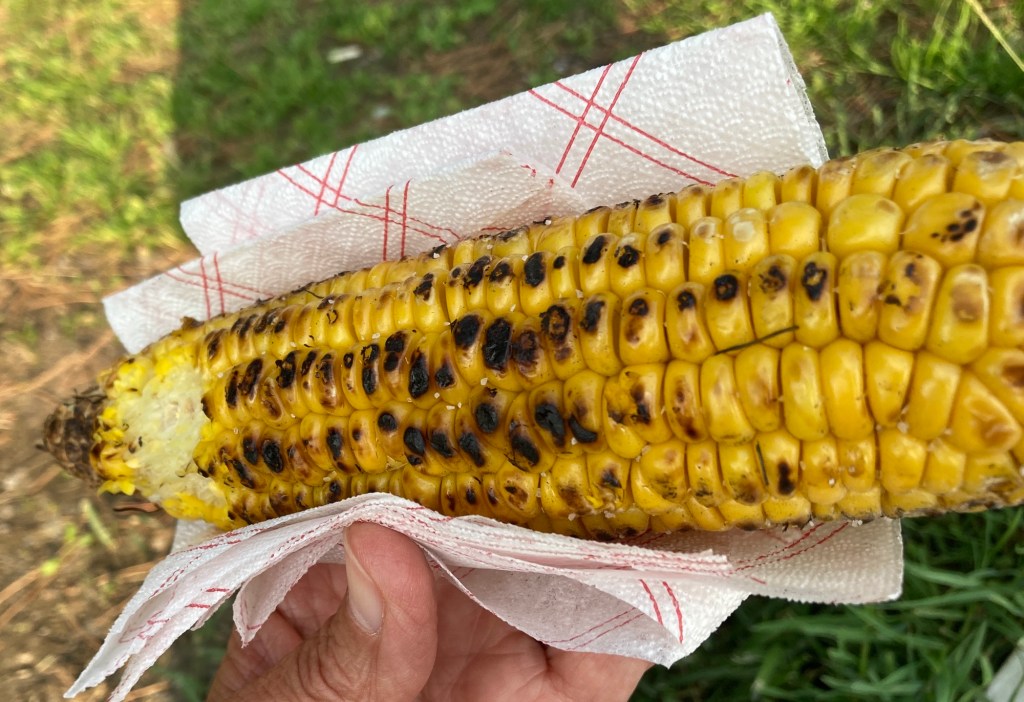
On summer evenings especially it was the place to be, refreshed by the breezes off the Aegean. But at any time of day you might run into friends, or intentionally meet up with them there; it was a simple pleasure for families. Street vendors sold snacks from their carts, such as roasted corn and nuts. As the sun was setting we’d buy a cup of the pudding-like warm drink called salep.

Thessaloniki

Over the years since I have often thought about how that city had so wisely made the most of its setting for the health and prosperity of its inhabitants.

I saw in advance that Thessaloniki had a similar recreational strip, called The New Waterfront, and last night I walked there for an hour.

I learned this morning when looking for a picture of Izmir’s promenade that some people have called these two “twin cities,” because of various historical and demographic aspects they share, besides their seaside location and pleasing waterside parks. Wouldn’t it be fun to spend time in both cities for a year or two while researching and writing a book comparing the two? Hmm… I should have thought of that about twenty years ago, but I suppose I was busy with something else.

Alexander the Great

Well, it felt very strange and dreamy to wander along that walkway last night, like going back to a different life in a different place that was somehow the same place, an existence that belonged to a different person. But no, it was me, and it is me. It’s a mystery for sure.

I Have Started to Say

The last stanza of this poem brings to mind the advice to “Die before you die.” It has been attributed to Rumi and to C.S. Lewis, and I’ve heard Orthodox Christians echo the saying. St. Paul said, “I die daily,” and also, “I am crucified with Christ.” Whatever all these people meant, our final death we are definitely instructed to keep in mind, and as the poet says, “learn” something about it — though it’s not clear that he was numbering his days in the Christian fashion.

But it was the second stanza that caught my attention here, Larkin’s description of the disorienting effect of considering time and ageing. The images capture what I often feel.

I HAVE STARTED TO SAY

I have started to say
“A quarter of a century”
Or “thirty years back”
About my own life.

It makes me breathless
It’s like falling and recovering
In huge gesturing loops
Through an empty sky.

All that’s left to happen
Is some deaths (my own included).
Their order, and their manner,
Remain to be learnt.

-Philip Larkin

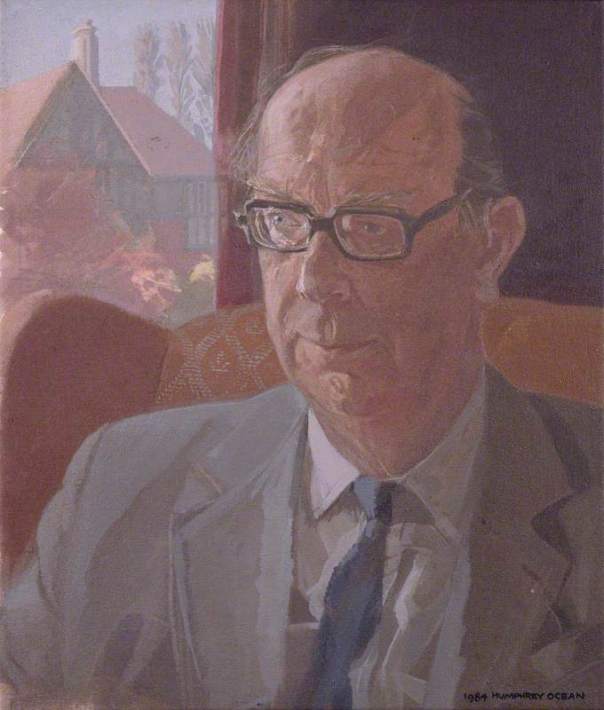
Philip Larkin, by Humphrey Ocean


So much of any year is flammable.

I hadn’t read this poem carefully since 2011 when I first posted it. Now that I consider it afresh, that last line about Things I Didn’t Do is haunting me again!

BURNING THE OLD YEAR

Letters swallow themselves in seconds.
Notes friends tied to the doorknob,
transparent scarlet paper,
sizzle like moth wings,
marry the air.

So much of any year is flammable,
lists of vegetables, partial poems.
Orange swirling flame of days,
so little is a stone.

Where there was something and suddenly isn’t,
an absence shouts, celebrates, leaves a space.
I begin again with the smallest numbers.

Quick dance, shuffle of losses and leaves,
only the things I didn’t do
crackle after the blazing dies.

~ Naomi Shihab Nye, born 1952, American poet

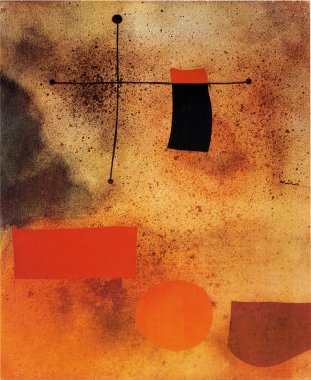
When when Maria Horvath posted this poem on her blog in 2011, she included the painting below, “Abstracto,” 1935 by Joan Miró

Theophanies into which we may enter.

As we close in on the end of the calendar year, our rector posted thoughts about the liturgical calendar in our parish bulletin. We Orthodox know at some level that the calendar of festal events and saints’ days “sanctifies time” — but do we live it fully? It’s not an easy thing to prioritize the “holy appointments,” as Fr. Stephen Freeman recently characterized them, in our lives that are typically super busy with various other activities. An excerpt:

This feast, this day, this time in my life, if I will keep the appointment, I can meet God. The feasts on the calendar are not appointments with memorials, the recollection of events long past. They are invitations to present tense moments in the liturgical life of the world. In those moments there is an intersection of the present and the eternal. They are theophanies into which we may enter. The events in Christ’s ministry that are celebrated (to use one example) are of little importance if viewed in a merely historical manner. It is not enough to say and remember that Christ died. The Christian faith is that I must become a partaker of Christ’s death. Christ is Baptized, but I must be a partaker of His Baptism. This is true of all the feasts and is the reason for our liturgical celebrations. The Church is not a memorial society—it is the living presence of Christ in the world and the primary means by which we may share in His presence. There is no time like the present, for only in the present does time open its riches to us and bestow its gifts.