Category Archives: travel

The Secret Pass to the Ruby Valley

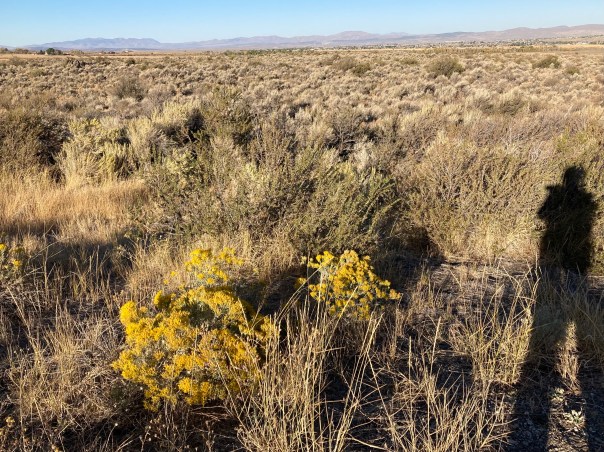
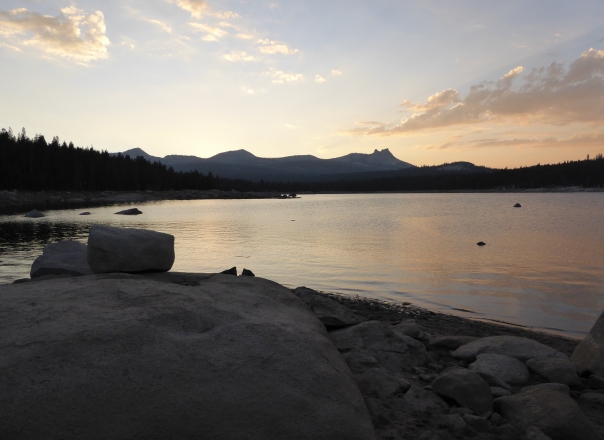
I took this one last picture from the campground, and shortly afterward we left Lamoille and drove north and east and then south for several hours. The first hour and more were on gravel roads with miles of washboard bumps and billows of dust, but they all passed through spectacular expanses of wild country that shared some qualities of other arid lands, but were different in the shapes and colors of the mountains, and in the varieties of plants. Soon enough these lonely roads took us over the Secret Pass to the eastern side of the Ruby Mountains.
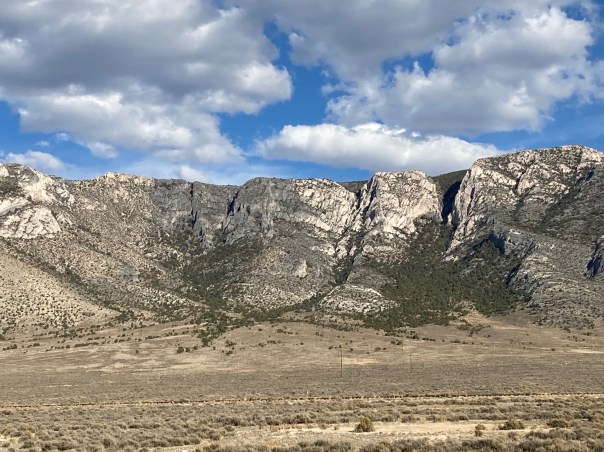
Ivy looked over the barbed wire fence at the view above and said, “It looks like wild horses should be running out there.” We had stopped our cars on the shoulder of the highway, and all six emerged to stretch our legs and look, and take pictures. But immediately Pippin said, “Oooh, the smell of the sagebrush….”

Broom Snakeweed

She had been riding with me, and I’d had the windows closed so we could hear each other talk; the sudden breaking into our senses of the warm and sweet aroma of the deserty plants, with the pungent dominance of Common Sagebrush… that was what I wanted more than any photograph, to put in a bottle and take home with me.

As we were standing there breathing and trying to take in everything, a big pickup appeared and stopped in the middle of the road, and a gray-haired man spoke to us through the window, with his engine running. “Welcome to the Ruby Valley,” he said. He told us that the little valley we were looking up at higher in the mountains, with splashes of yellow aspen, and some other plants turning red and orange, was named Joe Billy Basin, and his brother runs cattle up there.

He himself has a hay and grain business in the valley, and he hospitably invited us to “come back anytime.” We were still talking the next day about the unusual meeting and human warmth we had experienced in those few minutes — a person who loves his place and feels such ownership of it that he can spot a few souls who are kindred enough to be obviously appreciating what he also doesn’t take for granted.
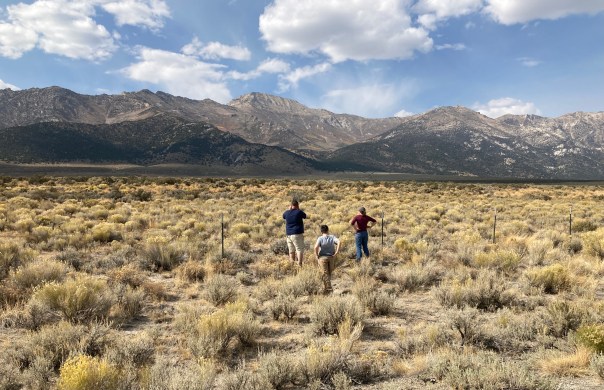
This trip across Nevada might be called a Great Basin journey. The Great Basin is an area of the western United States most often defined hydrologically as in the map below, an area where the waterways do not flow to the ocean. We had now arrived on the other side, the east side of the Ruby Mountains, which, to answer Martha’s question from my last post, are said to be named after the garnets that early explorers found.

The family are camping in Great Basin National Park, and I have been staying 2,000 feet down the mountain in Baker, Nevada. My husband and I came to this place with our children when they were small, and I am thrilled to explore again with one of those children now that she is grown up and camping herself. The campground by Baker Creek has forests of wild roses, now covered with hips, and their leaves turning yellow and orange.

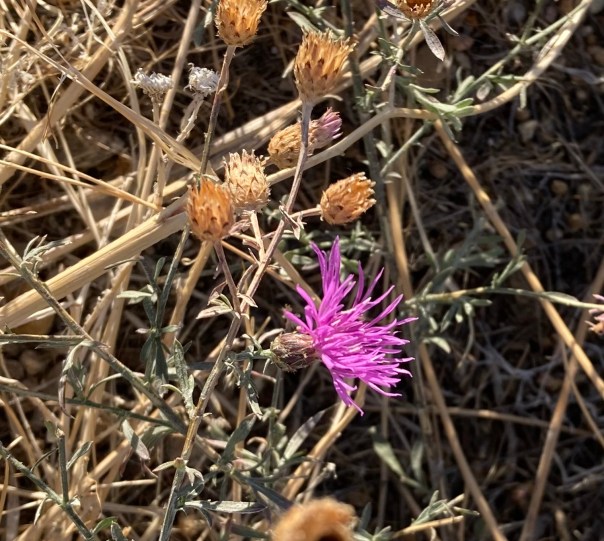
Jamie drew in his nature journal a picture of the rose hips, and a dragon making a meal of them. Ivy and I explored the creek, which runs right by the campsite. I collected sand for my collection in a snack bag, and while I was taking pictures of thistles she spotted a coyote by the creek.

Our day was mostly consumed by an experience I didn’t get in this park on our last visit, a hike to the Bristlecone Pines that have grown here for millennia, and to see a glacier! Other joys of the hike were various species of conifers that we adults are always trying to learn better and distinguish from one another, the local ones in this case being Limber Pines, Bristlecone Pines, Piñon Pines and Engelmann Spruce.

By the way, the Seek app we have found of no help, unless you are someone who is happy enough to be informed that the tree you are looking at is a Conifer. Here Pippin is holding a Piñon pine nut cone, in which all the nuts seem to have either not developed, or been eaten by some insect. She foraged through many cones and nuts under these trees but never found a good nut.

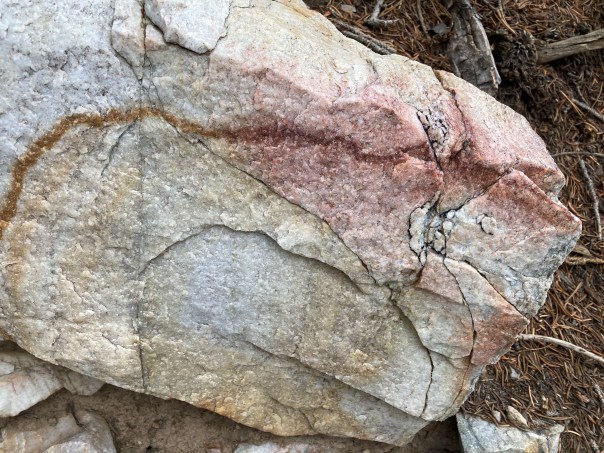
The talus below the active glacier, along the three mile trail that climbs up to the glacier, is the most colorful and lovely you could ever see. I may have to do a post of only rocks, to show you what variety there is. Pippin and I could not stop taking pictures of the marble-like slabs and blocks that came in blues, purples, orange and pink, often striped and patched with contrasting colors composing the most sublime abstract designs, not modern but as ancient as the mountains.
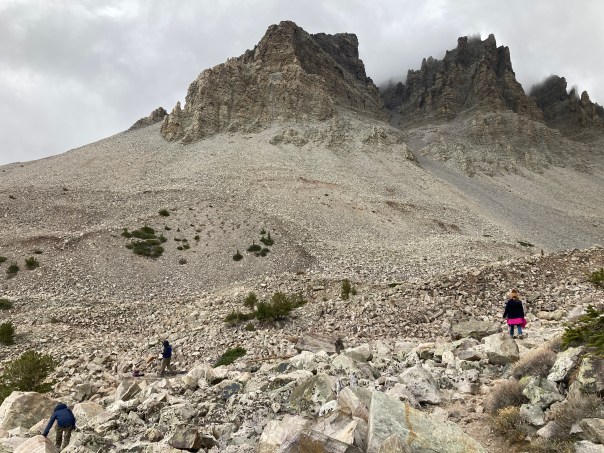
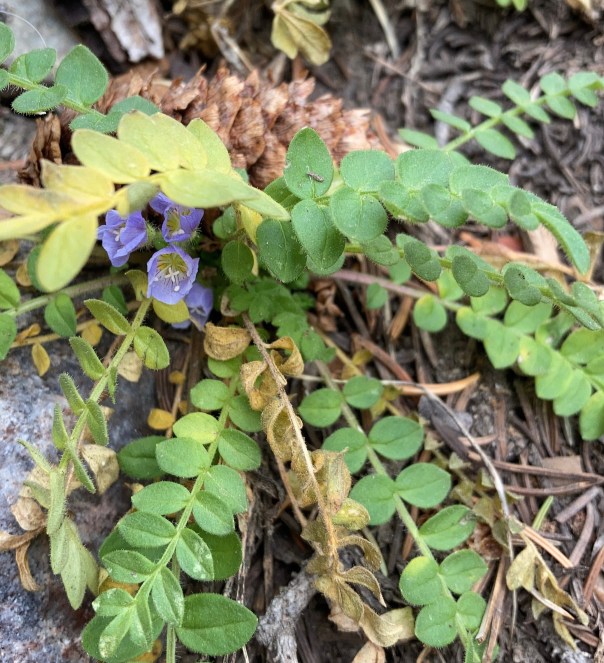
As we climbed up the rocky trail to over 10,000 feet elevation, we were surprised to see flowers still in bloom. Occasionally drops of rain began to fall on us but we didn’t actually get wet; some of the pretty rocks got prettier by the moisture. Below, the active glacier at the top of the moraine can be seen by the lines of white to the middle right of the picture.

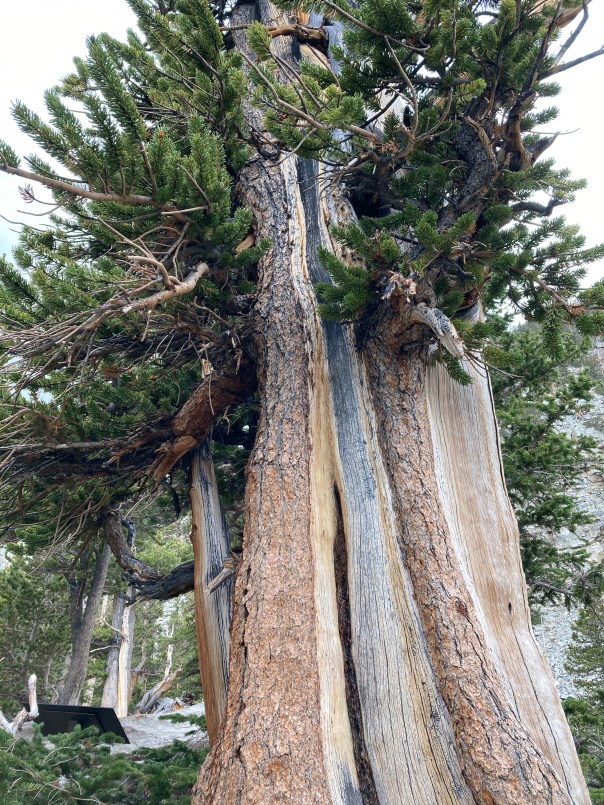
Above, one of the weathered Bristlecones that are thousands of years old. I wrote about my visit with my late husband to see these trees in the White Mountains ten years ago; here in the national park is the only other place in the Great Basin where trails have made viewing of them possible.

My back and knees are a bit strained from the various exertions of the last few days, but I’m eager for the mountain adventures yet to come, and grateful also for my readers’ vicarious enjoyment with me. I hope to be back soon with more!

Lamoille

I am in Nevada with Pippin’s family. We met last night in Lamoille Canyon in the Ruby Mountains, after they had driven one long day to get here, and I had taken two shorter days. I arrived less than two hours before them, because I dawdled so much on the way — which was, after all, what I had made provision for by traveling in a more leisurely way.

But did you know that the speed limit is often 80 mph in the wide open spaces of Nevada? Though that aspect of my journey might not seem leisurely, I did very much enjoy the hours of passing through ever-changing magnificent rock formations and groupings of different colors and textures of sage and other scrub brush. I had lingered over breakfast with friends in Reno yesterday and appreciated being able to take my leisure at high speed.


I wish I could write one of my leisurely travelogues, too, but I prefer to give my time to gawking at monoliths, studying beaver dams, and walking up Lamoille Creek to the place where the grandchildren have their fairy houses and boats (built for toy dragons nowadays).

But  I’d like to show you enough pictures to make a proper representation of this glorious place. I am staying in an Airbnb lodging on a cattle and chicken ranch with a view of those Ruby Mountains out my bedroom window. I can see the stars from my bed at night, and it takes only 15 minutes to drive up to the campsite where the rest of the group are staying. Their campsite looks very much like the one that our family used more than 30 years ago, and Pippin does remember being here.

We’ll be in Nevada for a couple more days, and I hope to post again about my expedition.

San Diego flowers and freeways.

It’s been a week since I departed on my trip, which took me first to my childhood home and family that I wrote about in my last post. After a very full day there, I drove to the San Diego Airport, where I fetched Annie. She and I spent the night slightly inland, where the most temperate marine breezes blew through the windows that our hosts like to leave open as much as possible. We were wined and dined along with other guests including their daughter whose birthday it was. We slept like logs.
San Diego freeways had a good reputation in my mind, even before I drove them a bit six years ago with my husband. When I’m whipping along where frequently there are four to six lanes — sometimes seven! — in each direction, and merging and exiting and noticing other freeways crossing above and below, it seems that much of the land must be covered with them by now. But no, it’s a large county, and there is lots of the sunniest part of California territory still left to walk on, closer to the earth and at a more human and humane pace.

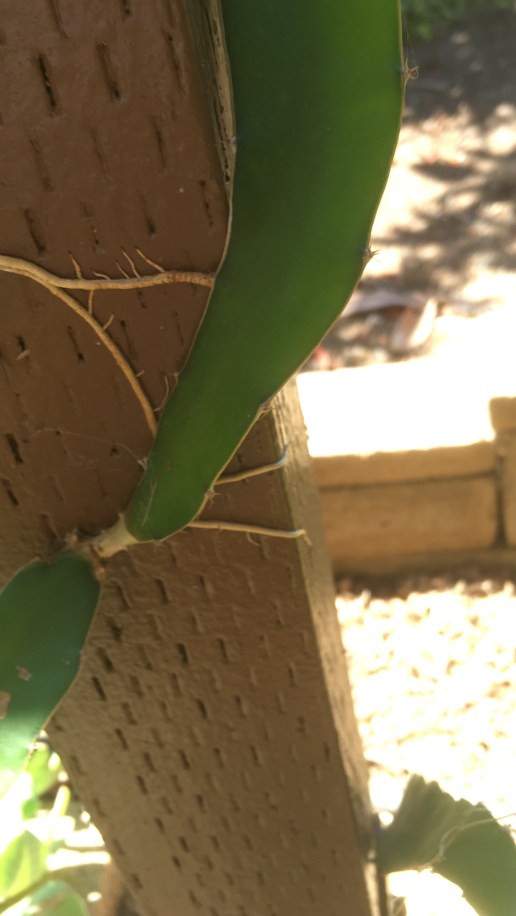
Our first full day we drove to my cousins’ place in Vista, even more inland and at least ten degrees hotter. I first saw their property six years ago with my late husband, and was looking forward to the tour that Joe might give us again of all the self-started trees that he calls “bird drops,” and the succulents and cacti that thrive in that climate, like the tree-climbing cactus above that found a post supportive enough.

By late Friday afternoon Annie and I had made a big loop-de-loop, stopping by her great-great grandparents’ graves that I had last visited in 2015, and we ended up at the condo where most of the groom’s (my daughter Pearl’s) family from Washington and Wisconsin were staying. We joined a group weighted strongly to the young: five or six of my grandchildren and their significant others between the ages of 17 and 24. Toddler Lora, my great-granddaughter, was the youngest in the group. I slept in another Airbnb close by — with plumeria near the front door — and hung out with them a lot as we got ready in various ways for the wedding that was Sunday.

That first evening in Encinitas the boys had groomsmen events, and the females gravitated to the beach, which we got to by jaywalking across a busy street, picking our way over the railroad tracks, down through a gate…  then a run across four lanes of the coast highway and on to the path descending to the rocky shore. Dozens of surfers were silhouetted against the setting sun. I was the only one of our group who kept farther back from the edge while I took my views and pictures; the others all had fun getting drenched to some degree by the surf breaking right there. The next morning boys and girls alike were out early to surf and swim.

That was the day that I went south again to meet in person for the first time two long-loved blogging friends. Emily’s large family will soon be moved from Coronado where she has been cultivating a beautiful garden for several years. It was one son’s birthday at her house, too, but no one seemed to think it strange to have a strange grandmother drop in. Emily sent me off with bags full of starts of many of the succulents that grow enthusiastically all around the house and pool. It was delightful and really heartwarming to meet in person six of the family who were just as happy and gracious in the flesh as they appear in the tales and pictures I’ve been enjoying for so long.

Sara lives about a half hour mostly east of Emily, on a hill with a wide view, and the perfect patio and small waterwise garden in which to sit and take it all in; huge jacaranda blooms show in the tops of the trees from their steep hillside below. But first, we went to lunch, and she took me to the water conservation garden nearby. I had inconveniently come in the hottest part of the afternoon, but we wore our sun hats and strolled in a very leisurely way among the paths.

The garden has been there long enough for the Australian trees to grow to great heights. There was a butterfly garden/cage where evidently those creatures weren’t bothered by the heat. I took so many pictures! My heart was overflowing with flowers and plants way too many to process or learn much about, but because I was discovering them in the company of my friend I was content to let them remain a somewhat anonymous backdrop to our time together.

I had wanted to sit for a spell on her own patio, too, which we did, and I got to chat a little with her very kind husband. Sara gave me gifts of printed prayers like this beautifully illustrated one:

After I said good-bye at their door, on my way to my car, it was then that I spied this gardenia, a rare encounter for me, and it immediately seemed the perfect emblem of Sara and her blogger’s voice that is such a refreshingly sweet and reserved one in this noisy world, saying, “Here is beauty: look!”

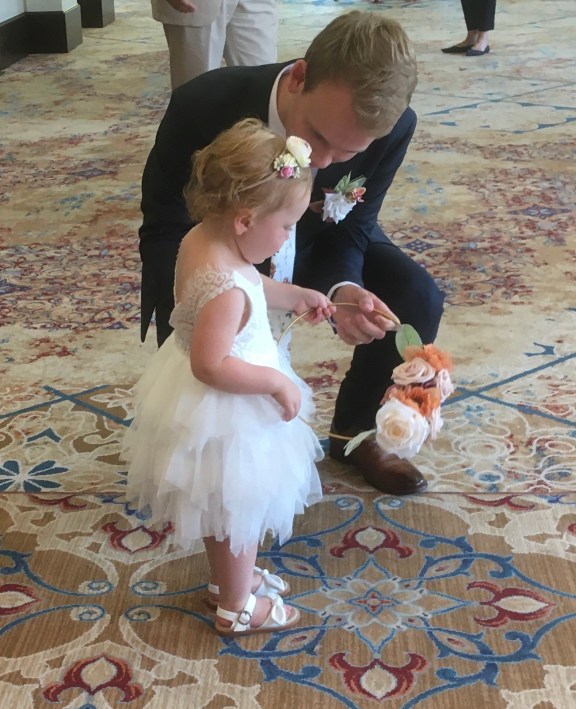
My grandson Pat got married the next afternoon! His whole family was handsome, and we sang all the verses of “Be Thou My Vision” during the ceremony. The choice of that hymn tells you a lot about the bride and groom. May God bless them!

The day after the wedding was our last day of San Diego freeways, at least for a while. I was driving on them for about three hours before we got out of the county and on our way to my mountain cabin. Daughter Pearl rode with me, which made the day pass very pleasantly, in spite of it consisting mostly of driving, at least half of it on freeways, for twelve hours. But as I write, I am in recovery, and composing the report on this next portion of my outing, the vacation part! First installment coming soon: Summer in the High Sierra…

From Britain to the the Black Sea….

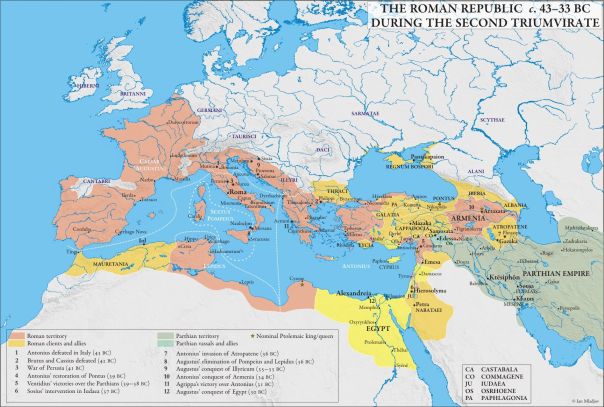
It is believed by the Orthodox Church that our Lord’s disciple Simon the Zealot was martyred in what is now the Republic of Georgia. I’ve been looking at maps of that world from the first century, but mine is never a systematic study, when I gaze at maps. Rarely do I come away with a clearer idea of geography or topography, or in this case, history. It’s one of those cases of too-muchness, and I no more hope to retain anything in particular than when I enjoy the view of of trees and plants from a hilltop.
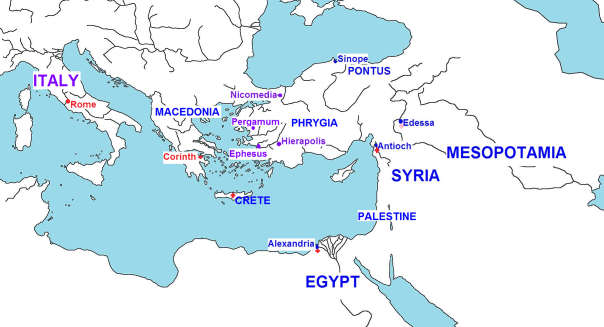
After I leave the map I never can visualize where Georgia or the Black Sea are. I should put a map just above my computer monitor, where I could gaze at it more frequently; I might even switch it out for another part of the world every few months.

Did any of you ever see the curriculum called Mapping the World by Heart? I once bought a copy of the original hard copy version for myself, not my children, thinking that I could work on it at least once a week and learn my geography. But no.

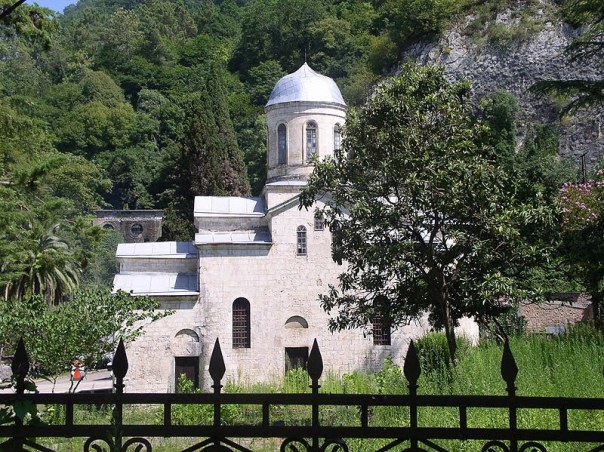
What first piqued my interest in the journeys of St. Simon was an article by John Sanidopoulos titled St. Simon the Zealot and Apostle to Georgia, in which he discusses the sources of his name Zealot and also Simon the Canaanite. He might have been the groom at the Marriage at Cana! And he is said to have traveled in Britain. There are photographs in that post of holy sites associated with the saint, like this church in Novy Afon (New Athos).

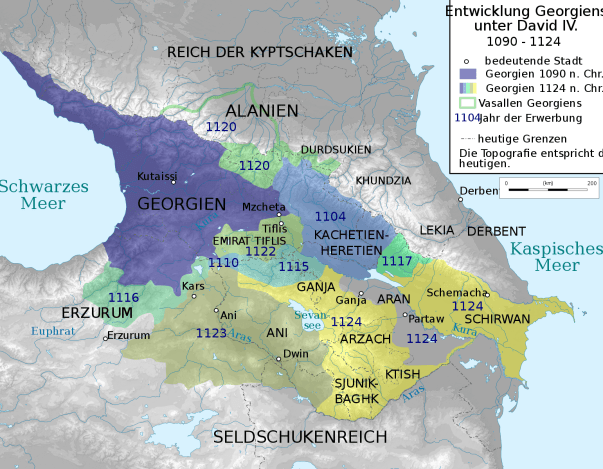
The article contains no maps, but when I set about refreshing my memory by means of a few, I came across beautiful depictions of different eras, such as this German map below, showing the 12th century in my favorite colors.

The identifying words at left, “Schwarzes Meer” are sweetly evocative of the day I swam in the Black Sea for a few hours when I was 17, near Istanbul somewhere. I wish I had a print of the picture that I took to refer to, but it is indelibly inked on my mind: A brilliant and dark cerulean sea under a cloudless sky; our feet in the warm, clean sand, and my laughing friend Viv, willowy in her swimsuit, with white-blond hair flying in the breeze.

If I ever get back to Turkey, or visit Georgia, I’d like to spend time by the Black Sea again! Whether that happens  or not, it gives me joy to think about the gorgeous places on the earth, and about the many people who have lived out their lives here or there, many of them with faith, all of them by means of God’s multitude of gifts.

Sometimes when I am just walking through my house or garden I am surprised when I notice that here I am, in my place, alive and with work to do, a life to love. God put me here. I exist. Wonders never cease!

Did St. Simon feel this, as he lived out his life, doing God only knows what? There are many sometimes conflicting stories and traditions about him, but when you think of how many years he walked the earth, there had to be at least a few thousand interesting hours and events that no one ever took much account of, which only God and maybe St. Simon remember.

I ran across this stamp commemorating the saint that was issued in Georgia in the 1990’s:

The day set aside for St. Simon the Zealot in particular was back in May, so I am posting this on the day when he is remembered with all of Christ’s apostles. Rejoice, Holy Father Simon!