Category Archives: trees

We shake the monastery olives.

The nuns at a nearby monastery needed some help with their yard work. We didn’t know anything more specific, or that there would be some sadness involved, when Mr. Glad and I signed up to be on the crew for a Saturday work session. I had gardened here one spring day a couple of years ago and was looking forward to another chance to visit, this time doing fallish tasks.

What a bright and shining day it was, too, as we drove over the hill. Recent rains had washed all the earth and air, and high winds pretty much shook them out to dry. The humidity was only 10%.

When the head gardener Sister Xenia led our team of five to the clump of olive trees we saw that they were loaded with black fruit.

Then came the bad news: All of this harvest could not be used in any way, because it was infested with Mediterranean fruit flies. The trees needed to be stripped of olives, and the fruit that had fallen on the ground must be raked and swept up, and all of it taken to the dump.

In a month or two an arborist will prune the trees and some kind of spray will be used to inhibit the growth the the flies next spring. Whether there is hope of them being controlled in one year’s time I don’t know.

The olives were no good, not even the fat and shiny ones that were hanging on these lovely silvery trees with the light shimmering through.

So the men shook the trees and brought showers of fruit down on our heads. Mr. Glad climbed on the roof of a little house to reach higher branches of one tree, and then he climbed into the tree itself.

You can see olives on the ground in the shade.

Rosebushes that had grown leggy in the shade were snagging the guys when they were stretching up to shake and pick, so I ended up spending the first hour pruning the canes out of the way.

Bright orange fruit hung from the nearly bare branches of a Fuyu persimmon tree, the variety that is crunchy when ripe, and never puckery. At least this tree was healthy, and that was some consolation for the olive disaster.

We picked and pruned that tree, and Sister Xenia encouraged us to take some persimmons home, so I tucked a few into my gardening tote and am planning to use them like apples in baking.

Before we knew it, our work party was coming to an end, and we had been invited to eat the midday meal with the sisters.

Dining room all ready

But first there were prayers of the Sixth Hour, in the monastery chapel, and a few minutes of leisure for walking around the grounds.

I had been anticipating seeing the elegant koi again, and they did not disappoint. We found them gliding soundlessly in their long deep pond, swimming close for a few moments when I leaned over with my camera, until they sensed they weren’t getting any food from us. A father and son were visiting them too, and happily chatting in Russian.

The monastery has a nice set of bells under a shake roof, with benches to sit on when the bells aren’t being rung. They were used to announce the hour of prayer, but for the call to dinner Sister Marguerite walked all around the property shaking a little hand bell to ring a daintier and less commanding message.

The small amount of work we did seemed a puny offering considering all that we received by spending a few hours at the monastery. We were well fed with the most delicious fasting meal I’ve ever had, and we went home with armfuls of persimmons, having soaked up quite a lot of love and peace.

Of course I want to go back soon.

Delicious autumn recipe.

The air was still cool, but the sun was already drawing the smells out of all the plants along the bike path when I walked along the creeks this morning. We had rain the last couple of days, so the leaves and grasses that have been drying to a crisp got washed and mixed into a good kind of stew.

My first impression, though, was auditory, the sound of ducks, and crows, and Canada geese, all commenting on the morning. Then a flash of silent white against the golden brown background, an egret, not squawking about anything, a quiet fisherman.

The paths are littered with piles of leaves, mostly brown now, like the live oak, which I was glad not to be sweeping off a patio. Their thorn-rimmed cups turn upside down and hold on to concrete surfaces for dear life. That last phrase will be my mnemonic from now on helping me to remember the name of at least one oak.

Mr. Glad wondered at my bringing home a redwood branch, when the tree behind us is dropping similar ones into our yard and pool every day and making hours of work for him to collect the prickly things. When you know you will have to retrieve each one from the bottom of the pool or the decking, it seems that the rich brown sprays are falling constantly, but the trees remain evergreen.

The little redwood cone is darling, isn’t it? Less than an inch.

I leaned over a bridge and breathed in the essences of a thousand bits of living things, carried in the air still moist from the rains, and stirred together by the breeze. The dominant herb in the mix was the wild fennel, fallen down heavy with water, dried brown and mildewed black, and in a tumbled mess with blackberry brambles and grasses and everything I don’t know the name of. The beauty that used to be visual is now distilled into heady scents.

It was reminiscent of an anisekuchen I have made at Christmastime, but the recipe for this nourishing treat includes a multitude of mysterious and essential ingredients. As I was whiffing my fill it seemed I would never want another bite of white-sugary anise cake or any kind of cake again — can’t I just run down to this creek bed and breathe? Oh, but it’s a seasonal dish, and you never know just how long it will be served. But come back tomorrow and something nice will be on the menu for sure!

Asian pear

We return to the secret Warners.

Jess Valley in the Fall

I was sitting on a log with my husband, in the middle of a tall forest. We were on our way back to the trailhead and not in a hurry to leave. “It’s so quiet,” I said. “You can’t hear a clock ticking, or a car on a road…”

“But you can hear pine needles falling on the ground,” said my companion.

That deep quiet is one of the things we love about the Warner Mountains and this whole corner of the state, Modoc County and much of Siskiyou County. You might go for several hours, as we did, and not see another soul.

“The Warner Range is not part of the Sierra Nevada range or the Cascade Range, but part of the Great Basin Ranges,” you will learn if you read the very short Wikipedia article on them. The Warners extend into Oregon, as you can see from the map at right.

This area is like a secret treasure. The forest and blue sky (we were hiking at over 6,000 feet elevation) seemed to belong to us alone. And it is true that few Californians have been here or even know anything about this hinterland.
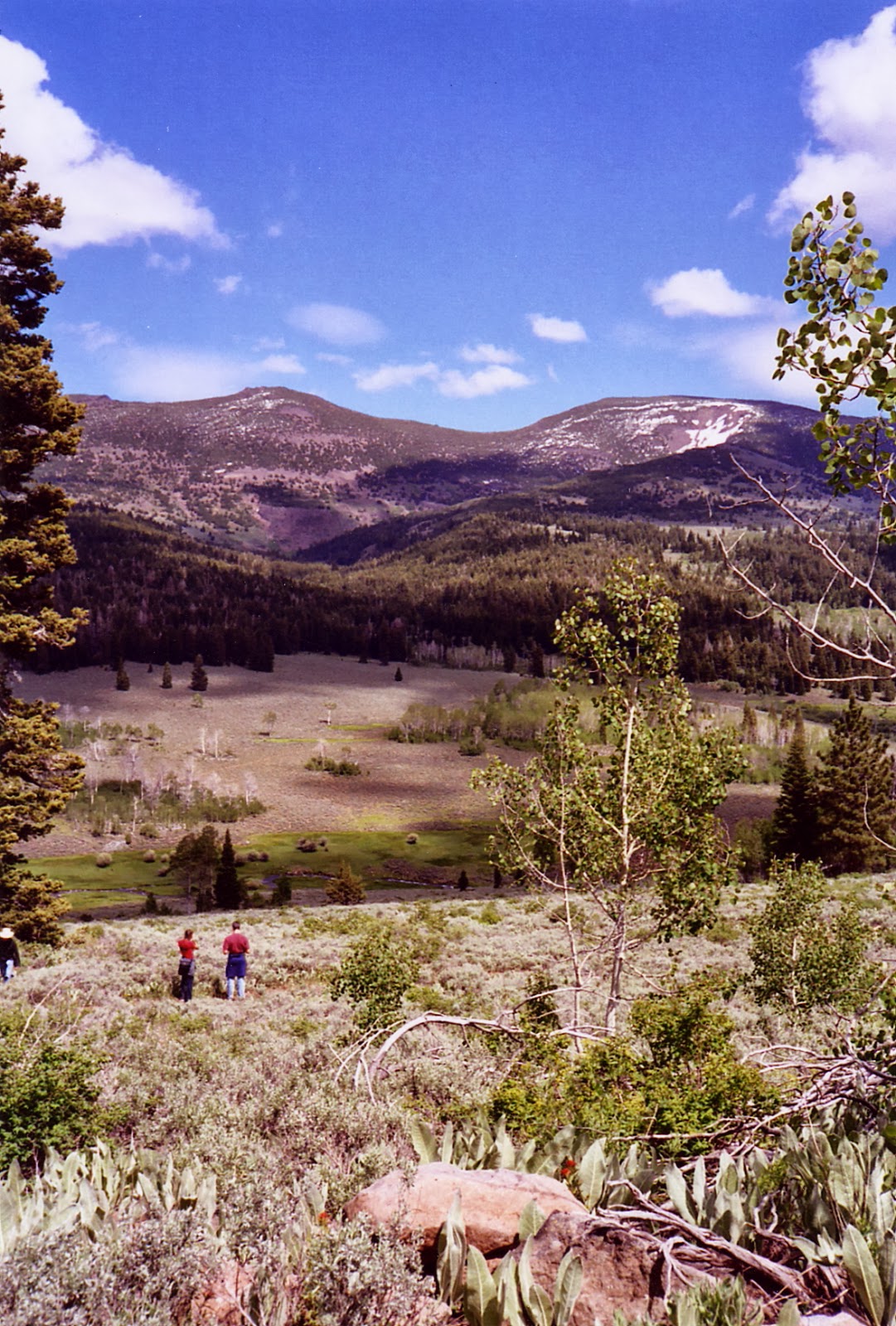
Warner view 2003

Ten years ago we came here for the first time, with some of our children, and camped in the summertime. We hiked on the same Slide Creek Trail, out of Soup Springs Campground. I’m posting some pictures of that visit, when the main difference in the scenery was the source of yellow highlights in the views. Earlier in the year it was fields of mule’s ears (Wyethia) that made the bright splashes, but now it is aspen trees turning color.
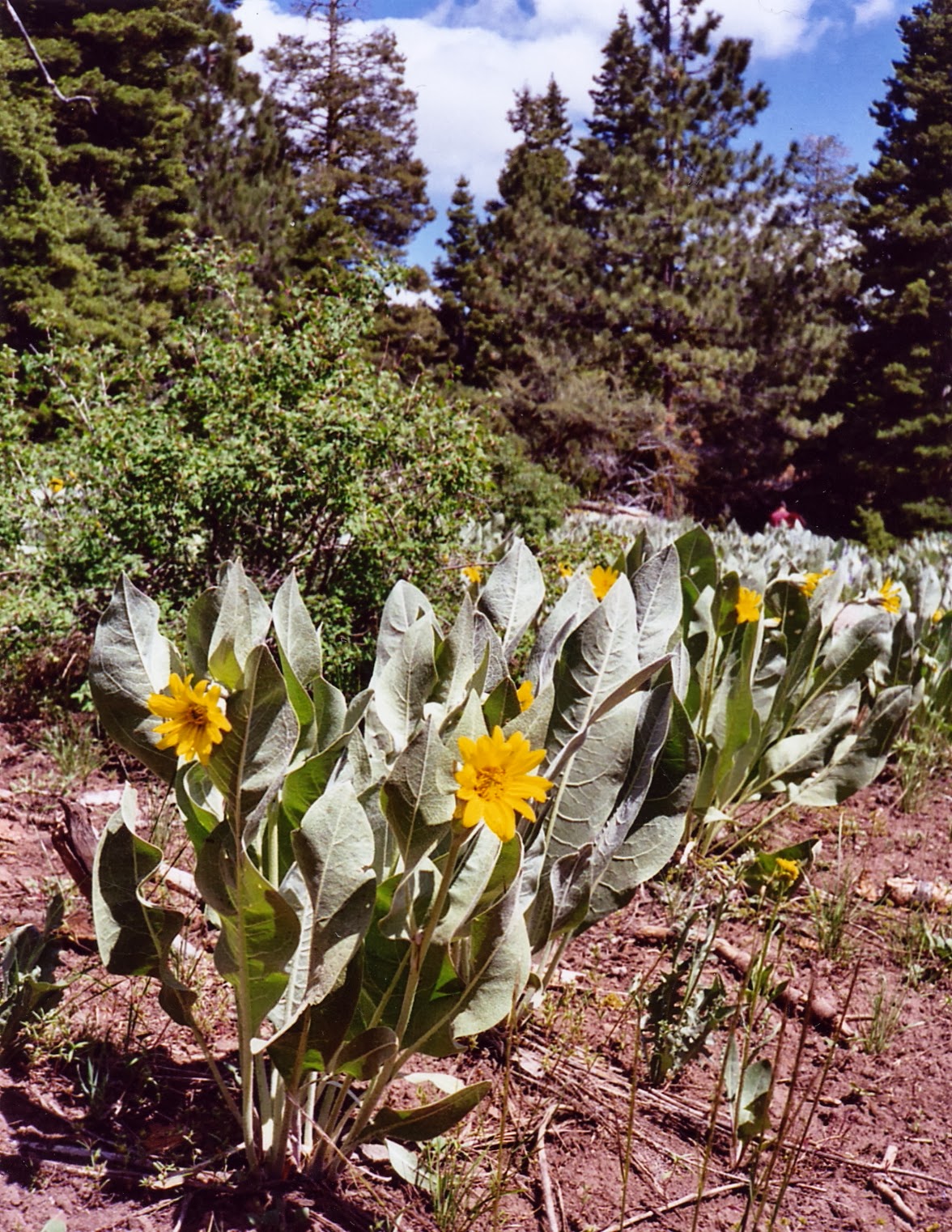
Mule’s Ears Summer 2003

The mule’s ears have thick leaves when they are green, and after they are dried up, before they lie down on the ground, they clatter sharply in the wind. The aspens make a more whispery noise.

Jess Valley 2003

In 2003 we had stopped in Jess Valley at the corner of Road 64, because the setting of the farms between mountain ranges was perfect for taking pictures. I recognized the spot when we went by and we stopped again for more.

The air is so clean up there, it makes you want to breathe deeply and refresh every cell in your body before you have to go down to the valley again.
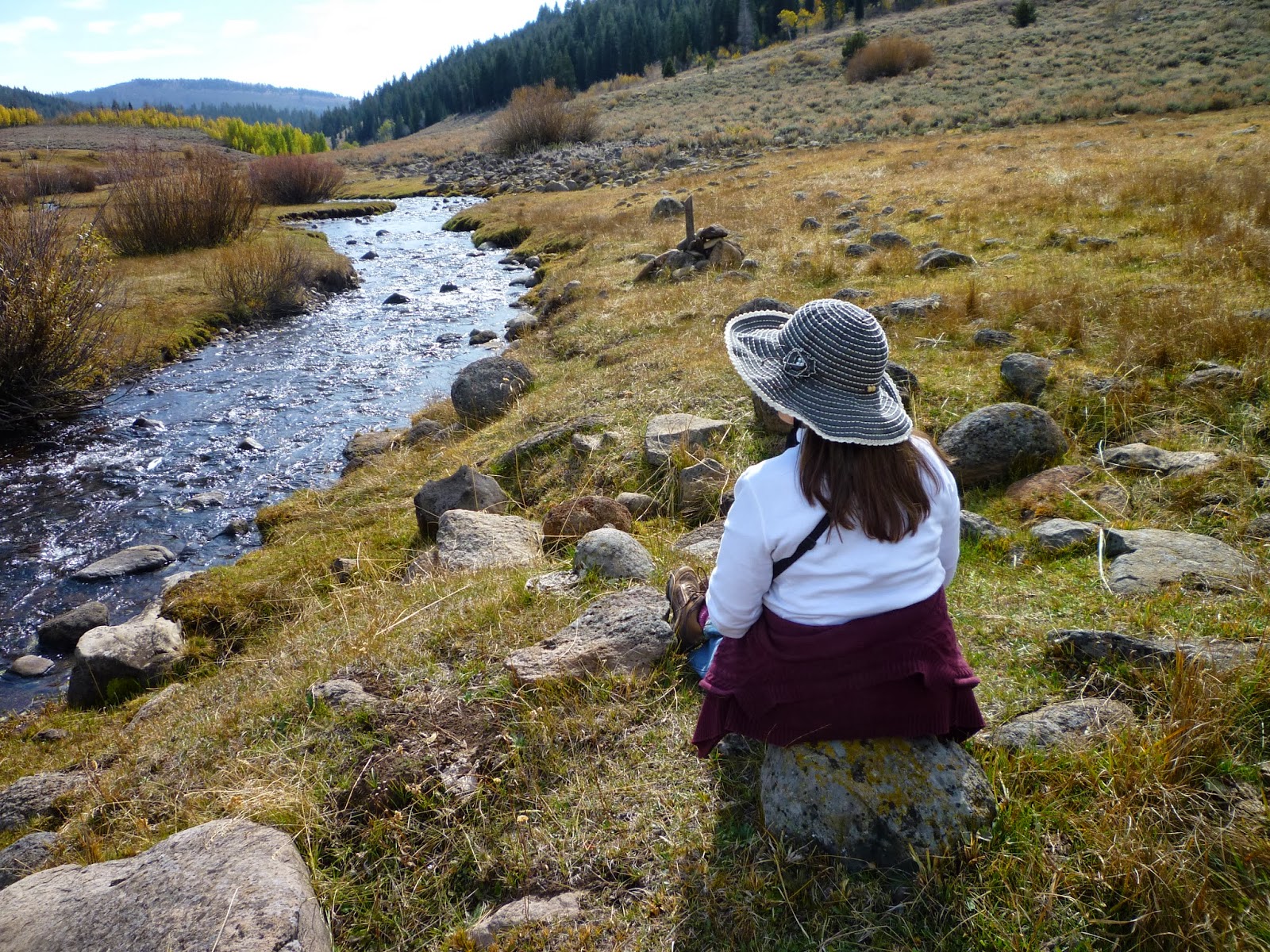
by Mill Creek
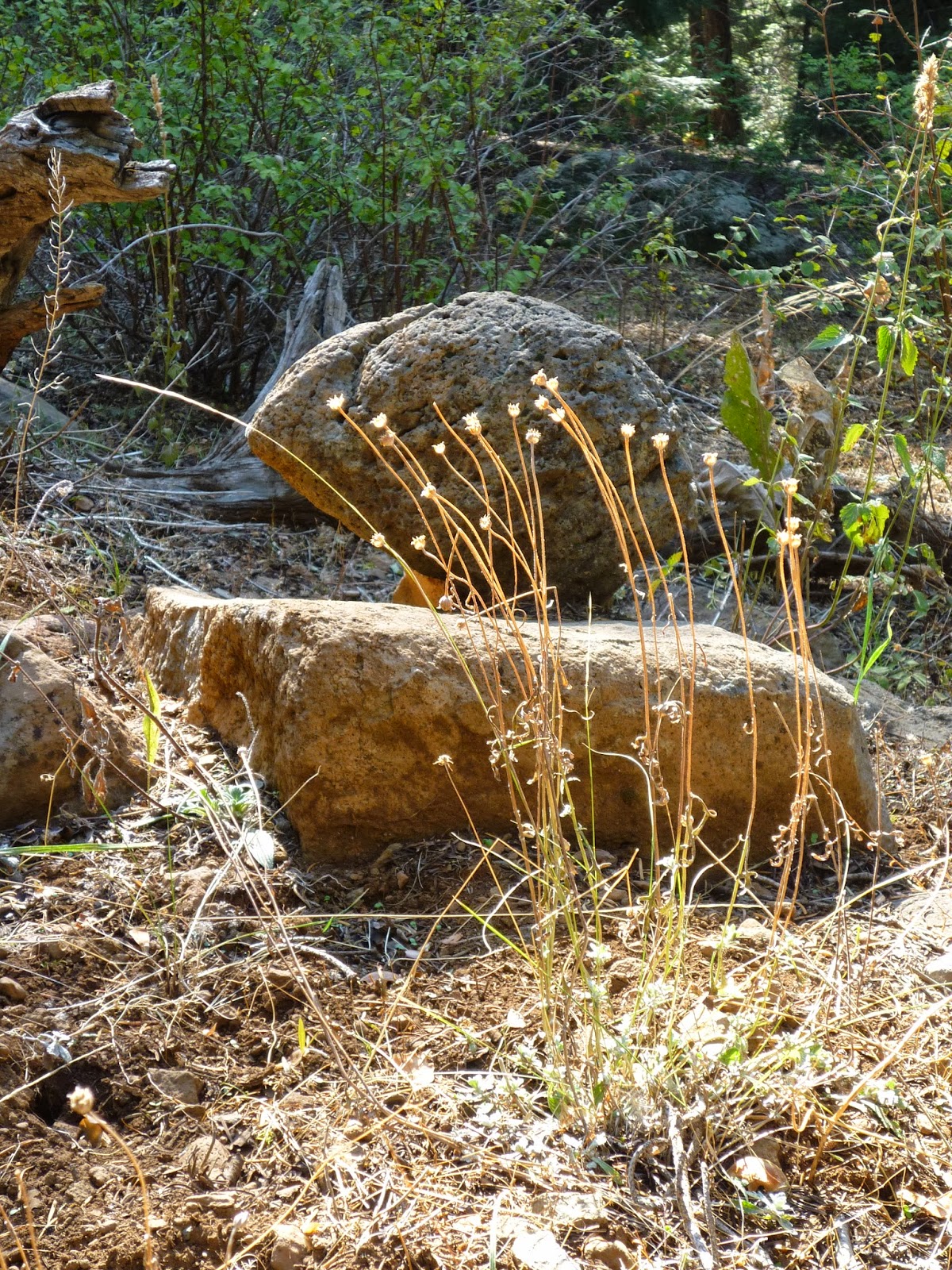
What the mule’s ears look like now

Our hike wasn’t the only thing worth remembering of last week’s trip, so I will try to write again soon on the culture and events of this out-of-the-way part of our fair state.

Two Glad girls by Mill Creek – 2003

I manage my forest.

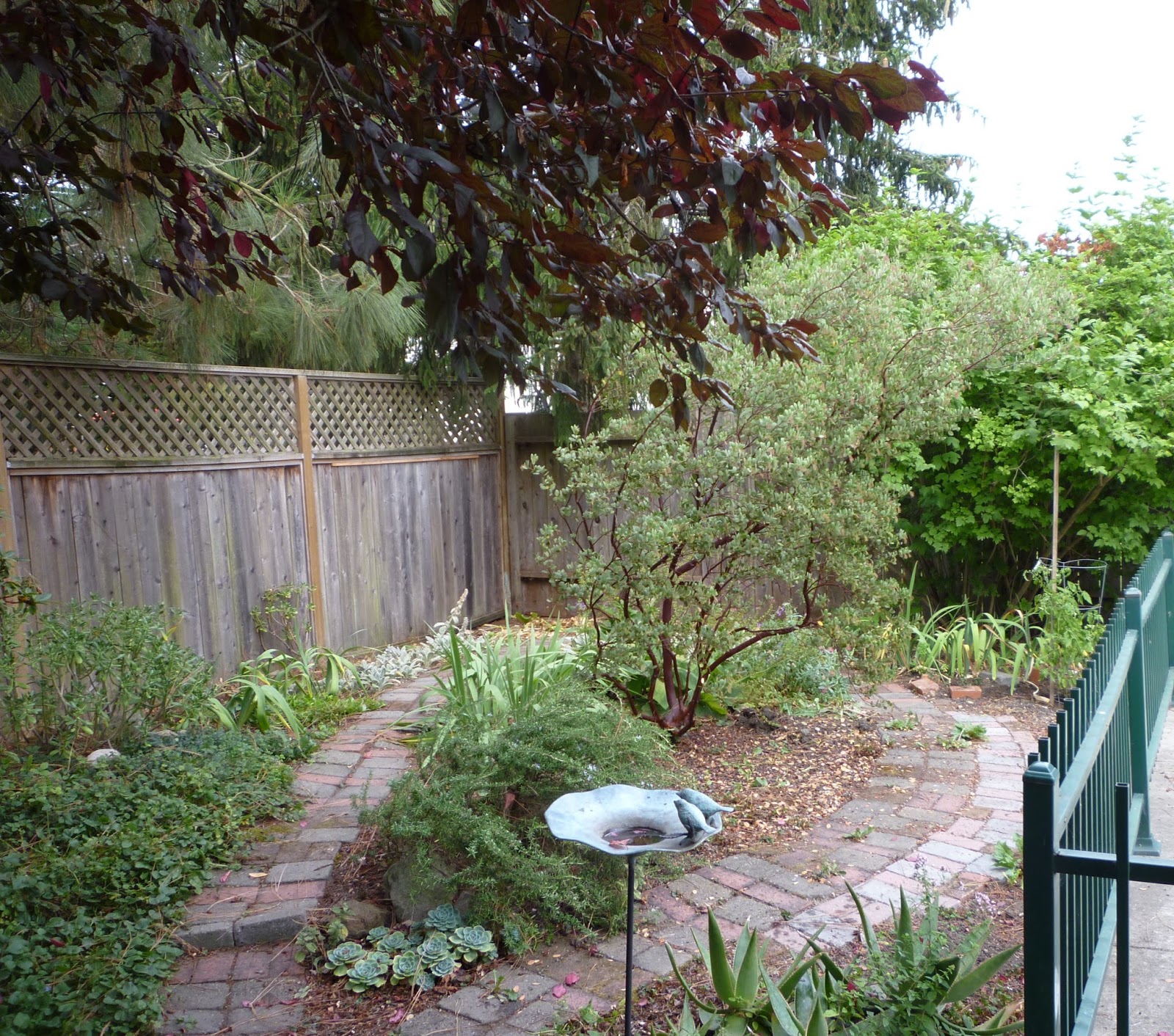
Manzanita in foreground

Several trees overshadow one half of our back yard and make it feel forest-y. Only two of the trees are actually on our property, and the taller is a pine tree we are ashamed to say we haven’t identified. I spend a lot of time picking up its needles that fall all year, blowing and drifting over sweet woodruff, rhododendron, rosemary, campanula ground cover, and on to my dear manzanita.

 
If I were a good forester would go out each morning and groom my park, but it’s painstaking work, as the long needles get tangled in the various convoluted branches and sift down underneath the lower canopies.

When I was stretching my back to this task yesterday it turned into a general tidying-up of the “woods.” I pruned the manzanita some more, trying to maintain head clearance above the path it wants to span. We’ve already widened the path as much as possible to accommodate our favorite little tree.

My other goal in trimming it is to keep the natural curves of the shrub, so I try to envision the direction of future growth. Ideally it wouldn’t need pruning at all, but when we planted it we didn’t anticipate its leaning so sharply northward. I removed dead twigs and every needle I could see.

Then it was all ready for a photo session.
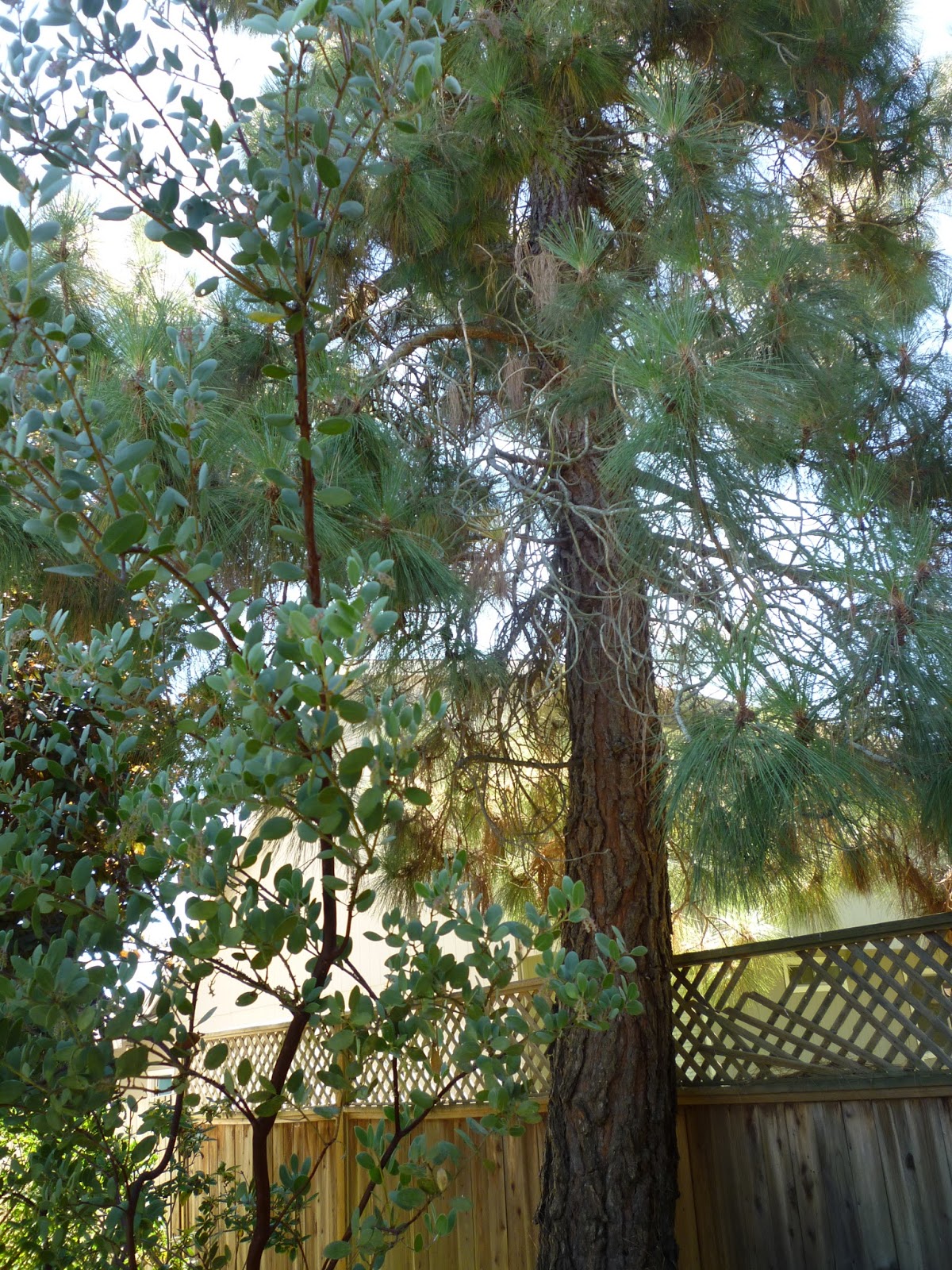
That pine tree looks amazingly healthy in the photo at top, but in this one you can see some of the clumps of brown needles just waiting to fall.
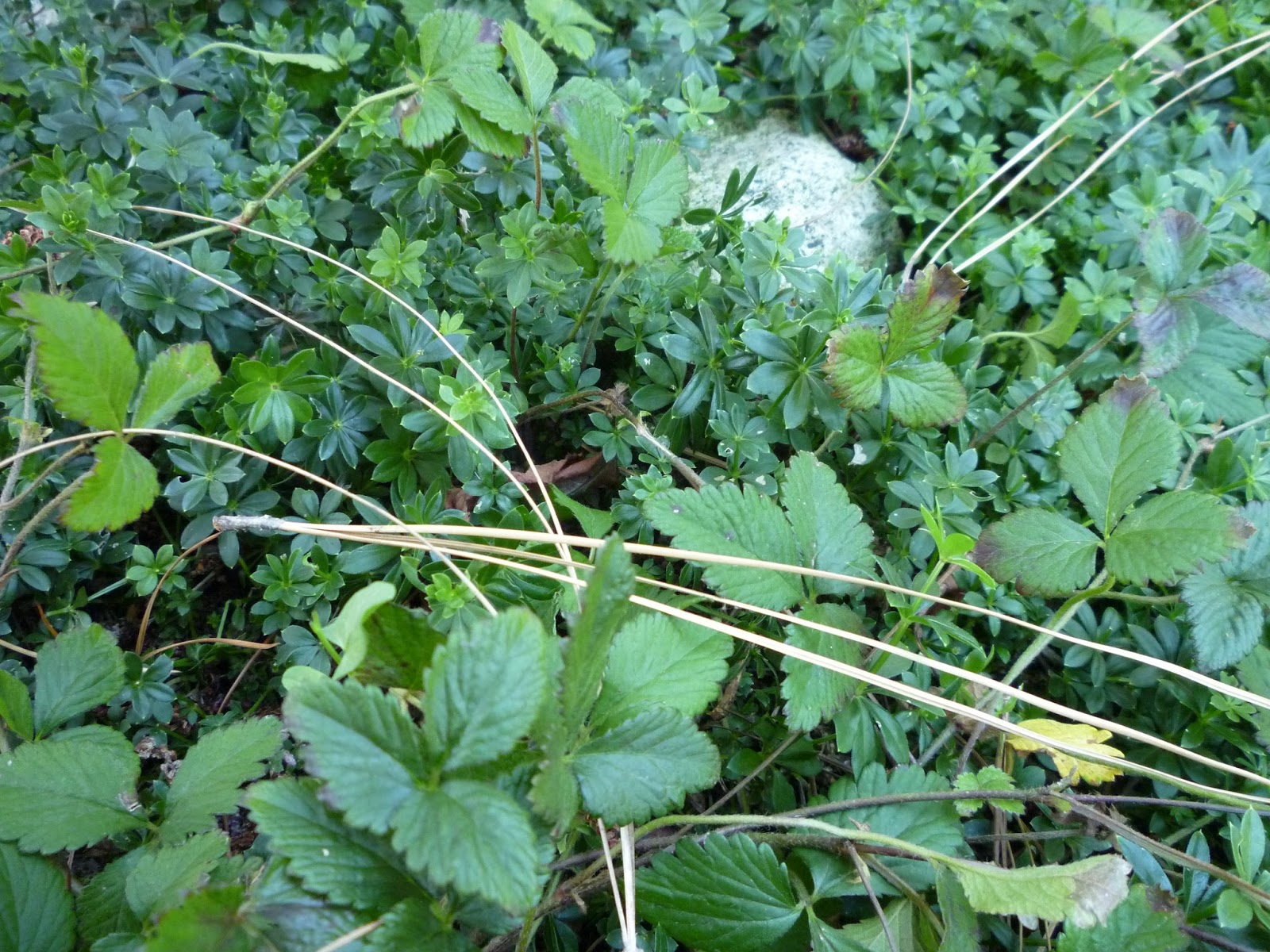
If we just focus in on one or two needles in a small space, they actually look artistically placed and ornamental.
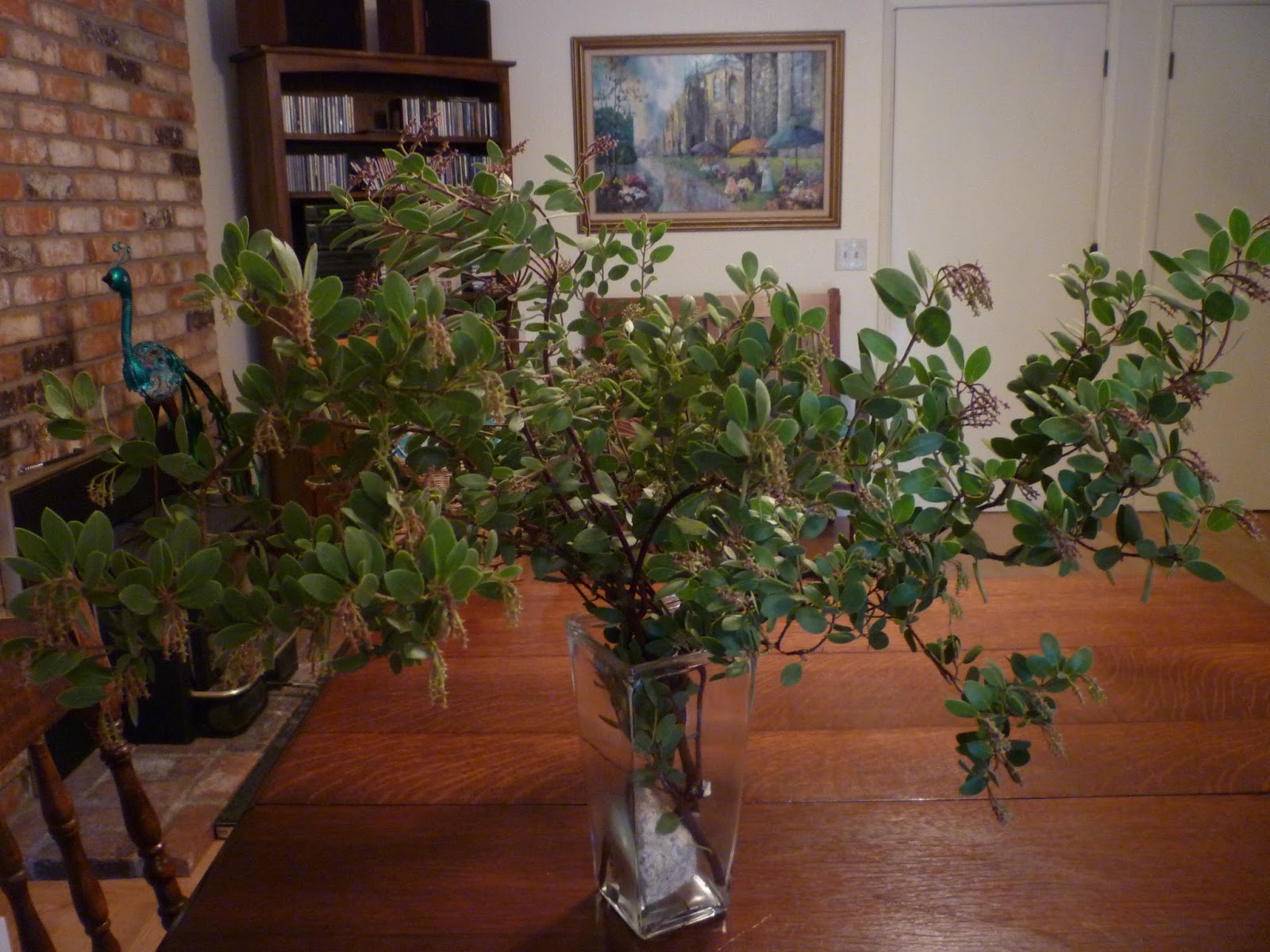
I brought the manzanita prunings indoors to decorate my table.
They make me so happy.