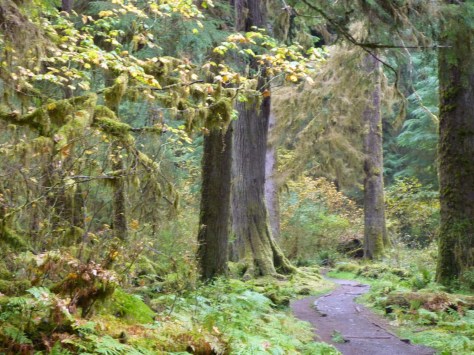
The rain forest surprised me. It wasn’t chilly, even though it was cool; perhaps the humidity served as a blanket. The towering complexity wasn’t too overwhelming, because my camera helped me to isolate and literally focus on various particulars.
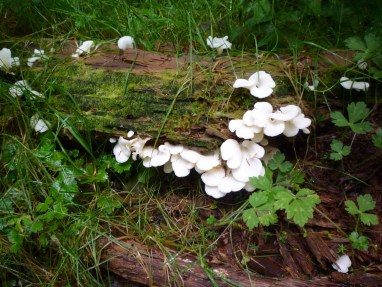
My favorite plants were the exotic fungi, because they stood out from the multitude of mostly green colors.

They say there are several thousand plant species in there, and I imagined it would be a trial to take a day hike through all that jumble and jungle of green sameness. Instead, it was strangely invigorating. Is there more oxygen than average in a rain forest, what with all those plants exhaling? It was as exciting as the beach.
We had the slightest drizzle as we entered, but not enough to warrant covering my head. Even that amount of moisture waned and my hair didn’t get wet — only pleasantly fluffy, a welcome relief from the usual flat.

Autumn was beginning to give some color accents, especially in the form of the big leaf maples that arch throughout the canopy and drop their leaves over everything.
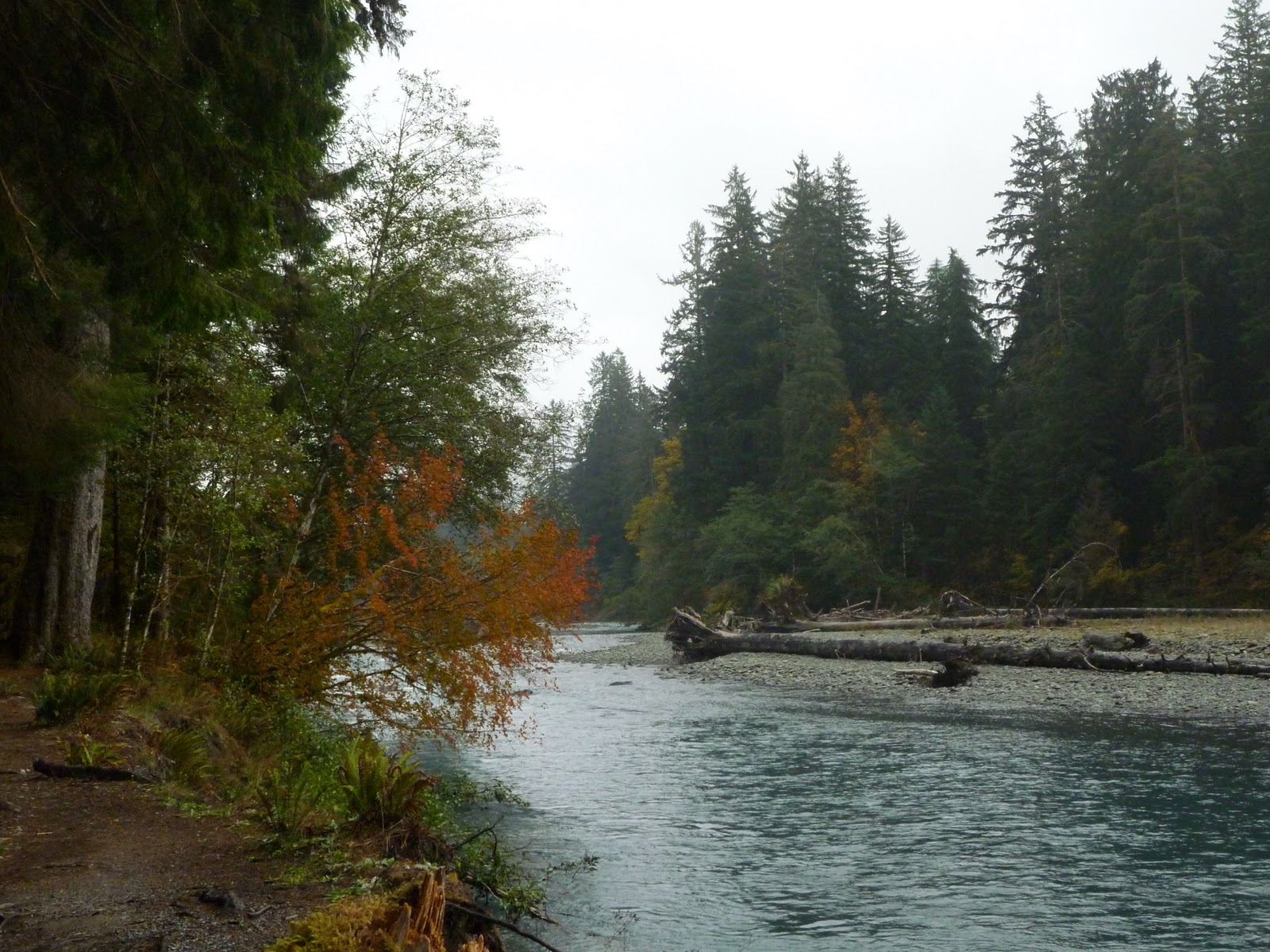

Hoh….the very name of this forest is like a mother’s calming hush, or a version of the meditative Ohm. I got to thinking of the shape of the letters themselves as the circumference of a Sitka Spruce trunk with branches on the sides.
It seems that the word Hoh by itself has endless possibilities, but in any case it seems to be the only name possible for this place, so quiet and deep. The Hoh River runs through it.

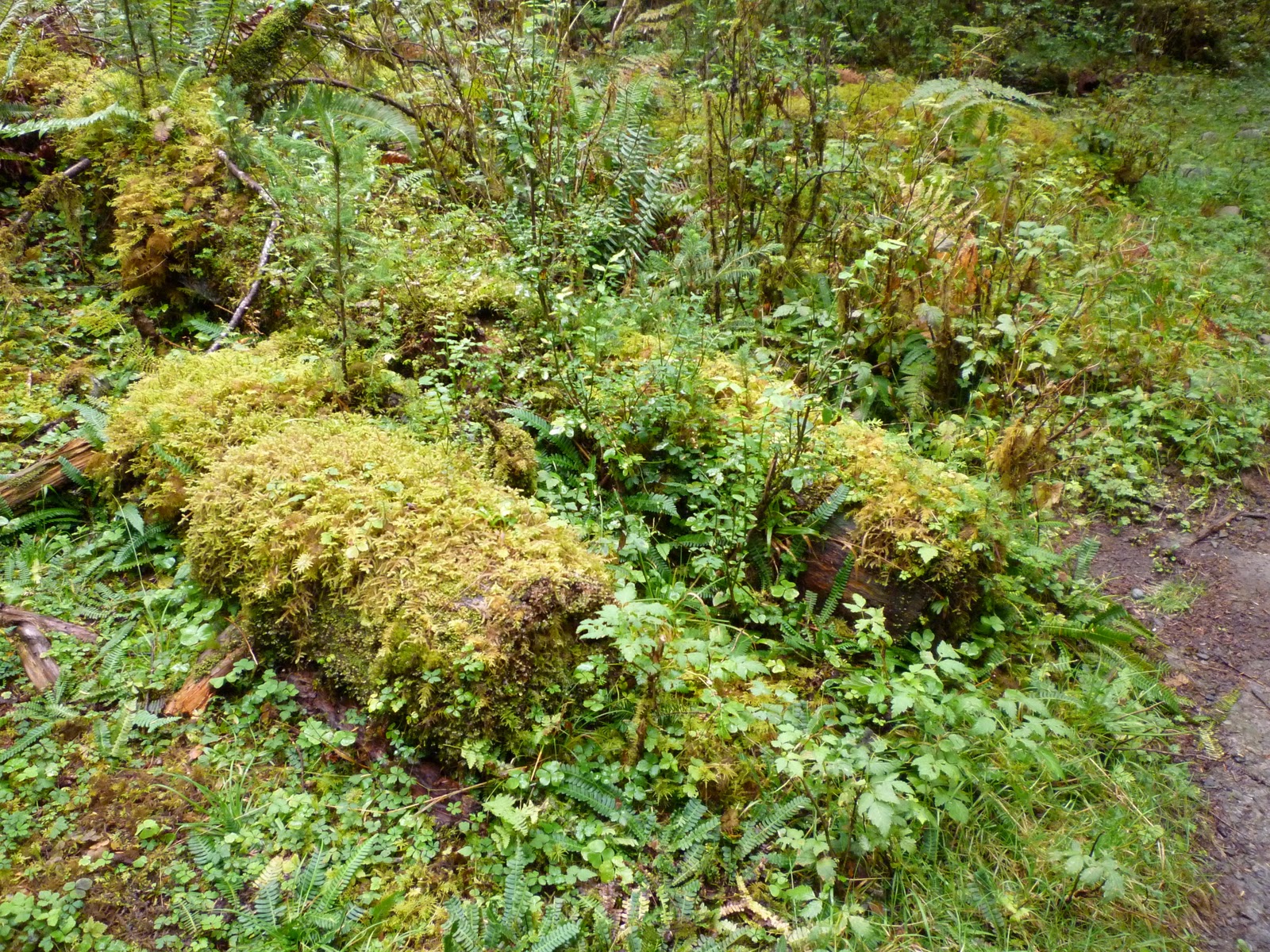
Wherever a stump stands, several plants will use it for a seedbed, so that a conifer, a fern and a deciduous tree will often make a bouquet on the stump. But a log lying horizontal becomes a pasture of low and thick lichens and moss.
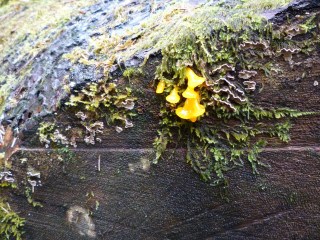
Below: Gray leaf lichens were in abundance, lying around everywhere, and also growing on trees. If there were a contest for the brightest fungi, the yellow one would get my vote.


This area of the world boasts the tallest (Sitka) spruce tree and the tallest (Red) cedar tree in the world. I couldn’t guess what most of the evergreens were, their lowest branches were so high up, and everything blanketed with spongy green lace. But I think this one is a Douglas-fir (it’s written like that because it’s not a true fir.)

Leafy lichens abound. I guess this is one?
I was surprised when Mr. Glad said we should turn around and go back out. We’d been hiking two hours and it didn’t seem to have been more than about 40 minutes. By that time I wasn’t living in the moment, though. Time was flying because I had caught a whiff of the moist rain forest scents. Funny I didn’t notice right away. But when I did, I couldn’t just enjoy the mystery and deliciousness of these smells, but I had to start thinking about how I would describe them, if only to myself, so I could remember them.
I will probably never come back here! was my thought, and I will never smell this again. So why did I waste time thinking about it, I now wonder. Why not just drink of the thrilling sensory Now? And why were the disciples not content to just be in Christ’s presence at His transfiguration?
They were trying to make provision for the future, and prolong the experience, as I was hoping to provide myself with some words to take with me. I couldn’t hope to make the moment last, as we were walking fairly briskly by then, getting closer and closer to the outside where the opportunity would be gone. I was lagging behind and noticing that the mix of wild aromas changed with the changing terrain, but they were always bewitching. Do people get addicted to smells? It could happen here.
Time was running out, and it did run out, ten days ago now. I kept thinking about the words for several days, but as expected, there was no way to improve on whatever poor metaphors I came up with while my senses were being bombarded.
The smell of the rain forest was something like eating a cookie fresh from the oven, a cookie made of fermented wild mushrooms and hazelnuts, with one’s head in a bucket of vanilla ice cream.
This was a new smell for me, with no links to my grandmother or anything in my past. There was no way to focus on it the way a camera helps one to focus visually — and no way to deliberately preserve it, though my mind has no doubt filed this input in a purer form than the silly image I worked so hard to invent. Perhaps elements of that exotic forest atmosphere exist elsewhere, and if so, they might someday come to me on a moist breeze and I’ll be taken back to the Hoh.


 I kept thinking of my church’s teaching that water is the substance representative of all Creation, so that when Christ was baptized in the Jordan he was actually baptizing the Creation and blessing it. In Bremerton the Harborside Fountain Park highlights the city’s maritime and shipbuilding history with a multitude of fountains, surrounded by constant views of waves, and boats sailing across…um, which canal is that?
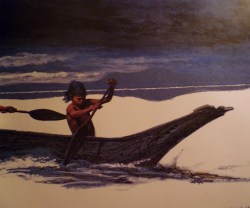 Spending days in this part of the country brought to my mind images from a National Geographic children’s book, Three Little Indians, which we read many, many times to our children in the 70’s and 80’s. One of the children featured in the stories of three Native American tribes was Center-of-the-Sky, a Nootka of past eras of the Northwest. The dark skies and high surf of the paintings, along with the idea of fish as a staple of the diet, came back to me on our trip, when two of our hosts served us salmon, which might be the quintessential food of the Northwest.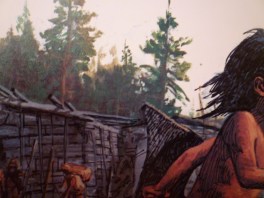
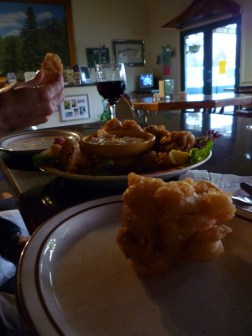 Mushrooms are prolific in Washington’s woodlands; they get nutrients from the tree roots. October is a good time for harvesting the ones called chanterelles, and one humble café where we ate was featuring wild chanterelles deep-fried. I didn’t want to miss the chance to try these exotic fungi, so we ordered a plate of appetizers. After downing the lot, we doubted that was the best way to present their subtle flavor.
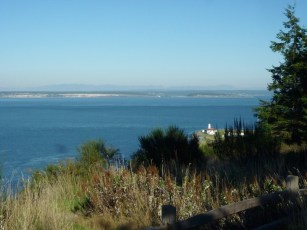 Too many trees!? How could one find fault with that? Western Washington seems to be almost the opposite of the desert, the symbol of want and dryness. But creatures are provided for even in that arid place, and I might still prefer it, with its abundance of sky and sun shining out of it. For the remainder of our vacation, though, I found plenty in this wet and wild land to nourish my soul as well as body.
 Gladsome Lights