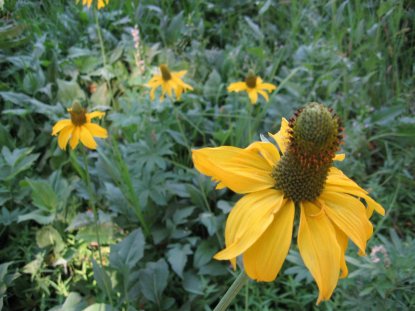
If you’ve read my blog very much you know that I love to take pictures of wildflowers.
I also like to identify the flowers, so I know what to call them. I can’t enjoy them half as much if I don’t know their names or relations. If I know a flower’s name I feel more the reality that we are both creatures of our Father, and it is my own kin.

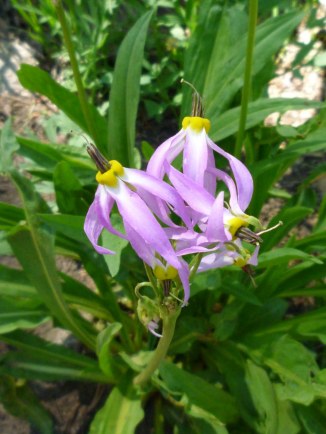
Plant identification was slow going until ten or so years ago. Our outings usually included a few children and a father who wanted to get to the mountaintop or some other destination. There never seemed to be time to stop and look through a wildflower guide to see if we could find a picture of what was before us next to the trail. That is, if we had even brought a guide.
If we even owned a guide. Several years of marriage and children passed before we invested in a wildflower guidebook. I hadn’t learned the names of these plants as a child, but when I married Mr. Glad he started teaching me the ones he knew, and that’s how my love of wildflowers began: Blue Dicks, Sticky Monkey, Tiger Lily, Lupine….those were my first flower friends.
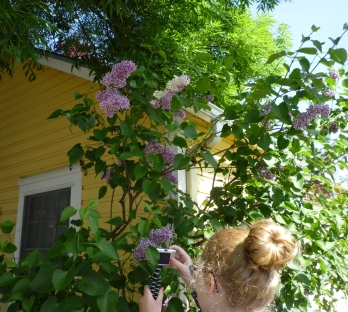
I suppose it wasn’t until I had the tools for digital photography that I got inspired, surely by Pippin first, to take pictures of blooms and then go home to work further on the fascinating task of figuring out the name — if not of the exact species, at least the family or genus.
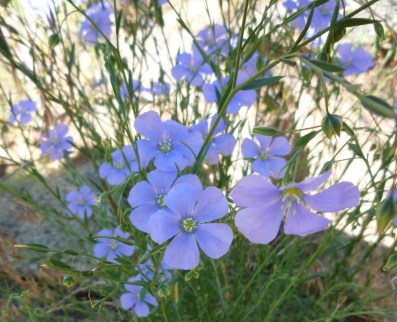
My findings were often published on my blog. Then months or years would go by, and I would see the flower in the wild again, and not be able to retrieve its name from the corners of my brain — even if I had spent hours looking in multiple guides and on websites. So I would go back to my blog and try to find it there, if I had time for that job.
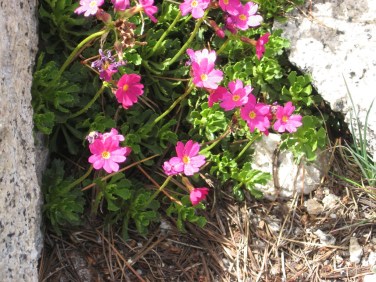
A few years ago I got the idea of sifting through all those picture files, to scroll through scores of pictures from every hike or trip and find flowers that I had photographed and managed to identify — then I would copy them all into a big Wildflower folder (still on the computer) so I could easily find them again when my ailing memory failed me.
For a couple of days last month when I was too weary and sad to do anything else, I worked on that project, and it didn’t take as long as I’d expected.
Many flowers remain unidentified, maybe more than I know the names of. I put some of them in the folder, too, with a “Q” in the file name, for Question. A question mark would be ideal but it’s not allowed in those file names. If the date and place the picture was taken are known, I add that information.
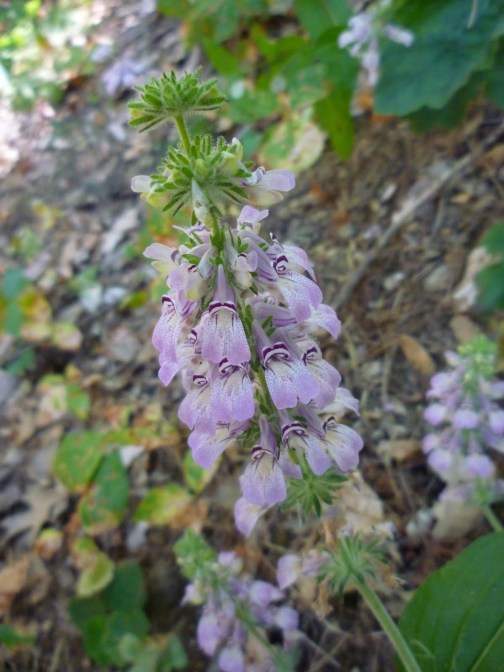
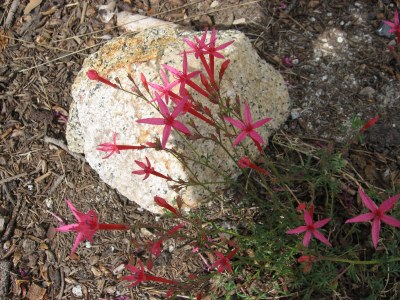
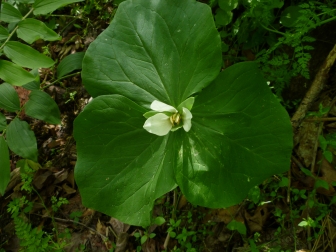
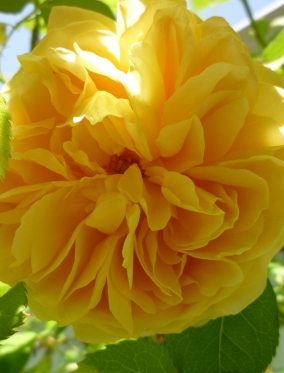
I am sharing a few of the pictures I put into this new folder, not the recent ones, but specimens that haven’t been on my blog for several years. Some of these flowers I haven’t yet encountered again since I first made met them, but I hope there will be many more chances in my future.
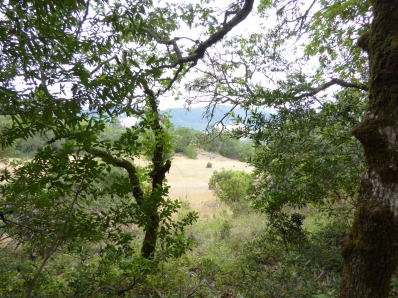
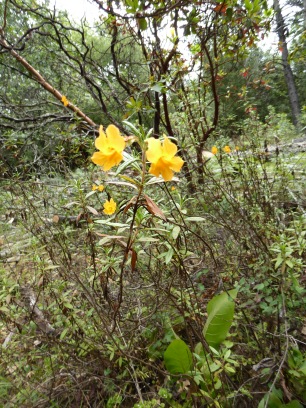


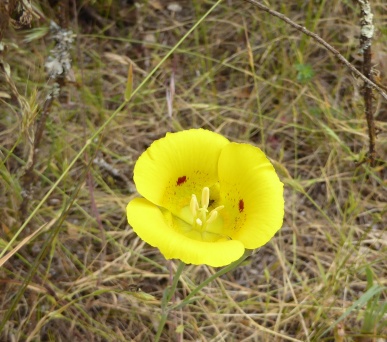
 I was shocked when the names of three flowers came to my mind right while I was looking at them! I guess after dozens of instances of entering the same data into my brain, a synapse is finally ignited? I only had to think for half a minute to remember Mariposa Lily and Elegant Brodiaea when we came upon them.
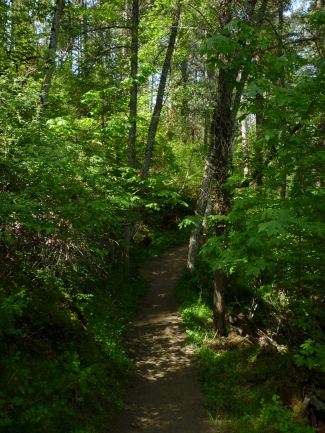
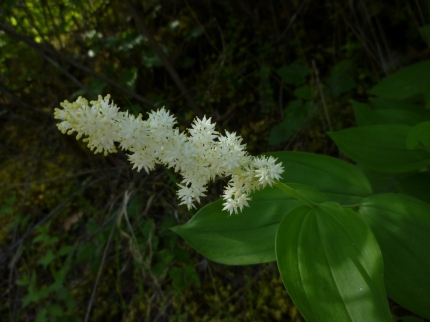
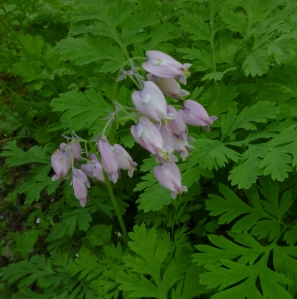
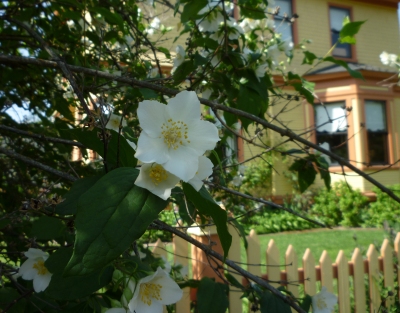
 “We call wild flowers common because of their quantity. But this is just where we strike the great difference between the productions of Nature and the productions of Man. When we produce many samples of the same thing they are of poor quality and we speak of them as mass-produced. The mass productions of Nature do not fail at all in terms of quality. Take the bluebell. There indeed is quantity. Yet every single year we are freshly struck by their quality. Only a flower-snob could fail to see that any one of these bells on the uplifted belfry is as delicate a construction as any tulip or any rose. I will not say more beautiful, or less, for in this realm of flowers we actually are in the presence of abundant examples of — perfection. I think that perfection is the key to the emotion that flowers cause in us. When a thing is perfect the problem of its existence is solved. Gazing at flowers in a wood an unexpected signal seems to go up; we feel a movement of happiness and hope about everything, there is a suggestion that all is really well, all is right with the world….”
