“When I was a child people simply looked about them and were moderately happy; today they peer beyond the seven seas, bury themselves waist deep in tidings, and by and large what they see and hear makes them unutterably sad.”
― E.B. White

“When I was a child people simply looked about them and were moderately happy; today they peer beyond the seven seas, bury themselves waist deep in tidings, and by and large what they see and hear makes them unutterably sad.”
― E.B. White
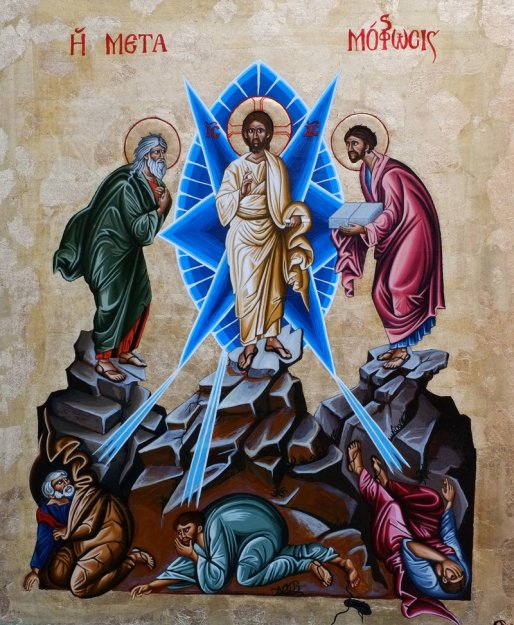
When Jesus and three of his disciples were on Mt. Tabor, and Moses and Elijah appeared as well — before Peter, James and John fell on their faces at the thundering of God’s voice, Peter suggested they build some shelters and stay a while. Just now I read this prayer prompted by that event: “Prayer on the Feast of the Transfiguration.”
“Come to us again, O Jesus—do not listen to Peter! Come down from Tabor and come to our homes, into our hearts! Come here, where we are suffering and laboring for our daily bread! Come here, where we are crucified by people, demons, and passions! If Peter does not want to come down, leave him on the mount and come to us, to our hearts!
“Teach us how to be saved, show us how to endure. Train us to carry our life’s cross. Teach us how to be crucified. Come and suffer for us, Thou Thyself be crucified instead of us, Thyself first taste the cup of death, show us a new way to salvation through suffering.
“O, how we would have liked to stay with Peter on Mount Tabor! But we bear a body, gasping from sickness, lusts and passions. In our breasts are hearts burning with hatred. At home our children are waiting for us, asking us for a piece of bread!…”
-Archimandrite Iachint Unciuleac
You can read the whole prayer: Here
It being the day (2003) that Metropolitan Anthony (Bloom) of Sourozh fell asleep in Christ, I want to share a quote in his memory:
“The Gospel is a harsh document; the Gospel is ruthless and specific in what it says; the Gospel is not meant to be re-worded, watered down and brought to the level of either our understanding or our taste. The Gospel is proclaiming something which is beyond us and which is there to stretch our mind, to widen our heart beyond the bearable at times, to recondition all our life, to give us a world view which is simply the world upside-down and this we are not keen to accept.”
―

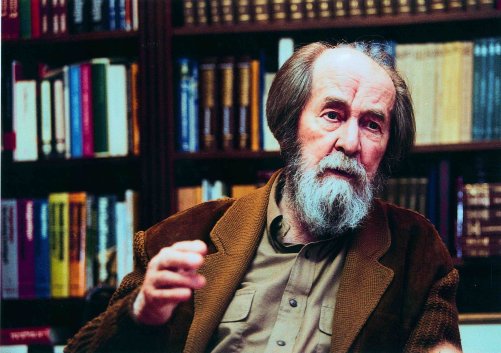
To commemorate the death of Aleksandr Solzhenitsyn, August 3, 2008, this year I give you a link to his essay, “Live Not by Lies,” with an introduction to it, and excerpt from it. The website of the Aleksandr Solzhenitsyn Center has a wealth of the author’s writings and speeches, a list of events and publications related to his legacy, his biography, and more. They have put up a new page dedicated to excerpts of his writings over the course of almost forty years on the topic of Ukraine, beginning with, “Russia and the Ukraine are united in my blood, my heart, my thoughts.” First the introduction to the essay:
On the day Solzhenitsyn was arrested, February, 12, 1974, he released the text of “Live Not by Lies.” The next day, he was exiled to the West, where he received a hero’s welcome. This moment marks the peak of his fame. Solzhenitsyn equates “lies” with ideology, the illusion that human nature and society can be reshaped to predetermined specifications. And his last word before leaving his homeland urges Soviet citizens as individuals to refrain from cooperating with the regime’s lies. Even the most timid can take this least demanding step toward spiritual independence. If many march together on this path of passive resistance, the whole inhuman system will totter and collapse.
— by Edward E. Ericson, Jr. and Daniel J. Mahoney, The Solzhenitsyn Reader
Here is one short excerpt from the essay:
“Our way must be: Never knowingly support lies! Having understood where the lies begin (and many see this line differently)—step back from that gangrenous edge! Let us not glue back the flaking scales of the Ideology, not gather back its crumbling bones, nor patch together its decomposing garb, and we will be amazed how swiftly and helplessly the lies will fall away, and that which is destined to be naked will be exposed as such to the world.”
-Aleksandr Solzhenitsyn
It won’t take long to read the whole essay here: “Live Not by Lies.”
 Gladsome Lights