“The Christian admits that the universe is manifold and even miscellaneous, just as a sane man knows that he is complex. The sane man knows that he has a touch of the beast, a touch of the devil, a touch of the saint, a touch of the citizen. Nay, the really sane man knows that he has a touch of the madman. But the materialist’s world is quite simple and solid, just as the madman is quite sure he is sane. The materialist is sure that history has been simply and solely a chain of causation, just as the interesting person before mentioned is quite sure that he is simply and solely a chicken. Materialists and madmen never have doubts.”
“Whenever I see someone reading a book . . . I feel civilization has become a little safer.” Matt Haig, How to Stop Time
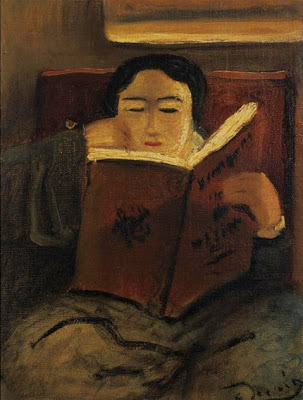
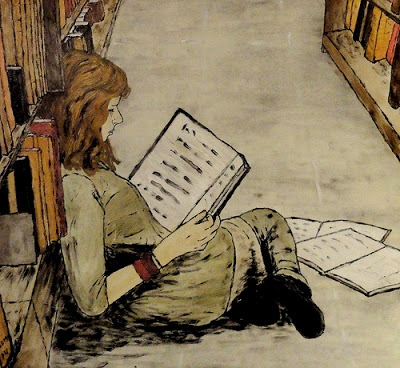
You turn the page because you have to know— because the youthful wizard is in trouble, because the wife’s about to pack and go, because you just like living in this bubble of graceful prose and other people’s ills and joys, because turning the pages makes you see things from a new perspective, fills your mind with more than you, and maybe breaks your heart or your routine, or breaks apart what’s rusted shut, or else draws a connection where you thought there was none. And once you start, the pages lead you to the intersection of art and life and your own empathy; the pages turn you toward humanity.
-Jean L. Kreiling
Jean Kreiling expresses so many of the reasons that we love to read — Did she leave anything out? I do like very much — often, but not constantly! — living in this bubble of graceful prose, even when the bubble doesn’t contain other peoples’ ills and joys. I hope my reading is doing all the positive things the poet sees. I read this poem Sunday afternoon to eleven fellow readers, when our parish women’s book group met on my patio and enjoyed our usual lively discussion of such pleasures. I’m also keeping it tucked in my purse to share with any friend or stranger I might meet, anytime our conversation turns to our latest favorite books.
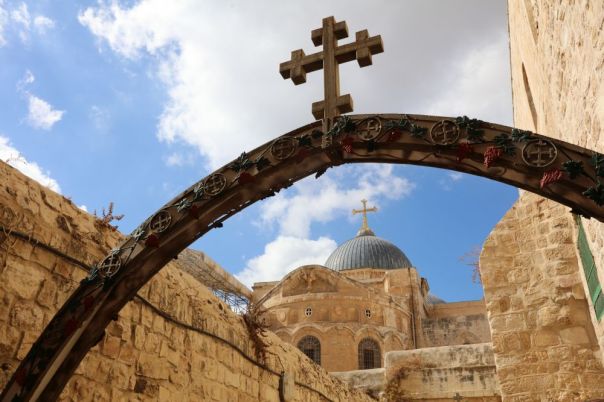
We are celebrating the Feast of the Elevation (or Exaltation) of the Holy Cross. This is a commemoration of historic events in the Orthodox Church, and an opportunity to ask ourselves what these outward expressions of faith have to do with our lives in the current age. The original events are more than a thousand years distant from us, but the human condition is unchanged.
“The Exaltation of the Lord’s Cross has arrived. Then, the Cross was erected on a high place, so that the people could see it and render honor to it. Now, the cross is raised in the churches and monasteries. But this is all external. There is a spiritual exaltation of the cross in the heart. It happens when one firmly resolves to crucify himself, or to mortify his passions—something so essential in Christians that, according to the Apostle, they only are Christ’s who have crucified their flesh with its passions and lusts (cf. Gal. 5:24). Having raised this cross in themselves, Christians hold it exalted all their lives. Let every Christian soul ask himself if this is how it is, and let him hearken to the answer that his conscience gives him in his heart.”
-St. Theophan the Recluse, Letters on the Spiritual Life
“In the traditional theology of the Eastern Church this world and the ‘next’ are not two worlds. We use the language of place (heaven and earth) for lack of language not for accuracy. There is more to the created order than we see (‘all things visible and invisible’). But that which is not seen is not inherently separate from that which is. Sacrament (mystery in the East) is a way of describing the relationship between what is seen and what is unseen. Everything is sacrament, icon and symbol.”


 Gladsome Lights