I only discovered this poem a few years ago. Being short and packed with autumnal images, it is perfect for a busy time of year, when you don’t want to let the equinox pass unnoticed, but you are canning tomatoes or drying figs or just taking all the walks you can in the crisp air. If you don’t pay attention to the calendar or the TV, you might miss the day.
For months and years I’ve been trying off and on to confirm that its author is Edwina Hume Fallis. New things show up on Internet searches all the time, and today I have seen enough sites that are confident about attributing it to her that I will accept it. Two months ago I couldn’t find two postings of the poem where her name was even spelled right. Most places it is shared as by “Anonymous.”
In the city of Denver, Colorado, Edwina Hume Fallis is especially famous, for her teaching and writing, a toy shop she owned, and her book When Denver and I Were Young. (I did recently contact the Denver public library to see if they had a copy of the poem below in their collection about her; they did not.) She and her sister made toys to use as props in telling stories to kindergarten students, and she did write over 100 poems; maybe this one was in an anthology that is now out of print. Many women bloggers seem to have memorized it in elementary school.
I wonder if any of my readers in the Southern Hemisphere knows of a similar poem that applies to the opposite seasons down there?
SEPTEMBER
A road like brown ribbon, A sky that is blue A forest of green with that sky peeping through. Asters deep purple, A grasshopper’s call – Today, it is Summer Tomorrow is Fall!
-Edwina Hume Fallis
At Pippin’s in 2017, waiting for the aspens to turn.
“The great medicine is for you to devote yourself to worship of Christ. Everything is healed. Everything functions normally. The love of God transforms everything; it sanctifies, amends and changes the nature of everything.”
Soldier’s family and I are having such a good time, I think most of us forget for long periods about the pervasive fires and the smoky skies. My dear people arrived four days ago, and we’ve been as busy as beavers ever since. The boys are much louder than beavers. There’s something about three boys arriving in a family in less than six years that creates a force field of extra decibels and energy output. I have no doubt that in the balance the constructive energies are increasing!
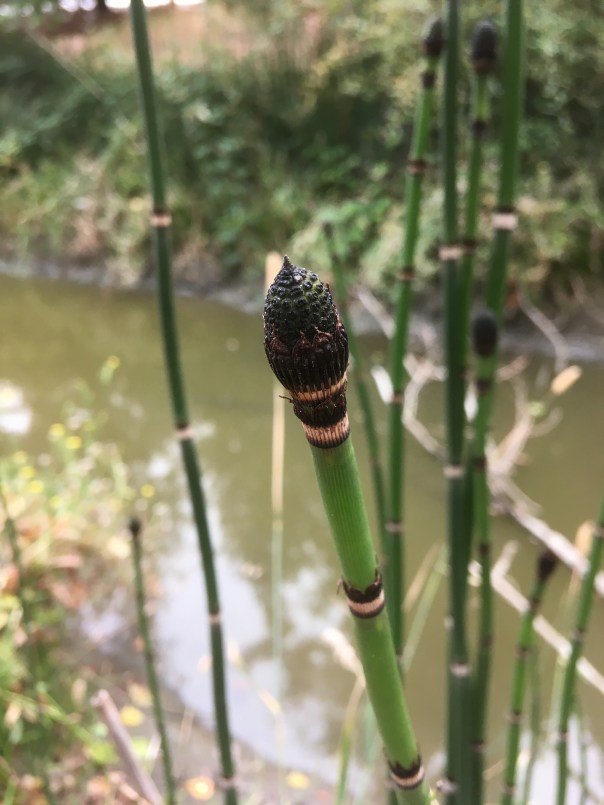
The first day we did the creek walk, and tasted fennel in all stages of its growth, from the newest fronds to the early seeds. The boys learned about Queen Anne’s spot of blood, and how horsetails break so satisfyingly clean at their joints. I learned the name of a new plant, White Sweetclover.
For two days we did lots of chores in the garden and around the house.
My playhouse has been lovingly fortified by Soldier since I got it used five years ago; back then he put a floor on it and placed it on a foundation he’d made. He sealed it against the rain, and repaired the door when it was falling apart. This week he recreated the little decoration above the door, that used to have red plastic matching the roof. Now it has red wood shingles matching the new roof, and I don’t think there is any remaining plastic that can peel and get brittle and break. If ashes weren’t falling in the back yard I’m sure little Clara would be playing house.
Liam picked many figs that were hard for me to get to, because it’s easy for him to wriggle among the hedges of yarrow and oregano, into the tangle of fig branches, to find the fruits that are drooping and black. Often they have a bird peck taken out of them, so we cut that part off and eat the rest. He and Laddie helped me deadhead the echinacea and one remaining lavender.
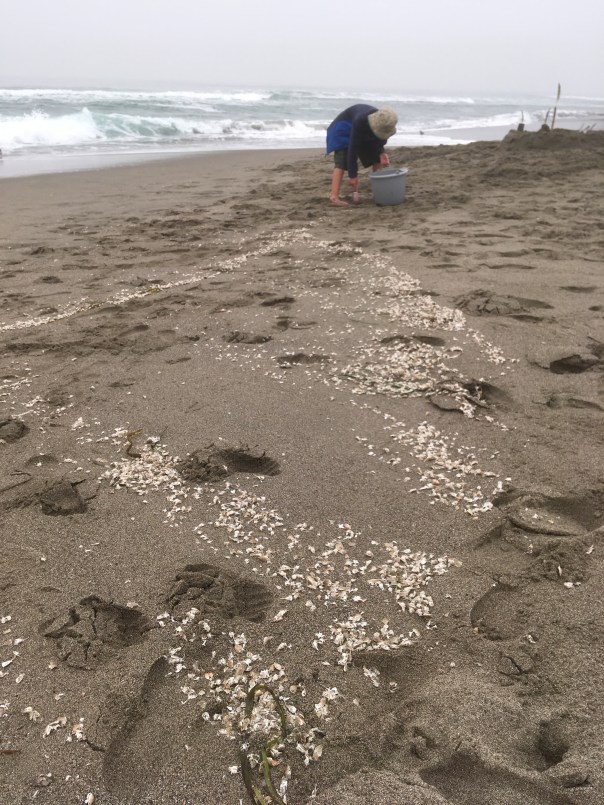
The third day, off to the beach! It was an exploratory mission; we couldn’t know for sure from the air quality apps if it would be worse than inland, but we hoped not, and when we got out of the car it was comfortable enough to breathe, so we stayed all afternoon. It was Clara’s first beach experience. She was game for everything.
The boys used all their mental and physical powers in sport with the surf. I who was never much of an athlete am awed by the quick reflexes of one, and the way another takes on the waves as a sort of whole-body interactive science project, learning how to work with the crashing and pushing and keep his balance.
Pacific sand crabs
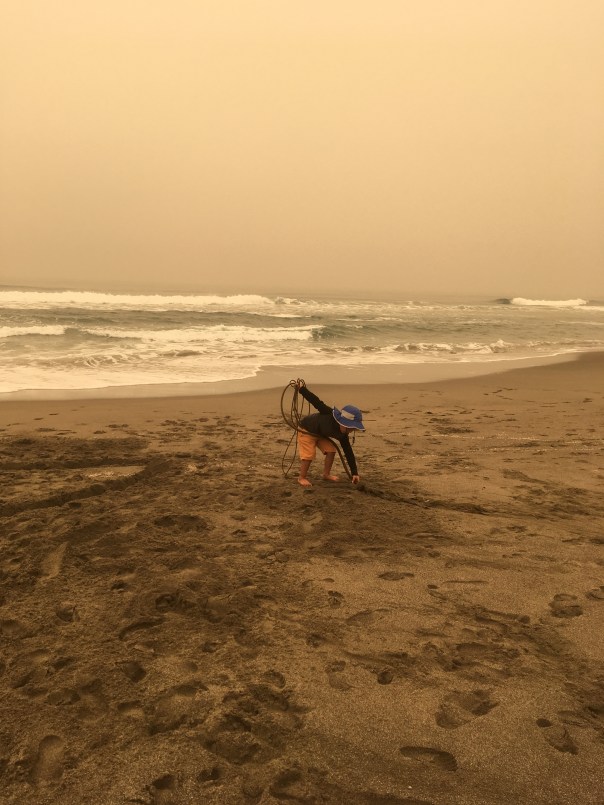
Joy found a sea plant washed up and called to Brodie, “Here’s a rope!” He came running and gathered it up, flung it out, dragged it all over.
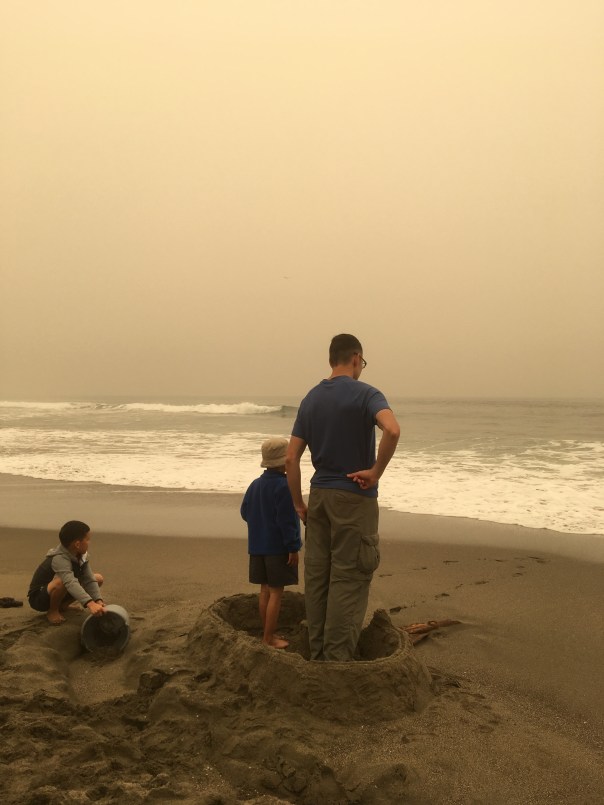
Soldier made a castle and hours later we waited for the waves to slowly encroach. The shorebirds entertained us, digging with their bills that were nearly as long as their stilty legs. At home later, Soldier and I with the help of Cornell’s allaboutbirds.com identified them as Marbled Godwits.
Two things hard to understand: How late it was, when we started home. Maybe the sunlight’s never changing all day confused our inner clocks. The other strange thing was the color of our pictures when we looked at them later.
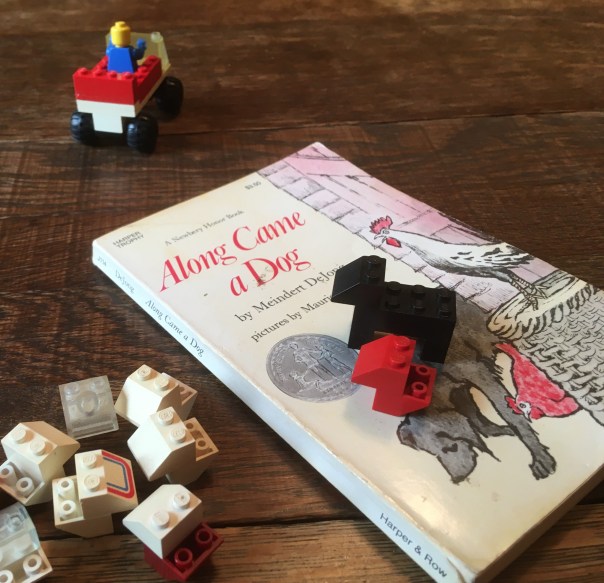
I’m reading to the boys Along Came a Dog by Meindert DeJong. It has ten chapters, so I told them that we should try to read two chapters at each sitting, so as to guarantee that we finish in the nine days they will be here, since we can’t read every day. Today we finished the sixth chapter, and in the middle of the session they started playing with Legos while they listened, and building figures to represent the main characters in the story.
The story starts with the man, a flock of white chickens, and the little red hen. He drives off to work every day. And then, along comes a big black dog — that he doesn’t want. I would like to give you more of a review of the book and tell you about our intense engagement with the story, and the things we talk about. But I am way too tired to do that right now, and I must rest and store up strength, and be ready to meet the force field tomorrow morning. Good night!
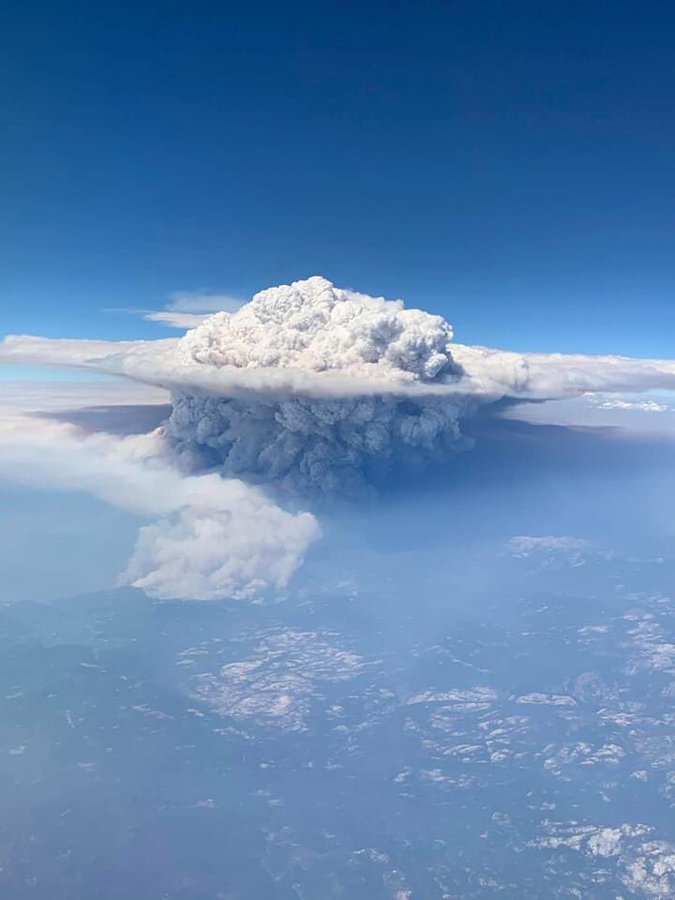
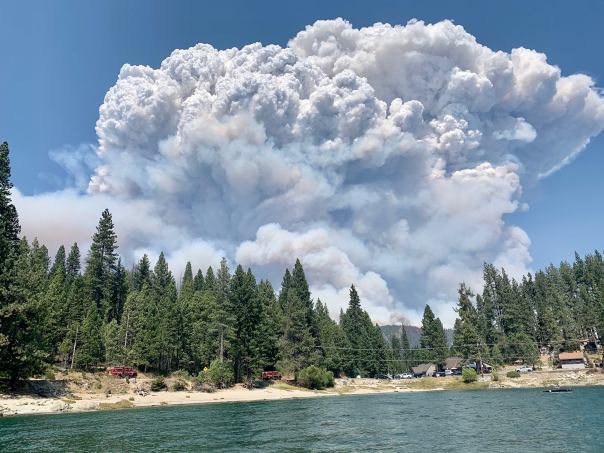
Above is a photo I found online, taken by a passenger on his flight over the Sierra Nevada, and showing a smoke cloud billowed up from the Big Creek Incident in the Sierra National Forest, which as I write is not two days old, and is 0% contained. Yesterday it grew from 5,000 to 36,000 acres, and necessitated the airlifting of more than 200 campers by the National Guard. Many campgrounds, lakes and residences in these mountains have only one real road going in, and if fire blocks that, you are stuck.
On the National Guard plane.
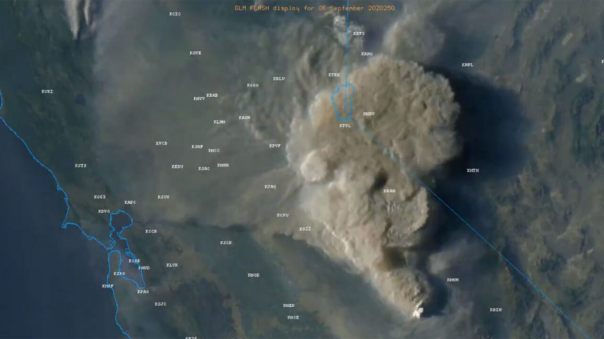
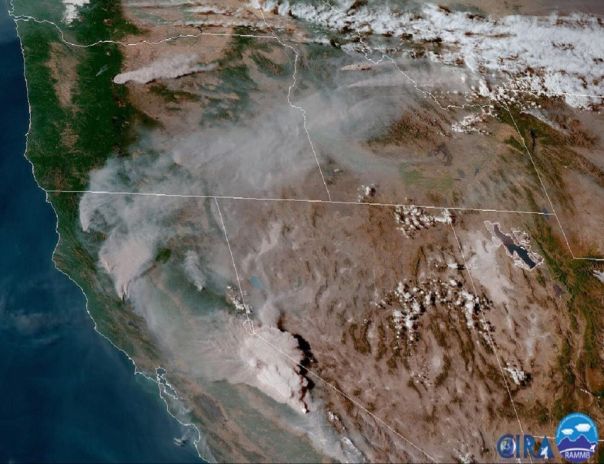
None of these photos are my own, of course. In the satellite images below, you can see San Francisco Bay on the left, and the smoke spreading across the state line into Nevada. The lower photo shows more fires over more of the state. (Let me draw your attention also, again, to how much of the state lies north of San Francisco.)
I might not have paid much attention to this particular fire except that it has abruptly changed my plans for this week. The fire itself isn’t threatening the area where my family’s high mountain cabin is, but the road we take branches off another road that has been closed by the highway department, several miles below our road in. So… we won’t be going up after all. But God willing, I will still be seeing Soldier’s family down here, and it will be good.
View from Shaver Lake.
The indecision of yesterday has left me mentally and emotionally exhausted all out of proportion to my own situation, so that I can hardly compose a thought or a sentence, but I wanted to give an update. ❤
 I only discovered this poem a few years ago. Being short and packed with autumnal images, it is perfect for a busy time of year, when you don’t want to let the equinox pass unnoticed, but you are canning tomatoes or drying figs or just taking all the walks you can in the crisp air. If you don’t pay attention to the calendar or the TV, you might miss the day.
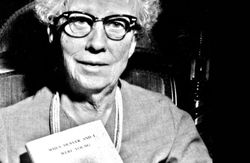 In the city of Denver, Colorado, Edwina Hume Fallis is especially famous, for her teaching and writing, a toy shop she owned, and her book When Denver and I Were Young. (I did recently contact the Denver public library to see if they had a copy of the poem below in their collection about her; they did not.) She and her sister made toys to use as props in telling stories to kindergarten students, and she did write over 100 poems; maybe this one was in an anthology that is now out of print. Many women bloggers seem to have memorized it in elementary school.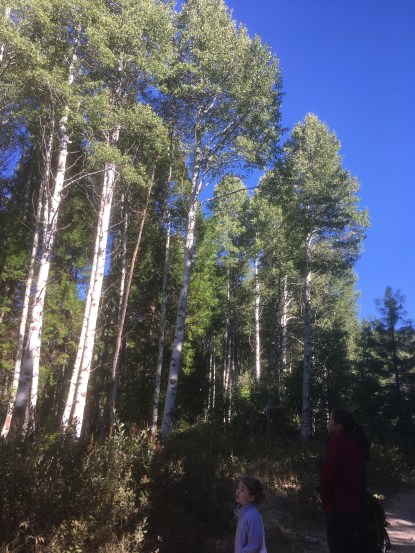

 Soldier’s family and I are having such a good time, I think most of us forget for long periods about the pervasive fires and the smoky skies. My dear people arrived four days ago, and we’ve been as busy as beavers ever since. The boys are much louder than beavers. There’s something about three boys arriving in a family in less than six years that creates a force field of extra decibels and energy output. I have no doubt that in the balance the constructive energies are increasing!
 The first day we did the creek walk, and tasted fennel in all stages of its growth, from the newest fronds to the early seeds. The boys learned about Queen Anne’s spot of blood, and how horsetails break so satisfyingly clean at their joints. I learned the name of a new plant, White Sweetclover.