A child who can learn from the bird.

Mags and I are reading The Lily of the Field and the Bird of the Air together, and so far it is delightful to be in this mini book club with her. Once her copy of the book arrived she dived in with alacrity and even put the perfect amount of pressure on me, in the form of a meek suggestion, to post our responses as close together as possible.

So here I am, just where I want to be, challenged, but not alone, being in alliance and camaraderie with a friend who welcomes the exercise. I do feel that my engagement is feeble… or perhaps the situation is that Kierkegaard has revealed the feebleness of my soul.

Søren Kierkegaard published the first edition of this work in 1849, but he continued to think about the subject and to write about it in his journals. The translator Bruce H. Krimmse tells us this in the introduction, and quotes from the journals, reflections that I rather wish I hadn’t read, because what’s in the first half of the book itself is quite adequate for stripping away any sentimentality I might have about birds and flowers. As Krimmse says, “[Kierkegaard] never permits the reader to ease up on the oars and drift in an intellectual, ethical, or spiritual sense.” Also, these further explanations were confusing to me, whereas most of the first discourse was more accessible. Maybe this was one of the introductions one should read after.

Kierkegaard begins the first of the three discourses in this little book by telling us what is wrong with “the poet’s” response to Christ’s sermon in Matthew 6. I will put that scripture passage right here so you can review it if you want, or you can skip past easily:

25 “Therefore I tell you, do not be anxious about your life, what you will eat or what you will drink, nor about your body, what you will put on. Is not life more than food, and the body more than clothing? 26 Look at the birds of the air: they neither sow nor reap nor gather into barns, and yet your heavenly Father feeds them. Are you not of more value than they? 27 And which of you by being anxious can add a single hour to his span of life? 28 And why are you anxious about clothing? Consider the lilies of the field, how they grow: they neither toil nor spin, 29 yet I tell you, even Solomon in all his glory was not arrayed like one of these. 30 But if God so clothes the grass of the field, which today is alive and tomorrow is thrown into the oven, will he not much more clothe you, O you of little faith? 31 Therefore do not be anxious, saying, ‘What shall we eat?’ or ‘What shall we drink?’ or ‘What shall we wear?’ 32 For the Gentiles seek after all these things, and your heavenly Father knows that you need them all. 33 But seek first the kingdom of God and his righteousness, and all these things will be added to you.34 Therefore do not be anxious about tomorrow, for tomorrow will be anxious for itself. Sufficient for the day is its own trouble.

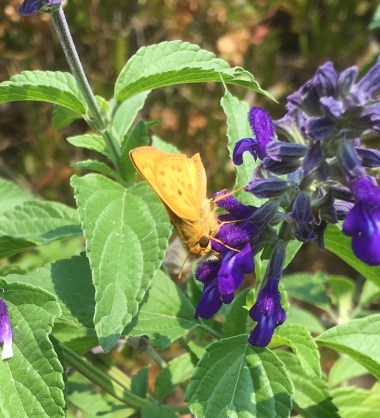
The poet, our guide tells us, hears this and despairs of learning anything from the bird, having a sort of romantic notion of the ease of the bird’s life, and “wishing” that he could be bird-like, but having excuses. He sounds humble and childlike, but he “lacks the earnestness of eternity.” However, “The gospel is so earnest that all the poet’s sadness fails to change it….”

We are exhorted to be childlike in a different way altogether, and here I find the image or ideal of the child as Kierkegaard describes him to be a striking contrast to what is expected by most people in the last several decades:

“…the child never says, ‘I cannot.’ The child does not dare to do so… precisely because the child does not dare say, ‘I cannot,’ it is not therefore true that it cannot….” There follows the same thought repeated in various ways, and I am grateful for this repetitive aspect of the author’s style, because I need these things drummed into my noggin.

Okay, so once we have got that essential point, that if God tells us to do something, it follows that we can do it — what is it we shall do? I use the word shall because Kierkegaard very clearly uses it as distinct from will, a distinction that I think has been all but lost since sometime in the last century. Now we might say, “I will learn from the bird, even though I don’t want to.” The child of Kierkegaard’s day would say, “I shall learn from the bird, even though I do not will to do so.” But wait – he wouldn’t dare to say that, or even think it!

Our assignment from Christ: to learn from the lily and the bird, and to seek the Kingdom of God first. I need to work harder to write a proper response to the remainder of this discourse, and publish it later, because that part is the meat of it, and the birdsong.

p.s. I used dived instead of dove above when referring to what Mags did because, although Americans use dove twice as much now, Mags is British, and they still prefer the older form. So do I.  🙂

A harbor, medicine and peace.

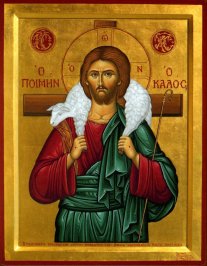
This portion of another pastor’s letter was passed on to us via our rector this week; it was written by Orthodox Bishop Irenei of London. I am comforted when our shepherds in Christ lead by their example of faith and love. I hope that you all have similar fortifying influences in your life, but if you can use one more good word on this topic…

The Church of Christ has endured through many centuries — in the course of which she has been confronted with countless illnesses and diseases, small and great — in solid faith and with peaceful hearts, each member of the Church knowing that he or she is part of no worldly or man-made institution, but the Harbour of Life that is Christ’s Body. We are fed the food not of men but of angels; we are inspired by the truth, not of this world, but of God Himself; and we are ruled, not by worldly fear which grows and begets more fear, but by the peace of Christ which surpasseth all understanding (Philippians 4.7) and brings unfailing comfort, whether in times of peace or peril. In the present moment, therefore, I urge you to be not afraid (Isaiah 43.1) nor let the concerns of the moment shake you from the firm foundation that is unhindered faith in the living God, Who heals the sick and restores the broken-hearted. The present situation may be a cause of great upset in the world around us, but in the Church, and in our Christian lives, we continue unhindered and undeterred in all that God has delivered into our hands for the salvation of our souls.

…local governments will be issuing various instructions and protocols for managing and controlling the spread and effects of this momentary health challenge: we urge all our faithful to be acquainted with these practical instructions…in all such things we should be examples to the world of pious trust in God that leads not to undisciplined alarm, but rather to a continuance of life in an untroubled spirit and undisturbed reliance on the Divine Will.

In our churches, we shall continue with the celebration of all our rites, customs, Divine Services and above all the offering and receipt of the Holy Mysteries in precisely the same manner as we have always done. No genuinely believing Christian can for one moment accept that the Holy Mysteries might bring or be the source of sickness or ill-health: by no means! The Mysteries of Christ are the true medicine of our souls and bodies, and bring nothing but life—and life eternal. Any whose hearts are troubled by present matters should pray fervently for an increase of faith so that fear can be cast aside; and the Church will continue her ancient witness to the love that is beyond fear, bringing the Holy Mysteries to the world, and to each of us, in a time when it needs them profoundly. Do not be afraid! As we sing so frequently in these Lenten days, God is with us! And He is merciful and loving, quick to hear and heal and save.

—With love in Christ,
IRENEI, Bishop of London and Western Europe (ROCOR)

Truth in a story of plague.

Only a few days ago I read, hastily as it turns out, a post on Fraise that got my attention because of what Mags wrote about Albert Camus:

Sartre accused Camus of expelling Christ from the front door of the house, only to let him in at the back. I think this sums up Camus’ respect for people of faith. But then Camus just respects all people, all the time, with all love and compassion. He certainly captures all the stages of illness and its accompanying fear that we’re experiencing now.

I don’t think I’d read any Camus since college, and maybe all I’d read was in high school French class, in French, which would mean I’d understood little at any level. But this made me want to read Camus for real. I continued in her post to read about Cyrano, and until this morning forgot that she was mentioning Camus because she had recently re-read his novel The Plague (La Peste – she read it in French.) Mostly what I retained was the phrase “love and compassion.”

Soon afterward I saw on Rod Dreher’s blog that he is hosting a sort of book club to read The Plague! So naturally I hopped on. I’ve been listening to the audio version while I wait for a used paperback to arrive. Dreher hopes to complete his website discussion within two weeks, so I may have to read everyone’s comments on his page later. I know I won’t go that fast. I have to work this book into my other Lenten reading, which is an unusual compendium this year!

I ran into my dear homeschooling friend Debbie in the store and told her I was starting The Plague; she laughed her delightful laugh and said, “Oh, Gretchen, you are reading that right now??”

Well, why not get some perspective on the current news? It has been very thought-provoking already, not far into the story, to compare the world today to that in which the story’s characters live and move. Camus in the first pages uses the word “modern” several times in describing them, and makes me curious to see how their story develops, and how their response to their epidemic might compare to that of us who are called “post-modern.”

One of the things that occurred to me immediately is something very much from the surface of the story, that our current “plague” is much nicer than the one whose graphically described, horrific symptoms spread through the town of Oran. I was a little worried about listening too close to bedtime, to the account of the rats coming into the streets to die their bloody deaths.

Please comment, if any of you have thought about this novel or have read it recently. (If you  have, you probably want to visit Dreher’s blog to see what goes on there.) I already noticed a few lines that I’d like to muse on when I have the print copy and can look longer at them. But until then, here is an idea I’ve thought about for a long time, but didn’t remember that the quote was from Albert Camus:

“Fiction is the lie through which we tell the truth.”

Providence and Photography

Long ago in Fantasyland, I thought my remodeling project might be done before Lent 2019. And again this year I thought so, but I had less hope than last year. 🙂

I hate to take the time to tell you properly why it’s not done, and how it makes me feel. But I will say that at worst, I feel like a homeless woman who for a year has been camping in an increasingly disorganized storage unit, who must still be presentable at 7:30 every morning to welcome visitors who are working on the place, very close to my bed and bathroom.

But I do have the loveliest bed, plenty of food to eat, and I have a bathroom. My wonderful house has windows through which sun often shines. I have hope of my affliction coming to an end. Millions of people in the world would love to experience my problem. Besides, God knows what I need, doesn’t He? He does. The last fifteen months have not gone the way I expected, but I can’t help but see, even with my bad spiritual eyesight, much good coming out of “everything,” and I’m not talking about my closet makeover.

The providence of God was crystal clear this week, when it’s the first week of Lent, and precisely for the first three days of this special week my project stalled; it wasn’t the first occasion when I could appreciate the timeliness of delay. Unlike most truly homeless people I have a car and could drive to church! I love to attend Matins and other services that are at 8:00 a.m. during Lent, and it’s not difficult during this season of my life when I can’t sleep past 5 or 6. And as often happens, when we have said the last “Amen,” I’m not eager to leave.

Today I lingered to straighten some of the new purple cloths on the icon stands. On Sunday a dozen of them had been quickly exchanged with the previous cloths of Pre-Lenten color — was it gold? — right in the middle of  Forgiveness Vespers, and a few were a little wonky. Then I went out and wandered in the church garden with my camera. I had already taken a couple of pictures on arrival, when the sun was barely up.

I went into the kitchen where Herman and Maria were just unloading their shopping bags of vegetables and clams and yummy things with which to make soup for tonight. We will have the first Presanctified Liturgy of Lent, and on Wednesday evenings we eat together afterward, a simple soup-salad-bread meal together, which people take turns cooking. I’m planning to prepare one of these midweek soups in April.

Before I could leave the parking lot I got a phone call from the painting contractor saying that they will finish this week, tomorrow and Friday. I had been prepared to wait much longer than that, but this seems perfect. One never knows what a day will bring — that is one way of describing the uncertainty, lack of routine, and waiting that has often been crazy-making in this last year.

But If I don’t have to wait here at the house, and I am physically able to take walks or go to church while I’m waiting, it’s not hard to be content. A thousand flowers decided that March 1st was a good day to bloom; there’s no denying that spring has sprung!