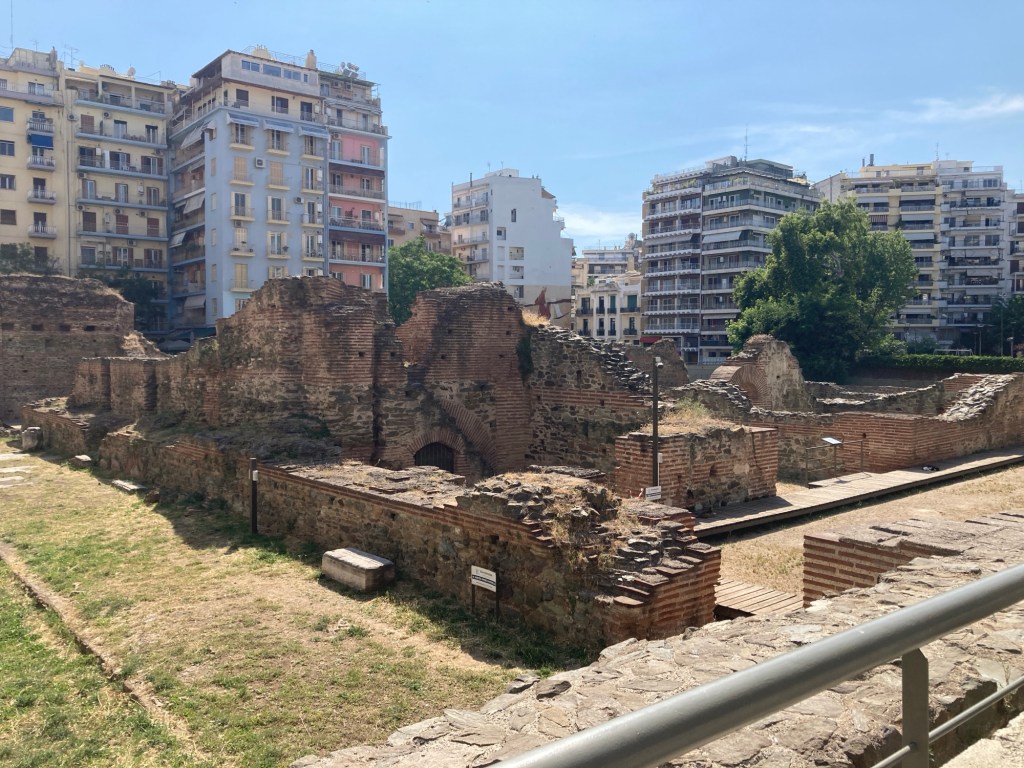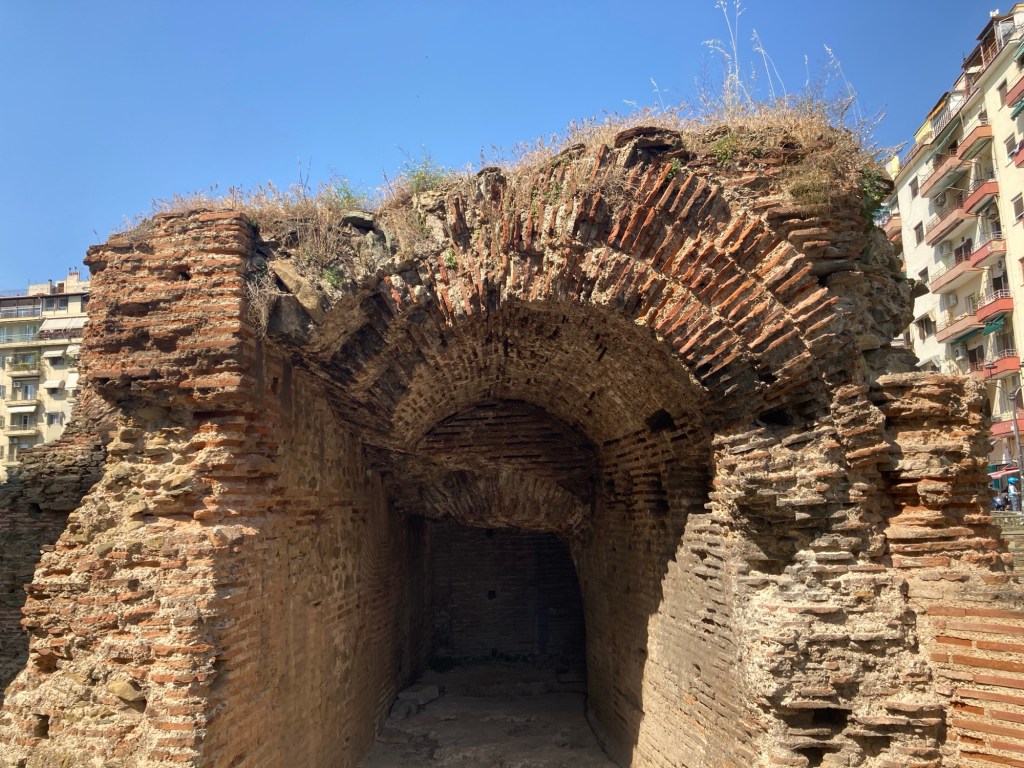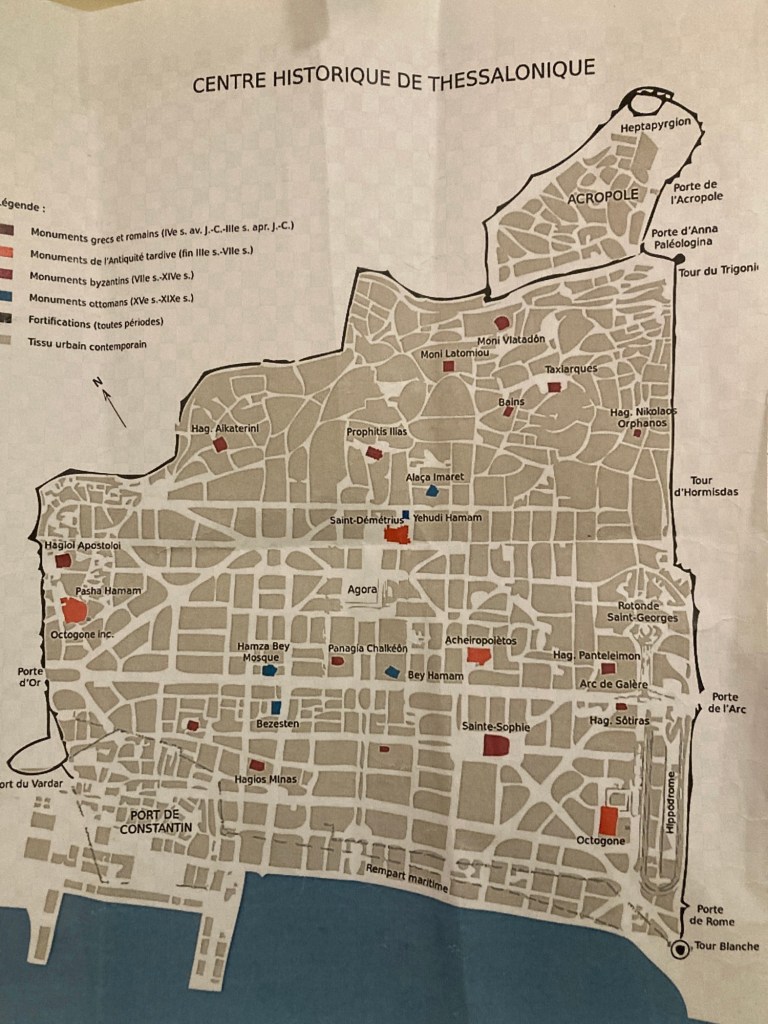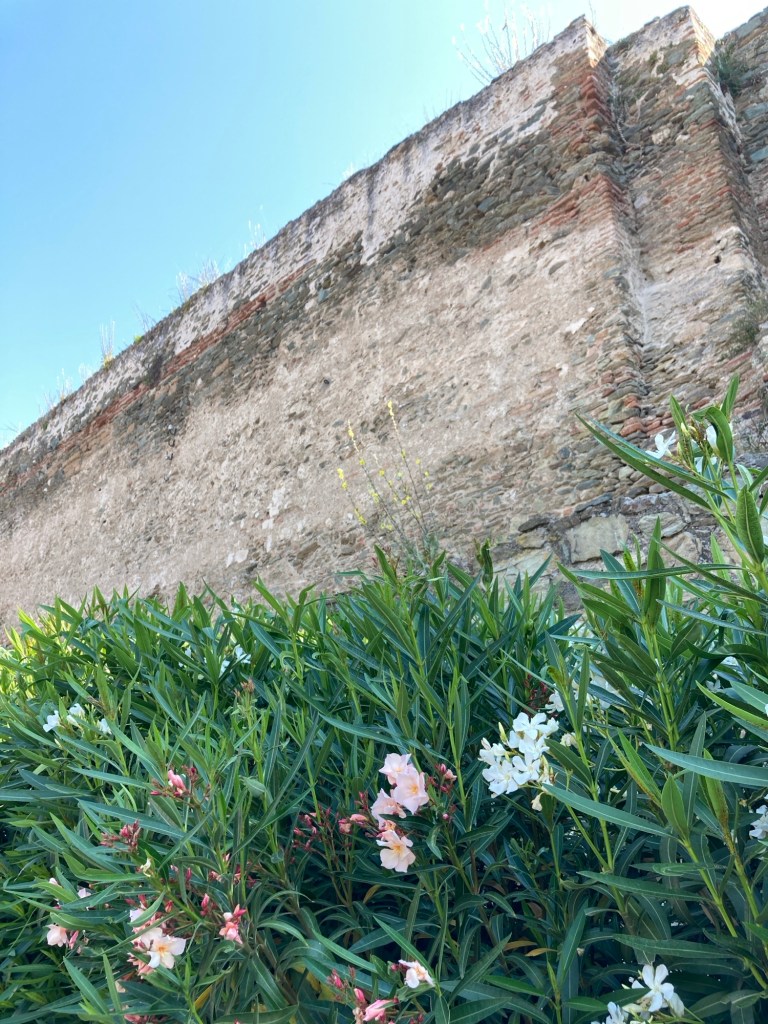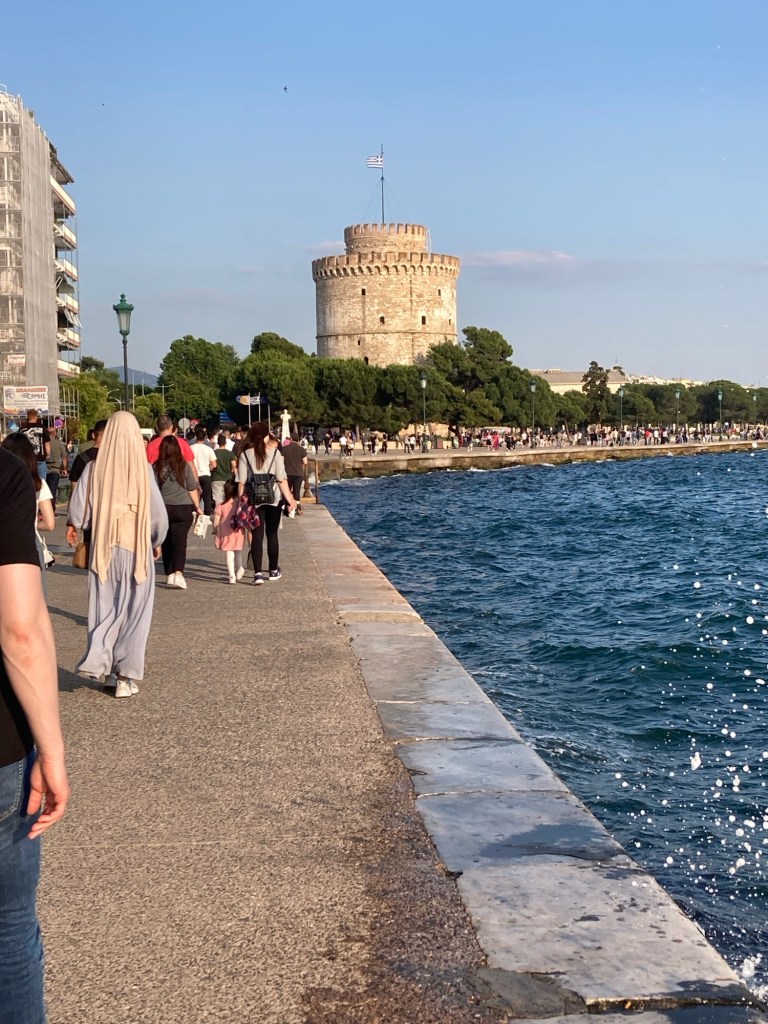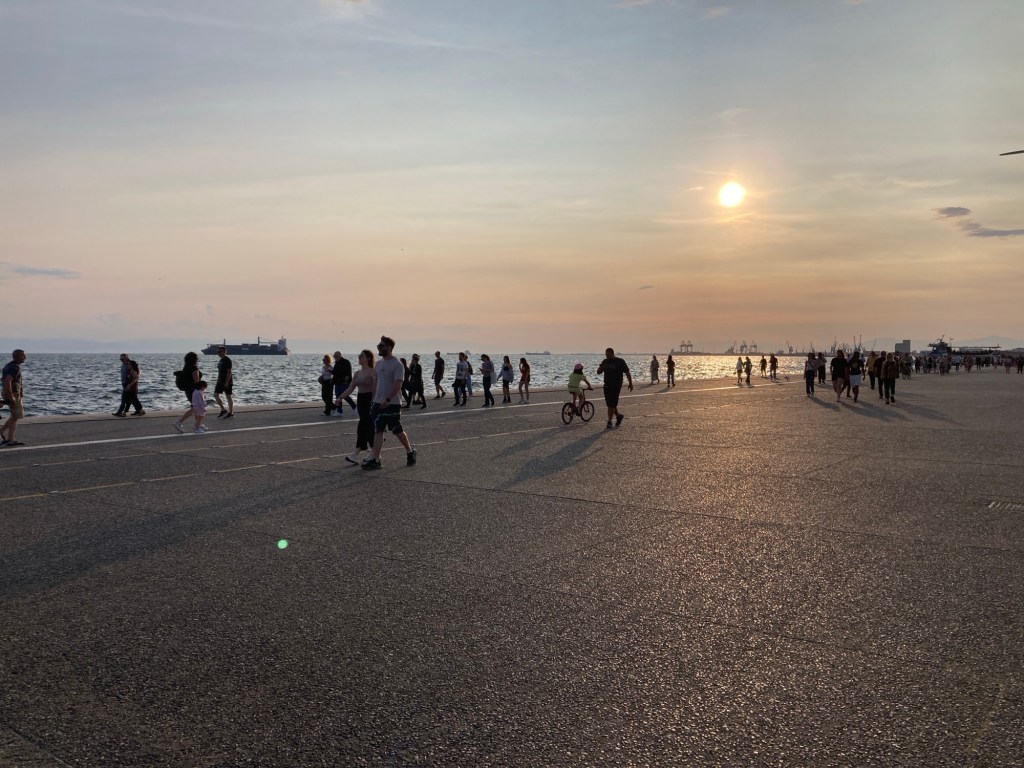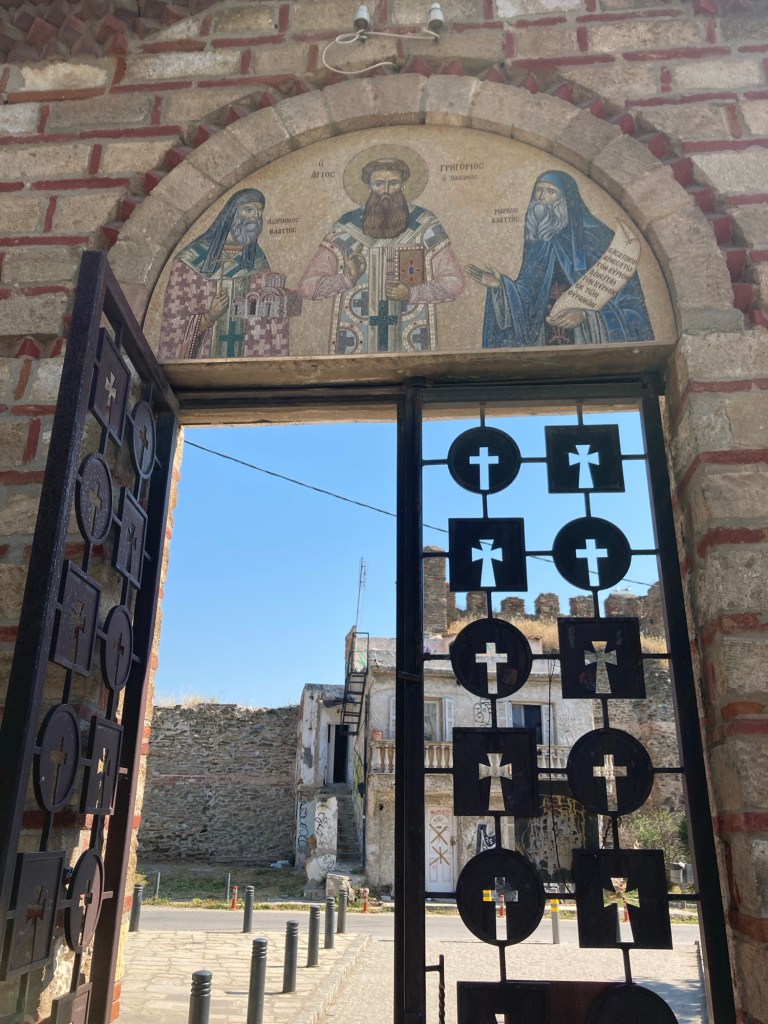
A birthday takes me to Greece.

At 6 a.m., about two months after the actual event to be celebrated, our party finally assembled over a lavish hotel breakfast buffet in Rafina, the port near Athens from which we were to take the early ferry to the Island of Paros.

We came from four towns in California, Wisconsin and Argentina, about a year after we’d last all been together at a wedding, which was when the others convinced me to engage with them in this project. I’m so thankful to God for having smoothed the way to making it a reality.

We are, besides the guest of honor, my daughters Pearl, Pippin and Kate, and my granddaughter Maggie. None of us had been to Greece before, but the idea for this particular spot on the globe began with the plans my late husband and I had made to visit Greece, which we had to abandon when he became too ill to go.

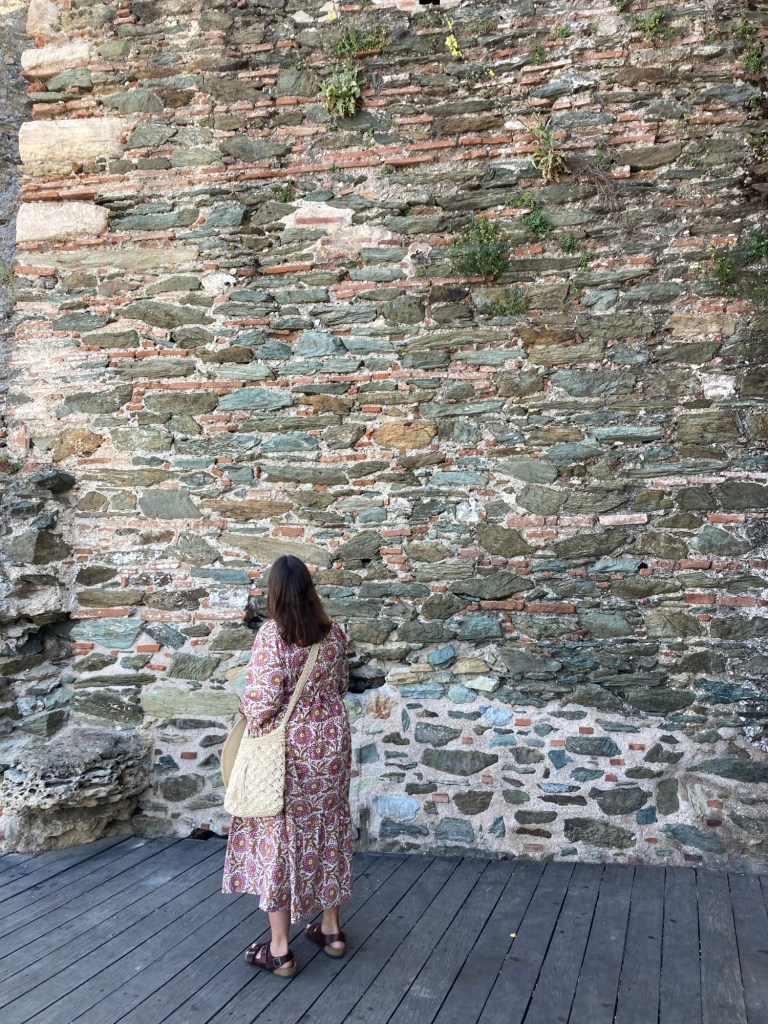
Our first day on the island we walked around the town of Naoussa, including its ruined Venetian castle, and ate lunch outdoors. A storm was brewing, and suddenly a gale of wind was blowing menus and napkins all over, and the wait staff wrestled with several umbrellas to keep them from toppling.

One broke anyway, with a big crack. We were just finishing our meal so we went strolling at that point.

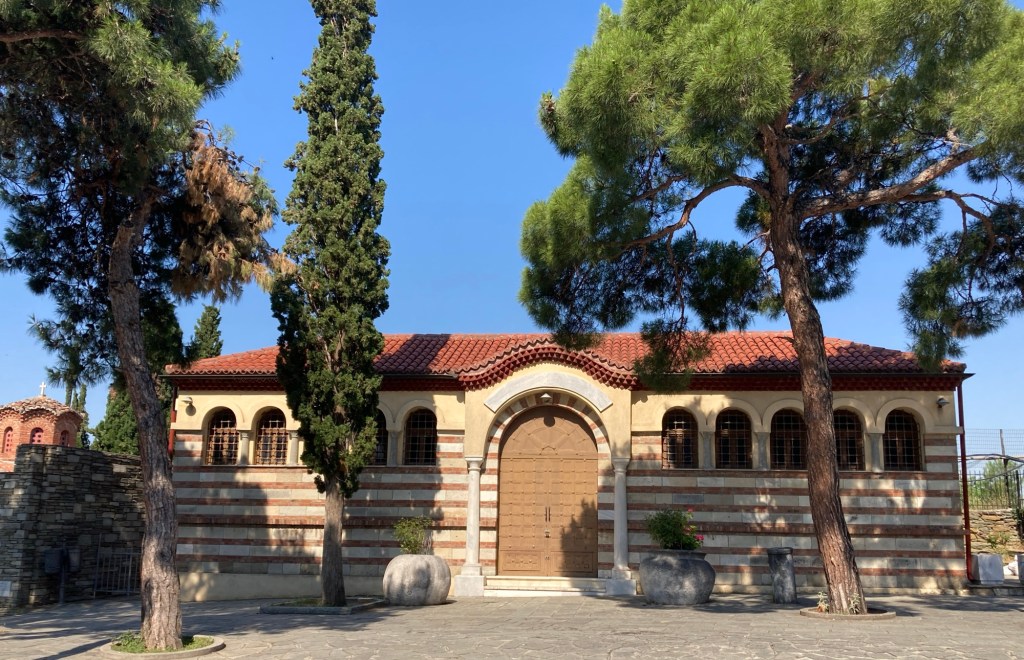
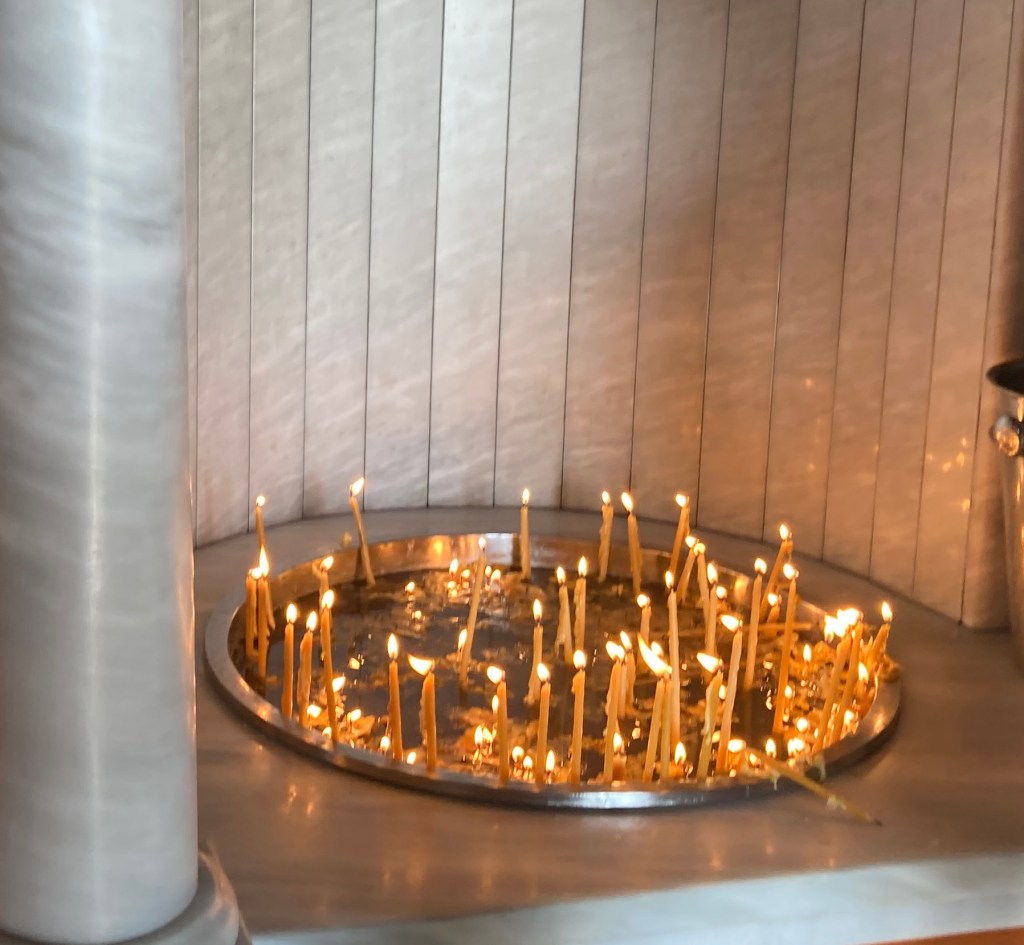
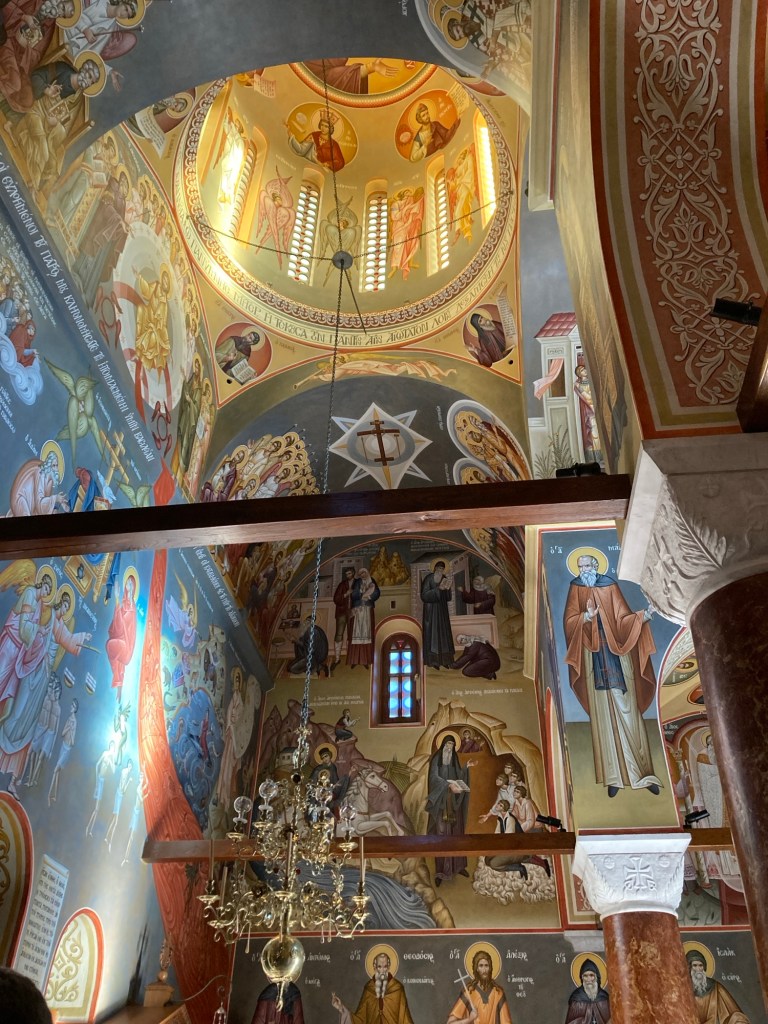
I was having intermittent feelings of having been recently awakened in the middle of a deep sleep, so I didn’t notice myself the several chapels and churches mixed in among the shops that we passed, but Kate pointed them out to me, and I went in and offered my sleepy prayers of thanksgiving. It did seem like a dream; were we really here?

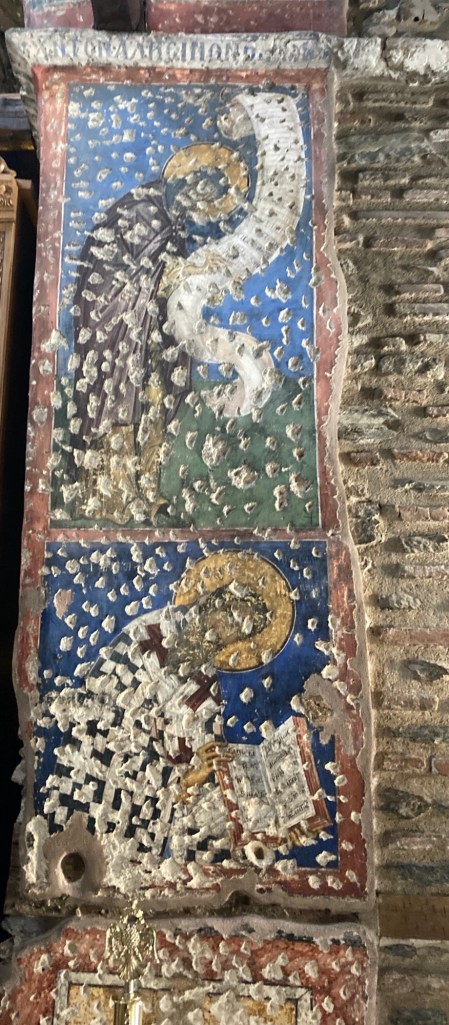
In St. Nicholas Chapel

Checking into the house we are renting for several days, I had to accept the truth that indeed we are here, and that “villa” is not too extravagant a name for this lodging. I keep thinking of the book The Enchanted April and the Italian castle-villa the four women took holiday in.

Soon I was wishing we also had wait staff, in particular someone like Domenico — though in our case he would likely be “Niko” — because after I got into bed something outside my room kept banging and knocking in the wind, and I would have liked him to secure it as those strong Greek men did the umbrellas.

Niko is not here, so I sailed off to sleep in spite of that noise, with my windows wide open to the rolling thunder and sound of rain on the patio. I snuggled down in a white room under my white coverlet, still a little disoriented but quite content.

Bees and good-byes.

Bee on yerba buena.

Good-byes not to you, Dear Readers, but to the beautiful friends that are the trees and flowers, bees and blooms of my garden, as I prepare to set out on my travels. Most of the days of the year I am home and can tend to their needs, even if it is often less than optimal care and attention I give. Now, in May, the most flowery and gorgeous of my local botanical world, to leave it all…

I keep reminding myself that it will be okay. There is an automatic irrigation system, there are friends and neighbors and landscapers and possibly even a daughter, to caretake in my absence. Yesterday morning it must have been God Who woke me up at 4:00 a.m. so that I found myself in the garden before the sun rose, and witnessed a leaky irrigation hose spraying against the pine tree instead of giving drink to the plants on down the line. I turned off the system and later on Trusty Alejandro was able to come and repair that, and another leak that he discovered by testing the whole system. If I hadn’t quite unusually been out to witness that (and to bathe in the heavenly and oh-so-earthly atmosphere at that time of day), it likely would have wasted that precious water several times a week, and many plants would have suffered before I got back. For anyone who is not aware of the fact, our summer season in California is typically rainless.

In my pre-trip melancholy I keep going out to peruse the little kingdom that God has made me a steward and a lover of, and I see new and amazing things every time. I also find more little weeds to pull, or yellowed leaves to pinch off. There will probably be dirty dishes in the sink when I depart, but I hope no spent irises or Iceland poppy stems standing tall and naked.

I was surprised by the blossoms on the yerba buena ground cover under the pine tree, though I know I’ve seen it in bloom before. The bees are crazy about those tiny flowers. I know the one photo of the bumblebee is blurry, but it was cute the way he was hugging the cup of nectar while drinking…

…or losing his head entirely in his delight:

Two sides of my garden have tall dodonaea or hopbushes providing a backdrop of ever-changing colors for the other plants, and a sort of screen that makes the garden more cozy. Right now a couple of the bushes have changed into their pink outfits.

Today the new Landscaper Dan is coming very belatedly to make a plan for things he might finish up while I’m gone. It gives me extra comfort to know that a person who appreciates the garden needs even more than I do will be paying attention. The area by the front door that we planted together in November makes me feel that I am in the middle of the prairie. Those droopy-petaled pink flowers are echinacea pallida. I’d tried growing them from seed several times without success, but Dan got three plants which have been very happy, and happy to bloom.

My arborist friend A. came and pruned the pineapple guava (feijoa) a few weeks ago. It is so big now, in its tenth year in the garden, and covered with those blooms that are so delicious to eat in themselves. I wish you could come over and have a taste.

I can’t stop swooning over the penstemon — that color!

Soon I plan to be back with stories while exploring in Greece,
but for now, God bless and keep you, Dear Garden!

I Have Started to Say

The last stanza of this poem brings to mind the advice to “Die before you die.” It has been attributed to Rumi and to C.S. Lewis, and I’ve heard Orthodox Christians echo the saying. St. Paul said, “I die daily,” and also, “I am crucified with Christ.” Whatever all these people meant, our final death we are definitely instructed to keep in mind, and as the poet says, “learn” something about it — though it’s not clear that he was numbering his days in the Christian fashion.

But it was the second stanza that caught my attention here, Larkin’s description of the disorienting effect of considering time and ageing. The images capture what I often feel.

I HAVE STARTED TO SAY

I have started to say
“A quarter of a century”
Or “thirty years back”
About my own life.

It makes me breathless
It’s like falling and recovering
In huge gesturing loops
Through an empty sky.

All that’s left to happen
Is some deaths (my own included).
Their order, and their manner,
Remain to be learnt.

-Philip Larkin

Philip Larkin, by Humphrey Ocean