Tag Archives: C.S. Lewis

Space is the womb of life.

G.K. Chesterton said he believed that…the most practical and important thing about a man is still his view of the universe.” (I can’t find the source for that quote; does anyone know it?)

[update: The quote is from Heretics, and in larger context it goes,

“There are some people, nevertheless — and I am one of them — who think that the most practical and important thing about a man is still his view of the universe. … We think that for a general about to fight an enemy, it is important to know the enemy’s numbers, but still more important to know the enemy’s philosophy. We think the question is not whether the theory of the cosmos affects matters, but whether in the long run, anything else affects them.”]

He would have liked this article I read in Touchstone magazine, “Lost in Space.” In it Michael Baruzzini compares the viewpoints of Carl Sagan and C.S. Lewis’s Space Trilogy character Elwin Ransom, and relates what modern astronomers have discovered about just how empty it is out there.

Ransom’s thoughts are quoted in the article, and they are appealing in their expression of what seems to me the nurturing and provision of the Creator:

 “…the very name ‘Space’ seemed a blasphemous libel for this empyrean ocean of radiance in which they swam. He could not call it ‘dead’; he felt life pouring into him from it every moment. How indeed should it be otherwise, since out of this ocean the worlds and all their life had come? He had thought it was barren: he saw now that it was the womb of worlds, whose blazing and innumerable offspring looked down nightly even upon the earth with so many eyes….”

Baruzzini: “Where Lewis had Ransom find a life-giving environment, Sagan found affirmation of man’s essential loneliness. While Sagan’s picture of space focused on the vast distances and vacuity of the heavens, Lewis’s character, eschewing the nihilism of modern sentiment, focused on the connections between the planets and space.

“Who was right? Is space really just a vast, empty void, as Sagan imagined? Or is the earth not rolling through emptiness, but floating in a cosmic sea of light and radiance, as Lewis envisioned?

“It turns out that Lewis was largely right.”

space240-small-magellanic-cloud_66026_600x450

“Without the astrophysical processes that power the stars, the very matter that makes up our bodies would not be here. Science writer Simon Singh points out that this means we are made of nuclear waste; Carl Sagan for once got it right, and poetically so, when he stated that this means we are made of star-dust. In either case, Lewis’s instinct is confirmed: Space is the womb of life; it creates the very matter from which life and its home on earth is made.”

Read the whole article here.

Linking up to Weekends With Chesterton.

What to read during Lent? Maybe Austen.

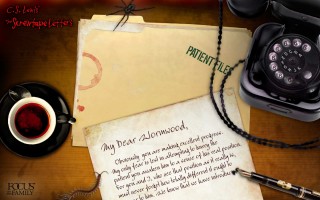
screwtape letters book old Some people who watch a lot of television are exhorted to turn off the tube and read something – anything – during Lent. I suppose the assumption is that if they are serious enough about their repentance to change their use of leisure time that drastically, they won’t waste the effort by taking up unedifying reading habits.
Our parish bookstore is full of titles obviously appropriate for the season, like the classic Great Lent by Protopresbyter Alexander Schmemann. And I know many people who read The Screwtape Letters by C.S. Lewis, because the senior devil’s instructions on how to keep a man in chains are so revealing of all the subtle sins we like to ignore or make excuses for.

screwtapes-desktop1 FOF

I didn’t get around to adding a Lent-specific book to my stacks this year, and I felt a little embarrassed about taking up a Jane Austen novel last week. If I had been more familiar with her books I might have known that there is plenty of material there for God to work with. But I blush to say that I hadn’t read one Austen book since high school.

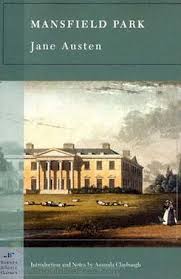
I don’t remember what it was the particular bloggers said, but more than one book review that came my way in the last few months made me think I would like Mansfield Park. Soldier and Joy gave it to me for my birthday, and here I am.

mansfield park

The introduction by Amanda Claybaugh quickly piqued my historical/philosophical interest, as she explained the context of the story (The French Revolution) and Austen’s metaphorical connections with lines like this:

“The theater thus functions in this novel as the art form of unbridled ambitions and abrogated duties, as the art form of revolution.”

Right there, lines from our lenten prayer of St. Ephrem come to mind, the ones referring to Lust of Power and Sloth. I couldn’t wait to get into the story itself, where I was immediately introduced to sinners as common as myself.

Mrs. Norris: “As far as walking, talking, and contriving reached, she was thoroughly benevolent, and nobody knew better how to dictate liberality to others, but her love of money was equal to her love of directing, and she knew quite as well how to save her own as to spend that of her friends.”

Have you known anyone like Mrs. Norris? I have. Not being a delegating kind of person, I don’t fall into that particular type of sin. Mine are perhaps more along the lines of the Miss Bertrams, whose “vanity was in such good order that they seemed to be quite free from it, and gave themselves no airs….”

It’s these sins of vanity and pride that we who look respectable on the outside seem most prone to — and that are often invisible to ourselves. Self-centeredness is my default setting, after all, and feels perfectly natural, so why should I even think of changing the setting for a minute, much less manage to leave it at a strange place on the dial?

The same could be said of Mrs. Norris, of whom the narrator tells us: “…perhaps she might so little know herself, as to walk home…in the happy belief of being the most liberal-minded sister and aunt in the world.”

It’s good to read something during Lent that warns me not to think highly of myself, not to think I am “spiritual.” Something that facilitates my efforts to join those happy/blessed ones who in the Gospel Beatitudes are called Poor in Spirit. It’s toward that end that we pray along with St. Ephrem the Syrian: “Grant me to see my own errors and not to judge my brother….”

How can I see my own errors, when the window of my soul is all dirty with various sins? Perhaps if I repent of what I do know, I will find the window a little less dirty, so that I can see more to repent of. I’m hoping that as I progress through Mansfield Park I will encounter more stunning examples of smudged windowpanes that with God’s grace I’ll recognize as similar to my own, and get on with the scrubbing.

I’ll tell you about the stars.


The stars made the biggest impression on me, this time at the mountain cabin by the lake, but not in the usual way.

Normally what strikes me at such a high elevation is the brightness, how the Milky Way is huge and obvious, and how even my weak eyes can see the Pleiades. But last week the moon stole the show with its competing lumens. I’ll have more to say about the stars later.

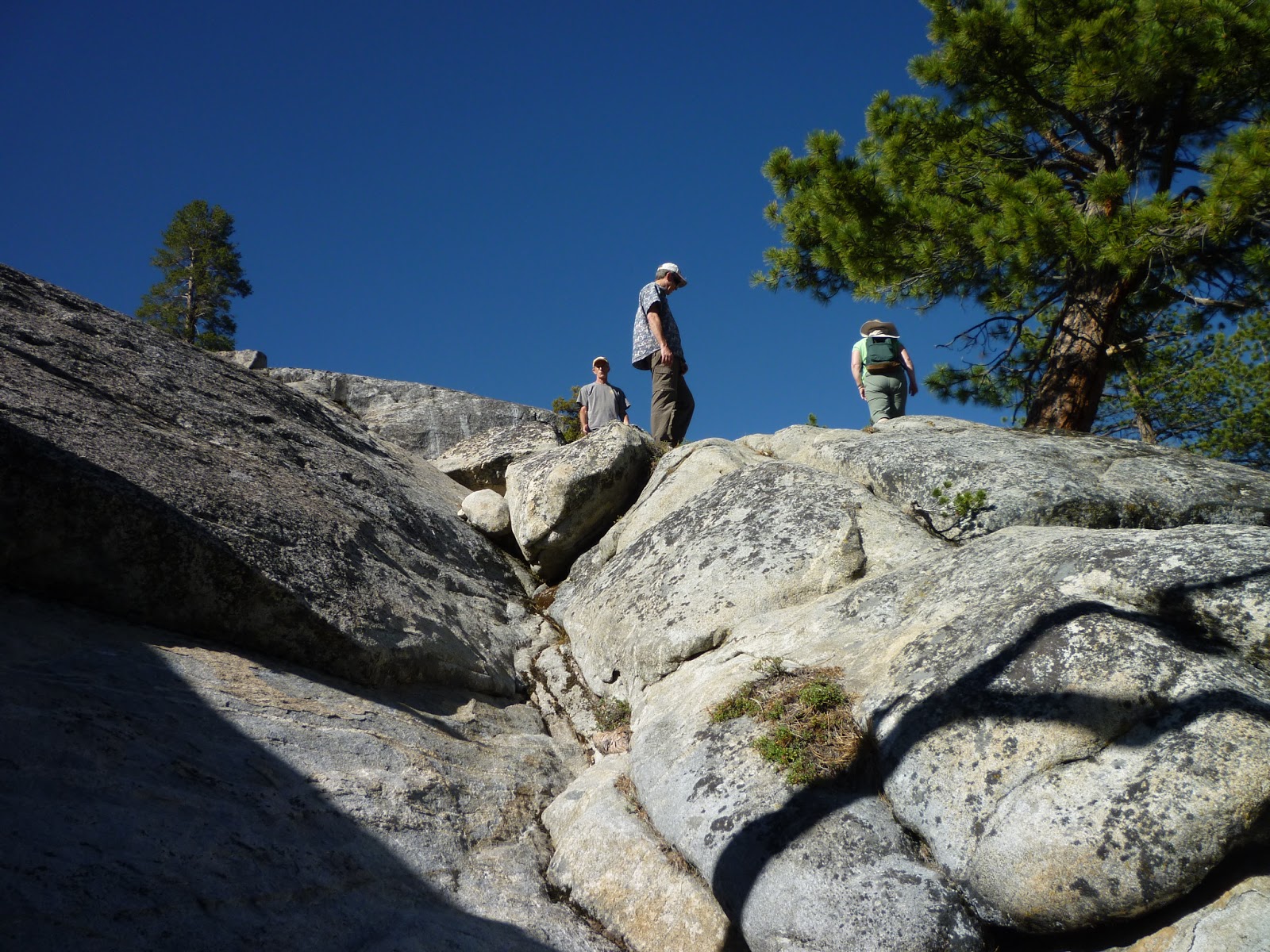
Just below the place that was too steep for my timidity…
Tall and Short climb Gumdrop.

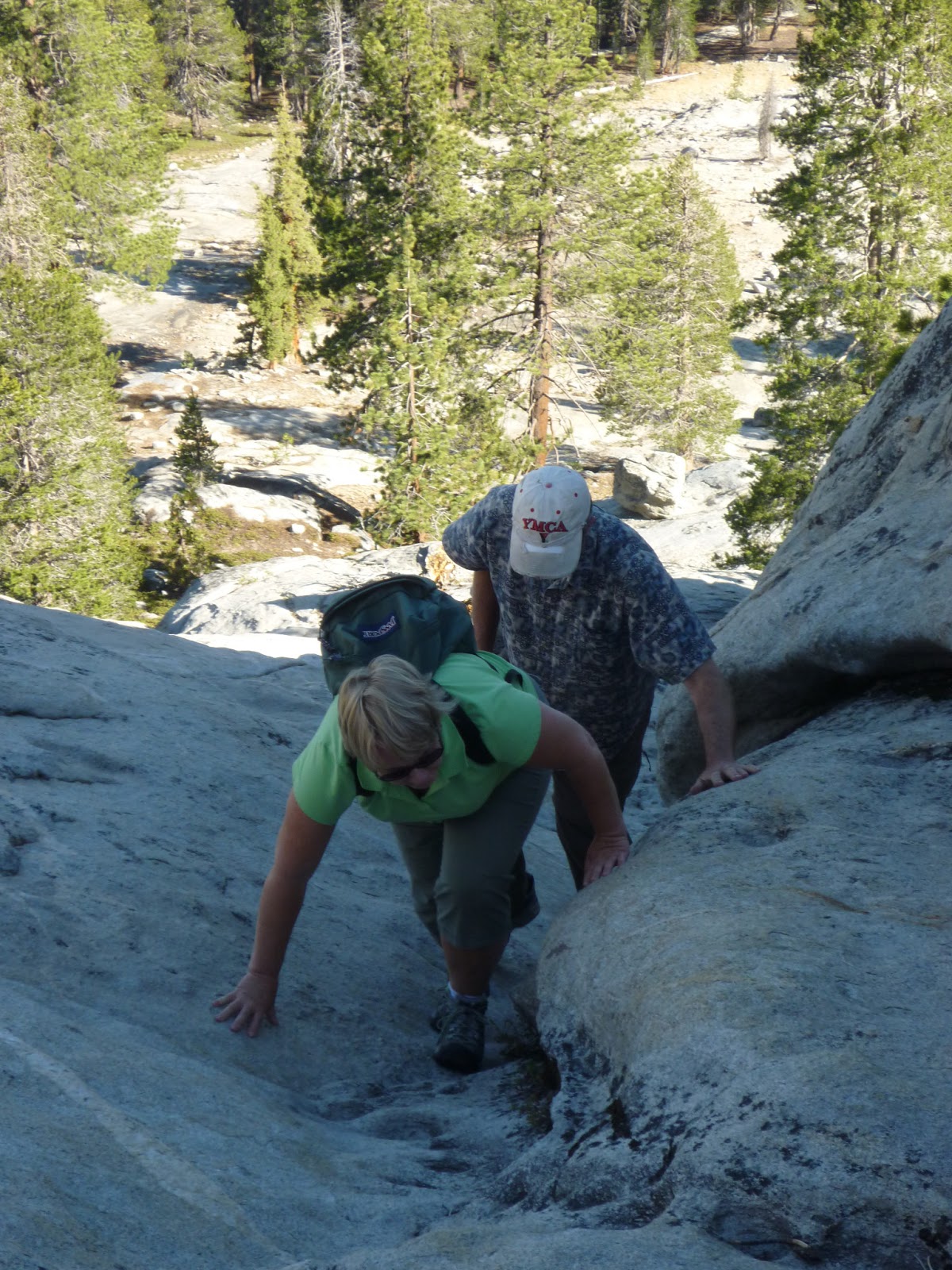
We had friends with us whom I’ll call Tall and Short. They are good sports and happy campers, very resourceful and cheerful when challenges arise. I will only tell you about the most fun challenge, of climbing Gumdrop Dome. I failed to surmount it for the third year in a row, and after I gave up I walked around the base to meet the others coming down the other side.

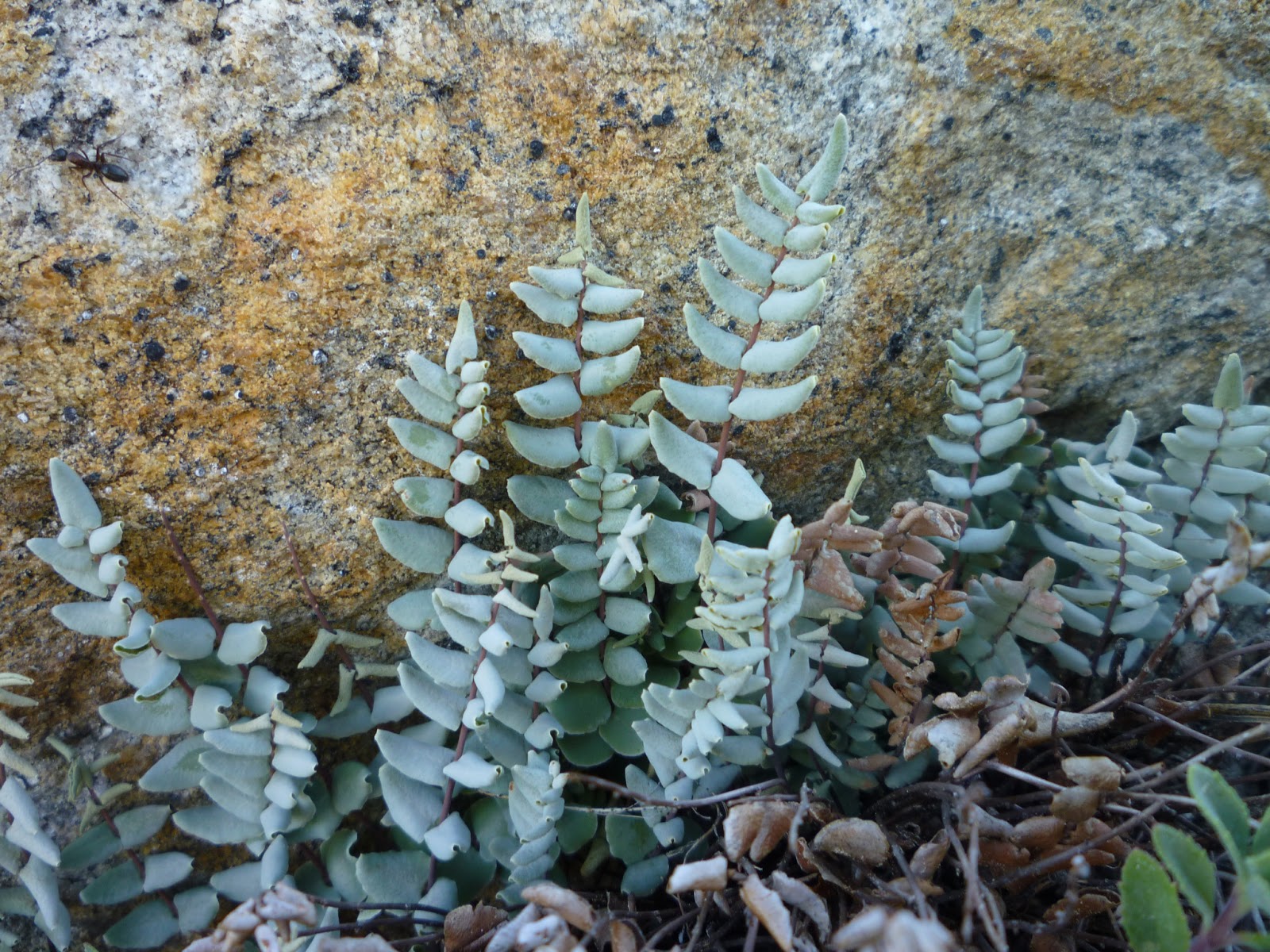
Of course I found a new plant on my walk, something that looks like a fern and a succulent at the same time, and was growing against a granite boulder, its “fronds” about as tall as my forefinger. I marked it with cairns above and below so that when my camera was returned to me I would be able to find this best of the specimens again.

I have no idea what it is, or how to start researching it. And I need to spend time on other things now, like making small dolls.

Seemingly tiny real people descend Gumdrop.

I took along on the trip my doll project that has been in the works for years without a single doll being born. (More than three years ago what slowed me down was stuffing-wool so dirty I couldn’t bear to tell its story, but that excuse is long expired.)

And while sitting on the cabin deck in the warm afternoons I completed three tiny dollies! I’ll post more photos of them when I have a bigger family to show. But it was a breakthrough that added to my contentment with a vacation that tried to scream “too short!”

More pleasant hours were spent paddling around the lake with my husband, while Mr. Tall fished and Mrs. Short sat on a rock nearby and knitted sweaters for her expected first grandchild.

Gumdrop Dome from the lake

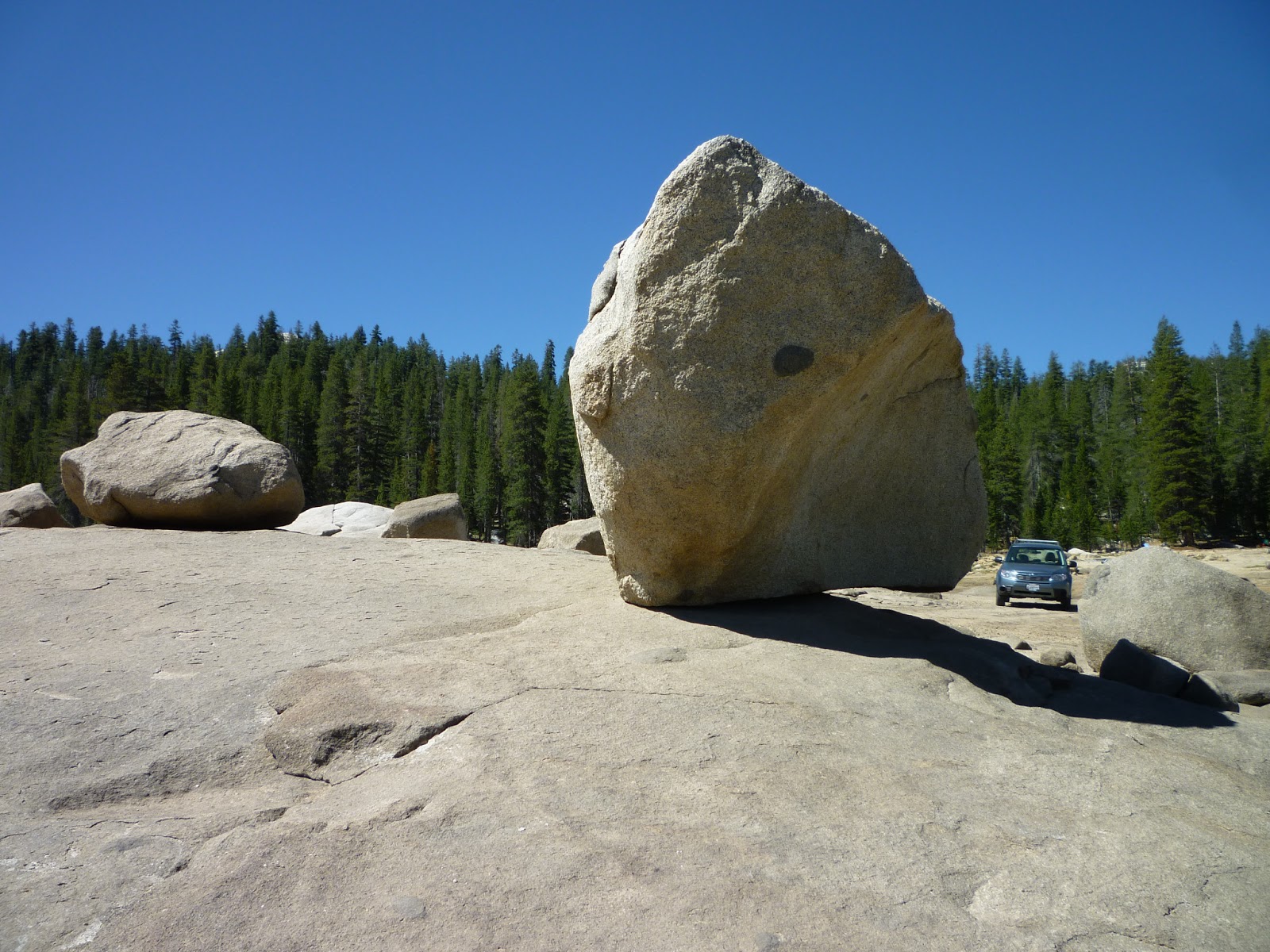
Many rocks are exposed that we normally prefer not to see. It was a year of little snow in the Sierras, so the lake is down. But it’s fun to drive out into the dry lake bed a ways and park in the midst of granite drama, as in the photo at top.

We can’t imagine that there is another Sierra lake that has so many granite domes and peaks encircling it. As we floated on the lake I studied the variously shaped rocks and tried to come up with names for them. Only one is named on the official maps, but I think they all are deserving.

This picture shows at least four hitherto unnamed domes. The one on the left I want to call Glad Peak, because Mr. Glad and Soldier climbed it one time. In the center of the photo are two domes side-by-side, whom I am calling He and She. Between those in this view is a peninsula that is in a normal year called Ant Island, and which we like to paddle to and around. But not this time….

It doesn’t matter if the snow pack was light, or if some trees have died, the sky is unchanged. But on the first night up there I completely forgot to go outside to greet the stars. The next day we all talked about how we must view them together that second night — but the sun sets so late, and half of our party was in bed before the other half of us remembered again. Then I forgot and put on my nightgown, and then remembered again. Almost dutifully I opened the slider, pulled the door shut behind me… and immediately felt myself in Deep Heaven, what C.S. Lewis wanted to name what we coldly term Space.

The stars crowded me, pressing their quietness down. I was alone, standing on the deck barefoot with the cool night air on my legs, but barely noticing the slight discomfort, because of the great company of beings so close — just me and them being familar, and me wondering. It would have been rude to leave after only a quick glance, and besides, they were telling me something.

I walked slowly around in the dark, annoyed by the light from the lamp inside, which I tried to keep behind me. Not a human sound could be heard, not even an animal sound. It was the kind of quietness that is roaring — but with what? I couldn’t pin down what it was, so I stood and listened. The host of heaven with weighty silence conveyed the presence of The Holy, and it was almost too exhilarating, that close to bedtime.

Eventually I had to go inside and climb under the covers. But my exciting encounter with the stars changed me in this way: Years ago I did make solitary mountain retreats here at the cabin, for several days at a time, but I haven’t felt up to doing that again. Now that the feeling has been revived in me, of being alone and at the same time the opposite of lonely, I am hungry for more of it, I want long days and nights of it, and I plan to return in September. I think those stars are angels.

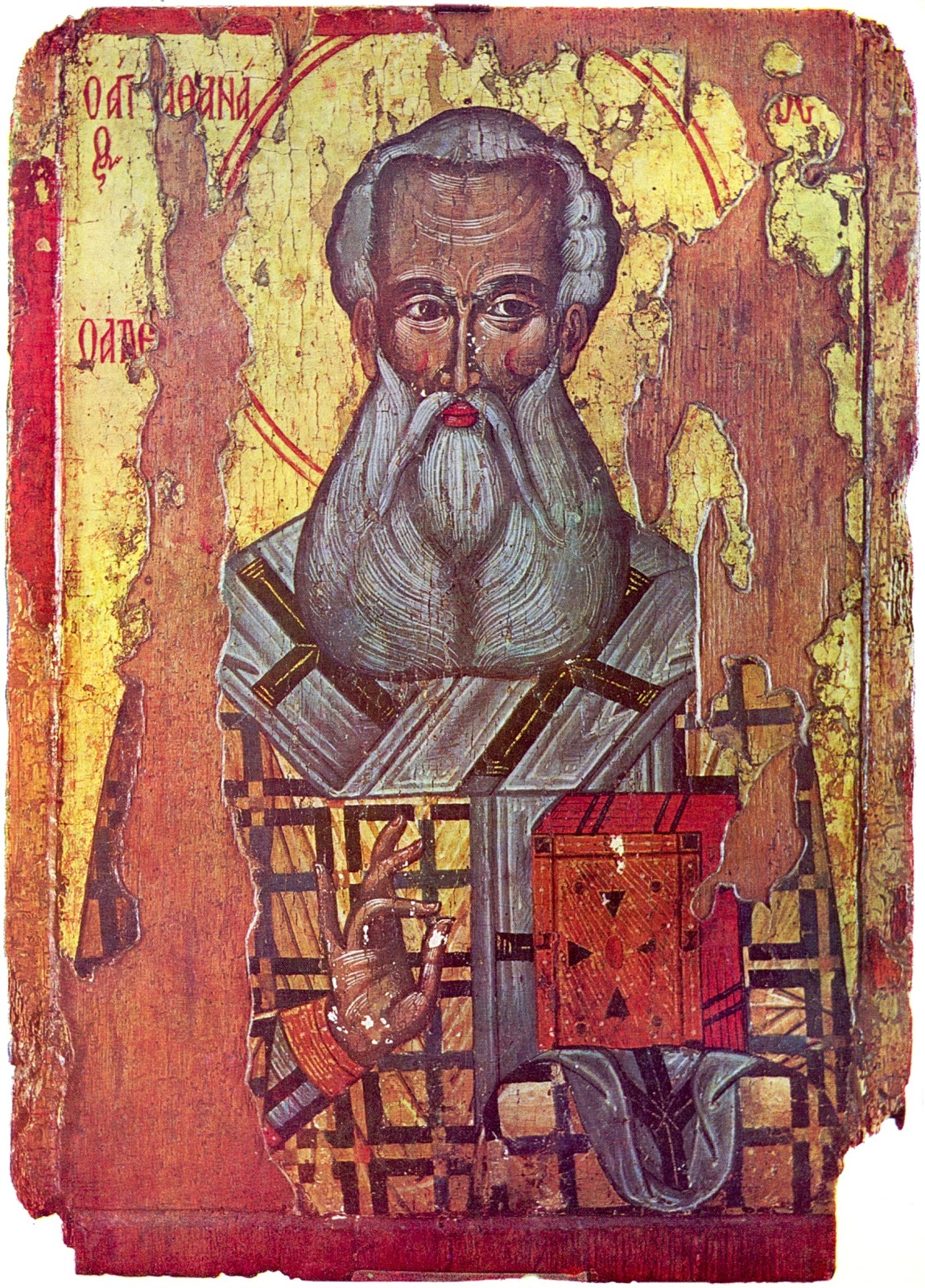
Athanasius – the heart sings

I must have read C.S. Lewis’s introduction to St. Athanasius’s On the Incarnation twice before in an attempt on the whole book, without getting much beyond it, but on this third try I have kept going. It seemed a fitting little paperback to read during Advent.

In the introduction we have an instance of Lewis’s exhorting us to read more of the Old Books, like this one from the 4th century, though we are timid: “The student is half afraid to meet one of the great philosophers face to face. He feels himself inadequate and thinks he will not understand him. But if he only knew, the great man, just because of his greatness, is much more intelligible than his modern commentator.”

And Lewis also writes here about devotional vs. doctrinal works, On the Incarnation being one of the latter, that he finds the doctrinal books often “more helpful in devotion” than the expressly devotional ones. I can relate to his description of people who “find that the heart sings unbidden while they are working their way through a tough bit of theology with a pipe in their teeth and a pencil in their hand.”

Actually I don’t know about the pipe in the teeth, but I always have a pencil in my hand as I lie in bed with my book of theology or literature or whatever. And I marked some passages from St. Athanasius to share in this season when we focus on God With Us.

You must understand why it is that the Word of the Father, so great and so high, has been made manifest in bodily form. He has not assumed a body as proper to his own nature, far from it, for as the Word He is without body. He has been manifested in a human body for this reason only, out of the love and goodness of His Father, for the salvation of us men. We will begin, then, with the creation of the world and with God its Maker, for the first fact that you must grasp is this: the renewal of creation has been wrought by the Self-same Word Who made it in the beginning. There is thus no inconsistency between creation and salvation; for the One Father has employed the same Agent for both works, effecting the salvation of the world through the same Word Who made it in the beginning.