
I don’t think I’ve ever been so sad to leave my High Sierra retreat, to come down from a truly mountaintop experience — and return to too-muchness. It was my longest ever stay up there at our family’s cabin, and no one else with me for any of the ten days, though I did chat with several other owners of cabins in the little community when I met them on my walks. Many of them were packing up their goods and closing their cabins until next summer.
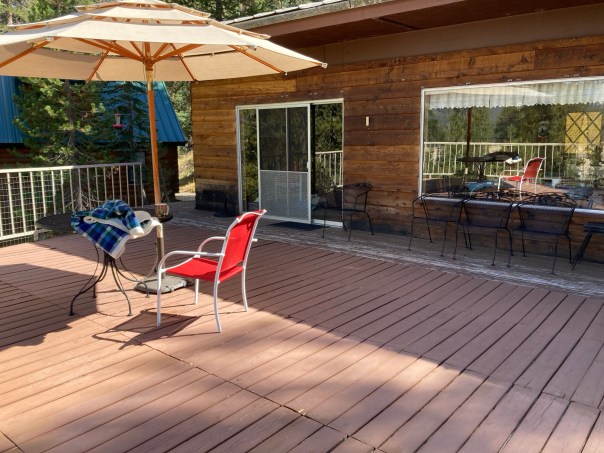
The solitude was true, in the absence of my usual social interactions via blogging and such; I did without the “news” or even uplifting articles online. Authors of print books I did engage with while I read, and it felt good to sink deeply into those books, and to spend time on other contemplative activities. I liked to sit on the deck to read, with the sun at my back and a blanket on my 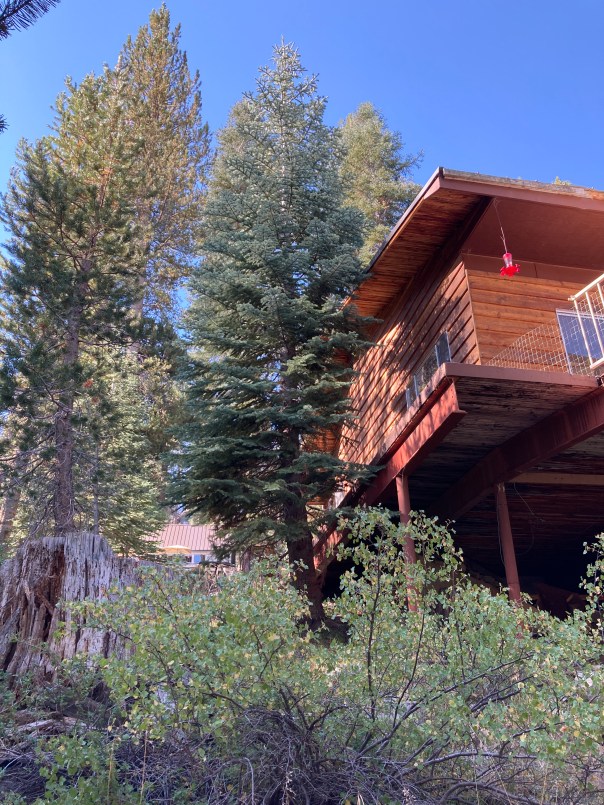 lap.
lap.
There was enough housework to satisfy my love of housekeeping. I always put a lot of thought beforehand into what food to take along, because it needs to last the whole time; if something is missing I’d rather make do without it than drive what would end up being a three-hour round trip to the nearest town.
I knew that the provisions I brought would be more than plenty, but I didn’t try to plan menus beforehand, because when I’m only feeding myself that is too much trouble. Also, I’ve found from experience on camping trips espeically, that when my mind is freed of a hundred distracting bits of business, I like taking time over the Coleman stove or in the cabin kitchen to be creative with the limited ingredients on hand. One thing I made was Greek Roasted Lemon Potatoes.

 My last day at the lake, I made a delicious soup to use up bits of vegetables and leftovers, and put most of it into the freezer compartment of our little propane refrigerator. That gave me two more mini-blocks of ice to help keep other perishables cold on the drive home.
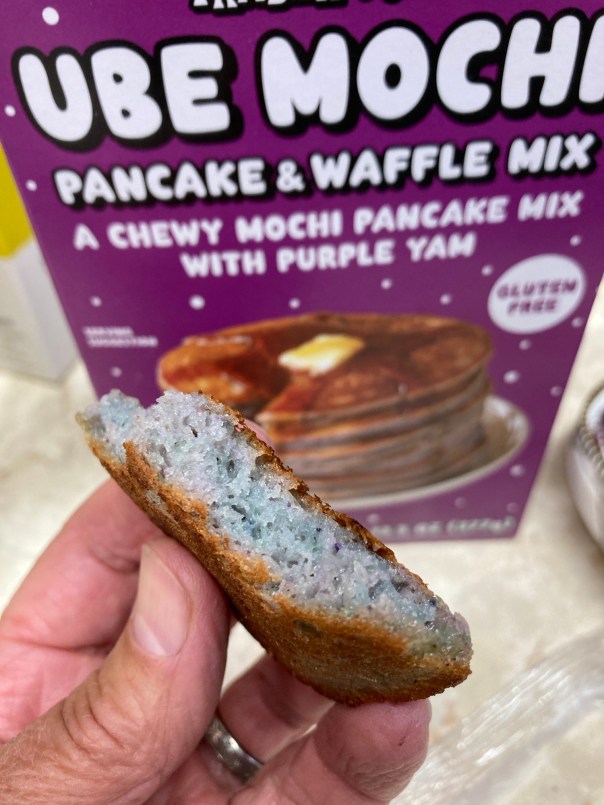
I had brought supplies for times when creativity was lacking: like this mix I’d had in my cupboards at home for months, without opening it. In the cabin on a chilly morning, purple yam pancakes turned out to be just what I desired.
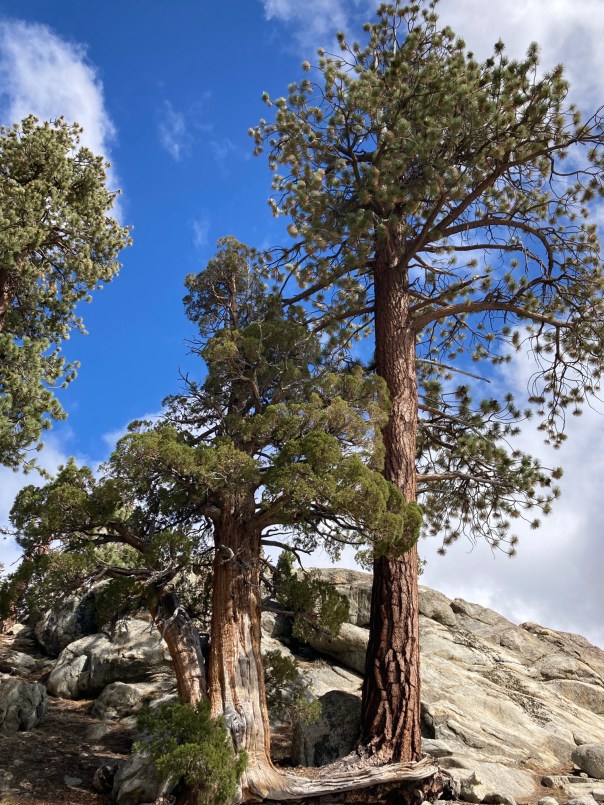
Up on the dome, I greeted my favorite familiar trees. I asked them to bless me to return another year to be with them once more. Every time I am up there I think, How can this be, that I am given such a priceless gift, to be in a remote and lofty place, having sweet and solitary fellowship with God and His sublime creatures and vistas? One of these visits will be the last one….

The weather had turned cold the night before my dome walk, with the temps dropping into the 20’s, but the sun broke through the clouds soon enough that I was able to linger a while and eat my lunch, though I wished for a wool layer under my sun hat.
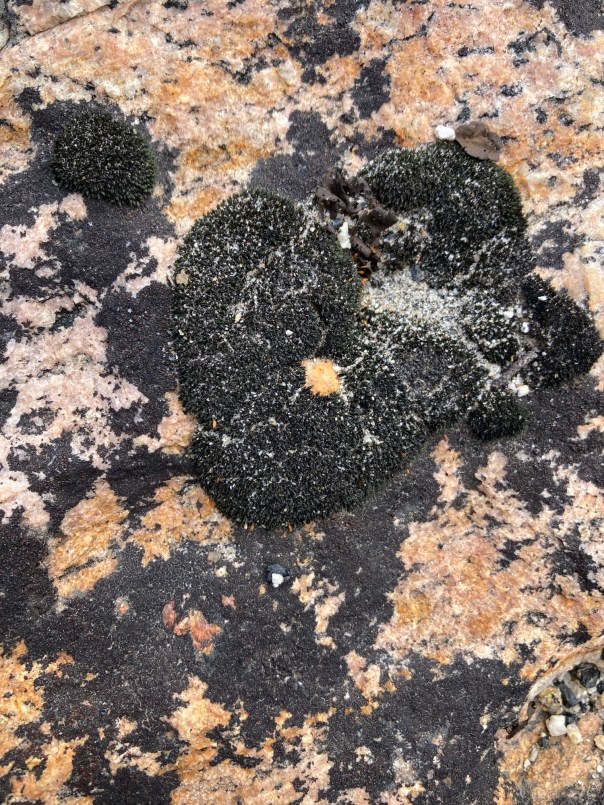
At one steep place, I snugged into the granite slope more closely, and found myself a few inches away from this dense and furry black stuff that I guess is lichen…? Or is it a different thing from the flatter, blacker lichen under it? Maybe my daughter Pippin will jump in here and tell us — likely she already told me, and recently. It had a tiny yellow lichen growing in its middle. Imagine these rocks and lichens and succulents under a thick blanket of snow, all winter long…. but then they will be right there next year when I return, may it please God that I do.
 Gladsome Lights