Tag Archives: darkness

What Tess did write about.

WINTER SOLSTICE

I will not write about Christmas lights garlanding the tree,
how steadily red blends to sapphire  emerald  gold,
how strong the little bulbs must be to throw their dancing hearts
upon the café wall, how children try to catch them.
I will not say there is tinsel draped about the branches
like seaweed over pebbles, nor paint the cloths swaddling our skins
apricot, indigo, violet, teal. I will not speak of glazed
pastries on the counter, how they shine so much
they could be varnished, there for the hell-of-it, for the sheer
beauty of their glistening berries. I’ll turn away from buses heaving
down the rush-hour road, ignore how in all this rain
the headlamps could be tumbling garnets, polished amber,
as if a picture-book box of pirate treasure had spilt its pearls
and precious stones across a tarmacked page.

I will not describe how the sun becomes the sea, I will not delight
in words to name its colours – cerise, crimson, indigo,
scarlet, madder, rose. I will not try to find a way
to show your smile across the table, how it slips like warm charcoal
into the fabric of my heart. I will not suggest I light a candle
as the year prepares to wane, that you hold a second wick to mine
then another and another, that together we whisper a prayer
for each growing flame. I will not talk about the light
that is everywhere, how far you have to travel for the sky
to be completely black (and even then there are stars, there is the moon’s
borrowed brightness). I will not question why fire burns more fiercely  
before sputtering out, or how – when we know we’re dying –
we can be so fully alive. I will not say these things because this
is a poem about darkness. I am writing about the darkness.

-Tess Jolly

Pippin photo

The darkness keeps its appointment.

LAMPS

Eight o’clock, no later
You light the lamps,

The big one by the large window,
The small one on your desk.

They are not to see by—
It’s still twilight out over the sand,

The scrub oaks and cranberries.
Even the small birds have not settled

For sleep yet, out of the reach
Of prowling foxes. No,

You light the lamps because
You are alone in your small house

And the wicks sputtering gold
Are like two visitors with good stories

They will tell slowly, in soft voices,
While the air outside turns quietly

A grainy and luminous blue.
You wish it would never change—

But of course the darkness keeps
Its appointment. Each evening,

An inscrutable presence, it has the final word
Outside every door.

-Mary Oliver


A quiet light to himself.

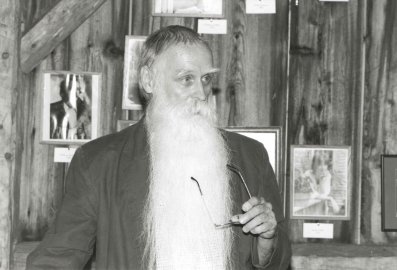
Donald Sheehan

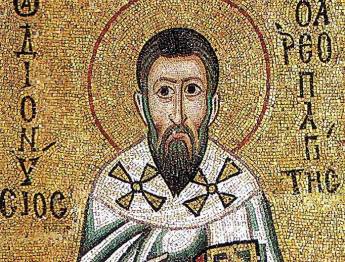
Some years ago Donald Sheehan’s widow Xenia shared on social media an excerpt from his book The Grace of Incorruption, a passage in which he links Robert Frost with St. Dionysius. She published it on the saint’s feast day in October, along with his icon below, but for re-posting Sheehan’s thoughts I have chosen today’s date, on which Robert Frost breathed his last, an appropriately wintry day in 1963. Xenia Sheehan: 

This day the Orthodox Church celebrates St. Dionysius the Areopagite, 1st (or possibly 5th)-century poet of “Mystical Theology,” whom Donald Sheehan uniquely compares to American poet Robert Frost in his “deliberate turning out of all the lights of false knowing . . . in order to behold — in Dionysius’ astonishing words — ‘that darkness concealed from all the light among beings.'”

Don writes in The Grace of Incorruption that,

“…in order to know the personhood of another, we must unknow both the persona and the personality: we must let these lights go out. Again and again, in his finest poems, Robert Frost accomplishes precisely this unknowing, the deliberate extinguishing of all the false light, and a welcoming-in of the darkness in which true personhood can shine forth. And true personhood is, always, genuinely beautiful.

“I think what moves us so deeply about the poem ‘An Old Man’s Winter Night’ is Frost’s evocation of genuine personhood in the old man. The old man in Frost’s poem is not a persona nor a personality; he is, genuinely, a person. And as the lights go out in the poem, the more beautifully and movingly his personhood emerges. One vivid detail: when the log in the stove shifts with a jolt, we, too, are jolted into a deeper intimacy with the old man, an intimacy that gains in power because of the darkness.”

-Donald Sheehan

Text and icon from Donald’s widow Xenia Sheehan in 2018

AN OLD MAN’S WINTER NIGHT

All out-of-doors looked darkly in at him
Through the thin frost, almost in separate stars,
That gathers on the pane in empty rooms.
What kept his eyes from giving back the gaze
Was the lamp tilted near them in his hand.
What kept him from remembering what it was
That brought him to that creaking room was age.
He stood with barrels round him—at a loss.
And having scared the cellar under him
In clomping there, he scared it once again
In clomping off;—and scared the outer night,
Which has its sounds, familiar, like the roar
Of trees and crack of branches, common things,
But nothing so like beating on a box.
A light he was to no one but himself
Where now he sat, concerned with he knew what,
A quiet light, and then not even that.
He consigned to the moon,—such as she was,
So late-arising,—to the broken moon
As better than the sun in any case
For such a charge, his snow upon the roof,
His icicles along the wall to keep;
And slept. The log that shifted with a jolt
Once in the stove, disturbed him and he shifted,
And eased his heavy breathing, but still slept.
One aged man—one man—can’t fill a house,
A farm, a countryside, or if he can,
It’s thus he does it of a winter night.

-Robert Frost

Robert Frost

Night and death had been poured out.

…night possessed us and the shadow of death encompassed us, for we had fallen into sin and lost the power of sight which was ours by God’s grace, and by which we were able to perceive the light that bestows true life. Night and death had been poured out on our human nature, not because of any change in the true light, but because we had turned aside and no longer had any inclination towards the life-bearing light. In the last times, however, the Giver of eternal light and Source of true life has had mercy upon us.

-St. Gregory Palamas