 |
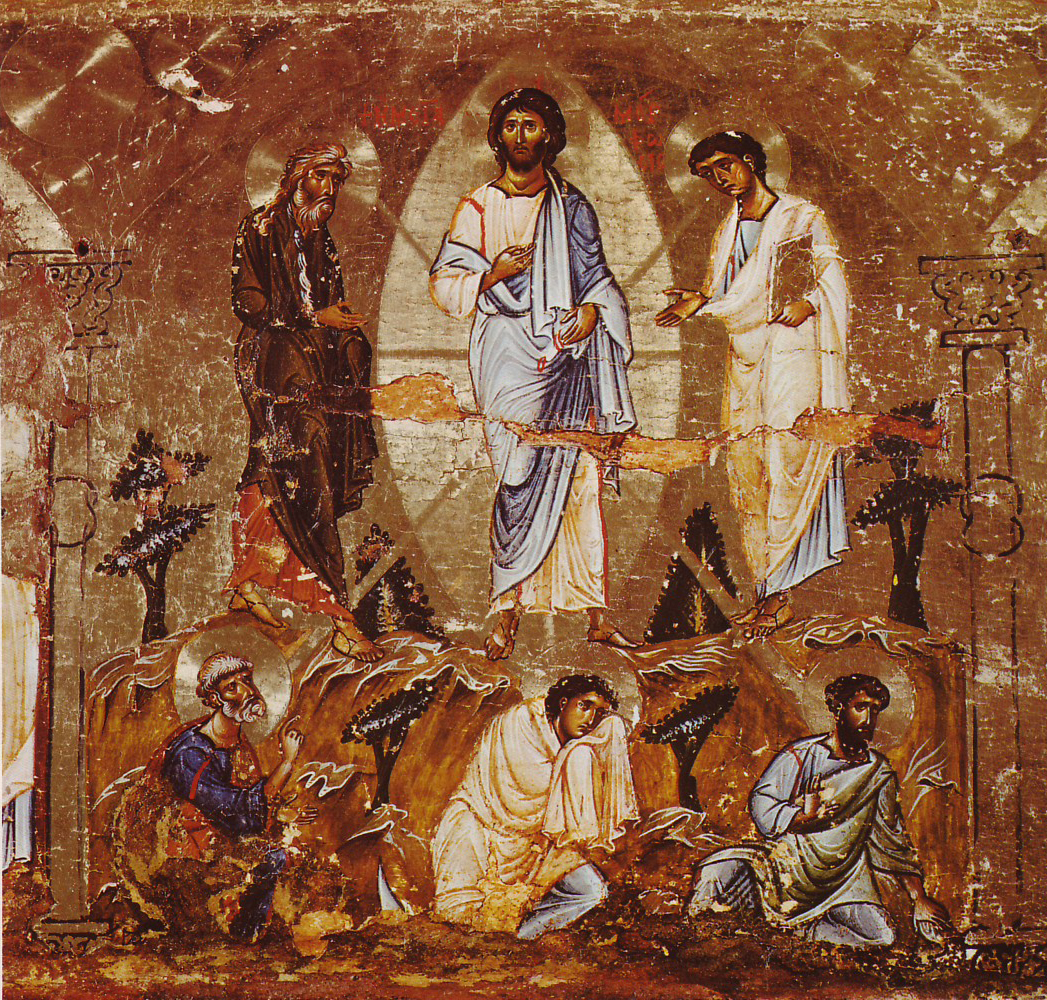
| Icon of the Transfiguration, Sinai, 12th century |
It’s been four years since I first posted these thoughts on the Feast of the Transfiguration, and I’m finding them worth considering afresh. May He Who is the Radiance of the Father shine on and in us.
Light and Love
St. Macarius of Optina:None of your suffering has come by chance. Nothing can happen to us without our Lord’s consent; and His consent is not only wise but always dictated by His love of us. Carefully examine your conscience and your life, and I am sure you will understand what I mean. Sorrow weighs you down? Never mind. The grateful heart, humble and wise – the heart which has become grateful, humble, and wise – will be greatly consoled and blessed with serene joy.
As I was looking for an icon of this feast, I ran across a phrase “transfiguration of suffering,” and I realized that–of course–these thoughts are connected. As I have heard regarding Orthodox theology from the beginning, it’s difficult to put it into a systematic theology, because “everything is connected to everything else.” God won’t be boxed into our human and finite categories.
 Just as Christ was revealed in all his glory, as much as the disciples could bear, that is, so every Christian has the potential to shine with the light of the Holy Spirit. Suffering can be used as a tool to accomplish this, as we see in the lives of many of God’s people. One person who comes to mind is Father Arseny, whose life of suffering in the last century one can read in two books of firsthand accounts. Reading about him, I caught a vision of what it might mean to be truly a Christian, a “little Christ.” There is a short review of the books about him here.
I have little suffering to bear, but if I do accept it with thanksgiving and patience, it might make me more able to show forth His light and love. This is a good thing to keep in mind and heart for the Feast.
 Gladsome Lights