I’ve never met a child whose physique brought to mind the form of a mushroom. For that reason only, and for years, I’ve delayed posting this provocative quote. Now I’ve pretty much gotten over my shock and am no longer embarrassed on behalf of the dear man who had no children of his own, but seems rather in awe of them, and charmed.
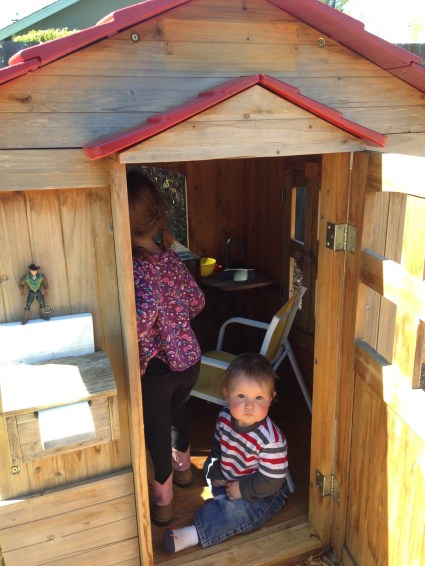
 Also, I gave up trying to find a picture of one of my family when a child, with a head that I would call bulbous. It might be that the word was more neutral in tone at the beginning of the last century. But I imagine that the poet and artist also delighted in how the toddler’s proportions were just the reverse of his, whose body was quite oversized relative to its head.
ON THE SEVENTH DAY OF CREATION
“The most unfathomable schools and sages have never attained to the gravity which dwells in the eyes of a baby of three months old. It is the gravity of astonishment at the universe, and astonishment at the universe is not mysticism, but a transcendent common-sense. The fascination of children lies in this: that with each of them all things are remade, and the universe is put again upon its trial.
As we walk the streets and see below us those delightful bulbous heads, three times too big for the body, which mark these human mushrooms, we ought always primarily to remember that within every one of these heads there is a new universe, as new as it was on the seventh day of creation. In each of those orbs there is a new system of stars, new grass, new cities, a new sea.”
—G.K. Chesterton, The Defendant (1901)

 Gladsome Lights
