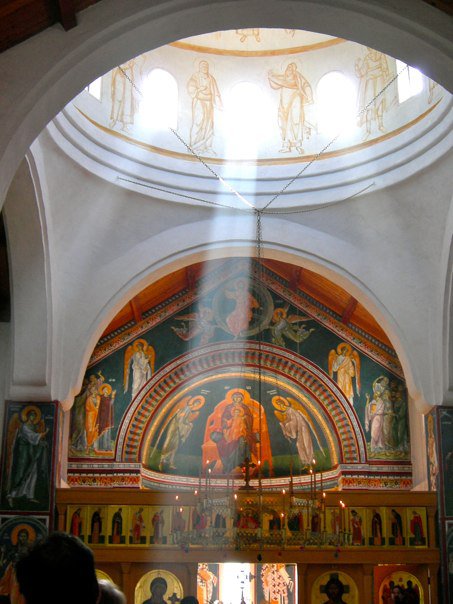
Today is Bright Monday, one of the many “most blessed” days of the church year. Our temple was beautiful in the morning light, and in the light of the parishoners’ peacefulness, decorated with white Easter lilies and the priests in white vestments, the altar open and letting more sunshine from outside flow into the nave. Wide beams of fuzzy sunlight also streamed down from the windows just below the dome, when thundershower cells were not passing by, and all the candles on the chandelier were lit, even though they weren’t “needed.” Here is a zoomed-in glimpse of my view.
I love that in the Orthodox Church we have a whole Bright Week to bask in the high joy of Pascha, before we descend slightly into the lesser heights of the 50-day Paschal season on our way to Pentecost. Throughout this period we get to greet each other every day not with a mere “hello!” but with that proclamation that is shouted in many languages on Pascha night, “Christ is risen!” Fr Stephen posted a lovely short video on his blog, one that captures the pervasive blessing of Christ’s Resurrection.
He also posts a translation of the words sung in the film, and though I don’t know how to link to the video directly, I can at least put the words here:
People rejoice, nations hear:
Christ is risen, and brings the joy!
Stars dance, mountains sing:
Christ is risen, and brings the joy!
Forests murmur, winds hum:
Christ is risen, and brings the joy!
Seas bow*, animals roar:
Christ is risen, and brings the joy!
Bees swarm, and the birds sing:
Christ is risen, and brings the joy!
Angels stand, triple the song:
Christ is risen, and brings the joy!
Sky humble yourself, and elevate the earth:
Christ is risen, and brings the joy!
Bells chime, and tell to all:
Christ is risen, and brings the joy!
Glory to You God, everything is possible to You,
Christ is risen, and brings the joy!
In my parish we had nine services between Holy Thursday and today, Bright Monday. I made six of them this year, and I doubt I’ve ever attended more–even though this year I felt the strain of trying to navigate my daily path through my strange house (torn up for remodeling) and several children coming in at various times for an Easter reunion of sorts.
Tonight I am filled to the brim with all the love of my children and husband, and thankfulness that they all wanted to be here and be together… and filled with Paschal joy, too! I noticed that even the sorrowful days leading up to Sunday have their own joy in anticipation of Christ’s rising from the dead. For example, these words from a hymn: “We worship Thy passion, O Christ; show us also Thy Holy Resurrection.”
Holy Friday is to be a day of strict fasting and quietness as much as possible, remembering His suffering and sacrifice, and because I had non-Orthodox family around I couldn’t plan ahead as to whether I would attend all the services that day: Royal Hours, Vespers of Holy Friday, and Matins of Holy Saturday. In the end, I wasn’t needed at home, and I realized that the best way to remain prayerful that day was to remain in church! So I spent most of the day there, and it was probably the richest Good Friday I’ve ever had. Not until I attended my first of these longish services that dwell deeply on the Cross of Christ did the event and its significance really sink into my heart.
 The Vesperal Liturgy of Holy Saturday features 15 readings from the Old Testament, some of them pretty long, like the whole book of Jonah. And two or three of them feature extended congregational singing of choruses. Then–a baptism! It was in the middle of this service that I was baptized into the church three years ago. After I have listened to so much history of God’s dealings with His people, the baptism ritual is quite overwhelming. Just as God is lavish in His grace and forgiveness, His provision for our salvation, the ceremony is an extravagance of olive oil poured in water and holy chrism anointing hands, feet, ears and head. The “newly illumined” parishioner wears a white gown and carries a candle, wearing a cross that has also been dipped, baptized in the font.
I did happily remember my own baptism (that’s me in the photo), but it wasn’t only a personal nostalgia that brought me to tears; much more than that it was gratefulness for the whole plan of God, executed in a saga of faithfulness that we can’t even comprehend, much less tell adequately. If, as the apostle says in John 21:25, “…there are also many other things which Jesus did, the which, if they should be written every one, I suppose that even the world itself could not contain the books that should be written. Amen.”–then we also could not utter enough words to proclaim the implication of baptism, much less do a thorough job of “praising the LORD for his goodness, and for his wonderful works to the children of men!” Ps 107:8
Listening to the Orthodox prayers and hymns, it seems that the Church is trying anyway. A stranger to these proceedings might think that the priest goes overboard in prayers for the new member and prayers of thanksgiving to God. Part of me also thinks this, sometimes, at various services, it is true. But the other part of me says, “Hasn’t God filled our cups to overflowing? Didn’t he do everything He could to save us? Remember yesterday–Good Friday? Are you so soon bored with thanking Him?”
Truly the spirit is willing, but the flesh is weak. Which is why I didn’t even go to the glorious Paschal Matins and Liturgy at midnight. We were going to have a big family gathering in my house-with-no-kitchen the next day, and I was already worn out, so I needed to sleep that night. That Vesperal Liturgy is the beginning of our Resurrection celebrations, though, as in the middle somewhere we change the vestments and altar cloths to white, and we partake of Holy Communion, always a festal event.
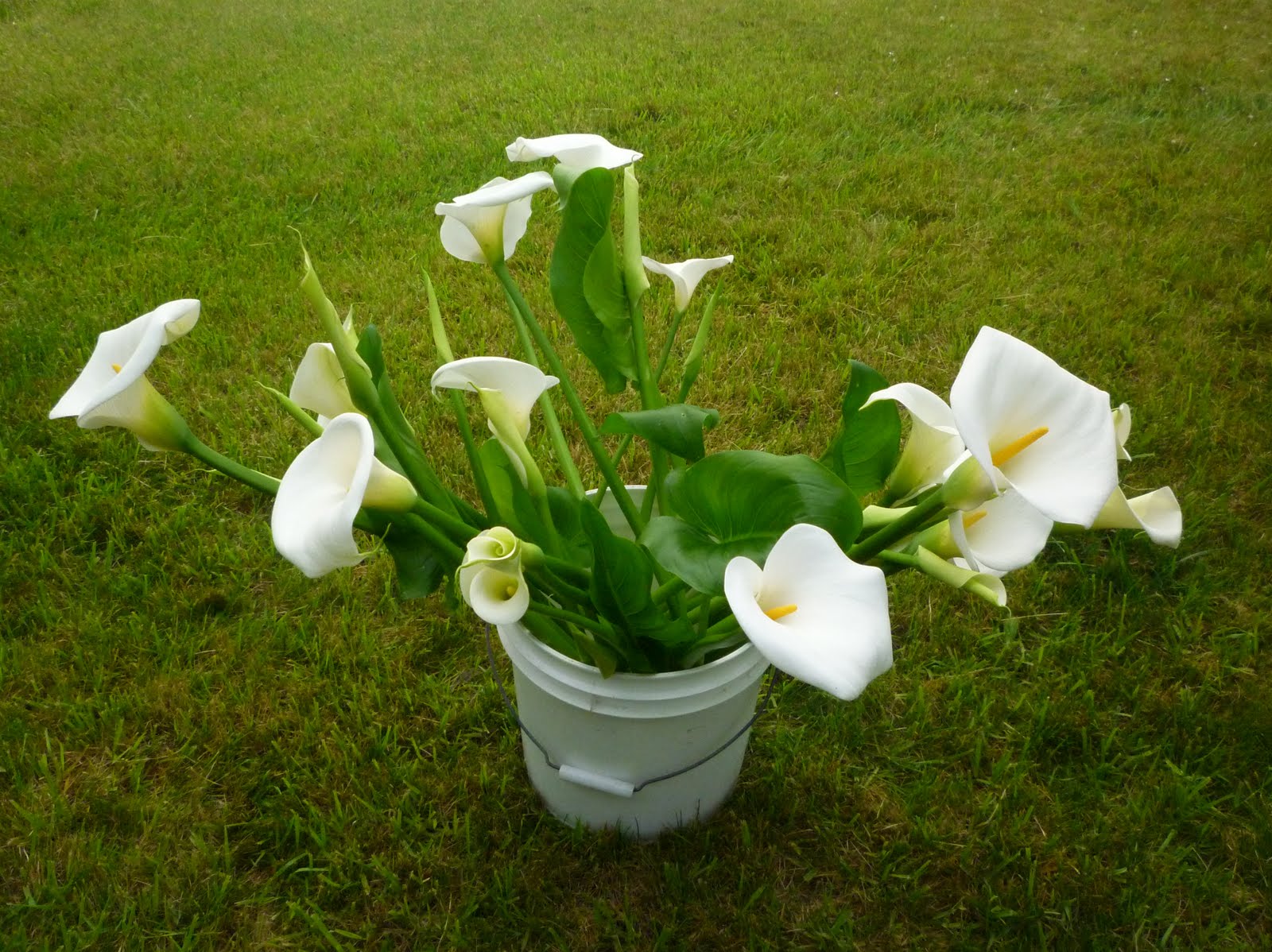
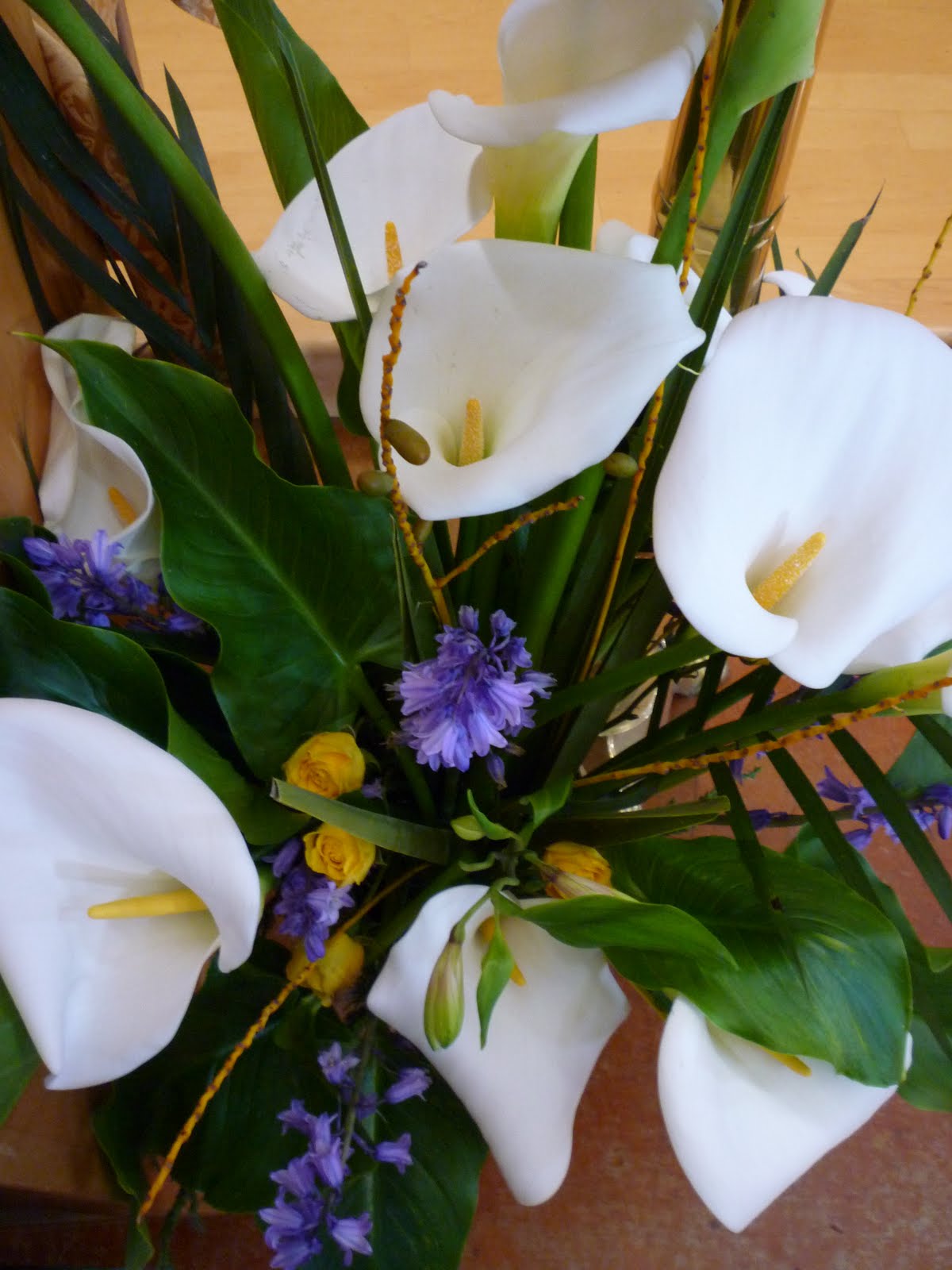
While many of my family went to a brunch Sunday morning, I made signs for the bare walls in the living room, using crayons on some remnant rolls of newsprint I got about 30 years ago from the recycling center. Of course, they said, “Christ is risen!” and “Indeed He is risen!” I had brought in enough calla lilies from the back yard the day before to fill three vases stuck around the room amid the camping clutter and oddly-arranged furniture.
It was a blessed day of feasting and reunion, with yummy things from the deli. This morning was the buoyant liturgy , and now I will hope not to deflate too quickly, but to float airily on through this Bright Week.






 Gladsome Lights