Wandering from the parent bough, Little, trembling leaf, Whither goest thou? ‘From the beech, where I was born, By the north wind was I torn. Him I follow in his flight, Over mountain, over vale, From the forest to the plain, Up the hill, and down again. With him ever on the way: More than that, I cannot say. Where I go, must all things go, Gentle, simple, high and low: Leaves of laurel, leaves of rose; Whither, heaven only knows!’
“First, I took a running leap,
and then, half buried in the heap
that we’d raked up, I lingered, caught
in a cocoon of leaves and thought.”
That is the first stanza of a new poem by Jean L. Kreiling, which I just read on the website of the Plough Publishing Company. The title is “After Helping my Father Rake the Leaves,” and it is rich with images of the season, “hot colors from a chilling world,” and memories of the poet’s father, who “turned his face into the wind” — a metaphor for his inspiring life and attitude.
You can read the whole loving poem on the Plough site.
This is the church where George Herbert served as rector for a only a few years before his death at the age of 39. He was born in Wales in 1593, into a wealthy and powerful family. The poet John Donne was his godfather, which was surely an important role, as his father Richard died when George was three years old. After his university education he held posts at Cambridge, was briefly a member of parliament, and held the clerical post of prebend.
But it wasn’t until 1629 that he decided to enter the priesthood and was appointed to the parish where “he lived, preached and wrote poetry; he also helped to rebuild the Bemerton church and rectory out of his own funds.”
He knew he was dying (of consumption); it was in that last year of life that he sent all of his poems to his friend Nicholas Ferrar, asking him to publish them if he thought they were good for anything. He said that they held “a picture of the many spiritual conflicts that have passed between God and my soul, before I could subject mine to the will of Jesus, my Master.” Commenting on George Herbert’s religious poetry later in the 17th century, Richard Baxter said that the poet “speaks to God like one that really believeth in God, and whose business in the world is most with God. Heart-work and heaven-work make up his books.”
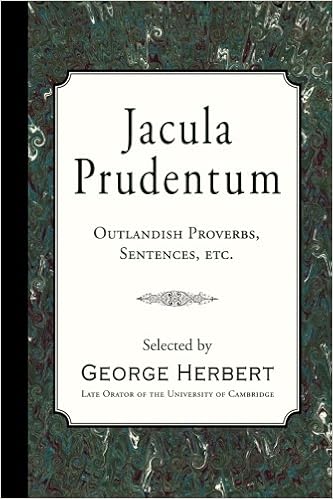
His prose works include a volume of nearly 1200 “outlandish proverbs” that he collected, and which is currently available on Amazon. That’s one that looks interesting to me, too.
Charles Cotton described George Herbert as a “soul composed of harmonies,” and it seems that he was also a skilled lutenist and composed hymns. More than ninety of Herbert’s poems have been set for singing over the centuries by composers like Benjamin Britten, Henry Purcell, and Ralph Vaughan Williams. When I read that the Wesley brothers adapted a few dozen for the Methodist hymnal, I checked out our family’s inheritance of hymnals from Methodist and Presbyterian churches but only found one attribution to Herbert.
But I do have a collection of his poems. I’ve shared other works of this poet; now here is one that I only recently noticed, whose echo-dialogue and themes I like very much. I found online a thorough exploration of the poem by Inge Leimberg, who tells us that “In Herbert the three themes of death, being restored from death, and spiritual vision are closely bound up with music and poetry (which to Herbert are one and the same).” I haven’t finished reading her essay, but I did catch one example of the layers of meaning he was famous for; “holy leaves” likely refer not just to leaves, but also to pages of the Bible.
One friend was of the opinion that Herbert would be singing his melodies with the angels in heaven, and I wouldn’t be surprised if the angels do join in with this harmonious and persevering soul.
HEAVEN
O who will show me those delights on high? Echo. I.
Thou Echo, thou art mortall, all men know. Echo. No.
Wert thou not born among the trees and leaves? Echo. Leaves.
And are there any leaves, that still abide? Echo. Bide.
What leaves are they? impart the matter wholly. Echo. Holy.
Are holy leaves the Echo then of blisse? Echo. Yes.
Then tell me, what is that supreme delight? Echo. Light.
Light to the minde : what shall the will enjoy? Echo. Joy.
But are there cares and businesse with the pleasure? Echo. Leisure.
Light, joy, and leisure ; but shall they persever? Echo. Ever.
Colorado Springs – I am still here with Soldier and Joy’s family, but having a quiet and slow morning, as Joy has taken the children to visit an old friend she ran into at church. Today is cold again, after a week of warm and sunny weather, and the winter season will settle in before the end of the month with freezing temps every night. The town lies at 6300 ft. elevation, with Pikes Peak in view, so one would expect a mountainous feel to the air and the seasons.
I’m a little homesick for my usual mild climate and the abundance of beautiful plants all year long. This Airbnb house is in a neighborhood that appears a little drab to me. Is the relative dryness of the region the region the reason that the leaves on the trees don’t turn beautiful colors, but merely shrivel and lose their color before falling? Out the window we see a broad and flat expanse of dirt and dry weeds between 40-yr-old housing tracts, where it seems more houses are now going to be built, so if you are a little boy who likes to identify excavators and cement mixers you will enjoy that view. I tire of it and lift my eyes just a bit to the large sky, and one morning, there was a sunrise palette.
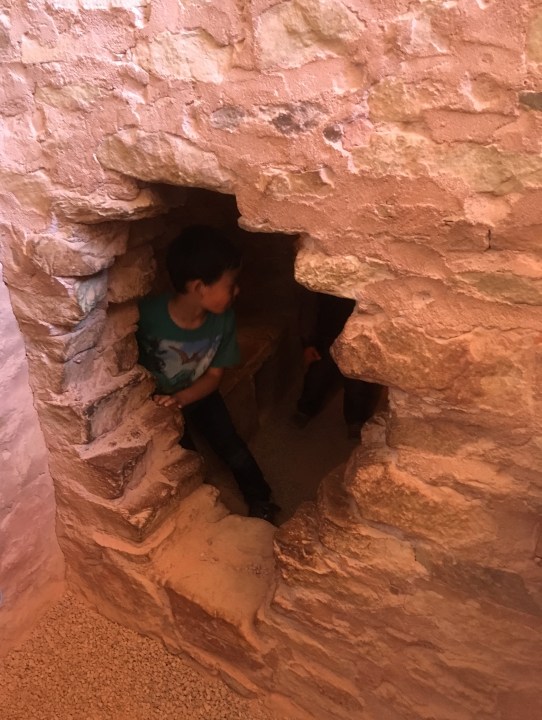
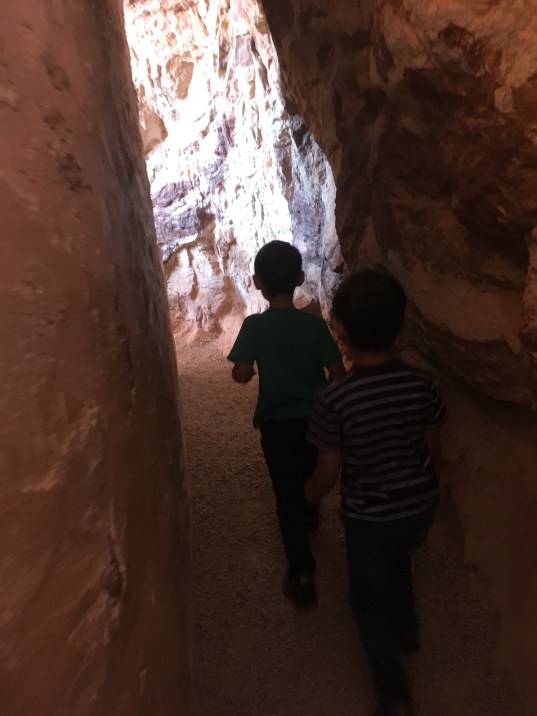
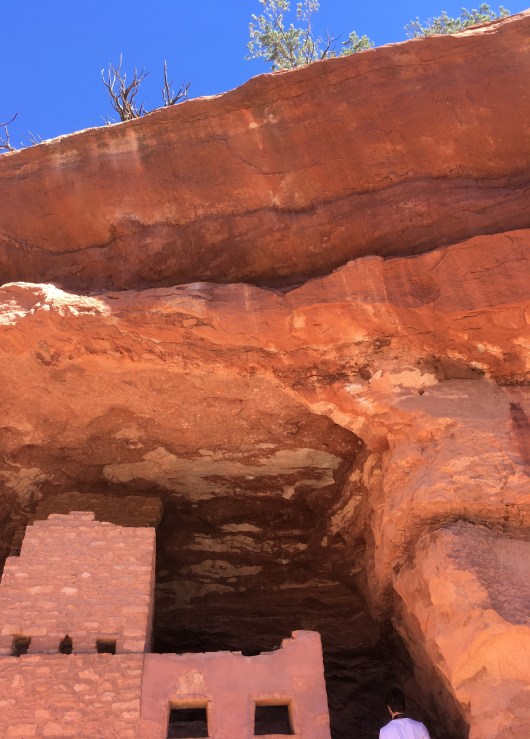
All the males and I went on an outing to Manitou Springs on the weekend, where more than a hundred years ago bricks from ancient Anasazi ruins in the Four Corners area of the Southwest were used to build a full-size replica of cliff dwellings. It was fun for the boys to walk through the passageways and explore rooms cut into the rock, and there was even a small arrangement of native plants by way of a botanical garden for me to investigate while they went through the dwellings a second and third time. I love that red rock!
The natural beauty I have most appreciated has not been of the broad landscape, but what I’ve found close up, like the above, and the ubiquitous junipers and blue spruce that will stay fresh and green all winter, and which are a clean contrast to the nearly aways blue sky. The town is known for the way the sun shines all or part of the vast majority of days. Yesterday I had the boys to myself for a few hours and they ran outside on the green grass; we scooped up leaves with a snow shovel and I taught them to run and jump in our little pile. The leaves smelled sooo good.
The most sublime images of creation I encounter day by day are the humans, with their souls that glow with the life God gave them, and who have the potential to be changed into His likeness as they follow the desires of their deepest longings. I am in awe of the parents’ conscientious care of the children, the thousand responsive decisions they must make every day about how to answer questions, how to deal with squabbles and tantrums and meltdowns — after they have already made many intentional and pro-active planning decisions.
I know, I also used to do that same job day after day, and I wonder at the person I was! It’s all of God’s grace, that we have the strength to do it again the next morning, and that the children grow up at least somewhat prepared to live without the constant supervision and training that they need early on. If they can learn to return to God time after time after time, to receive forgiveness and everything else they need, that will be the best thing.

 “First, I took a running leap,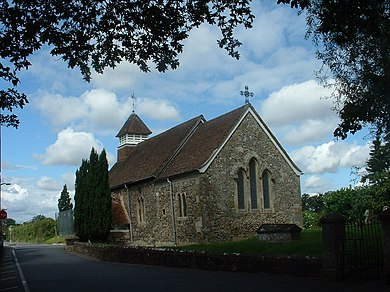
 Colorado Springs – I am still here with Soldier and Joy’s family, but having a quiet and slow morning, as Joy has taken the children to visit an old friend she ran into at church. Today is cold again, after a week of warm and sunny weather, and the winter season will settle in before the end of the month with freezing temps every night. The town lies at 6300 ft. elevation, with Pikes Peak in view, so one would expect a mountainous feel to the air and the seasons.








 Gladsome Lights