“3100 Christians were killed and 2830 were kidnapped in Nigeria in 2024.” In India, “Four to five pastors or churches are attacked every day.” These are some statistics representing great suffering in parts of the world that aren’t in our daily headlines. The constant wars and episodes of violence, the dysfunctional families and societal breakdown that do make the headlines can’t begin to tell the story of each individual human life wracked with pain and heartache. No doubt all of us know, and many of us are, cases in point. Is it not crass, under the circumstances, to write about being happy? Should we feel guilty for even being happy?

The words of Jesus about tribulation had been floating around in my mind a lot recently: “In the world you will have tribulation,” and, “I have overcome the world.” Last Sunday as I was driving to church and actually bringing those thoughts into focus, as hard as I tried I could not remember the clause that comes between those two, which I have known most of my life. I stopped on the way to pick up a friend, and while I was waiting for her to come out to the car I looked up the verse on my phone. It turned out to be a convenient case of forgetfulness because when I went to the Bible app, of course it had several translations, which gave a broader meaning to Christ’s encouraging words.
Our Lord had just been telling his disciples about many disturbing things that would happen in the future, and then generalized saying, “In the world you will have tribulation….” And his next words are startling, really. The way I knew the next part is: “…but be of good cheer, for I have overcome the world.” Other translations are “take heart,” or “have courage, for I have overcome the world.”
The poem below is about being happy, about meaning, and writing. I’ve written before about how in the most creative, happy times of my life, which were while I was with child, I completely forgot about my diary or journal and never wrote a word in it. At other times, just living at a normal level of happiness, I often have written in a journal. My problem with journaling is exactly what G.K. Chesterton alluded to on at least two occasions saying,
“I am a bad reporter because everything seems to me worth reporting; and a bad reviewer because every sentence in every book suggests a separate essay,” and,
“Once I planned to write a book of poems entirely about the things in my pocket. But I found it would be too long; and the age of the great epics is past.”
Did Chesterton ever keep a journal, I wonder? My guess is he didn’t, because writing about everything in a journal would leave him no time for gainful employment at writing in a more focused manner about many things.
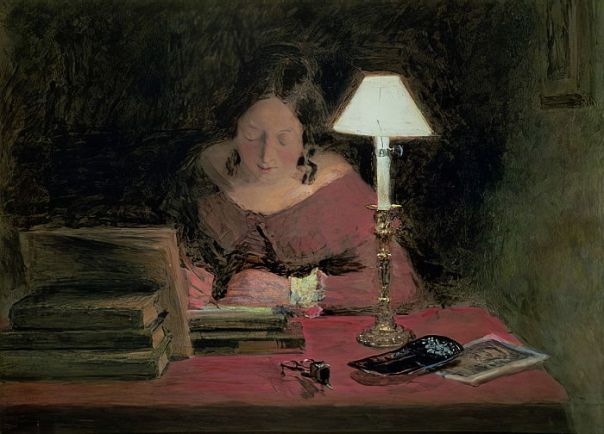
I seem to have given up on my journal to a greater degree than ever before, because there is just too much that I want to put in it. If I wrote in my journal the way I want to, I would never be done. I sense this, every time I try, and I start scribbling madly, racing against time, knowing that it’s hopeless: I will never be able to do a proper job. Journaling demands to be neverending.
A book I borrowed briefly from the library some years ago told the story of the author’s obsession with journaling, and then her obsession with thinking about her obsession. She asked, How could she have a life, if she journaled about everything? She feared she was ceasing to really live, because she was writing instead. I didn’t read very far in it, because if journaling was stealing time from living, using my precious hours to read her book was even worse theft.
Blogging is not the same at all, in my case. I have to be somewhat focused when I write for others to read, and I must bring every post to an end, so I can publish it. For a process-oriented person like me, each post is a manageable goal, one which I can abandon and no one will care. In the meantime, I’m able to include some of the things I would have journaled about, without getting lost in my thoroughness.
I could put myself into this poem, and I would be talking to God. Because I do write a lot, the whole thing may not seem to pertain to my situation. But it did make me think, and it made me happy.
MISSED TIME
My notebook has remained blank for months
thanks to the light you shower
around me. I have no use
for my pen, which lies
languorously without grief.
Nothing is better than to live
a storyless life that needs
no writing for meaning —
when I am gone, let others say
they lost a happy man,
though no one can tell how happy I was.
-Ha Jin


 Fresh news just before publishing: My dear friend and brother in Christ, “Mr. Greenjeans,” who started me working in the church garden and taught me tons about plant and plant names; who for many years and several times a month made all the huge bowls of dough for our church prosphora bread; who got me literally up to speed chanting the Hours in church; who became an even closer friend since 2020 when he and his wife began hosting small tea-and-talk sessions at their house — That Friend no longer has to struggle in this chronos world, but has fallen asleep in death, has gone to his rest, to await the Resurrection. Memory Eternal!
 Gladsome Lights