 This week so far I have seen patches of the starry sky through the window from my bed, and through narrow gaps in the tree canopy as I walked along the gravel road coming back from a campfire.
Those glimpses are lovely, but not as powerful as what I experienced a few years ago when I was alone here in the High Sierra, standing on the deck at night, looking up: I was aware of the stars as somehow sentient beings that were intently and personably crowding and pressing down on me. The poem below expresses the thrill of such a meeting as I had, with added feelings that I didn’t experience.
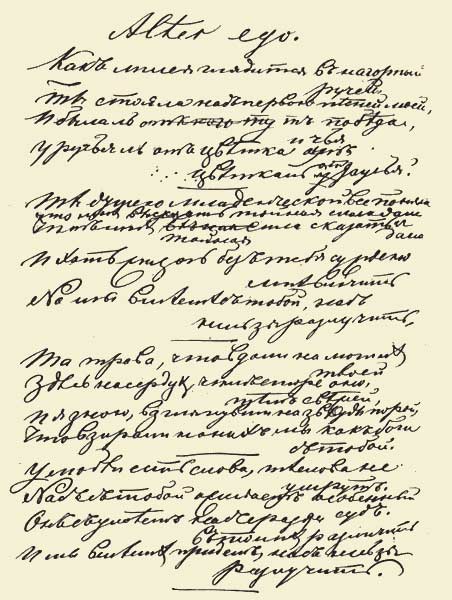
The composer Tchaikovsky, in a letter to the Grand Duke Konstantin Konstantinovich, wrote: “I place some of his poems up there with the very highest that there is in art. In this respect there is one which I am determined to illustrate musically some day.” This is the poem he copied in:
UPON A HAYSTACK ON A SOUTHERN NIGHT
Upon a haystack in lands of South,
I lay, while facing skies of night,
The choir of stars, alive and couth,
Was trembling, spread at every side.
The earth, mute as a dream half-hidden,
Was fast receding into space,
And I, as if the first in Eden,
Alone met the black night’s face.
Did I race to the depth profound,
Or did the stars race straight to me?
In mighty hands, it seemed me how,
I hanged above abysmal sea.
With heart, so sinking and bewildered,
I measured with my look a depth,
Into which, every moment sighted,
I sink, and nobody helps.
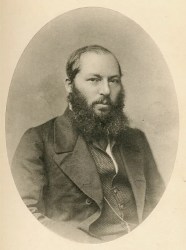
-Afanasy Afanasevich Fet, (1820-1892)
One odd thing is, the way Luis Sundkvist translated the letter from Russian, the second line of the poem reads, “I lay with my face towards the ground…” How this happened I can’t imagine, because of course the poem makes no sense like that.
Golgol and Tolstoy also thought Fet’s poetry was stellar. The writer and publisher Nikolay Nekrasov wrote: “Not a single poet since Pushkin has managed to give such delight to those who understand poetry and readily open their soul to it, as Fet does.”
The surname of Fet was assigned by authorities to Afanasy because of some question in Russia about the legitimacy of his birth; his parents’ marriage had been registered in Germany. In his later years he wrote to his wife, “You cannot even imagine how I hate the name Fet. I implore you never to mention it… If someone would ask me to give one single name to all the trials and tribulations of my life, I’d say without hesitation, this name is ‘Fet'”. Later still he was able to get back the name of his father, Shenshin, but as his poems were all published under the name Fet, so he is known. Evidently not much of his work has been translated into English, which makes this one even more special.
 Gladsome Lights