Tag Archives: Russia

A Thousand Years

Today is the 1,000-year commestvladimir-big halifaxmoration of the repose of St. Vladimir, Enlightener of Russia. He was the emperor whose decision to convert to Orthodox Byzantine Christianity transformed Russia and turned its history in a new direction, in about 988. I was lucky enough to attend Liturgy today, in a parish with Russian roots, and to hear a homily on St. Vladimir from a priest who had graduated from St. Vladimir’s Seminary. The Orthodox Church in America has posted online a long and rich story of the saint if you would like to read more of his exploits than I can tell here.
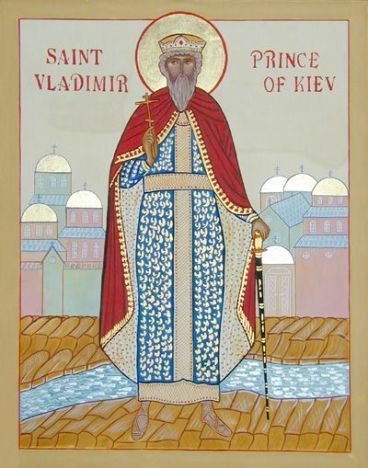
The most famous story among the faithful is an account found in the Primary Chronicle of Russia, written about this time, of how Vladimir, when he was still a confirmed pagan, sent emissaries to check out the churches and faiths of his neighboring lands.

They were completely unimpressed with the Muslim Bulgars, partly because of the ban on alcoholic beverages; of the German churches they reported, “We beheld no glory there.”

But in Constantinople at Hagia Sophia: “…they led us to the place where they worship their God, and we knew not whether we were in heaven or earth, for on earth there is no such vision nor beauty, and we do not know how to describe it; we only know that God dwells among men. We cannot forget that beauty.”

This has been the experience of so many of us converts to Orthodoxy, that we can well believe the story, which is not held to be as certain as the facts about the politics of the time and how Prince Vladimir made an arranged marriage with the daughter of the Byzantine Emperor, and was baptized before the marriage. However it came about, his conversion was providential and has had tremendous ramifications for the last 1000+ years.

He ordered the baptism of all his subjects, who dutifully went down to the River Dneipr en masse the next morning. Here I want to quote from the OCA article about how this event resulted in the continuing celebration of another meaningful church feast day:
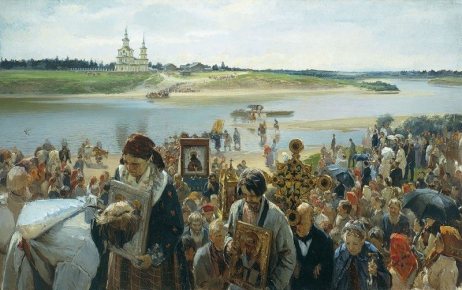
cross-procession-illarion-pryanishnikov

It is difficult to overestimate the deep spiritual transformation of the Russian people effected by the prayers of St Vladimir, in every aspect of its life and world-view. In the pure Kievan waters, as in a “bath of regeneration,” there was realized a sacramental transfiguration of the Russian spiritual element, the spiritual birth of the nation, called by God to unforeseen deeds of Christian service to mankind.

“Then did the darkness of the idols begin to lift from us, and the dawn of Orthodoxy appear, and the Sun of the Gospel illumined our land.” In memory of this sacred event, the regeneration of Rus by water and the Spirit, the Russian Church established the custom of an annual church procession “to the water” on August 1. Later, the Feast of the Procession of the Honorable Wood of the Life-Creating Cross of the Lord, which Russia celebrated with the Greek Church, was combined with the Feast of the All-Merciful Savior and the Most Holy Theotokos (established by St Andrew Bogoliubsky in the year 1164). In this combination of feasts there is found a precise expression of the Russian theological consciousness, for which both Baptism and the Cross are inseparable.

Prince Vladimir soon started to destroy pagan idols, some of which he had commissioned himself, and began serious reforms that would create a new church of the Tithes 17th cent Deśatynna_cerkvaChristian culture. He built monasteries and many and magnificent churches; hospitals, schools and orphanages. The capital city during this era was Kiev, and these first years of Christianity in Russia were a time of growth and prosperity and art. The hundreds of churches in Kiev were renowned for their beauty, for example, the fascinating Church of the Tithes, which has been destroyed many times and whose rebuildingvladimir card from vladimir 1000 yrs is under discussion again at this time.
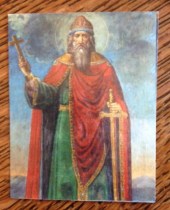
My own first experiences of Orthodox worship were not outwardly as splendorous as Hagia Sophia, but like those emissaries I felt the splendor of Heaven coming down on me. (Just this week I added to my page newly renamed “Orthodoxy and Me,” to tell much more of my story as a story and not just scattered parts.) In my parish we have a man who was born a Jew and took the name of Vladimir at his baptism somewhat late in life. This morning he joyfully passed out these little icon cards as gifts, and we were all glad that he was there so we could say, “Happy Name’s Day!”

Nina

When the weather is hot, my friend Nina prefers not to be out pruning roses or picking apples, so yesterday, it being 99 degrees, I kid you not, was a good day to visit and find her in the cool house doing a little embroidery. She set it aside while talking to me, though, and curled her slender legs under her where she sat in an easy chair.

I’ve been getting to know her since last winter, but I don’t recall ever seeing her dressed for cold weather. It’s usually some combination of Bermuda shorts and flip-flops, because she does not like being hot. Once when I came by she was just taking a loaf of bread out of the oven. It was intended primarily for her sandwiches, but we discovered that we are alike in our inability to resist freshly baked bread, so we enjoyed a warm slice together.

Before this year, I had rarely spoken to Nina, but I did study her very intently when I would see her in church, not daring to hope that ever in my life I might look so elegant. Maybe the use of a cane actually helped her to walk with the grace and erect carriage of a dancer. Week by week I would see her go up to the altar to pray, as though she were processing up a great hall to be crowned queen, or like a bride on her way down the aisle to be joined to her husband. She always wore a hat and a smile, never hurried, and looked completely serene and at peace. Yesterday she told me that as a young child she was allowed to walk to church by herself, which she loved to do, because being in church to her meant Peace.Nina bd girls w roses

We organized a surprise recognition of her 100th birthday, which fell on a Sunday. Our sisterhood bought 100 roses and toward the end of the service passed them out to as many parishioners to hold. At the very end Nina was ushered up to sit at the front and we all paraded by and gave her a rose and/or a greeting.

What a lot of stories she has to tell from so many years on this earth! Her family was Russian and her father went to China as part of the large crew on the Trans-Manchurian Railway, around the turn of the 20th century. Nina’s family were among the many workers’ families who became permanent residents of Manchuria, but they also were like many of the Russians in that they eventually immigrated to America. Her brother came first, and then Nina all by herself made the journey as a young woman. The stories of that trip to San Francisco, and how she found her brother and met her husband, are the fascinating topics of our chats together.Nina roses HB

A year or more after her 100th birthday Nina switched to a wheelchair for church attendance, but at home she continues without any assistance. She has lived alone for more than 25 years, having been widowed twice.

The second time she had only been married a year when her husband told her that he had had a dream about his late wife in which she asked him to take a walk with her. “Did you go with her?” was Nina’s immediate question. Because Russians have a superstition (she did not use that word) that if you have this dream about someone who has passed from this life, and you agree to walk with them, you will soon join them “on the other side.”

Nina says that her husband would not answer her question, and it wasn’t very long before they were in a car accident together, in which he was instantly killed. For a short time Nina lost her own will to live, but thanks to the mercy of God she realized that she loved her children and wanted to go on living. But in her own house, mind you, where she can do things the way she likes, including her own yard work, cooking, and housecleaning.??????????????????????

When she was about 50 she had some health problems, likely brought on by the pain of her first widowhood, and two of her doctors advised her about her diet. Between them she got the message not to eat dairy products or white flour, and to drink carrot juice. 50+ years ago how many people were drinking carrot juice? Not enough to cause the stores to carry it, so she bought a juicer and has been making her own ever since.

There doesn’t seem to be a fitting way to end this introduction to my friend who is now 102. She is going forward, and going strong, and shows no sign of slowing down. I want to learn from Nina, I want to be more like her. So far my lessons are: smile, drink your carrot juice, and stand up straight.

Revisiting the Fort Ross Fourth

I wasn’t able to participate with my church in the Fort Ross pilgrimage this year, but I thought I’d re-publish my article about the yearly event that I shared five years ago. I hope you all had a blessed Independence Day!

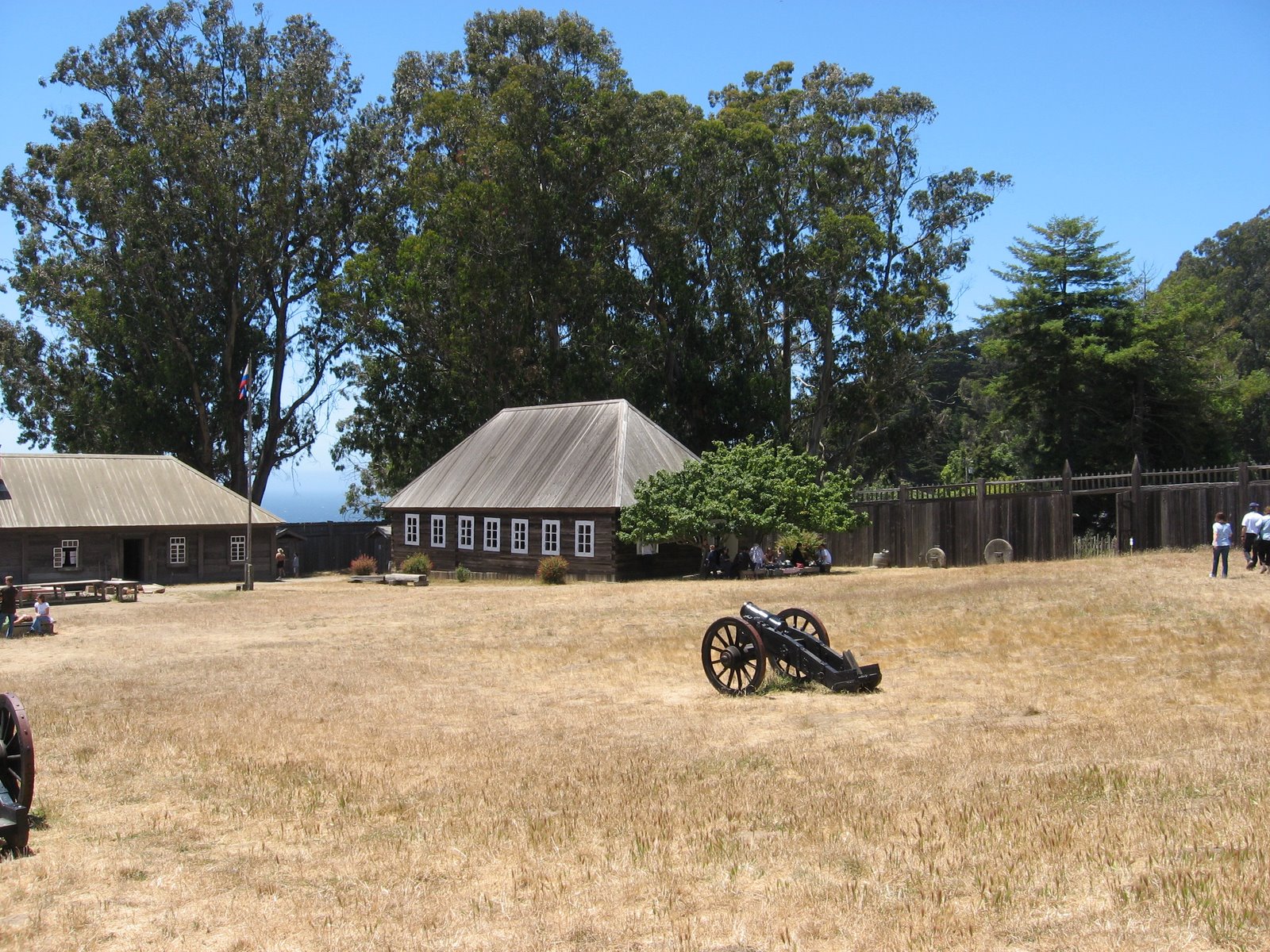
Fort Ross State Historic Park has been a favorite destination of our family for decades. It is a restored fort from the early 1800′s, when California was not yet a state in the Union, and for a while the Russians had an outpost in Northern California for fishing and trapping and growing food. You can see lots more photos and read about the history of Fort Ross online.

I loved the place from our first discovery of it when the children were small. A historic association holds yearly re-enactment days that are great fun, but just visiting on our own was relaxing and renewing, at least in the summer, when the sun would break through the fog and you could smell the ocean and the baking grasses at the same time, and imagine the people of long ago.

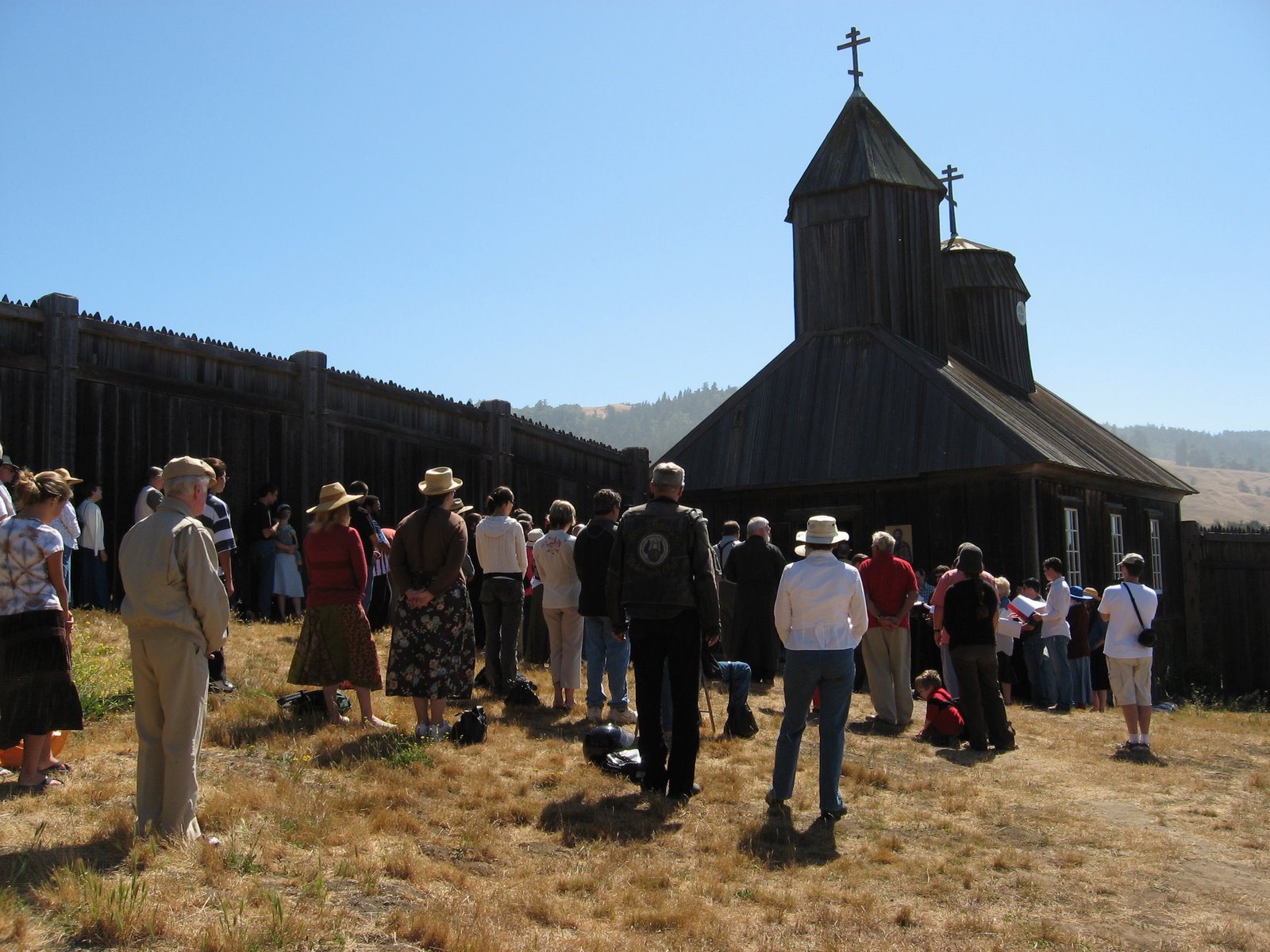
After I joined the Orthodox Church, I was delighted to learn that our diocese has permission to use the chapel at the fort twice a year, including on the 4th of July. We worship in the morning and have a picnic afterward when the sun usually comes out. There is plenty of time to get back home in the evening for Vespers and maybe fireworks later on. I’ve made the pilgrimage three times now, and my pictures here are collected from all the visits.


It’s a short walk from the parking lot to the actual fort enclosure. The photo at right is looking across the field from the chapel.


The church building as restored is small, and sometimes we let the whole of it serve as the altar, with the congregation and the choir standing outside and the priests and deacons coming in and out frequently as they pray and serve Communion.

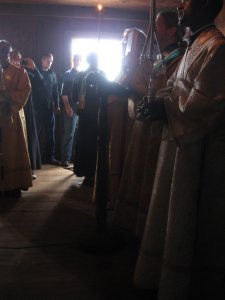
This year we all squeezed into the chapel, which is very intimate. I couldn’t get a good picture because of that window, but I am posting a bad one just to give an idea of the atmosphere. Very thin idea, indeed, as there is only the one visual dimension, and no conveyance at all to the other senses.
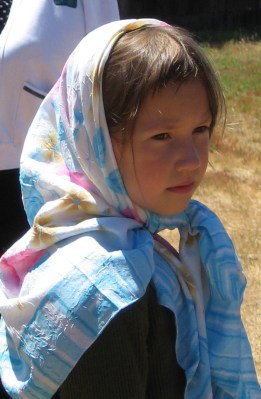
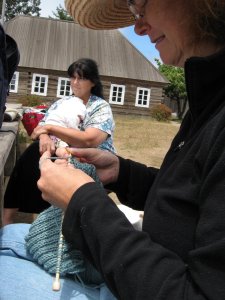


After the liturgy, the clergy and many others made the trek to the cemetery to sing a short service for the ones buried there. Others of us waited within the walls of the fort for their return.


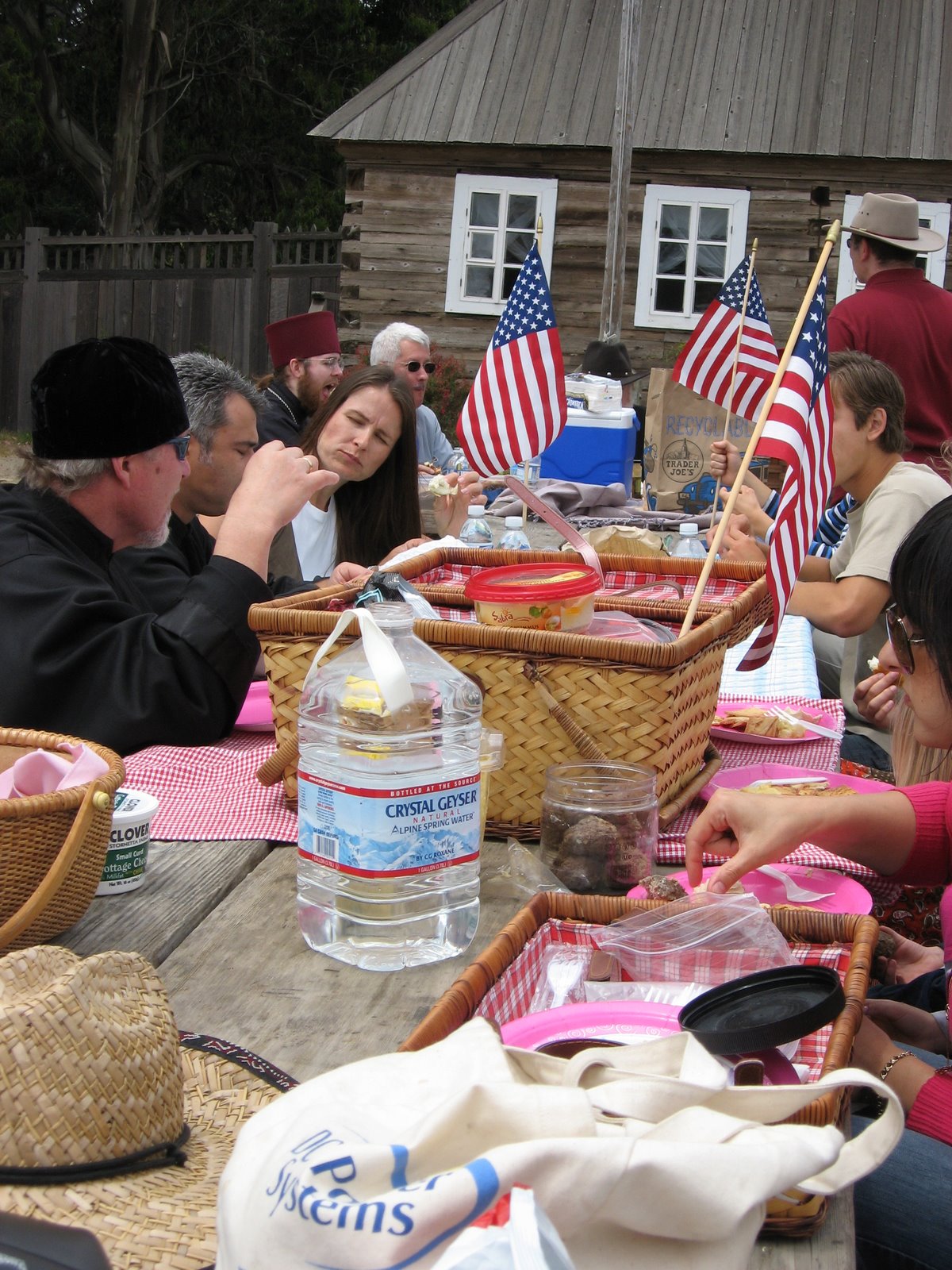
The bishop brought a picnic lunch, too.


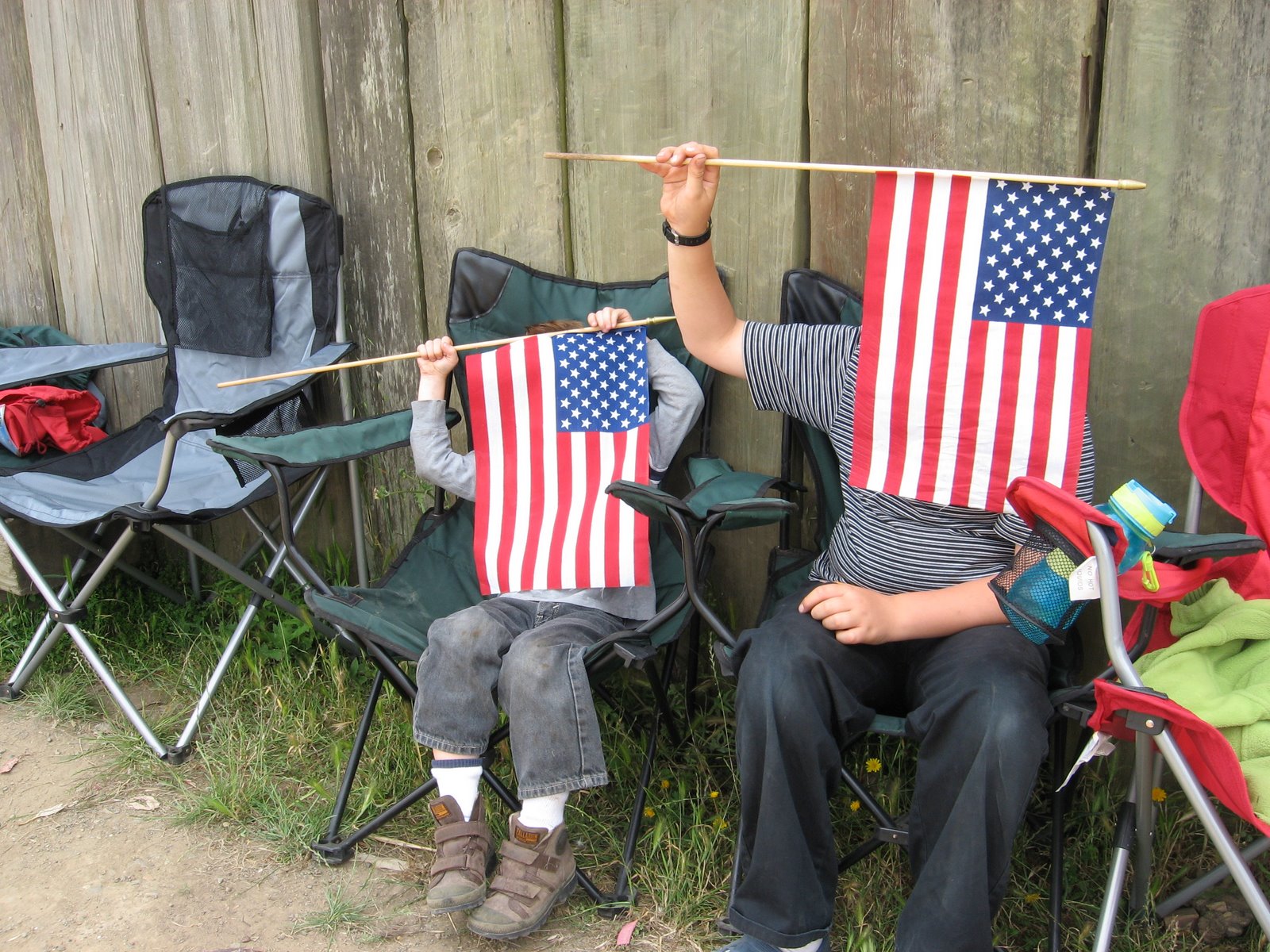
We waved plenty of flags to show our thankful allegiance to the nation whose birthday we were celebrating, at a fort now owned by Americans.


One year N. brought his hammered dulcimer and treated us to music at the picnic.

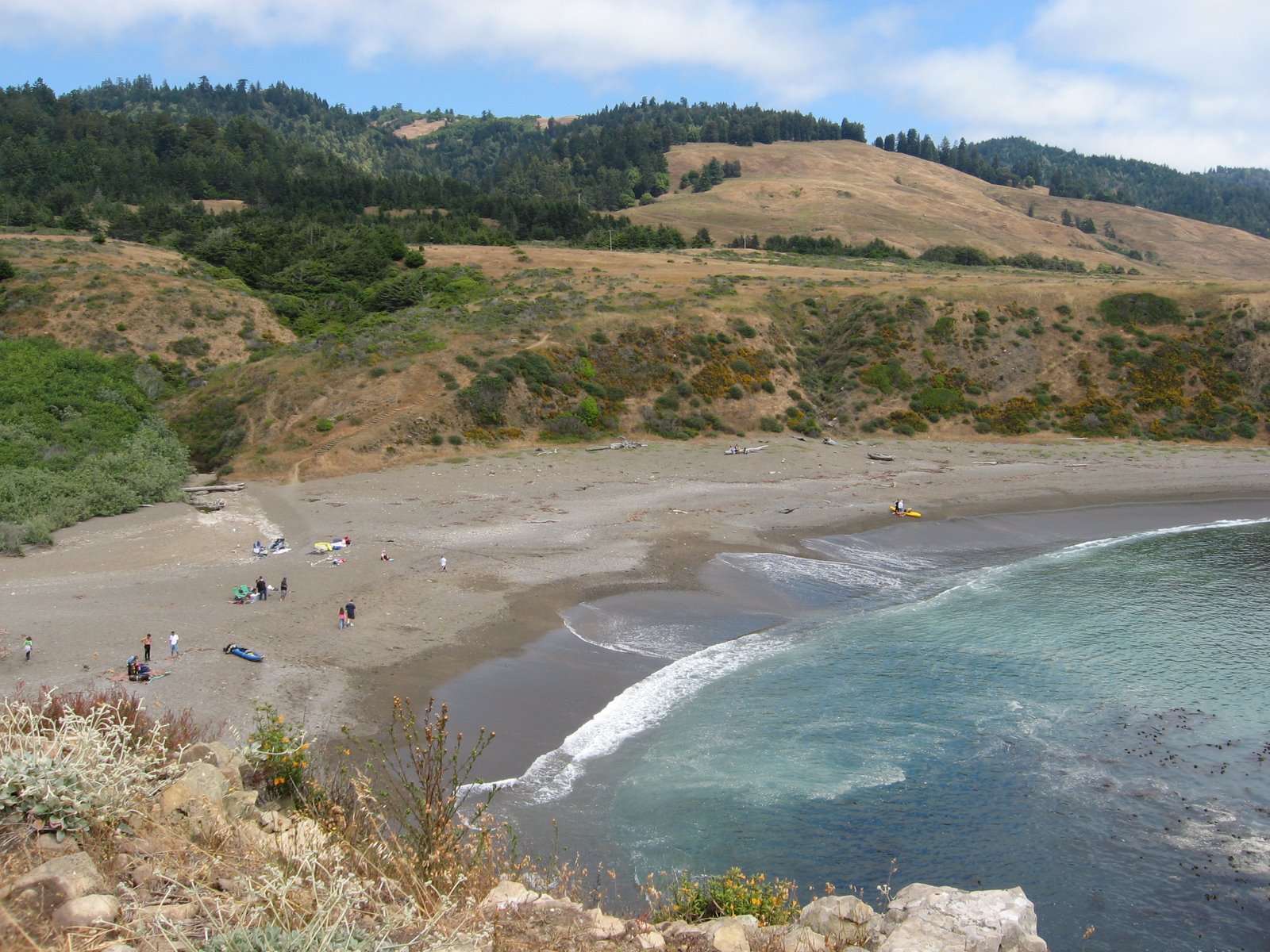
After lunch, K. and I took a walk down to the lovely cove below the fort.

One young parishoner and his mother had found treasures in nearby tidepools.


When we got back, the history talk by the park ranger was still going on. It leads up to instruction in loading and firing the cannons.

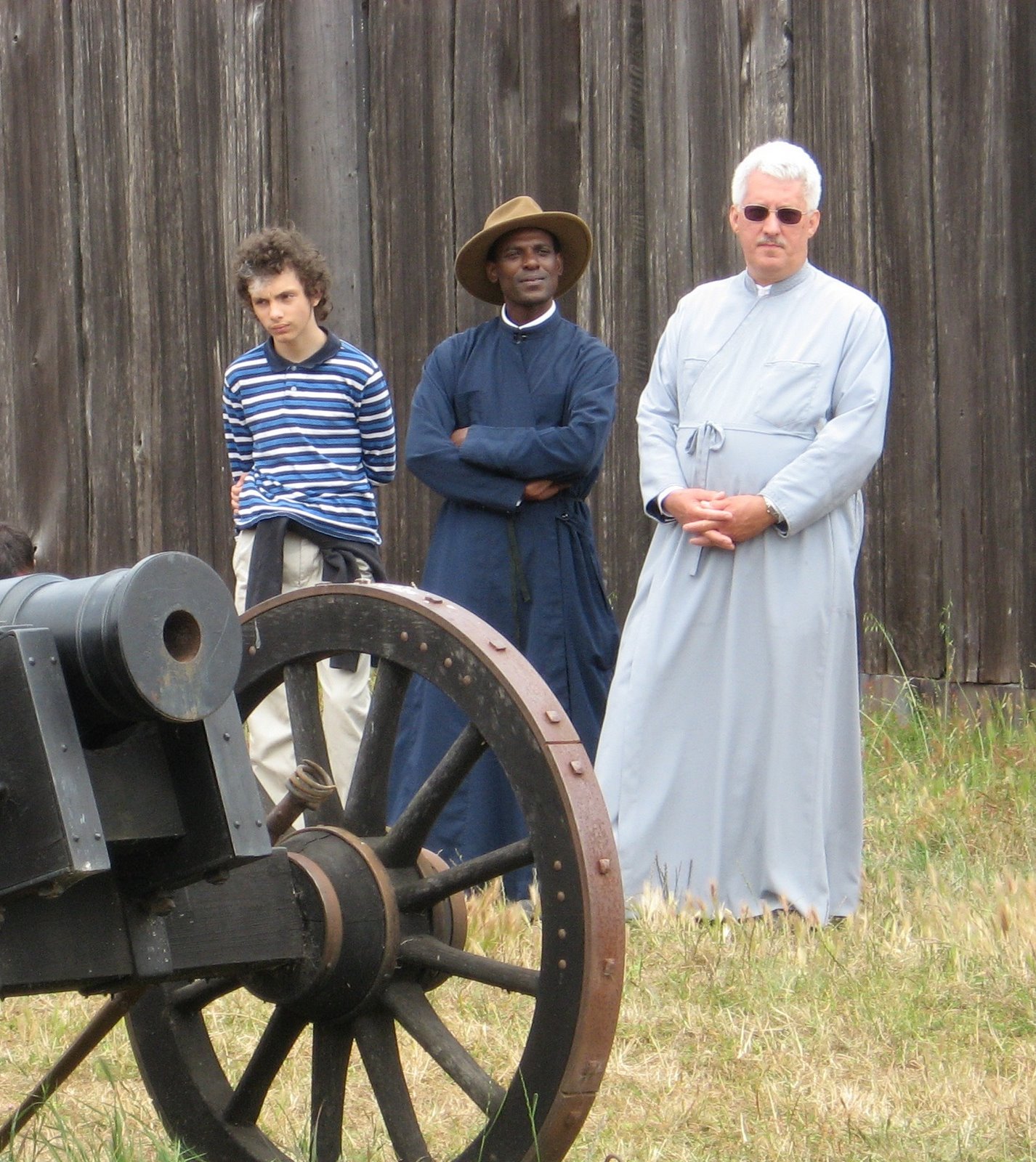
My favorite priest is getting ready to load the cannon.


A blue study of guys waiting for the explosion.

Bang! Poof! No cannonball was shot–only gunpowder.

The majority of California’s state parks are likely to be closed because of the deep debt our state is in. If that happens, our Fort Ross pilgrimages may become a fragrant memory, and something to hope for in the more distant future.

Update: Since I wrote that last gloomy paragraph, grassroots efforts of many people have improved the likelihood that the park will endure and continue to be one of my favorite destinations — and maybe as a pilgrim in 2015.

Honey is what it is, thank God!

from Fr. Ted’s blog

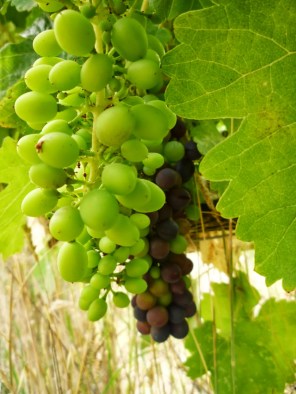
My parish is lucky enough to have our own vineyard right behind the church. This is very handy on the Feast of Transfiguration; at the end of the liturgy we can process out the doors and around the vineyard, to bless the grapes. It’s traditional to bless grapes or apples or any fruit, really, on this day.

Earlier on the feast day morning people brought into the church baskets of fruit and herbs and flowers. I carried a wooden bowl of blueberries and peaches. While we sang and communed and focused on the main event being commemorated, the fruit waited. The incense was particularly sweet that day, and I didn’t notice the smell of the beeswax candles as much as I usually do. Though I could see basil in a couple of the baskets, I didn’t catch its aroma either.

At the end of the service, with the prescribed prayers for the event, Father L. (and all of us) thanked God for all His bounty, and then he sprinkled holy water over the representative sampling.

He explained to us that this is not a superstitious rite we perform, using holy water to do magic on the fruit. When we bless anything in this way we do not make it into something other than what it is, but ask God to reveal it to be what it has always been.

Whatever created things we are talking about, they have always been meant by God to bring us into communion with Him. The service of blessing of fruit brings our thoughts back to Paradise, and the right and good use of the fruits of the earth that God has given us. We are reminded of how in the beginning God made Adam and Eve to be stewards over the Garden of Eden; human beings were called to exercise a loving and thankful dominion over the earth.

Russia

But we by our sin have instead caused destruction on the earth. Mankind more often than not has overused, abused and consumed in perverse ways the gifts of the Creator. Personally, I often gobble my food and eat without attentiveness to Him.

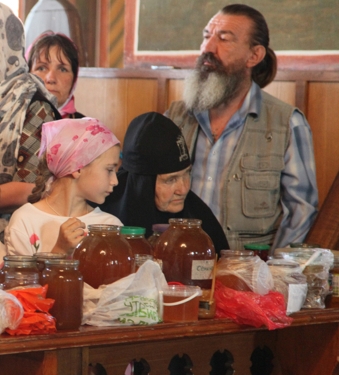
We have prayers for the blessing of bees and beehives and honey, too, usually in a separate service. Around here it’s August 1st, but I found pictures of honey blessings in Bulgaria where they do it dramatically on February 10 (see the bright cross picture down the page).

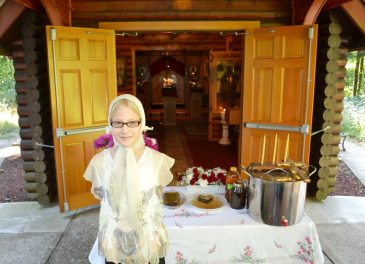
People like to take pictures of little girls and honey, I was happy to discover, and I am posting some of them here. The Russian ones are from Optina Monastery, and the Oregon photos from the Facebook page of New Martyrs of Russia Orthodox Church.

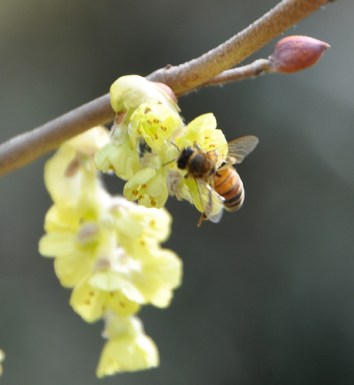
These honey and bee pictures are so enjoyable that I ended up with way more of them than of fruit. I hope you will hop over to the blog of Father Ted Bobosh where he posted a large and glorious photo collection of bees and other pollinators, such as the one I put at the very top, along with quotes about bees and Orthodox prayers for them. Just looking at the pictures will likely make you burst into prayer, too. Here is one of the prayers he posted:

From Father Ted

O God, who knows how to work benefits through human labor and irrational living things, You instructed us in your loving-kindness to employ the fruits and works of the bees for our needs. Now humbly we beseech Your majesty: Be pleased to bless the bees and increase them for the profit of the human race, preserving them and making them abundant. Let everyone hoping in Your majesty and Your boundless compassions, and laboring in the care of these living things, be counted worthy to receive abundant fruits of their labors and to be filled with heavenly blessings in Christ Jesus our Lord, to whom is due glory, honor and worship unto ages of ages. Amen.

The photo above is from my church on Transfiguration, baskets of all kinds of fruits of the earth waiting for the prayers of blessing. Some of them were inspiring in the variety and arrangement of items, but one of my favorite baskets is the big one in front, full of apples picked just that morning.I don’t eat much honey these days, but I get a whiff of it in the candles every Sunday in church, and I can imagine the heady scent emanating from these tables laden with jars and bowls and plates of honey.

Doesn’t it just tell you something about our God, how sweet He is, and how extravagantly generous, that He would give us something as intense and rich as honey? The bees, of course, are also in the business of pollinating the fruit. The whole Creation and its interconnectedness is reflected in the Church and in our salvation history, all of a piece and orchestrated in love by our dear Father God.

Fr. L blessing beehives
Blessing honey in Bulgaria
Honey blessing in Oregon
Oregon honeycomb