Tag Archives: snacks

Lotus seed for the world.

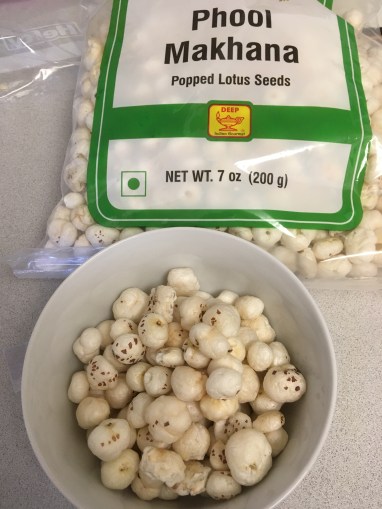
One package I picked up at the Indian market was a large bag of phool makhana or puffed lotus seed, a sort of popped-corn form of the seed of the lotus plant Nelumbo nucifera. When I was in India one restaurant that specialized in salads sprinkled a few of these puffs on top of one concoction that I loved.

I read about lotus seeds online, where there is a wealth of enthusiastic promotion of the food item as a cure-all, physically and spiritually. Unfortunately much of the prose resembles the spam comments I get on my blog, and gives me the giggles.

“… eaten as a fasting food in India as it considered a very pious. And, is also used to worship God.” Well, of course. “Whether you eat or drink, or whatever you do, do everything for the glory of God.” (I Corinthians 10:31)

Even Wikipedia seems to gush: “Lotus seeds can be processed into moon cake, lotus seed noodles and food in forms of paste, fermented milk, rice wine, ice cream, popcorn (phool makhana) and others, with lotus seeds as the main raw material. Fresh lotus seed wine has thirst quenching, spleen healing and anti-diarrheal advantages after drinking.[40][41] Lotus seed tea is consumed in Korea, and lotus embryo tea is consumed in China and Vietnam.”

One website that sells various flavors of puffed lotus seeds has this to say: “Focusing on ‘co-creation’ at all levels, we aim to bridge the gap between nature and consumers… to create an offering by combining the natural foods with modern techniques so as to enable the human kind to rejoice these gifts. POPMAK … is a healthy munching solution for all ages… which can add values in your life. We are just four years old company, aiming big to deliver and in this endeavor we will remain child like enthusiast for ever. Expect more surprises from us soon!!!!”

I must mention here a couple more Indian snacks that are in the house right now. Kareena bought these flaky fenugreek biscuits that she often eats for breakfast and shares with Raj.

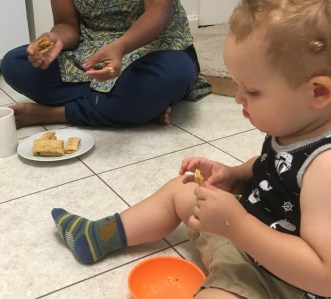
I’ve eaten a few of them myself and they are really nice — crispy and subtly flavored.

We bought some bhakarwadi which I have already eaten all up. They are like a cross between a barely-sweet cookie and a cracker with Indian spices, mildly hot.
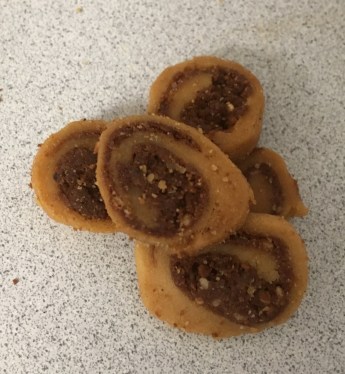
Bhakarwadi

The popped lotus seeds straight out of the bag were pretty bland and had the texture of stale popcorn. I roasted them in a pan with ghee, salt and spices, which transformed them into another light and crunchy, addictive Indian snack. Rejoice!

snacks and addictions

If you see red stains on the sidewalk in an Indian city, it’s likely they are selling paan nearby. This snack is the only nasty one I am going to write about, so I’m getting it out of the way first. People use it after the manner of chewing tobacco, after they roll some betel or areca nut (Areca catechu) and perhaps tobacco and some other flavors and ingredients into a paan leaf, which is also called a betel leaf (Piper betle) although the plant it comes from is an entirely different species .

I found lots of information online about how healthy the paan leaf is; it is related to kava, so maybe that’s true. But I’m afraid that doesn’t make the whole concoction any less toxic. “Paan (under a variety of names) is … consumed in many other Asian countries and elsewhere in the world by some Asian emigrants, with or without tobacco. It is an addictive and euphoria-inducing formulation with adverse health effects.”

Kate pointed out these paan preparers to me and that made me curious enough to read more about the whole thing. In some places paan is outlawed because the chewers often spit on the sidewalk and it makes an unsightly red mess. It is possible to find recipes in which the betel nut part is optional, so you could eat a non-toxic version if you’re interested. Let me know and I will ask Kate where she found it. 🙂

So, that’s usually a bad sort of snack to be in the habit of eating, but Indians are great snackers all around, and you are in luck if you are looking for something spicy and crunchy. There must be a hundred snacks in this category that I haven’t tasted, but I’ll tell you about a small sample.
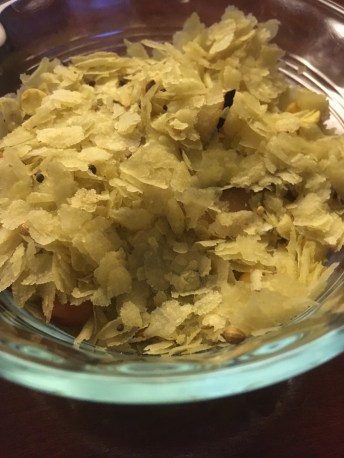
This flaky stuff below, poha chivda, is the first such food I encountered. The main ingredient is rice made into crisp flakes about the size of regular rolled oats, to which other very spicy ingredients are added. I can’t personally eat it tidily other than with a spoon out of a cup, but I think it must commonly be eaten out of hand, too. I found a recipe for it which I am linking to just so you can see a better photo of this snack that I love. The main ingredient would no doubt be hard to find in the U.S.:

Bitter gourd is battered and deep fried to make a food that is even more fiery than the above. Eating a whole 2″ diameter ring of this snack keeps me warm for quite a while:

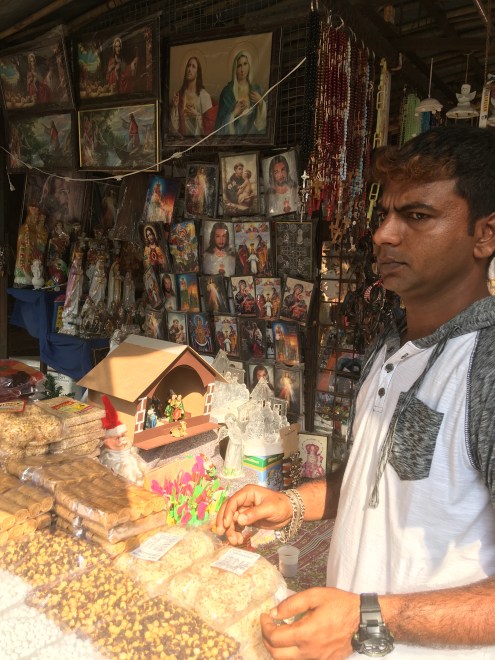
Outside the famous Mary Mount church at Bandra Fort is a snack stand that caters both to tourists and to church people who might need one thing or another as they go in to worship and/or come out hungry:

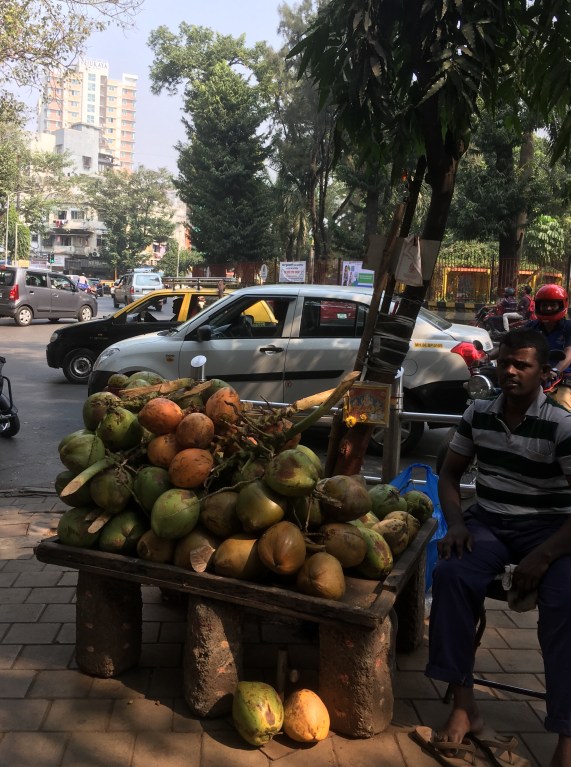
We came upon a coconut stand, and Tom bought a fresh coconut that was served with a straw. Then he was given a scoop made from a slice of the fruit, with which to scrape out the creamy pulp that was left after we drank the coconut water.

Another favorite of Tom’s is sev puri, which is sold at the same snack stands as pani puri which I mentioned before. I have eaten it two or three times, when we stop on the street and two or three of us stand at the counter and share one of these savory bowls. I know, it looks a mess, but you get to watch it be assembled from several ingredients that combine to deliver a flavor punch with crunch on top. Highly recommended!

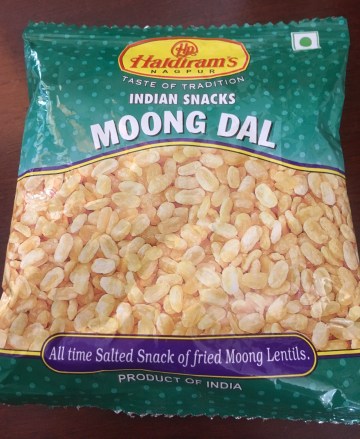
The moong dal snack below was offered in our hotel room last week and I have no idea what it is like because I’m saving it for something or other:

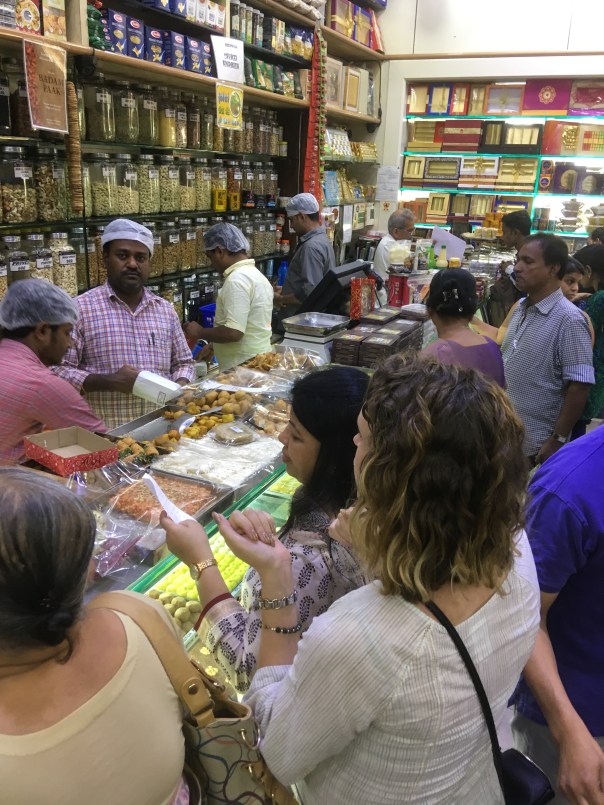
So far, the store pictured below was my favorite food shopping experience, for the large variety of dried fruit, snacks and sweets available there. Here Kate and friend Krishna are trying to get the attention of the busy clerks:

And it was at this store that I was introduced to the amazing dried apricots, no bigger than 1 1/2″, with pits intact. The flavor is sunshine bright, and they make a nice little nibble.

It would be easy to become addicted — but I’m counting them as health food!

Food for the mind, feasts for the eyes.

If I have trouble putting together a Real blog post, it’s not because I haven’t been soaking up the sights and thinking about so many things. Now that I am actually here, I have been reading about and discussing with Kate and Tom Indian history, language, politics, slums, and religion.

The night before Baby Raj was born, Tom projected maps of India on the big screen and gave a little talk on various of these topics — it was the best sort of lesson for me, the map presentation helping me to tie bits of knowledge together in my mind. Perhaps there’s a chance I will retain more than a smidgen.

My “studies” are interspersed with or carried on in the midst of Baby Immersion. Just being in a home where a newborn baby lives and breathes and will stare back at you with no feeling of awkwardness — it’s too sweet.

This baby will have Indian nannies as long as he lives here, so some of the first words impressed on his pliable mind will be from Indian languages. But which ones? Hindi is not the primary language spoken in these parts, and India has designated 30 languages as “official” languages of the nation. According to Census of India of 2001, India has 122 major languages and 1599 other languages.

20% of Indians speak Dravidian languages, which are not even related to Indo-Aryan languages such as Hindi. These and other non-Hindi speakers have fought against proposals to impose the Hindi language in southern India. The Indian constitution does not give any language the status of national language, but the authorized version of laws is required to be in English, and the business of the Supreme Court is conducted in English.

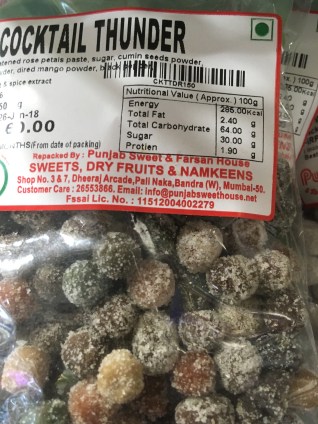
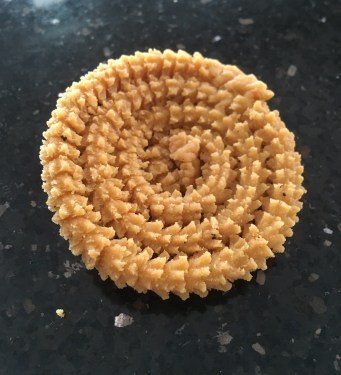
I’ve learned very few Indian words, mostly names of food. But I didn’t learn the name of the Diwali festival treat above before eating the last one in the house. Almost everyone I encounter seems to speak at least a little English, but sometimes I can’t understand one word in a whole sentence by the most fluent speakers, because of their accent.

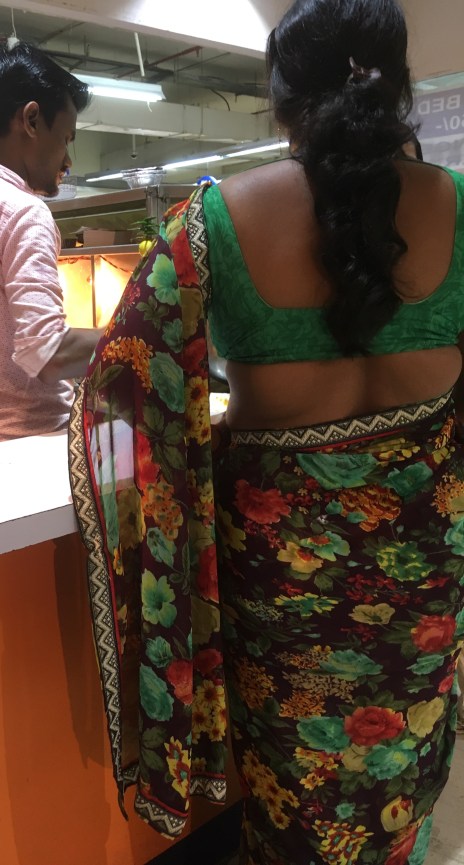
Everywhere we go I feast on colors, and feel myself to be somewhat ghostly in appearance in contrast to the Indian women in their rich attire. I’m sure I will come home with a few new and bright, concrete items to go with the images on my computer and the imprints on my mind. New dishes are constantly being set out on this banquet table.

Chinese Tea Eggs

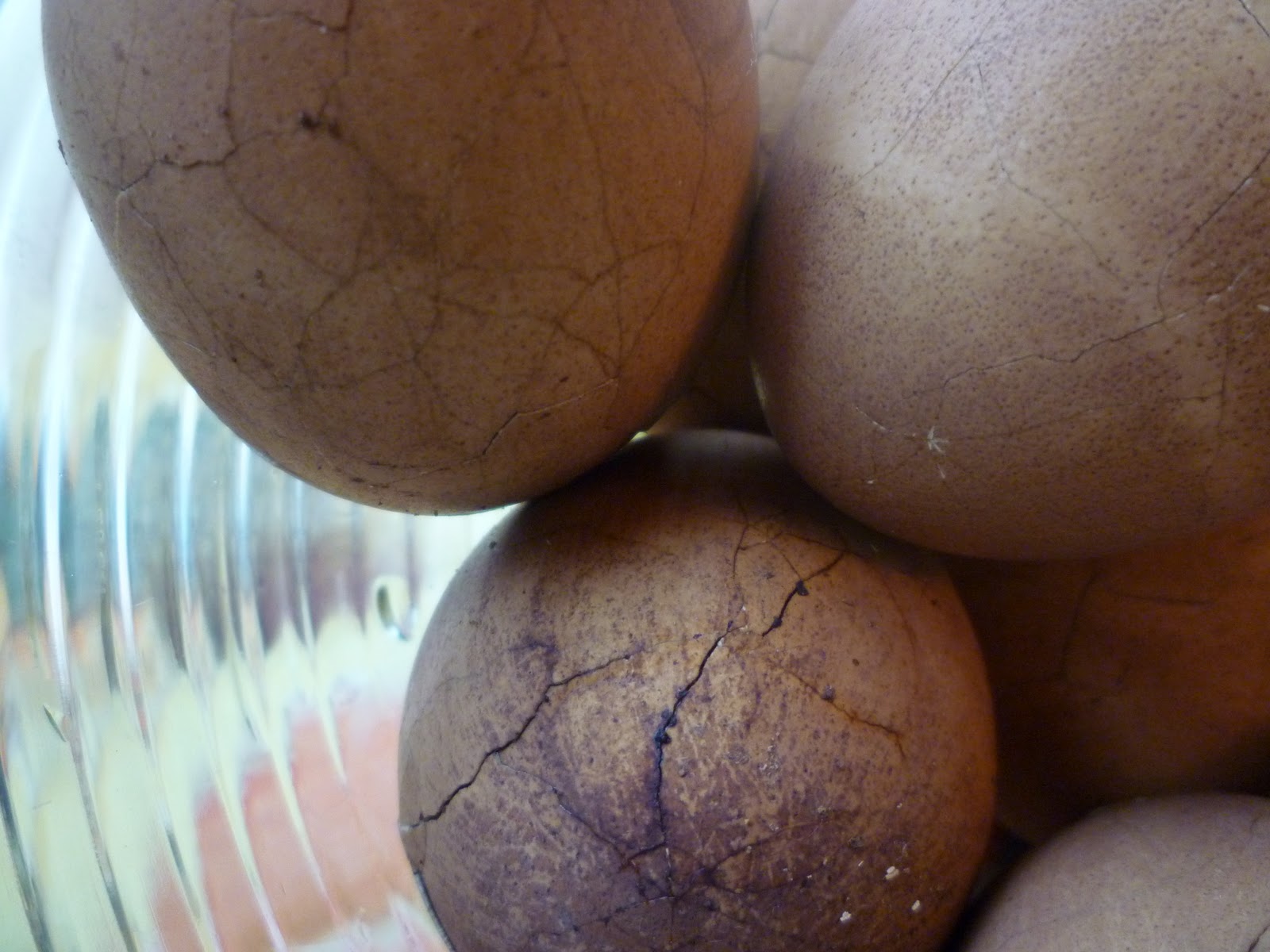
For more than 20 years a photograph of Chinese tea eggs sat in my recipe folder along with instructions for making them. By the time I got around to the project I couldn’t find the original article clipped from a magazine, and was inspired by reading on the Internet. One traveler said that in China a typical hiker will take along a sack full of these eggs the way American backpackers might put granola bars in their pockets.

Probably what stalled me was the thought that making hard-boiled eggs beautiful was only an aesthetic endeavor, and my creative efforts were applied elsewhere. But now I know that the interesting decorations on the eggs instill enough flavor to make them a complete snack without further additions.


I found lots of recipes, with few to many ingredients. The only constant is some tea leaves and salt. The first time I added orange peel, and used what seemed like an extravagant amount of soy sauce, but after perusing enough recipes and eating the results of that first batch, I decided that I could make a nice tea egg while using up some things that I have sitting neglected in the cupboards.

The flavor is so subtle, I’m pretty sure any elaborate recipe and combination of spice would be wasted on me. I don’t see how you could go wrong adding too much or too little of anything, except for the salt. Some spices that were included in many recipes were star anise, cinnamon sticks, peppercorns, cloves, and ginger root.

I used less soy sauce and more salt, and to make up for the loss of color from the soy, I added more tea leaves, because I had some loose black tea sitting around. Jasmine green tea is on my mind to try in the future. Instead of the cinnamon stick and star anise that I used the first time, I added a simple spice combination that I haven’t needed for anything else lately.

Here is the current recipe:

Chinese Tea Eggs

–One dozen large to extra-large eggs – but however many you can fit in one layer in your pot, they will all get the same benefit of the flavors in the broth. One can make a smaller batch in a smaller pot, and reduce the amounts, but I personally didn’t want to bother with fewer than a dozen.
–enough water to cover eggs
–4 tablespoons soy sauce
–1 teaspoon sugar
–1 tablespoon salt
–2 tablespoons Chinese 5-spice powder
–4 tablespoons black tea leaves (or use some tea bags)

Put the eggs in a pot in one layer, and cover with water. Bring to a boil, then lower heat to simmer for 3-4 minutes. (Most recipes cooked the eggs firm at this point, but the first recipe I read interrupted here, so I am following that practice, though it can’t be crucial, as the eggs will be overcooked by most standards by the end. Yes, they will have green on the yolk!)

Remove eggs from heat and allow them to cool a bit before handling; you can run them under water to speed cooling. Take the back of a knife and crack the eggs as evenly as possible all around.

Put the eggs back in the pot and add all the other ingredients. Bring to a boil again, then simmer for 1-3 hours, adding water if the level gets too low. The color and flavor will deepen with longer immersion. Remove from heat and serve as a snack or as an addition to rice or noodles.

If you have room, you can also leave the eggs soaking in the broth in the refrigerator overnight.

Last time I went on a road trip, I took along a couple of hard-cooked eggs to have when I stopped for lunch. But because I had forgotten to bring any salt to add, I didn’t eat them after all. I know, too fussy. Now that I’ve learned how to make these pretty eggs that have the flavor and just the right amount of salt all locked in, I’ll be more ready for picnics, and have an elegant alternative to the rustic method of salt sprinkling.