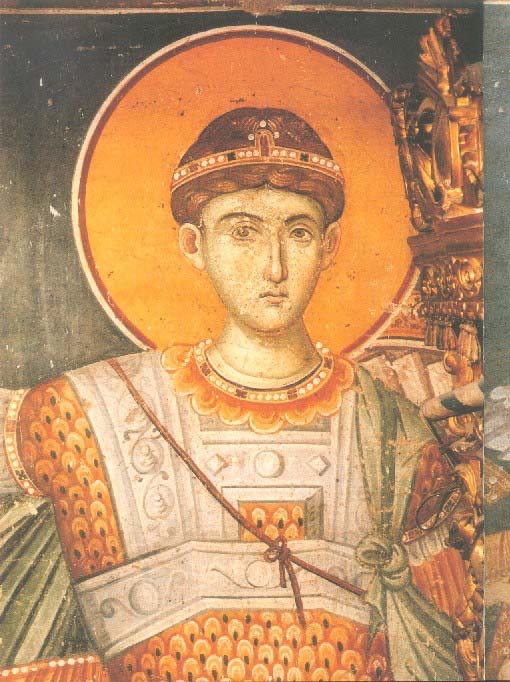
Holy, Glorious Demetrios the Myrrh-gusher of Thessaloniki
Holy, Glorious Demetrios the Myrrh-gusher of Thessaloniki

Saint Demetrios entered the story of my trip to Greece almost at the beginning, and before I end my telling I want to bring him back into it more fully. As I write, I’m still in Greece, but in Athens and on my way home.
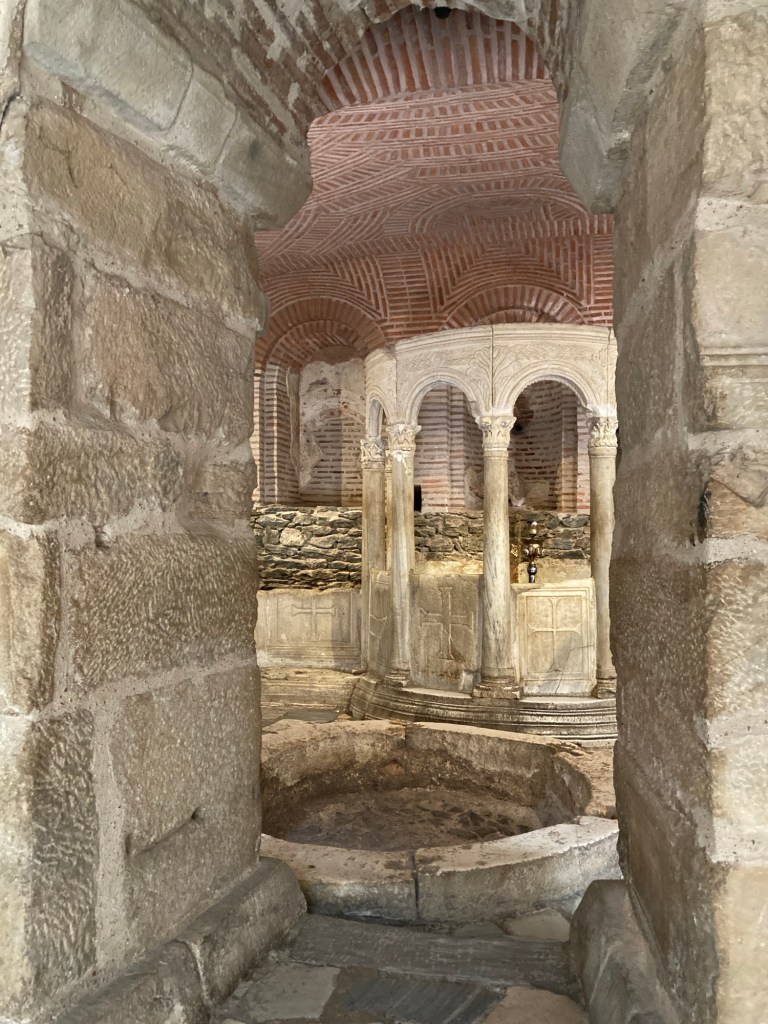
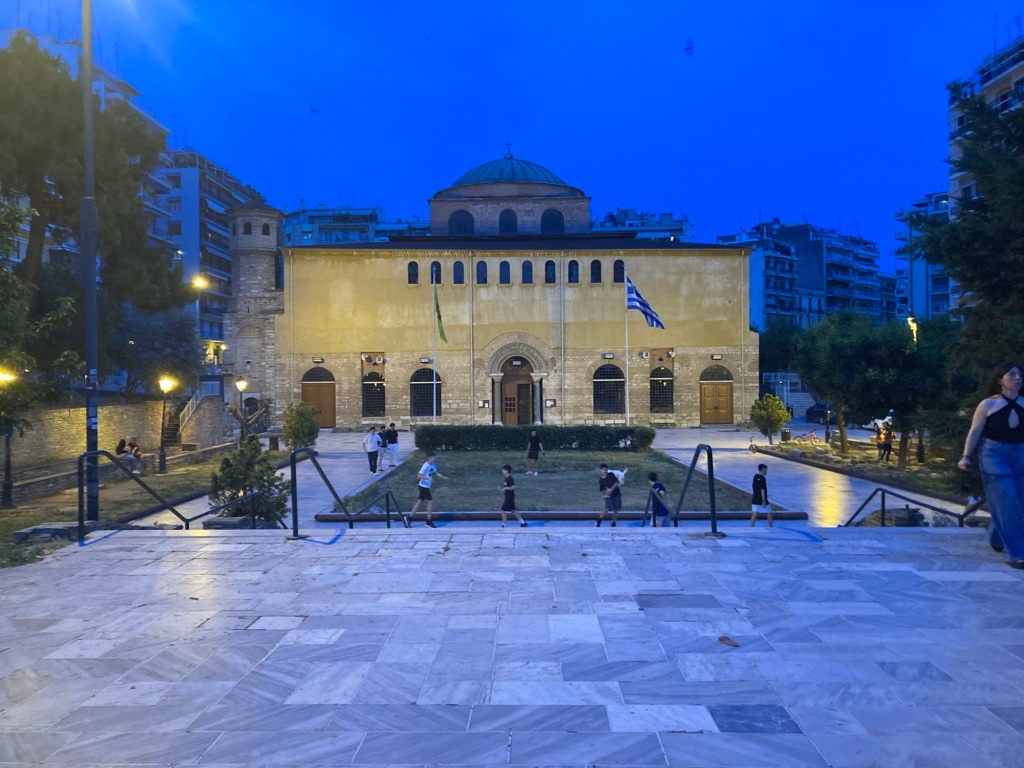
The Church that houses the saint’s relics was built on the site of a Roman bath house, believed to have been the place of his imprisonment and death. Emperor Maximian Galerius — yes, the same one who built the Arch and the Rotonda — had appointed young Demetrios proconsul of Thessalonica district, not knowing that he was a Christian.
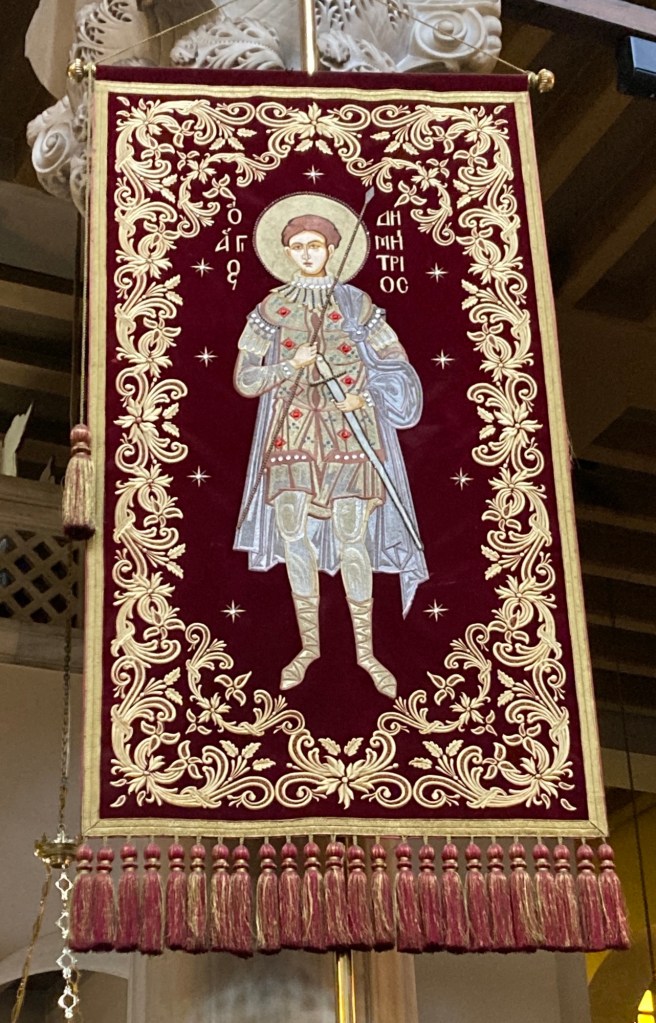
One of his duties was to put to death Christians, but instead he preached the faith, and was said by some to be a “second Apostle Paul,” for Thessalonica.
When Galerius found out, he ordered his imprisonment, and eventually his death, on October 26, 306. This article tells the story of his life in detail, including subplots concerning his friend Nestor’s martyrdom at the same time, how Demetrios became so beloved of the Slavs, and how he never would allow his relics to be moved to Constantinople.

During the reign of St. Constantine the first church was built on the site, and in later centuries the Christians began using the old bath house structures.
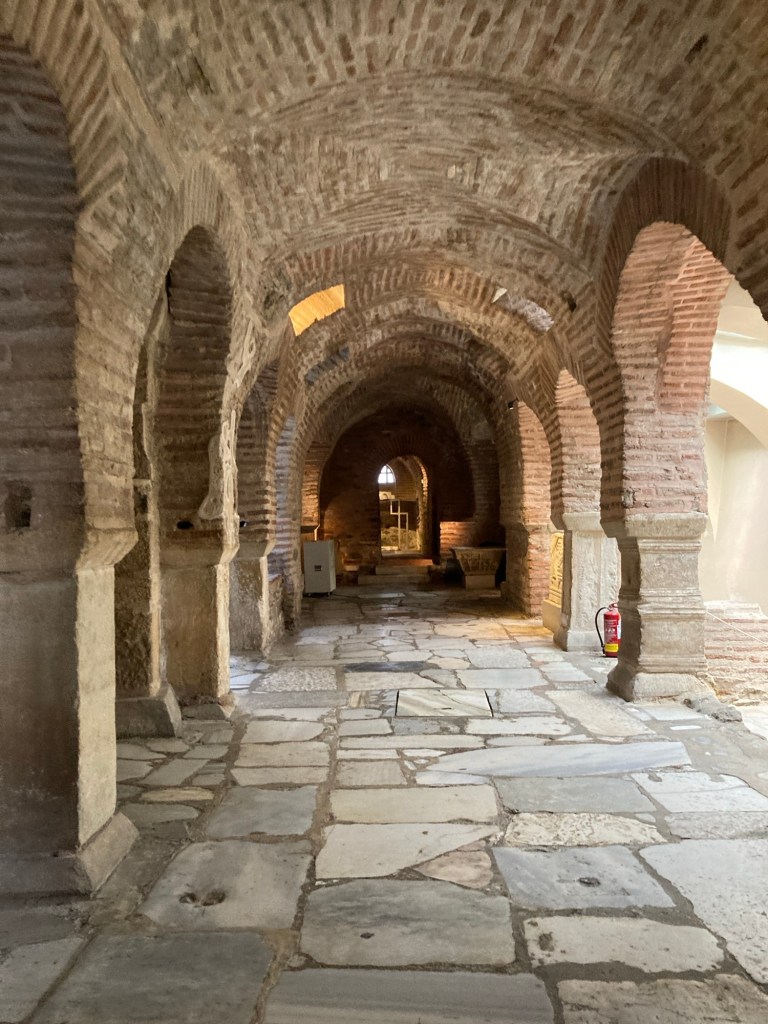
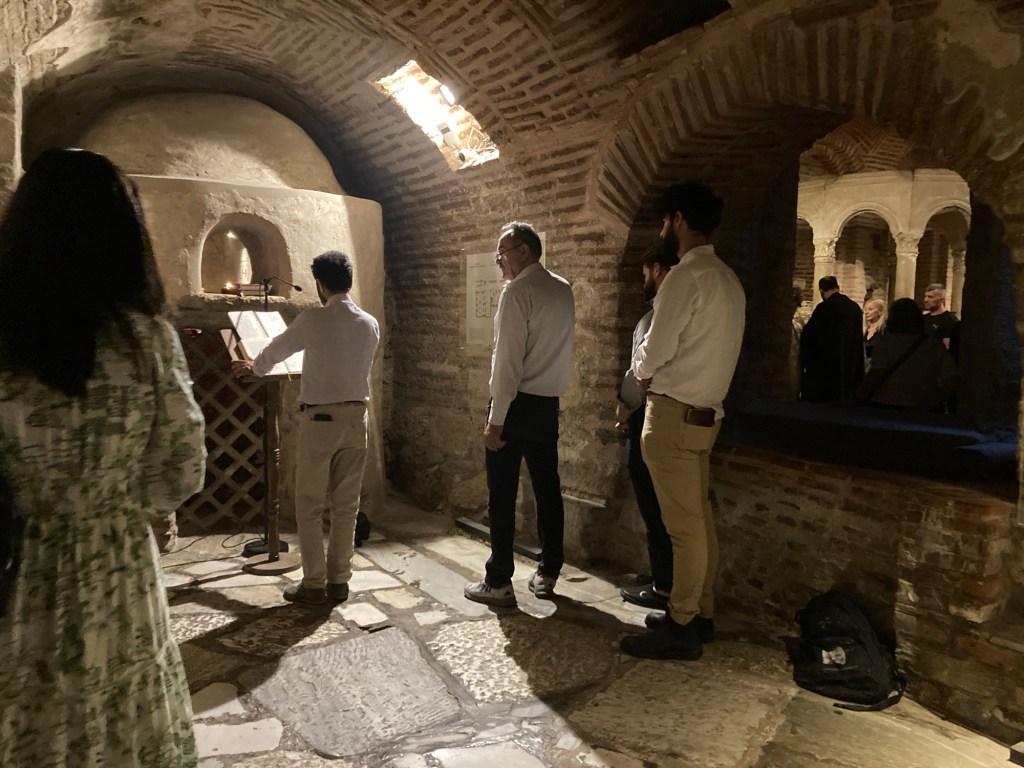
It was during the Ottoman rule when it was a mosque that the underground part became cryptic or “secret,” because whether by their intent or neglect, it was filled with earth and forgotten, until the fire of 1917 that destroyed much of the city; during restoration work on the church the crypt was revealed.
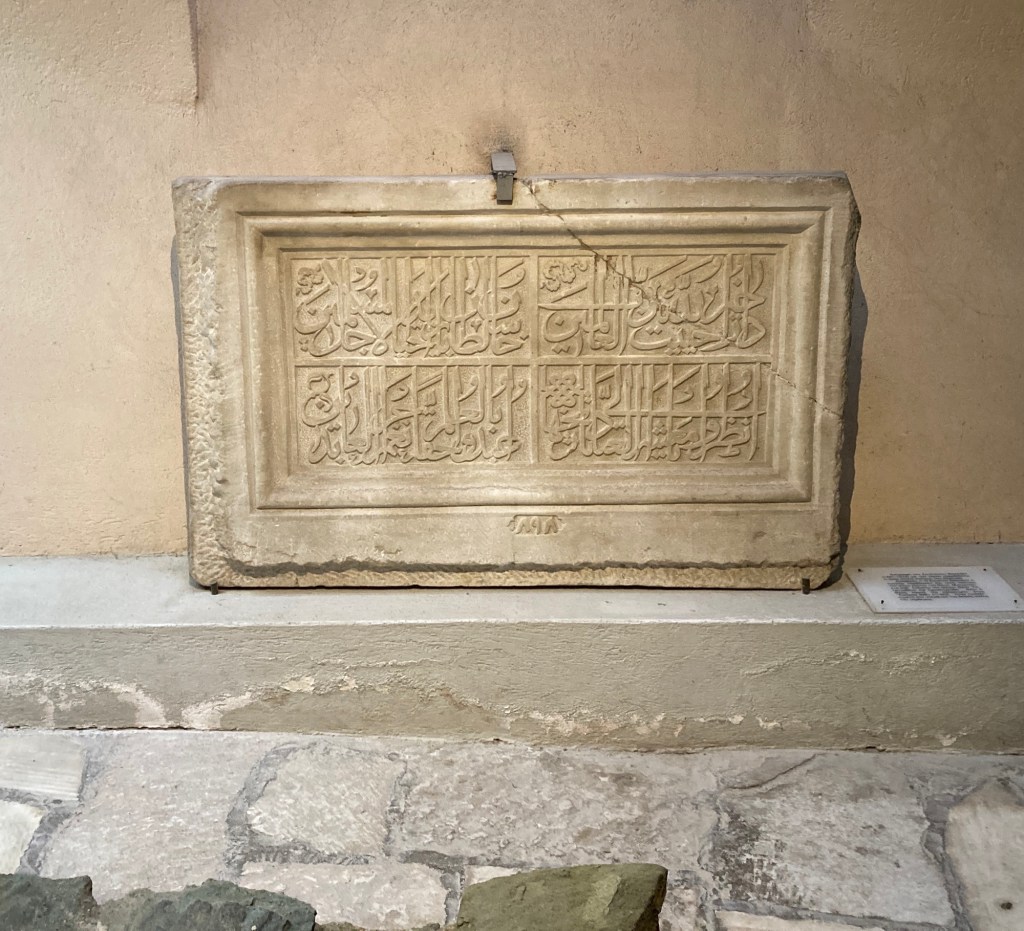
In recent years Orthodox services are often held in the space. I walked up to the church last Friday for Divine Liturgy that was served down there, where so much history is embedded in the stonework and the venerable marble floors.
The day before, the priest at the Church of the Panagia Acheiropoietos had reminded me, over coffee in his office, that there is nowhere on earth that God’s blessing is not present. You might think that He is here in Greece in a way that He is not to be found at the North Pole, for example, but it’s not true.
I have been thinking about that a lot. We Orthodox pray daily to the God Who “is everywhere present, and fills all things.” Also, we experience the eschaton at every Divine Liturgy, when Christ descends to commune with us.
The presence of God has been my experience in Greece, and He will be as immanent as ever back home when I return to the “same old” everlasting mercies of God new every morning. As I embark on my long, long day of travel, I hope I can keep in mind this constancy of grace.
Given the dailiness of our earthly pilgrimage, I can’t be too sad to leave Greece, and at the same time I’m extremely thankful for the short and rich time I’ve had here. Glory to God for all things.

I’ve written already about how my daughters convinced me to make the trip to Greece with them. They had to limit their travel time to about ten days, but I couldn’t face the thought of returning my poor body to the U.S. after such a short period, while it would still be confused from crossing ten time zones. Besides, being shuffled between multiple airports and airplanes, and spending hours in what are at best unnatural and uncomfortable environments — I wasn’t eager to impose that affliction on myself again so soon. So, my primary motivation to extend my visit was negative.
But as soon as I began to consider the possibilities this would open up, the idea became exciting in a positive way, and also a little scary. I hadn’t traveled alone in a foreign country since I was much younger, and even then my youthful advantages didn’t prevent me getting into several problematic situations.

I knew I wouldn’t want to join a group tour, but if I could be in contact with even one helpful person in whatever strange place, that would make the adventure seem more doable.
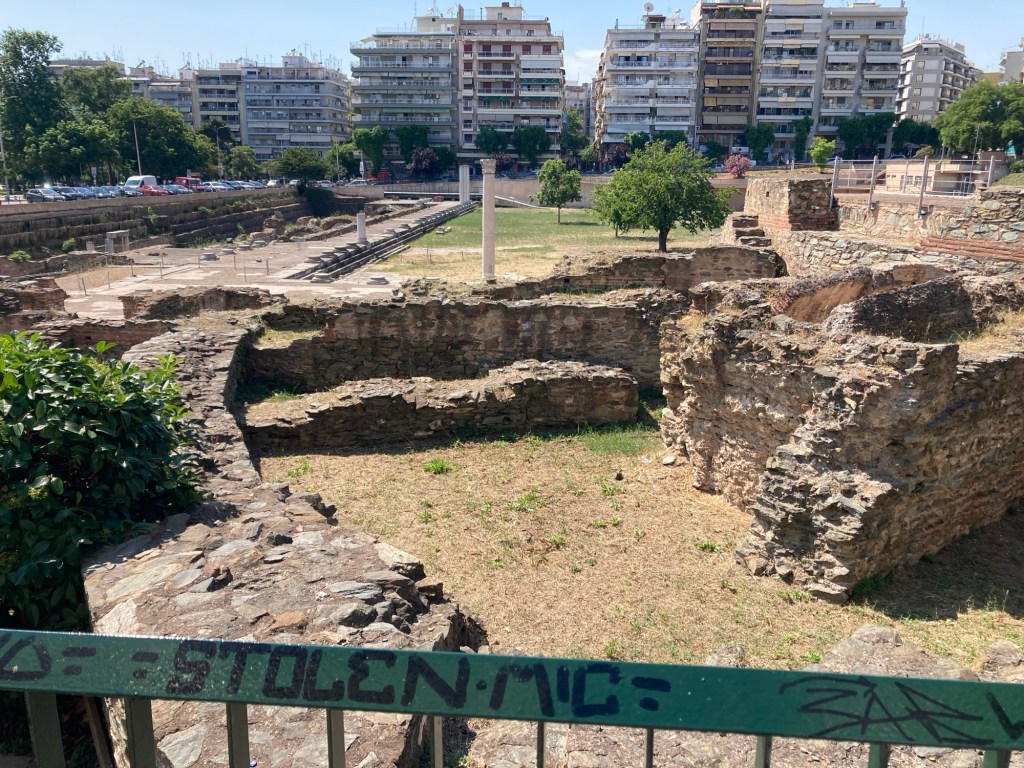
Thessaloniki was the Greek place name that I had heard the most in the last many years. Orthodox Christians know it as a center of culture and scholarship, and a place of pilgrimage very near to that more famous destination for pilgrims, Mount Athos.

Travelers to Athos typically pass through Thessaloniki, and if a mixed group of men and women are traveling together in Greece, the women might spend time in the many women’s monasteries near Thessaloniki while the men visit the Holy Mountain, where women are not allowed.

And I had known of several people at my home parish who had visited this city for long periods or studied at Aristotle University, or for other reasons lived in the city, past or present. So, very quickly, my choice of Thessaloniki solidified.
One friend had encouraged me to include at least two Sundays in the span of my visit, so that I could attend Sunday Divine Liturgy in two different churches. That helped me set the parameters of length of stay.
I really knew very little about the place. The first thing I learned was that St. Demetrios is the patron saint of Thessaloniki, and his relics are here, and I began to ask the saint’s prayers for a successful trip that would bring me to his city and church.

It turned out to be easier than I expected to make not just connections but new friends, and to become closer to people I hadn’t known well before. They not only answered my questions beforehand and after I arrived, but they provided hours of good conversation and explanations of Greek history and culture.
You have learned from my recent posts how much more I’ve discovered and experienced here – and I still have more to tell ❤️

 Gladsome Lights