Tag Archives: suffering

At home our children are waiting for us.

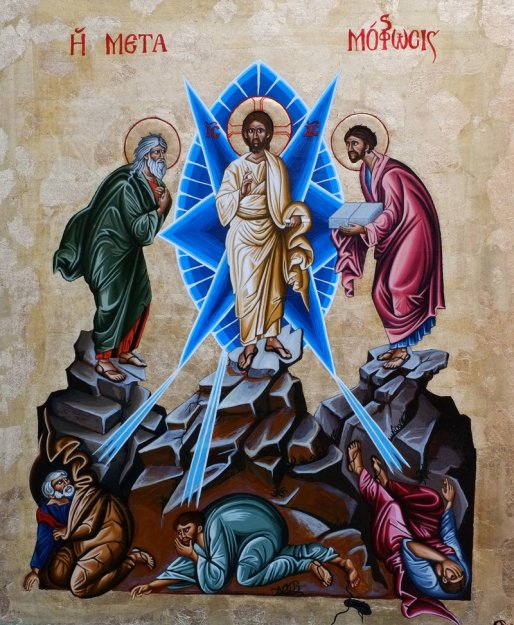
When Jesus and three of his disciples were on Mt. Tabor, and Moses and Elijah appeared as well — before Peter, James and John fell on their faces at the thundering of God’s voice, Peter suggested they build some shelters and stay a while. Just now I read this prayer prompted by that event: “Prayer on the Feast of the Transfiguration.”

“Come to us again, O Jesus—do not listen to Peter! Come down from Tabor and come to our homes, into our hearts! Come here, where we are suffering and laboring for our daily bread! Come here, where we are crucified by people, demons, and passions! If Peter does not want to come down, leave him on the mount and come to us, to our hearts!

“Teach us how to be saved, show us how to endure. Train us to carry our life’s cross. Teach us how to be crucified. Come and suffer for us, Thou Thyself be crucified instead of us, Thyself first taste the cup of death, show us a new way to salvation through suffering.

“O, how we would have liked to stay with Peter on Mount Tabor! But we bear a body, gasping from sickness, lusts and passions. In our breasts are hearts burning with hatred. At home our children are waiting for us, asking us for a piece of bread!…”

-Archimandrite Iachint Unciuleac

You can read the whole prayer: Here
Totally involved in the pain.

The Raising of Lazarus


“Despite the effects of the Fall and despite our deep sinfulness, the world continues to be God’s creation. It has not ceased to be ‘altogether beautiful.’ Despite human alienation and suffering, the Divine Beauty is still present in our midst and still remains ever active, incessantly performing its work of healing and transfiguration. Even now beauty is saving the world, and it will always continue to do so. But it is the beauty of a God who is totally involved in the pain of the world that He has made, of a God who died on the Cross and on the third day rose victorious from the dead.”

–Metropolitan Kallistos Ware

Our days are not filled with things we like.

Today, I just want to share excerpts from Fr. Stephen Freeman’s article, Thanksgiving as Mystical Communion:

“In one form or another, we divide the world into light and dark. It might take the form, ‘I like this. I do not like that.’ What we find easy are the things we see as good and the things we like. If a day is filled with such things, we are likely to be happy…. Of course, our days are not filled with good things that we like.”

“The modern myth is bound up with the ‘better world,’ the notion that through proper management and applications of science and technology (and all of the so-called ‘sciences’), we can make the world a better place – meaning that we will be able to eliminate the negative and maximize our pleasure. Pleasure is equated with the good, while suffering is seen as inherently bad. Modernity seeks to turn the world into a candy store (without diabetes).”

“My continuing critique of modernity has nothing to do with technology, medicine, science, etc. None of those things are ‘modern’ in and of themselves. Modernity is a set of ideas, not a time in history. One of its most subtle bits of propaganda is to pass itself off as a historical period, and, even, as the inevitable outcome of everything that has gone before…. Modernity is propaganda parading as history.

“It is also ungrateful.”

“No doubt, Christians will continue in doing good. However, in spite of every modern mythology, the world will not be a ‘better’ place. Evil things will continue to happen (many of them done in the name of a better world). Modernity, however, cannot bear suffering, which is truly tragic in that suffering is an inevitable part of every life. The modern world’s absence of a meaningful narrative with regard to suffering – other than to eradicate it – perpetuates and cultivates a heart that is frequently unable to be grateful.”

“In every thing give thanks:
for this is the will of God
in Christ Jesus concerning you.”
-I Thessalonians 5:18

“Giving Thanks” by Horace Pippin

Patiently pulling out the thorns.

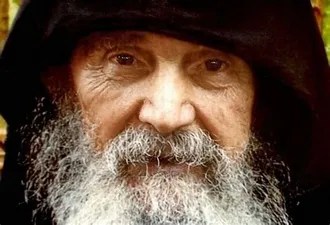
Today marks three years since the repose in the Lord of Elder Ephraim, at St. Anthony’s Monastery in Arizona, where he had lived most of the time since he founded it in 1995; it was one of seventeen Orthodox monasteries he established in North America. If you’d like to know more, any of these articles would be a good start:

Geronda Ephraim (from St. Anthony’s) or Ephraim (Moraitis) of Philotheou

Oh, and this one is lovely, featuring more stories from his life and photos of his funeral: Elder Ephraim has reposed.

It was encouraging to read in the St. Anthony’s article especially about his mother’s work — including prayer, above all — in helping to form the soul of this man, whose life in many ways has been a powerful gift to the world.

Here is a quote from Elder Ephraim that a friend sent today:

“Since you follow the Savior Christ… your greatest duty is to bear all suffering, whether it comes from nature, indolence, sin, or people. Since we desire to live a Christ-like life, we are obligated to submit to God’s will because all things come from God. And since they are from God, and thus are the divine will… Shall we not obey? Shall we not cry out with the blessed Job, ‘As it seemed good to the Lord, so it has come to pass. Blessed be the name of the Lord’ (Job 1:21).

“Through patience and thanksgiving, then, we show obedience to the divine will… Therefore, let us struggle; let us make our souls keen by working them over the whetstone of patience, in order to carry out a work pleasing to God. Afflictions, illnesses, distresses, trials – none of these will separate us from the love of Christ. For we have already been taught that narrow and difficult is the way which leads those who walk along it into the life without sorrow…

“Along the difficult way – that is, the trial of sickness and so forth – the thorn of doubt, of impatience, of cowardice comes to rend the garment of the soul. What is needed, therefore, is to pull out this thorn through faith, hope, and patience, having Jesus Christ as a model. Throughout His earthly life, he had many afflictions, and his All-holy soul was oppressed by many thorns, and so He exclaimed, ‘In your patience, you will gain your souls’ (Luke 21:19).”

+Elder Ephraim of Arizona, Counsels from the Holy Mountain