Our days continue with the lovely relaxed feeling that comes from being just the right temperature and humidity. It’s dry here, but not harshly so.
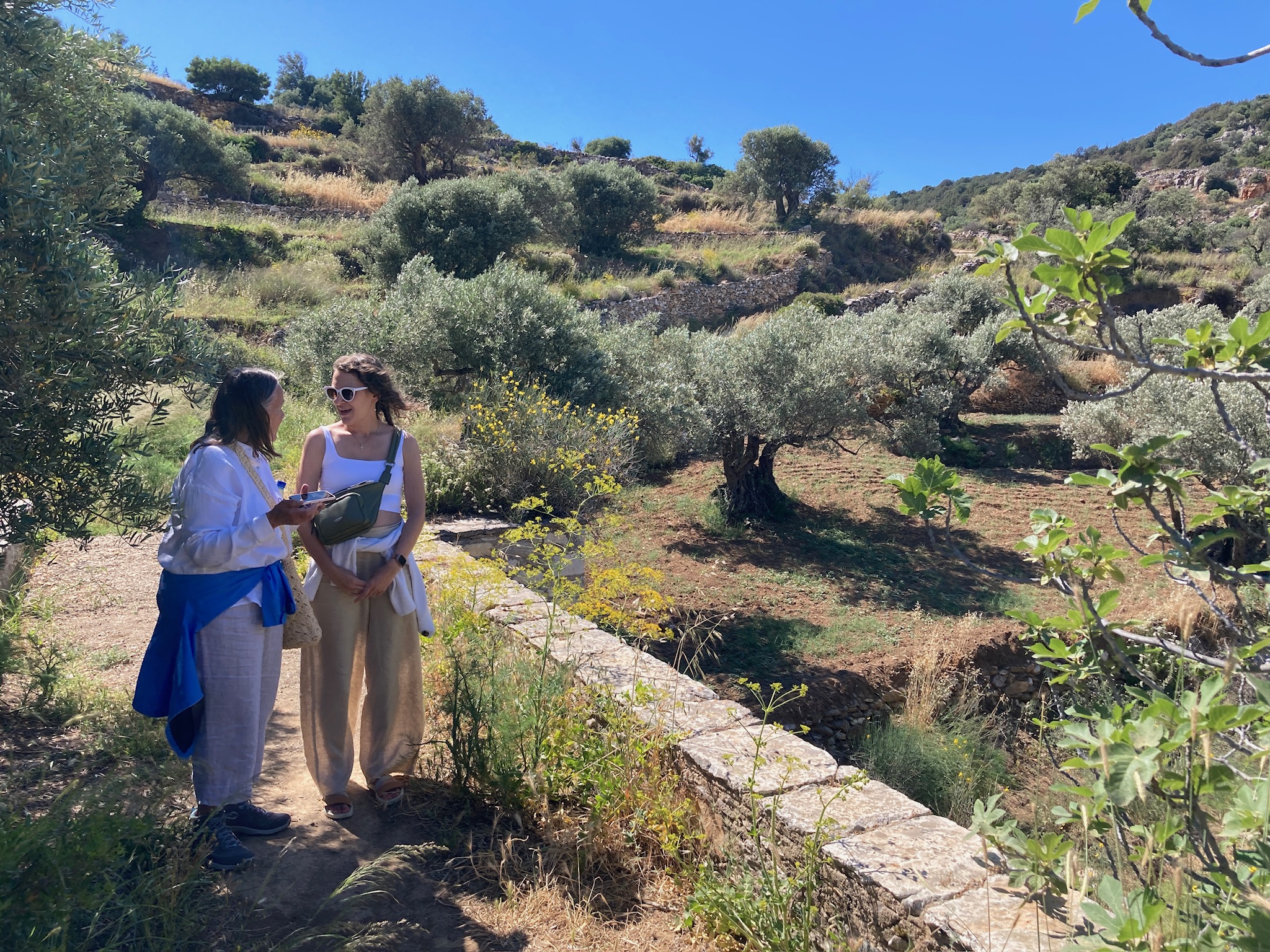
The sun is bright, but not too bright, and the air seems constantly re-freshed by the winds, though evidently perception is not the full reality:
Our first morning here we wondered about the red dust on the car and the stone terraces. In the town many people were washing down their outdoor spaces though it had recently rained.

“It’s raining dust from Africa,” our host told us. Soon we heard from others, “It happens every May, the red dust from Chad blowing north.” Who knew?
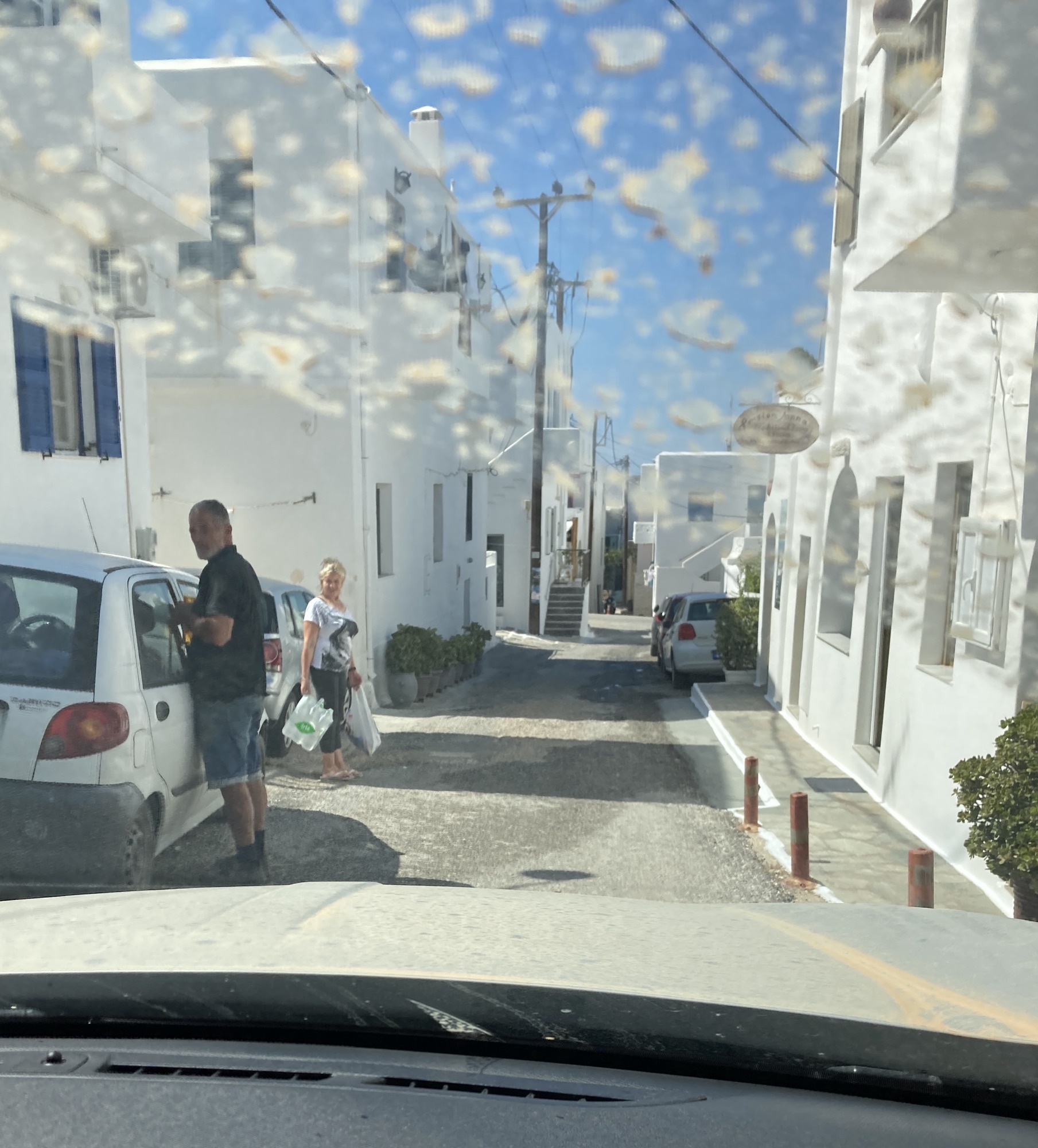
In the picture below, that I took when Kate was navigating the twists and turns of the narrow village streets, you can see the dust on the windshield, but it’s not red, so maybe we are at the end of the African dust season, and the air is now carrying the paler local dust.
One day we swam at the closest beach, Aliki. It wasn’t crowded at all. Some Greek boys were very boyishly playing with a ball in and out of the water and providing good entertainment, especially for Pippin who was catching Greek words and phrases in their shouts; she became much more comfortable with the language than I after our months of Duolingo lessons.
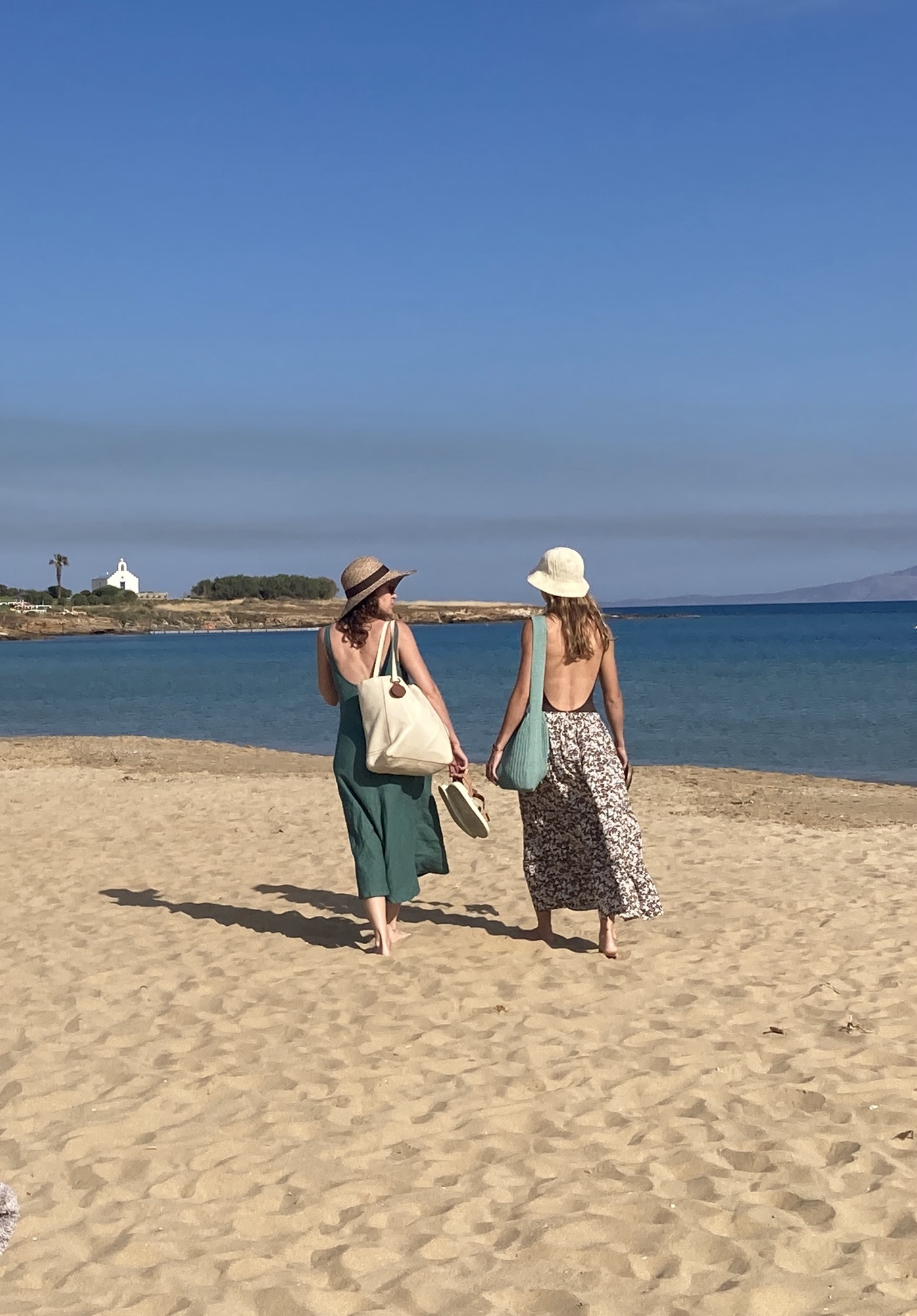
After I walked out through the waves up to my waist, it still took me a few minutes to finish what I had started months ago, when I told my daughters how much I was looking forward to swimming in the ocean.
I knew it wouldn’t be as perfect as the other times I’d been in the Aegean, on the Turkish coast so long ago, but without a doubt it would be much warmer than any of our northern California beaches whose currents flow direct from Alaska.
Once I did dive in, it didn’t seem too cold at all, and I swam as lazily as one can, for (what I perceived to be) a long time. That felt so good. I hadn’t swum in the ocean at all since Maui, thirteen years ago.

Another day we went to Golden Beach, in the evening, and I don’t think any of us swam, but three of us brought the others drinks from the bar, and we sat and told stories from the last years or from our childhoods and anytime in between.
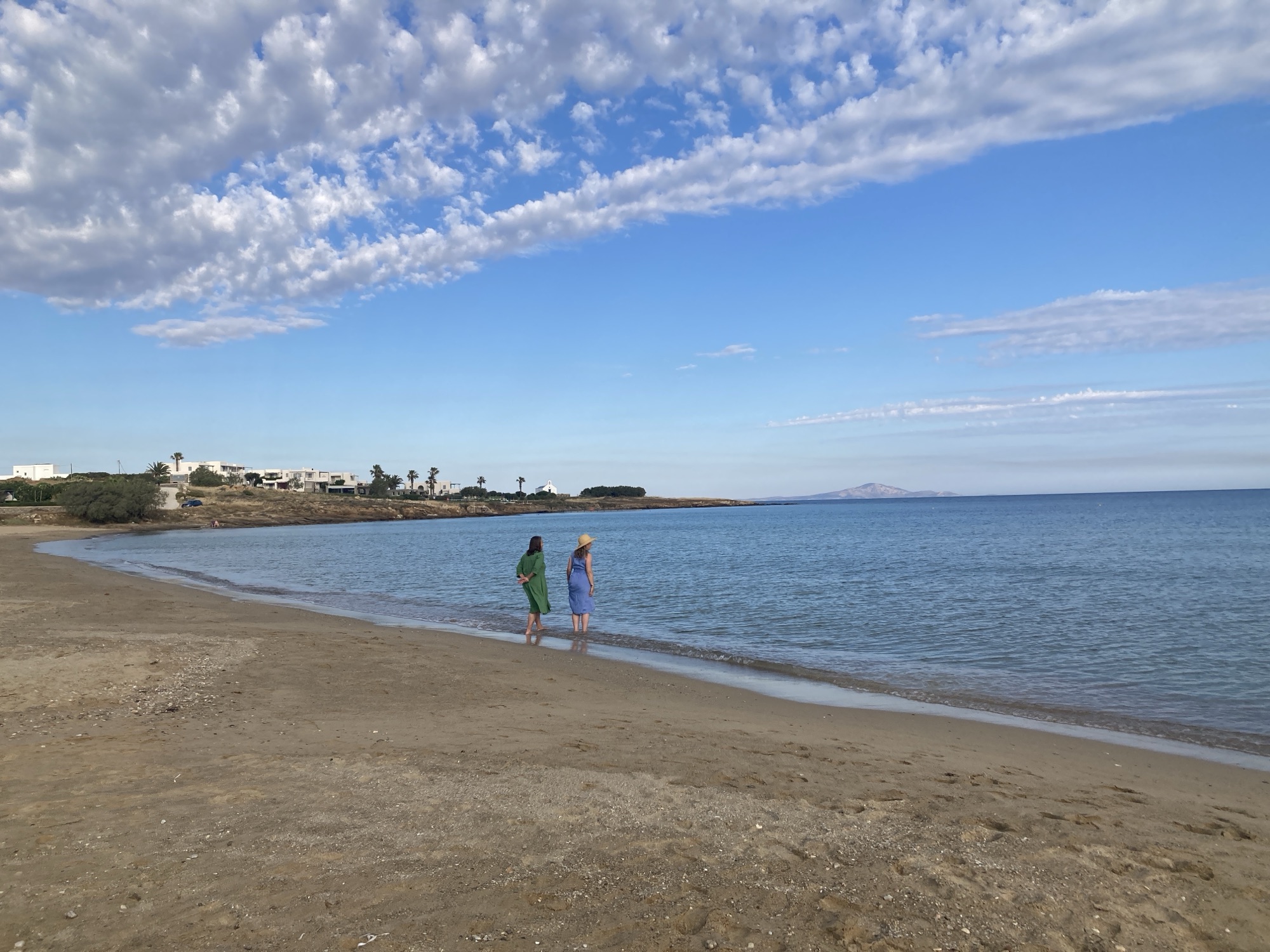
Pippin and I walked slowly along the shore looking at the smooth and many colored stones, and chose our favorites.

I have a lot of favorites. One daughter asked if I were going to take sand for my collection at home, and I realized I had forgotten to bring along a bag or bottle for that. In my purse I found a pill pouch with a few Tylenol tablets in it, so I dumped those in another place temporarily and scooped a tablespoon or so of golden sand into the tiny bag.
When we returned that evening after a long day on the other side of the island, we realized we were fresh out of drinking water. Our hosts simply stated on the website, “The tap water is not drinkable.” I had drunk a pint of it before I heard that, and thought it tasted good, but we have been buying water in quart bottles from the grocery store across from the beach.
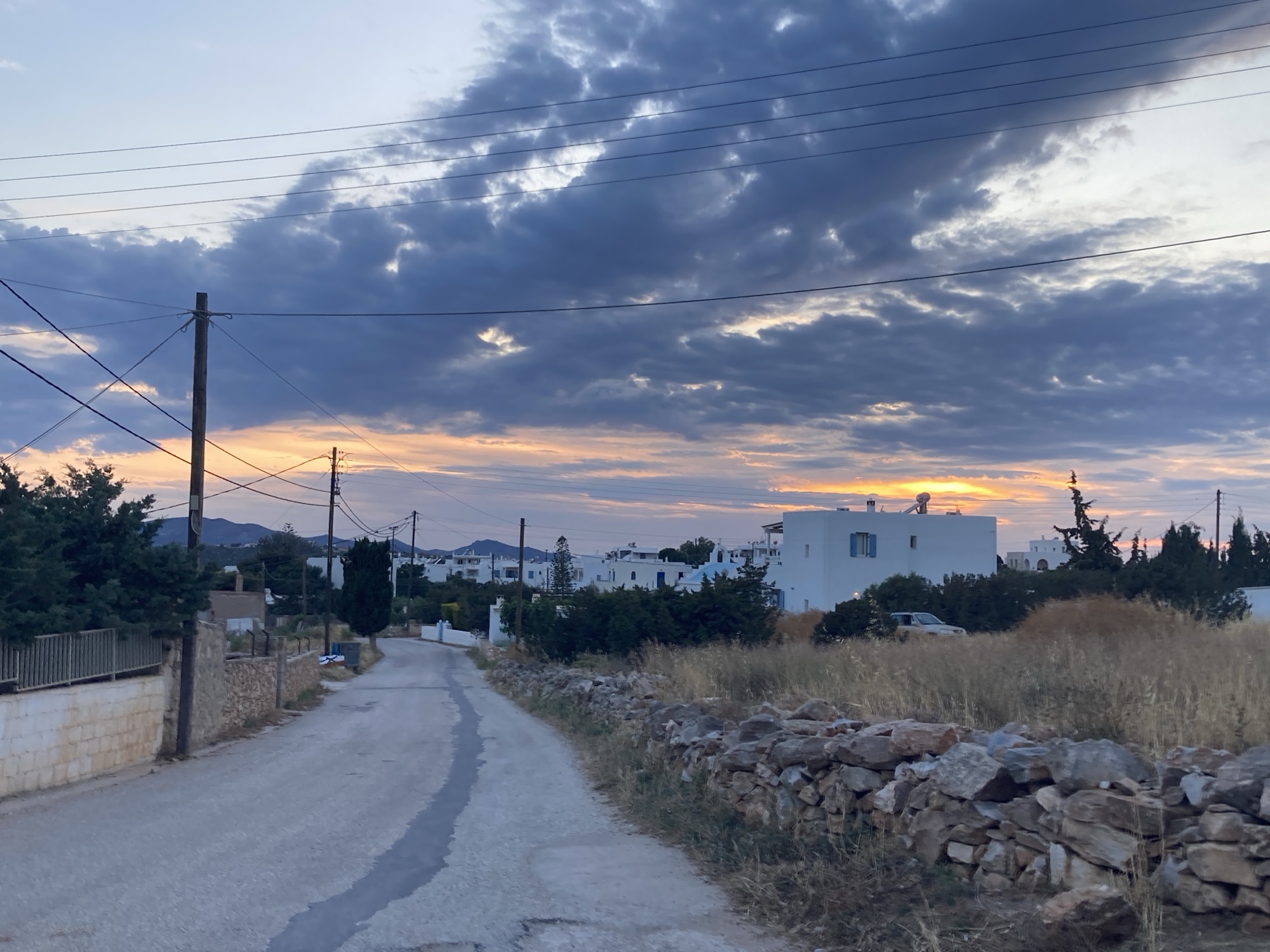
Pippin wanted to walk down there to buy more water, and I went with her. It’s about a ten minute walk, and was very pleasant in the fading light, with the village sounds changed from the daytime. People were walking their dogs, and it seemed to be the hour for dogs to bark.

The doves that fill the airwaves with their constant urgent cooing had not stopped, but fewer people were on the beach, and the beachside restaurant tables were quiet.
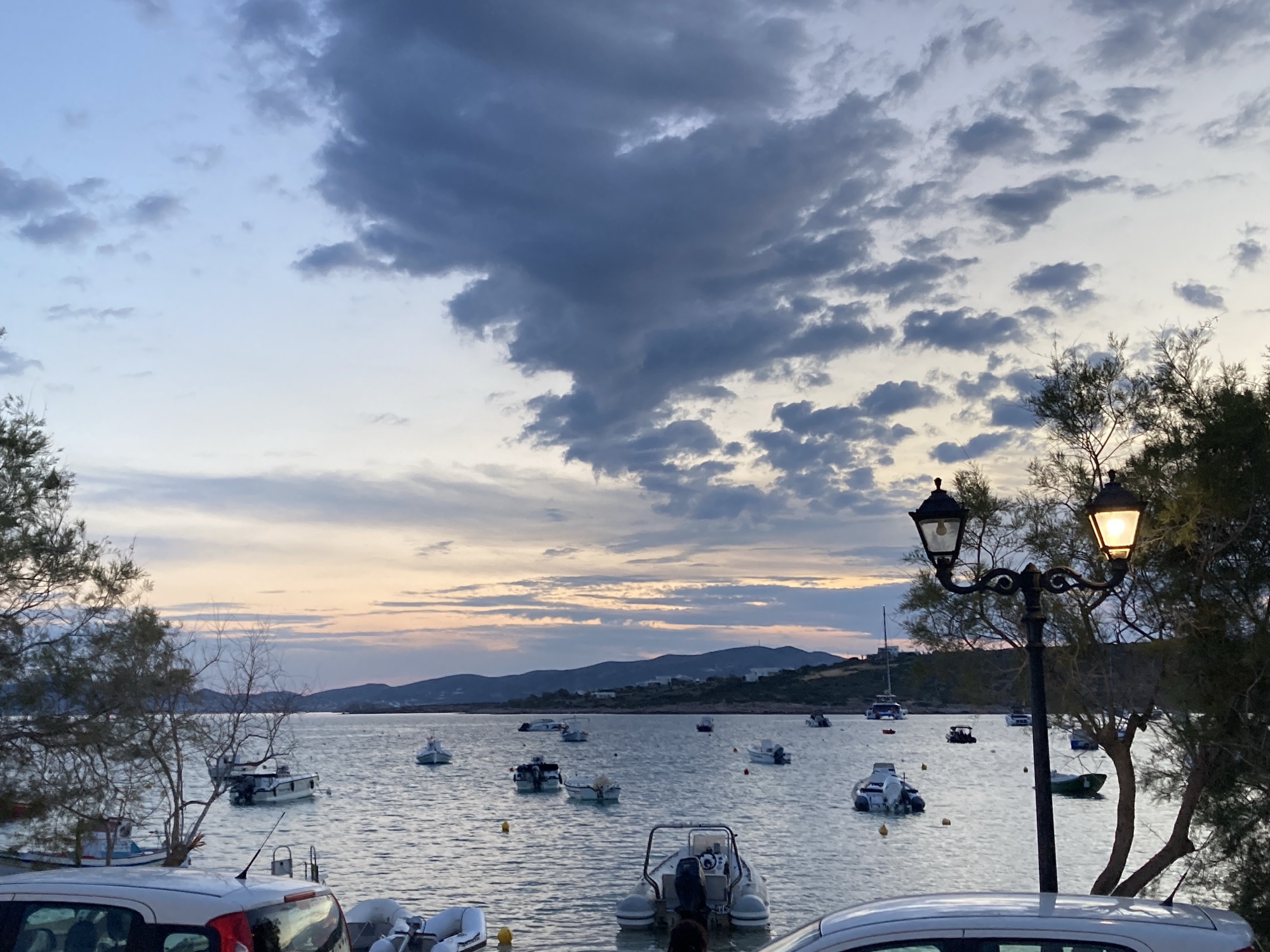
We browsed the store a bit and in addition to water bought linden tea and rice cakes flavored with oregano. I would not have bought them if I hadn’t learned this week that Maggie likes rice cakes. That makes two of us.

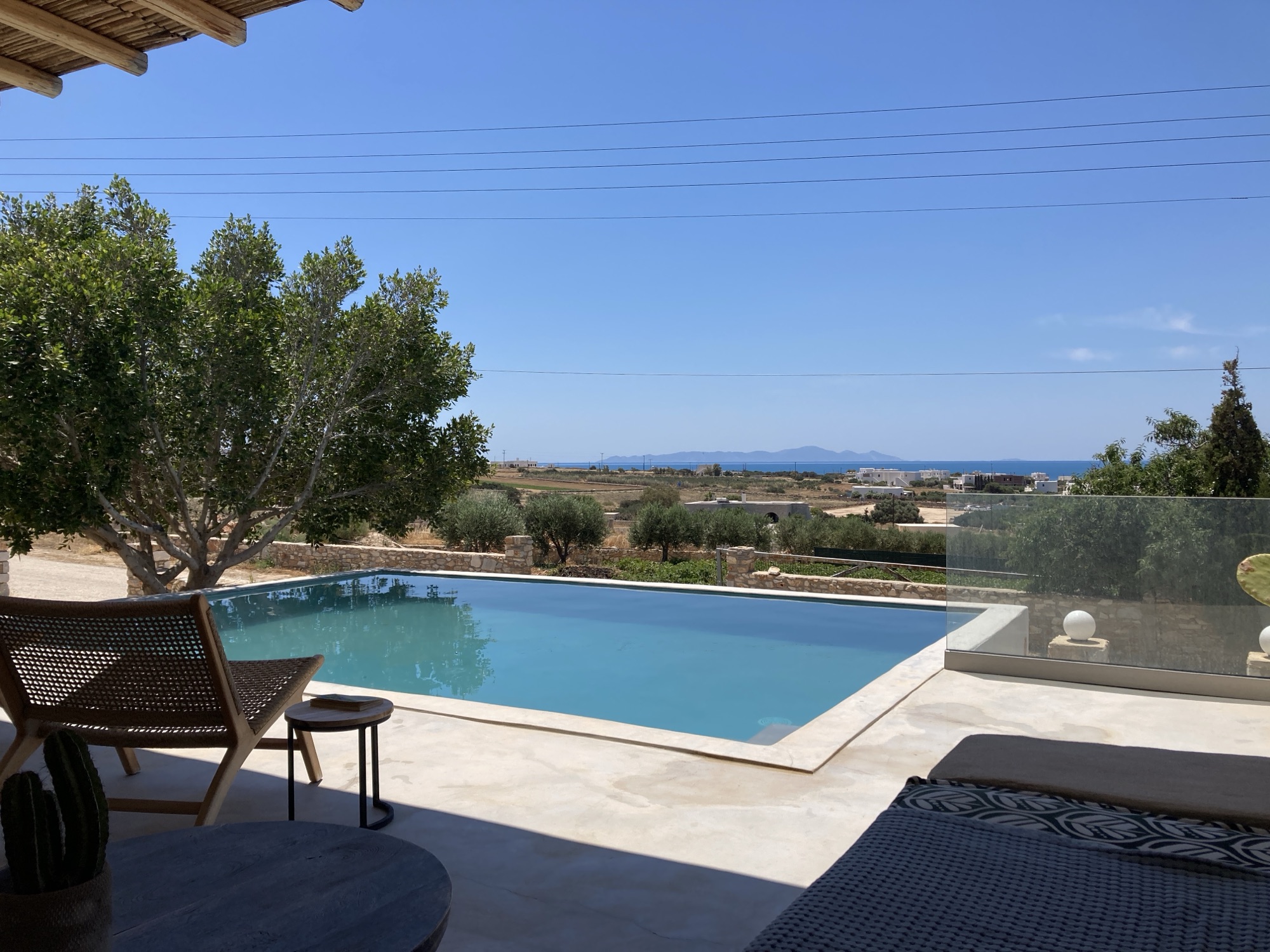
For today our group split up, three going to the nearby island of Antiparos and two of us staying here for a Home Day. I washed some laundry — it dries in a flash on the rack outside — and wrote a postcard; Maggie swam in the pool. I’m lying on a day bed on the terrace that overlooks an olive grove with the ocean just beyond:
The owner of the villa was here earlier skimming the pool, and when I came out he was in the middle of telling Maggie that at her age she should be going into Naoussa to enjoy the night life. She was reading a book, and he said only two in ten Greeks ever read a book. He doesn’t favor the quiet life such as Maggie and I were having this morning, and prefers to be busy with “business.”
But as he was leaving he said he regretted building several such villas as we are staying in, it is too much work keeping up with the hospitality and maintenance on all of them.
He also said he comes from Crete, but it is too big, he likes Paros much better, and it is a better life than Naxos, too. I’m thankful he built this house we are staying in, because it’s the best.
 Except for the hum of my car’s engine, and the sound of rubber rolling on asphalt, the night was still, and pitch black. Pearl and I were driving on curvy roads the last hour up the mountain, at nearly 10 p.m., later than I’d ever done that. There was no moon, but reflectors shone from the snowplow markers on both sides. I kept slowing down as a precaution against hitting deer that might bound out in front of me, then I would forget about them and speed up, my high beams shining into the darkness giving me some confidence to push on. This was an eerie and unusual way to start a vacation at the lake.




 Gladsome Lights