Tag Archives: symbols

Playing around his knees.

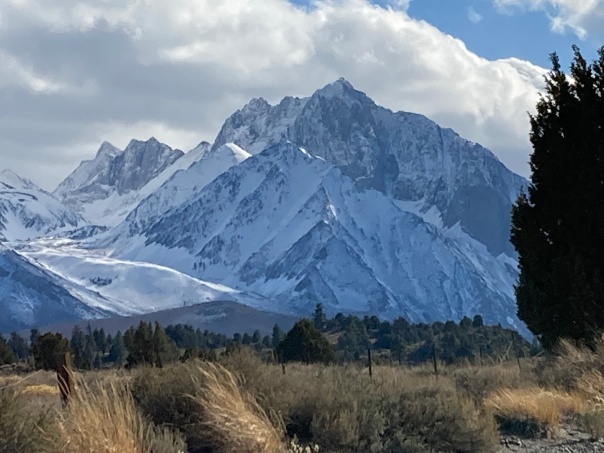
Eastern Sierra Nevada

The poem below got me started thinking about mountains and their symbolism. I discovered a very long article on the subject, “The Transfiguration on Mount Tabor: The Symbolism of the Mountain,” which I don’t have time to read deeply, because as I type this draft, I’m in the midst of packing the car for five of us who will be in the mountains together by the time you read my post. I hope the article is not paywalled. It is a treatise on the subject going back millennia, opening with this from René Daumal:

“[The] summit touches the sphere of eternity, and its base branches out in manifold foothills into the world of mortals. It is the path by which humanity can raise itself to the divine and the divine reveals itself to humanity.”
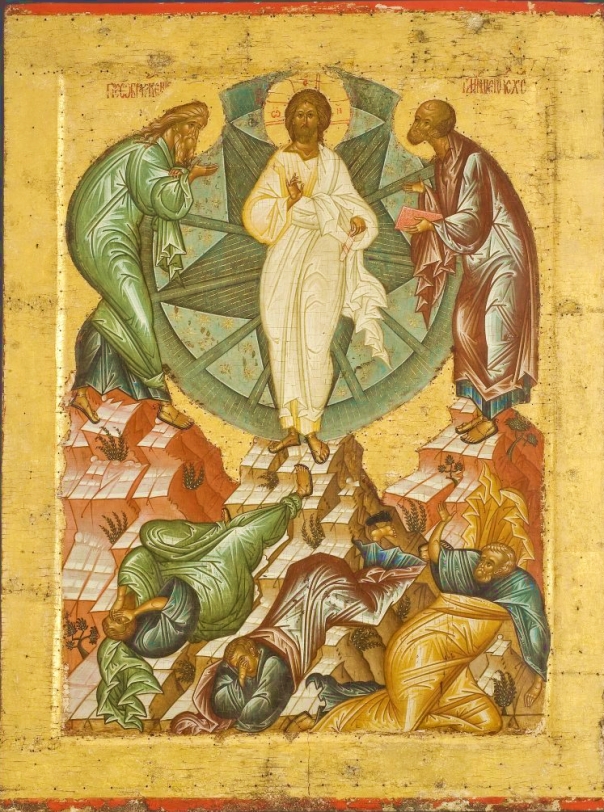
The Transfiguration, Mount Tabor

The author examines traditions throughout the world, beginning in ancient times and concluding with thoughts on what The Mountain means for us Christians who are on a continuum with those 2,000 years ago. Here is one excerpt to help you know if you are interested in the subject from a scholarly perspective :

“In the traditional Hebrew and Christian understanding of the world, places are what they are by their teleology: it is not so much by the material or structural elements that they are recognized, but by their function. Things are what they are because of their purpose and their place in a web of relationships within reality which help create our own map of meanings. Therefore, it is very difficult to understand from a purely geographical (time-space) position where God dwells with regards to this or that mountain. For this reason, many physical mountains have been ‘the mountain of God’. There is only ‘one’, but it’s not confined to one geographical space-time location as we modern people understand it.”

I guess it’s obvious that I myself am interested, and I thought of printing this article to take with me to the high country, but I’m afraid I won’t have time to read it up there, either. My family and I will be too busy playing around our grandfather’s knees.

THE MOUNTAIN

The Mountain sat upon the Plain
In his tremendous Chair—
His observation omnifold,
His inquest, everywhere—

The Seasons played around his knees
Like Children round a sire—
Grandfather of the Days is He
Of Dawn, the Ancestor—

-Emily Dickinson

Sierra Nevada, Tioga Pass Road

Why nominalism is important.

“Now, what do we mean by nominalism, and why is it important? There are many aspects of the nominalist position, but the main one is just the denial that this created world is an icon of a heavenly reality. Instead, nominalists hold this world’s form to be arbitrary, a product of sheer divine will.

“As Orthodox, we still comfortably assert that the world is an icon of heaven, or is meant to be. But in the West this union of the symbolic and the real became rather vexed. Now, we have even developed this destructive iconoclasm around gender, the human body, human sexuality, and so forth. Outside the Church, we have come to think that we can simply posit whatever reality we wish about these things.

“The nominalist and the realist positions must be reconciled. We must see that the reality of the world depends upon its being a symbol of heavenly realities. If creation is not a symbol of heaven, then its essence, its substance, would be of little importance. For example, if the world is just the arbitrary product of God’s will, then God could have made some other world, or not have given us gender, and so forth. And if the world’s form is arbitrary, then it is no longer ‘good,’ no longer beautiful and holy.”

-Timothy G. Patitsas,  The Ethics of Beauty

Holy Week revealed in a symphony of images.

Four years ago I shared this rich iconographic tour that Jonathan Pageau gives us of “The Icons of Holy Week,” posted on the website of the Orthodox Arts Journal. World events since then made me forget everything I read and saw here, so I am glad to have come across this post again in time to have my understanding broadened in time for this last leg of our journey to Pascha.

I encourage you to click on the link if only briefly, just so you can see Pageau’s exquisite stone carving of the Crucifixion at the top of the page. But of course his actual tour (of about 30 minutes) begins with Palm Sunday, and he continues through the week bringing to light mysteries of Christ’s passion as depicted and revealed in the several featured icons, leading up to and including His glorious Resurrection.

Jonathan introduces the topic with brief comments about the Notre Dame fire that was probably still burning as he spoke, and about the state of the arts and Christianity in the West. He goes on to show us the interrelatedness of the images specific to the season and how they sort of “talk to each other” as they reveal the deep theology and meaning of these holy days.

“Understanding the Icons of Holy Week”

The video is posted on the website of the Orthodox Arts Journal, but if you like to hear Jonathan talk about the arts, philosophy and theology, he has a YouTube channel, The Symbolic World. Some people lose track of time playing games on their computer, but my personal temptation is to watch Jonathan’s videos late into the night.

Whenever it comes to you, I wish you all a most blessed and salvific Easter!

A signpost for free travelers.

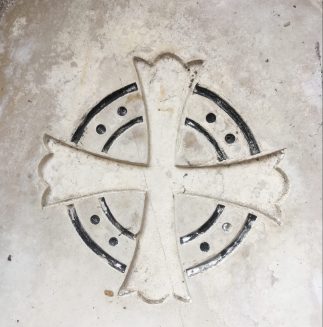
The cross, though it has at its head a collision and a contradiction, can extend its four arms for ever without altering its shape.  Because it has a paradox in its center it can grow without changing.  The circle returns upon itself and is bound.  The cross opens its arms to the four winds; it is a signpost for free travelers.

—G.K. Chesterton in Orthodoxy (1908)

(I took this picture at the Afghan Church in Mumbai, India.)