THE TEN DRACHMAS:
The Lord in the Guise of a Woman
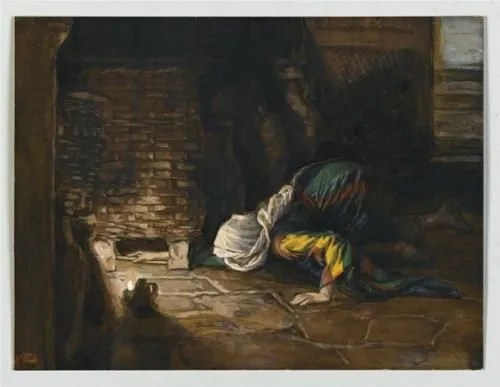
“Can you believe that Christ the Saviour portrayed Himself in the guise of a woman in two of His parables? One is that of the woman who took three measures of flour and made dough. But first let us speak of the other one where the Lord tells us about the woman who had ten drachmas and lost one. These are the most mysterious of all the Saviour’s parables. As the parable of the lost drachma is short, we quote it in full.”
“Or what woman, having ten drachmas, if she lose one, does not light a candle and sweep the house and look diligently till she finds it? And after she has found it, she calls in her friends and neighbors and says, Rejoice with me, for I have found the drachma that I lost (Luke 15:8-9).”
“At first glance this parable seems so simple, or even naive, that it does not impress the reader of the Gospel. In fact, however, the mystery of the universe is revealed in this simple parable.”
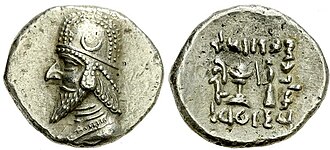
The paragraphs above are the first part of an article by St. Nikolai Velimirovich, which I’m happy to bring to your attention. From his statement about the mystery of the universe, the author goes on to point out the puzzling elements in this very short story, and to explain two interpretations, both of which he says are correct. I will let you read the whole exposition at your leisure: “The Ten Drachmas” (in which he also treats the second story, the “Three Measures of Flour,” in detail). But I want to share one more excerpt, which returns to the question of why the protagonist in “The Ten Drachmas” must be a woman:
“Our Lord described Himself as a woman because women are more careful than men in  looking after property, in keeping the house in order and in receiving guests. If this short parable, which consists of only two sentences, is explained in this way, whose heart will not tremble? for it contains the whole tragedy of the world, visible and invisible. It explains why the Son of God came to earth. It sheds a bright ray of light on the history of mankind and the tragedy of each individual’s existence.
“It confronts us with an urgent decision, because our life is swiftly passing — a decision as to whether we want to be the lost drachma found by Christ or not. Christ is looking for us. Are we going to hide from him, or let ourselves be found by Him before death hides us from Him, from the world and from life?”
-St. Nikolai Velimirovich
 Gladsome Lights