Fr. Stephen asks rhetorically, “Can You Forgive Someone Else’s Enemies?” with a look at the words and actions of Jesus in the Gospels, and reflecting on the story of The Brothers Karamazov. He writes:
Forgiving is “loosing.” Refusing to forgive is “binding.” The imagery of loosing and binding helps move the imagination away from a legal construction. When we sin, or even when we are involved in sin, we become bound. There is a binding that occurs because we ourselves were the cause of the sin. There is a binding that occurs because we ourselves were the victim of a sin. Th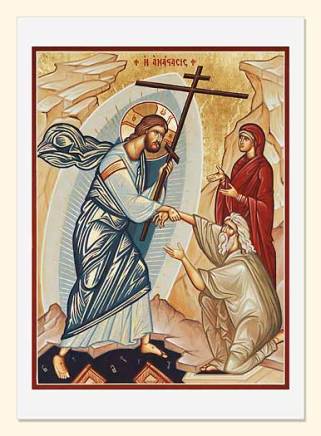 ere is a binding that occurs because we simply witness the sin. There is even a form of binding that occurs to the whole of humanity because of the diminishment of even one of its members. If everyone were somehow only responsible for their own actions the world would be quite different. As it is, the action of one involves the binding of all. Adam’s sin has left us bound ever since. We are not being held legally responsible for Adam’s action. We are existentially and ontologically bound by Adam’s sin.
These truths are hard to grasp, even for the intellect, and Fr. Stephen helps me quite a bit at that level. But to live in the reality of our freedom, to acquire and absorb and give this kind of liberating love — it’s something impossible, were it not for the fact and the power of the Resurrection. Lent is a good time to pray about this, yes?
I’m looking forward to seeing all of my children at once this weekend, and the thought of them and their tender, breakable and forgiving hearts gives me great comfort; they are a testimony to the kindness of God. And His kindness certainly pertains to the article I was referencing, the whole of which you can read here.

 Gladsome Lights