Tag Archives: Vigen Guroian

I feast on the garden and my cold dinner.

Today I spent most of the afternoon and evening working in my garden, happy to act out the quote from Elisabeth in the last post. Often on Mondays I end up trimming and weeding, because it’s tonight that I put out the garbage cans to be picked up in the morning, including the big green bin that is for all green waste.
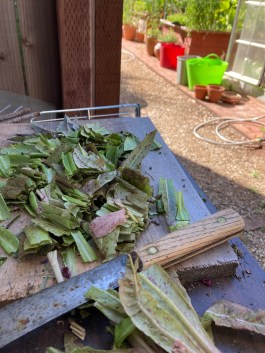
The lettuces that had bolted I chopped up and gave to my worms. Out there I set up a board by way of a chopping block just for this purpose. I probably have four times as many worms as I started with last fall, because the man who gave me my starter batch moved far away and couldn’t take his worm farm; he gave them all to me! He consolidated all three or four of his bins into one new one, before bringing it to my house, so I fear that they are overcrowded, and I plan to modify my set-up so that they have more room. But they seem to be doing well on the diet I provide.

I tied the new tomato stems to the long tree prunings I am using for stakes; I removed a lot of spindly new nigella sprouts that are still coming up everywhere even though the weather is not conducive to their health. And I picked lots of kale and Swiss chard.
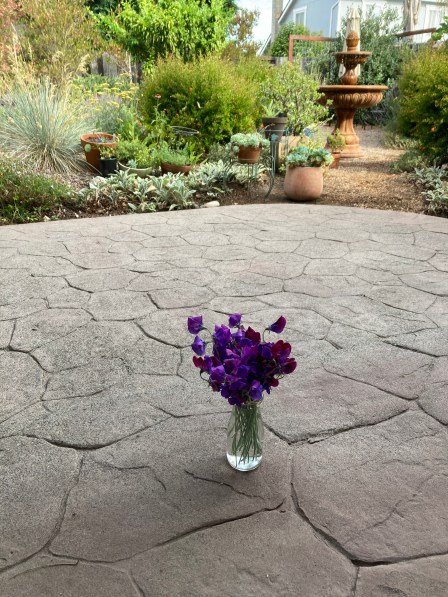
Last Saturday my patio got scrubbed and power-washed. I’d noticed only this spring how black it had turned over the winter; it hadn’t been cleaned since it was installed twenty years ago. While that was happening I picked a few of the sweet peas from the vines that are crisping up, as I pulled out the plants. The patio was left to dry and won’t be sealed until later this week, so in the meantime all my potted plants are waiting on the paths. I was watering them this morning when I noticed the manzanita’s bark curling as it does at this time of year. Here are new pictures of that artistry.
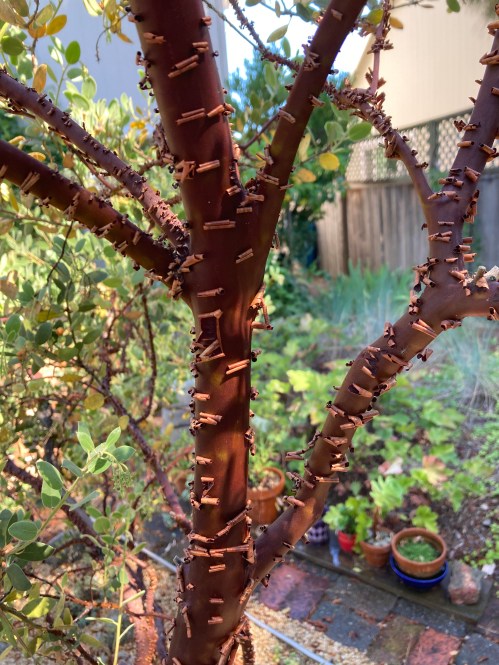
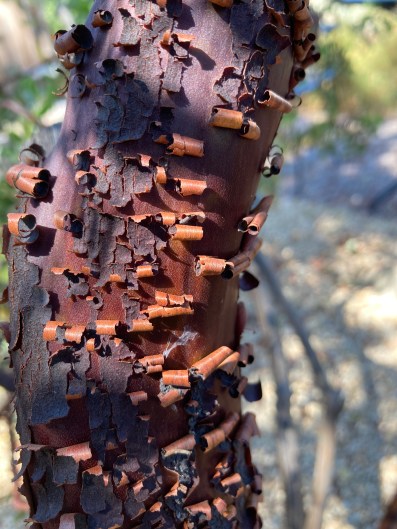
At six o’clock I was still going strong, and I didn’t want to stop and cook dinner, so I came in and just found cold things in the fridge to eat quickly — a lamb chop and a few roasted Brussels sprouts. There was cold tea as well, pretty fancy stuff that had just arrived today.
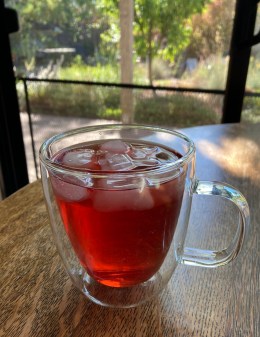
Last year I gave my grandson Scout a subscription to a few orders of Tea Runners blends of tea, and when I visited him recently he made tea for me from a flavor of my choice, from his collected packets. I was so impressed with the various flavors I decided to order a few for myself, and today I made Burgundy Blast as iced tea. Its color and flavor reminded me of the Kool-Aid that my siblings and I used to drink in the summers of my youth; I say that, quite glad not to have drunk Kool-Aid for many decades. But this was just barely sweet (I see from the ingredients list that the mangoes included were sweetened), and so fruity and yummy. And beautiful. This is what it looked like before the boiling water was poured over:


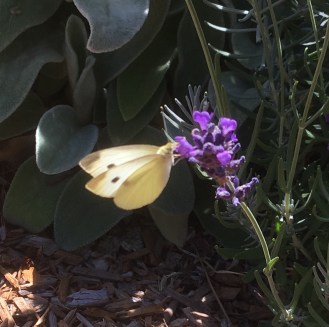
For several years I used to pick lavender flowers from my many plants, hoping to put them into sachets. I stored them in the freezer against the day I would have time for that project. But it never happened, and I stopped trying. This year I got the idea to make lavender simple syrup, but I didn’t pick the buds in time, and now they are fading. Oh, well, I gathered a cupful of blooms anyway, and maybe I will make lemon & lavender shortbread… maybe.

A lovely thing happened on this gardening day: I received in the mail this book The Fragrance of God, by Vigen Guroian (2006). I noticed it online when I was buying the new edition of Tending the Heart of Virtue: How Classic Stories Awaken a Child’s Moral Imagination. The Fragrance book seems to be on the same theme as the author’s previous book, Inheriting Paradise: Meditations on Gardening. I couldn’t help leafing through it right away, though I was too busy to give it proper attention. Just now I did take time to glean one quote with which to end my mostly garden post. I am reveling in my own heart’s portion of Paradise tonight.

“When Adam left it, he took a portion of Paradise with him. That piece of Paradise is more deeply etched in the human soul than all the memories of this impoverished world. Scratch beneath the skin of a genuine gardener, and you will find this memory of Paradise. When he looks into his backyard, Paradise is what he envisions. But Paradise is not just inside of every man and woman. In these regions of ‘sin and woe,’ William Cowper remarks, ‘Traces of Eden’  may still be seen, ‘where mountain, river, forest, field, and grove’
remind us of our ‘Maker’s power and love.'”
Dirt, milk, communion.

“The Armenian writer Teotig tells a story about the genocide of the Armenians during World War I. Father Ashod Avedian was a priest of a village near the city of Ezeroum in eastern Turkey. During the deportations, 4,000 Armenian men of that village were separated from their families and driven on a forced march into desolate regions. On their march to death, when food supplies had given out, Father Ashod instructed the men to pray in unison, ‘Lord have mercy,’ then led them in taking the ‘cursed’ soil and swallowing it as communion. The ancient Armenian catechism called the Teaching of St. Gregory says that ‘this dry earth is our habitation, and all assistance and nourishment for our lives [comes] from it and grows on it, and food for our growth, like milk from a mother, comes to us from it.’

“Teotig’s story is a reminder that we belong to the earth and that our redemption includes the earth from which we and all the creatures have come, by which we are sustained, and through which God continues to act for our salvation. If water is the blood of creation, then earth is its flesh and air is its breath, and all things are purified by the fiery love of God.

“For the earth to bring forth fruit there must be water and air and light and heat of the sun. Every gardener knows this, and so recognizes that the right combination of these elements lies beyond the control of science or contrivance. That is the wisdom and agony of gardening.”

–Vigen Guroian, in Inheriting Paradise: Meditations on Gardening

Mountain tea, rain, and a little book.

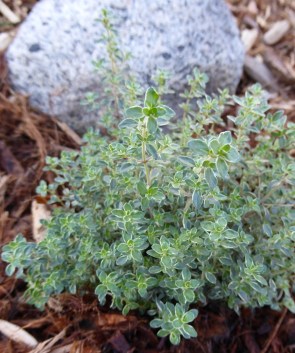
gl P1030396 thyme
thyme

It might seem to my friends to make perfect sense, that I would start the new year by reading a book that is about gardening. But I don’t normally enjoy such topics in print, preferring rather to have my own hands in the dirt and my eyes beholding whatever garden the whole of my body is present with. But Inheriting Paradise: Meditations on Gardening by Vigen Guroian drew me in for several reasons:

*It was a Christmas present from Pippin and the Professor, personally chosen for me, and not yet buried in stacks or lost in the large community of other yet-unread books on my shelves.

*Of the books I was gifted with, it is the smallest and shortest, fewer than 100 pages, which makes it easy to read while lying sick in bed (which I have been a little) or anytime before falling asleep in health. This minimalist aspect also leads me to hope that I might be able to stick with the author to the last page. It would be great to restart my Recently Completed list before January is gone.

*I’m familiar with Guroian and have heard him interviewed on the Mars Hill Audio Journal, as he walked around his garden talking about the various plants and about this book.

*I knew that his book was not about gardening as a thing that could be detached from the Giver of Life, but it would also be a book of philosophy and theology, and probably include some good quotes from world literature.

gl1-p1060466

Added to all these is a kind of fellowship with previous owners of this “used” book. On the title page an address label is glued on near the top, showing that Elizabeth A. Weber claimed the book at one time and was willing to leave her mailing address in it. On the next page are both the moving dedication of the author to his wife and a handwritten note from the year of the book’s publication.

Deeper inside were flowers folded in vintage Kleenex. But not too vintage – the book’s copyright is 1999.

I think I will want to share a few quotes from the book with you as I go along. Here is one:

“It is not the gardeners with their planting and watering who count,” writes St. Paul, “but God who makes it grow.” Indeed, we are not only “fellow-workers” in God’s great garden; we ourselves are God’s garden (1 Corinthians 3:7-9, REB). This is the ground of our humility as mere creatures among all other creatures loved by God.

It wasn’t a day to be a fellow-worker in my garden, even to clean up dead flower stalks. I was glad to be indoors, feeling loved by the rain’s healing and blessing. A brief hailstorm added excitement; immediately the nuggets of ice were melting away. I had just come inside from washing off that table when the shower began.

gl1-p1060472

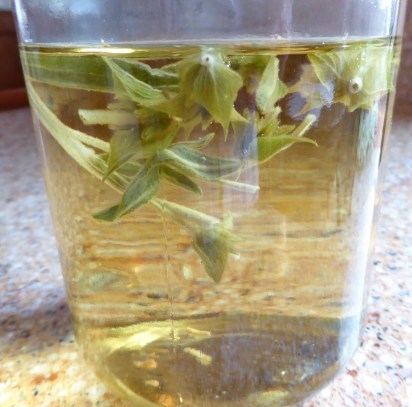
The product of someone else’s gardening or farming efforts came in the form of Macedonian Mountain Tea this afternoon. Mr. and Mrs. Bread tended to me by bringing some to the house to speed my healing. I’m certain this is the same tea I drank cold from a tall glass when I was in Turkey long ago. That was also called mountain tea, or ihlamur.

There seems to be confusion or disagreement in some places (even in my Turkish dictionary) about what constitutes Mountain Tea, but everyone will tell you that it is very healthy. What I am drinking seems to be some kind of Sideritis, if you want to look it up. “Mountain Tea” sounds much more wholesome, though, don’t you think?

gl1-p1060478

To your health!

Gardening? I’m on it!

pimiento peppers with nasturtiums

I thought I would skip this week’s discussion of The Hidden Art of Homemaking at Ordo Amoris, because what on earth — or about growing things in the earth — could I possibly say, that I haven’t said in my 115 blog posts that already have the tag “garden”?

But this chapter comes in springtime when it’s hard not to talk about gardening. I’d rather be in the garden doing it, but what do you know, it’s raining as I begin this ramble. And I happened to run across a couple of other blog posts as reminders that I haven’t covered every aspect of the subject.

kale with Mexican bush sage

The spiritual aspects of gardening are well treated by Vigen Guroian whose book is excerpted in  this blog. But I have a hard time making myself read about gardens or gardening, and if I wanted to convince a non-gardener to give it a try, I would just have them work in my garden with me a few times, and hope that they might by osmosis come to see the fun to be had.

If you don’t have a yard, as Edith says you can have a pot of something, and if you don’t want that, you can grow some sprouts on your kitchen counter. There are so many kinds of sprouting seeds available that you can grow a tasty and gorgeous salad in a week or so.

I do love to visit other people’s gardens and even look at pictures of my own yards of yesteryear, so I looked long enough at this Garden Rant post to see that it was about the gardener’s dismay when he realized that he had planted a dreadfully monochromatic and inartistic design.

His problem is the flip side of what I am careful about, the planting of clashing colors. What? you say, echoing my husband, don’t all the colors go together, as in God’s creation? It doesn’t seem to work that way in my gardens. Magenta flowers have caused me problems in the past – they don’t look nice with some of the red flowers nearby.

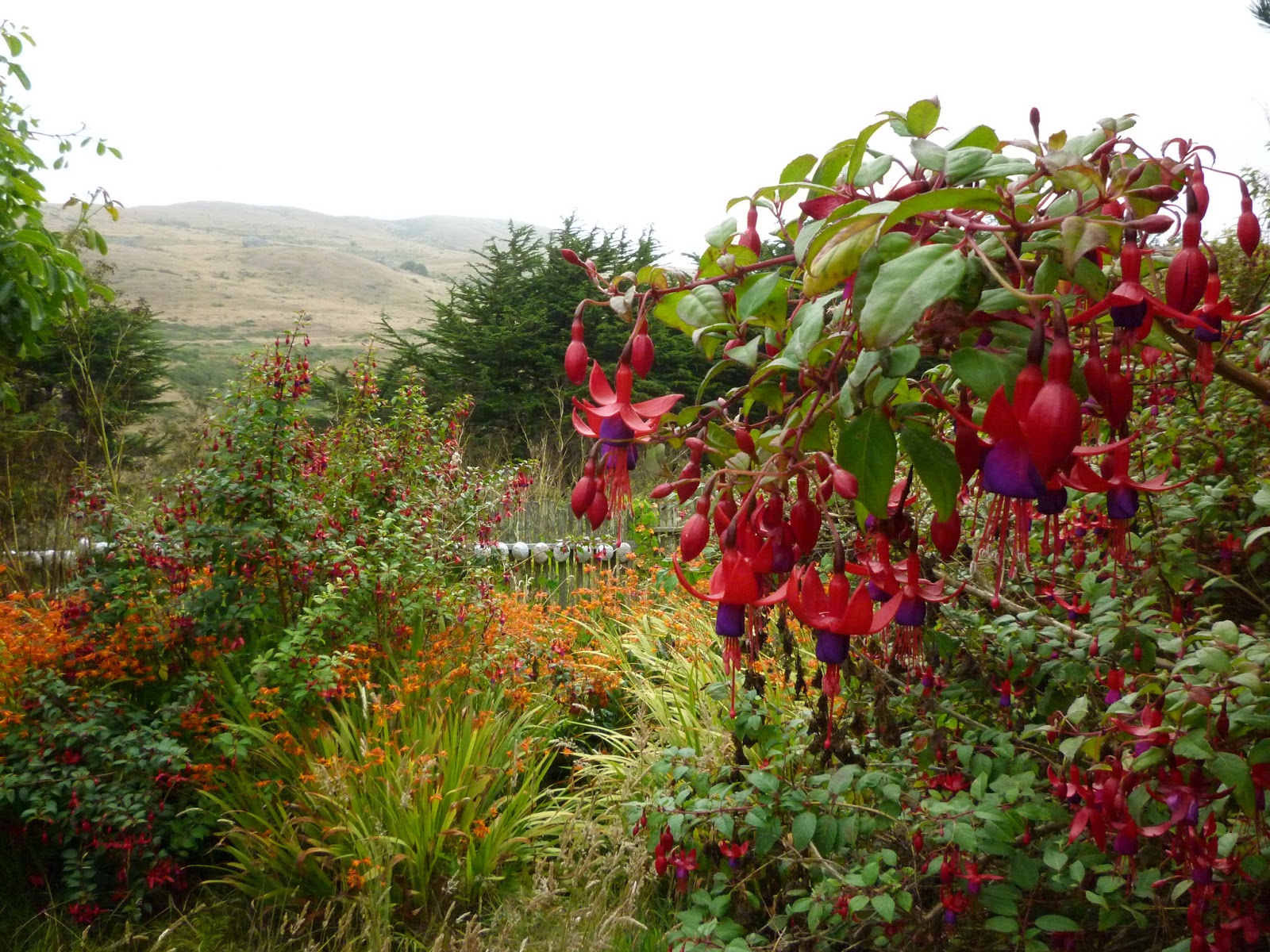
Once a bunch of bright red-orange flowers pretty much spoiled the look of my pale yellow and pale pink roses when they sprouted up in between, while the lavender bush in the same spot blended in nicely. So, I try to avoid mismatches and matchy-matchy. Most of the pictures I’m posting here are of nice contrasts in my own garden, but the one below is from our friends’ neglected beach cottage yard. It’s surprising how glorious these bright and wild colors look together. In foggy coastal areas it seems that whatever flowers you have are a welcome brightness, and they always steal the show by contrast with the white or grey skies.

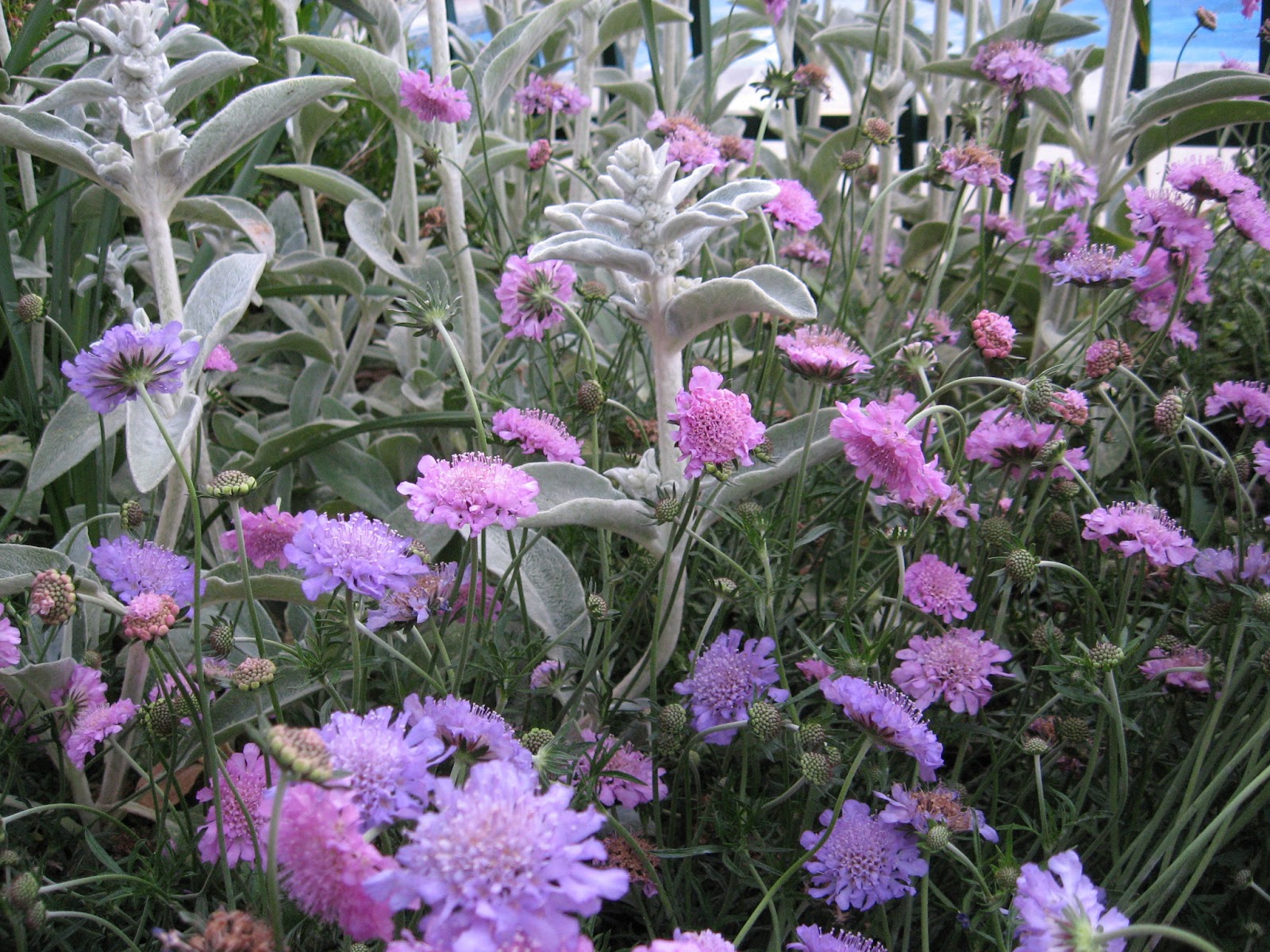
Here’s a much quieter scene: Greyish Lambs Ears make a soft contrast to almost any bright color, as with these pincushion flowers.


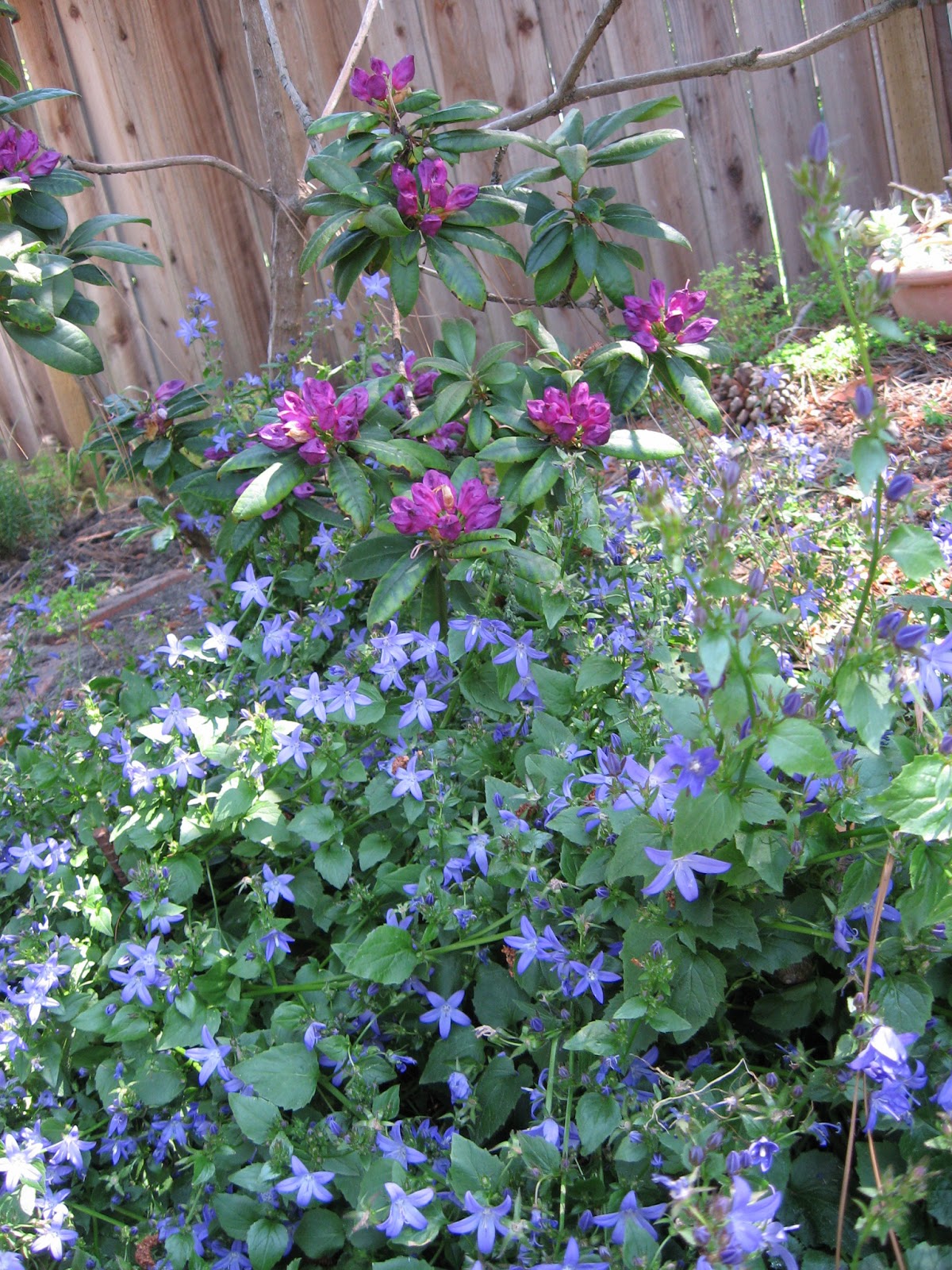
And even the magenta rhododendron is nice with blue campanula. I have learned to think of my garden beds as individual paintings, each with its own color scheme that may change somewhat with the seasons. Some have magenta, while some on the other side of the yard have red.

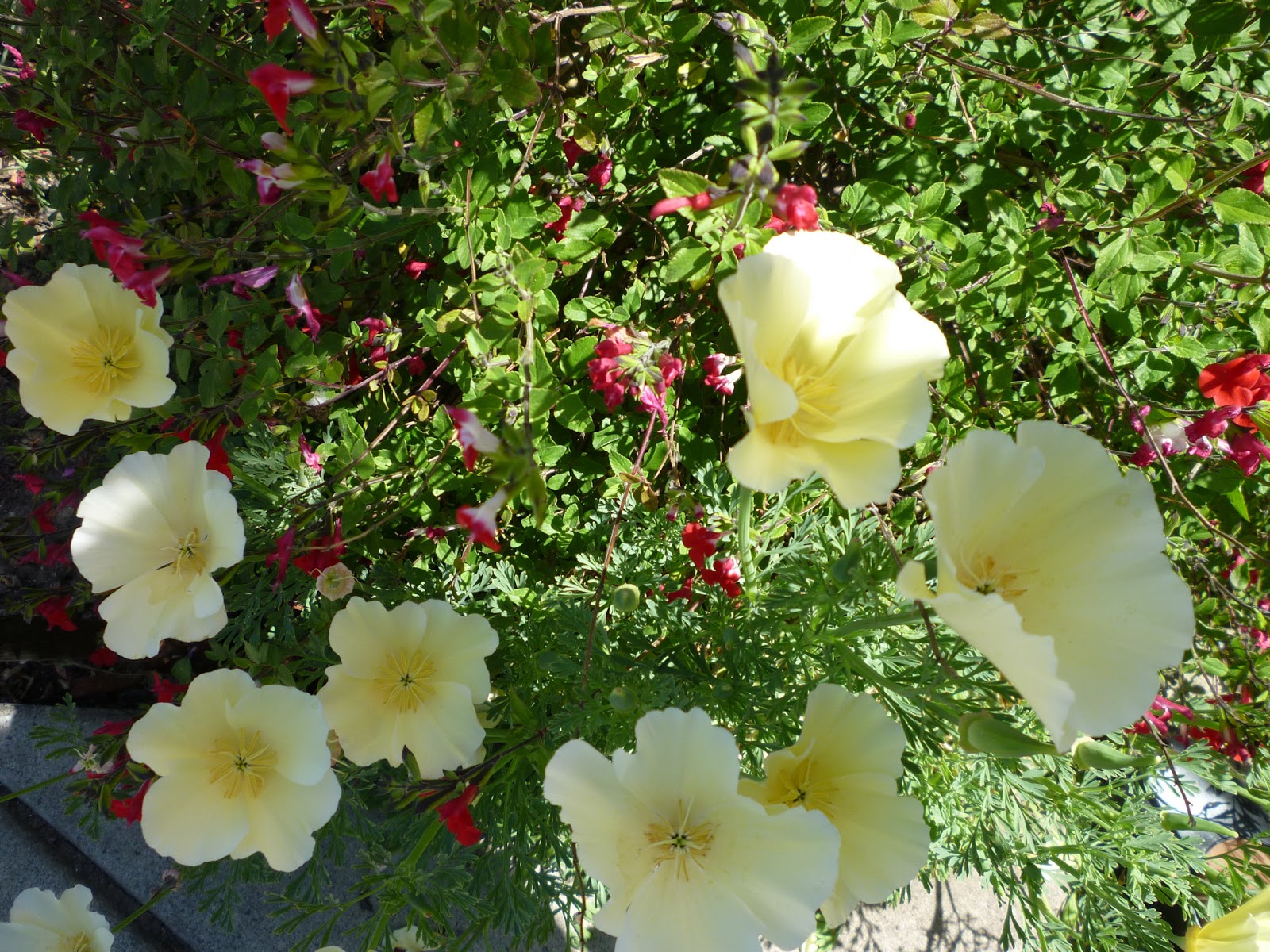
unusual California poppy with Hot Lips salvia

Either color can go with yellow or orange or blue…

It’s fun creating landscapes, if you don’t mind surprises, and  w – a – i – t – i – n – g  for things to grow and bloom, and sometimes having to re-do your design or be happy with a missing part that died. If you take pictures or actually take paints to paper and save an image of the way your plants’ colors and textures have miraculously blended to become Beautiful, you can remember and enjoy your past gardens for years to come.