I Make a place to sit down. Sit down. Be quiet. You must depend upon affection, reading, knowledge, skill—more of each than you have—inspiration, work, growing older, patience, for patience joins time to eternity. Any readers who like your poems, doubt their judgment.
II Breathe with unconditional breath the unconditioned air. Shun electric wire. Communicate slowly. Live a three-dimensioned life; stay away from screens. Stay away from anything that obscures the place it is in. There are no unsacred places; there are only sacred places and desecrated places.
III Accept what comes from silence. Make the best you can of it. Of the little words that come out of the silence, like prayers prayed back to the one who prays, make a poem that does not disturb the silence from which it came.
What is the difference between optimism and hope? One difference is that the word “optimism” is not in the Bible, and the word “hope” is. They are two distinct words and at least one of them is worth contemplating. I like to quote Fr. Alexander Schmemann on this topic:
“If there are two heretical words in the Christian vocabulary, they would be ‘optimism’ and ‘pessimism.’ These two things are utterly anti-biblical and anti-Christian…. Our faith is not based on anything except on these two fundamental revelations: God so loved the world, and: The fallen world has been secretly, mysteriously redeemed.”
Hope is one of the three foundational virtues of the Christian life, as this article, “Hope,” explains. Its description of the absence of hope tells us:
“The opposite of hope is despondency and despair. According to the spiritual tradition of the Church, the state of despondency and despair is the most grievous and horrible condition that a person can be in. It is the worst and most harmful of the sinful states possible for the soul.”
The author of this article discusses the philosophy of Jacques Ellul, and quotes him as saying, in Hope in Time of Abandonment, “You cannot talk about hope. The question is how to live it.”
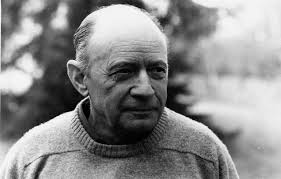
Jacques Ellul, 1912-1994
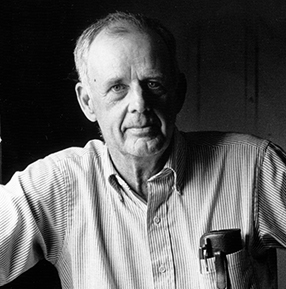
Matlack comments, “The reason you cannot talk about hope — or rather, cannot describe the action it takes — is this: Hope is not a program for reform, a solution to implement, or a prescription to follow. To borrow from the farmer and writer Wendell Berry, hope means ‘work for the present,’ whereas optimism means ‘making up a version of the future.'”
“What we do know is that Ellul’s own life bears ample testimony to hope. Here is one episode of many. Having lost his university position during the Nazi occupation of France, Ellul and his wife Yvette settled on a farm in a small village near the demarcation line, opening their door to Resistance fighters and Russians escaping German prison camps. With the help of neighbors — since Ellul knew nothing about farming — he grew potatoes and corn, with his wife raising chickens. As he once told the story, “I spent most of my time helping people get across into the free French zone. I was in cahoots with an organization that dealt in forged papers. So I was able to provide a whole series of people with forged identity cards.’”
About their own aims the editors of the journal from which I quote write: “Dystopian dread is the shadow of utopian dreams. The hope of The New Atlantis is to help steer away from both — and instead toward a culture in which science and technology work for, not on, human beings.”
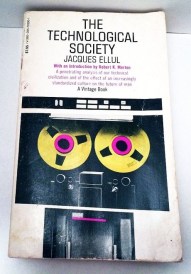
In another article on this general subject, of how to live in a technological age, Alan Jacobs wrote in last winter’s issue; he also mentions Jacques Ellul as one of the early critics of the technological society in “From Tech Critique to Ways of Living.” It is accessible to read right now. And Samuel Matlack has written previously about Ellul, in 2014: “Confronting the Technological Society.”
There he writes, after Ellul: “What is needed is a true revolution, which Christianity by its essence is uniquely equipped to effect — being in the world but not of it, living the hope of a kingdom already here but not yet.”
True revolution is not a change in the political order, but has to be something far beyond that realm, and deeper; may the Lord show us the basis for our true Hope, and teach us how to live it.
Our soul waits for the Lord; He is our help and shield.
Yea, our hearts are glad in Him, because we trust in His holy name.
Let Thy steadfast love, O Lord, be upon us, even as we hope in Thee.
The poet was remembering a friend who had recently died, when he wrote:
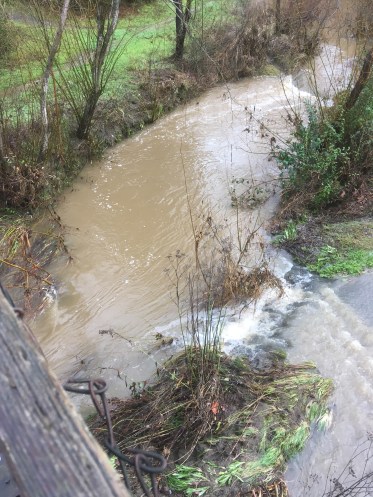
Today the cold rain falls,
A north wind shakes the walls,
The sound earth turns to mud.
The river in brown flood
Will not return the clay
It lifts and bears away.
Now may love equal fear,
As death begins the year.
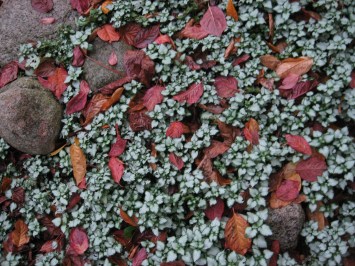
Again the air is full of falling: the fall of the leaves in the weighty season that brings all home again to the lowly miracle from which they came.
Nature, the mother and maker, requires that life take form, enflesh itself in the shapes and habits of the world’s unnumbered kinds. And then she requires each one at last to shed its guise, giving up its matter to the life to come.
Think of a world of no fall, no gravity, calling downward, homeward, bringing all by the light uprisen down to rest in the resting land — a world, instead, where all that dies would fly upward and outward, nameless and alone. How sterile then would be the earth, seasonless the year.
The year is the showing forth of the heavenly love that is the being of the present world. The leaves, opening and at last falling, hold a while the beauty of God who made them by the work and care of Nature, His vicar and our mother. His only is the light of which all things are made, the beauty that they are, the delight that is our prayer.
 “The opposite of hope is despondency and despair. According to the spiritual tradition of the Church, the state of despondency and despair is the most grievous and horrible condition that a person can be in. It is the worst and most harmful of the sinful states possible for the soul.”