It’s traditional for Mr. Glad to have homemade blackberry pie for his birthday, which arrives at the peak of the wild blackberry season here in Northern California. As a young couple we did our first picking up near the Eel River when we were just making hopeful forays northward, thinking about where to move to when our college days were done.
Later we had the bushes growing like weeds in our back yard and neighborhood, and the children could bring in plenty, so much that there were many more berries than I could bake into pies. I developed a recipe for blackberry syrup to process in jars so that year by year we had it to pour on pancakes.
Twenty years ago we moved to a less rural part of the county and now have to make more of an effort to collect our pie ingredients. In the last few years it has twice happened that one or two of the children made heroic efforts against busy schedules and blazing heat to collect buckets full enough for me to bake the customary pie or two.
One year I carted one of these pies up the mountain for our Yosemite family camp experience, and forgot the birthday candle. Someone carved a sort of long matchstick from a twig to use instead, but it was pretty much a failure.
Just above is the time I baked a blackberry pie at the high mountain cabin where I like to go for solitary retreats or for family gatherings where cooking is appreciated.
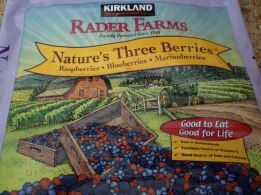
This busy-busy summer, there was hardly time for a spark of thought about going berry-picking, so I picked up two bags of mixed frozen berries at Costco with plans to make four pies for the big party that the children would give.
I’d used this berry mix once before, to make my usual blackberry pie recipe, the result being a kind of gummy candy wrapped in pastry. As the berries are individually quick-frozen, I speculated that they lose a lot of moisture in the process and must need less thickening than what I’d automatically put in the bowl.
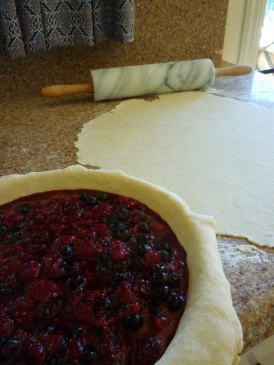
So this time around, I used less than half the amount of tapioca granules called for in the original Joy of Cooking recipe. A little runny would be better than globby. And the pies were a little runny, so if I do it again I’ll use exactly half the thickening.
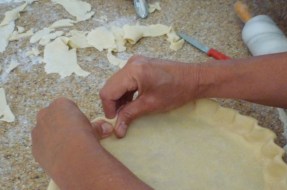
Getting the edge of the crust to look nice is not the easiest part of pie-making. It took me quite a few failed attempts in my youth before someone showed me to hold the top and bottom layers of crust together as one, while you fold them under, against the edge of the plate. Now you are all ready to flute the edge, if you want. My pinching technique is shown at right in a photo I had Mr. Glad snap for me. Click on it if you want to see it large.
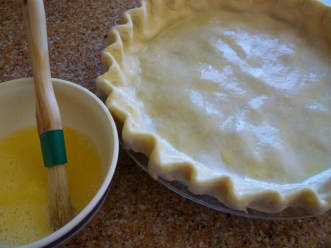
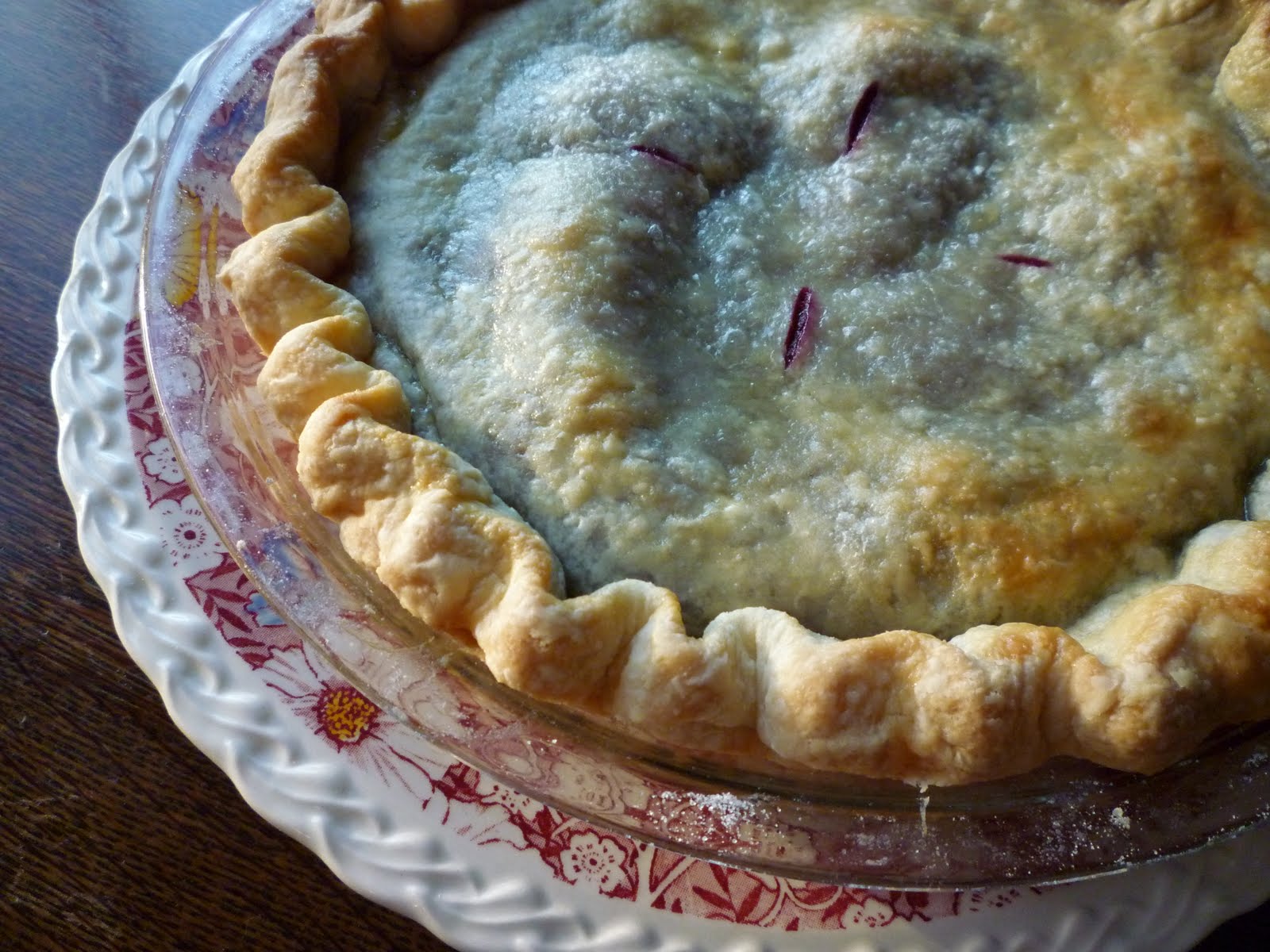
It seems hard to bake a berry pie without the blue showing through the top crust. Two of the pies I put an egg wash on, and two not. Two had a little less butter in the crust. But they all came out looking about the same.
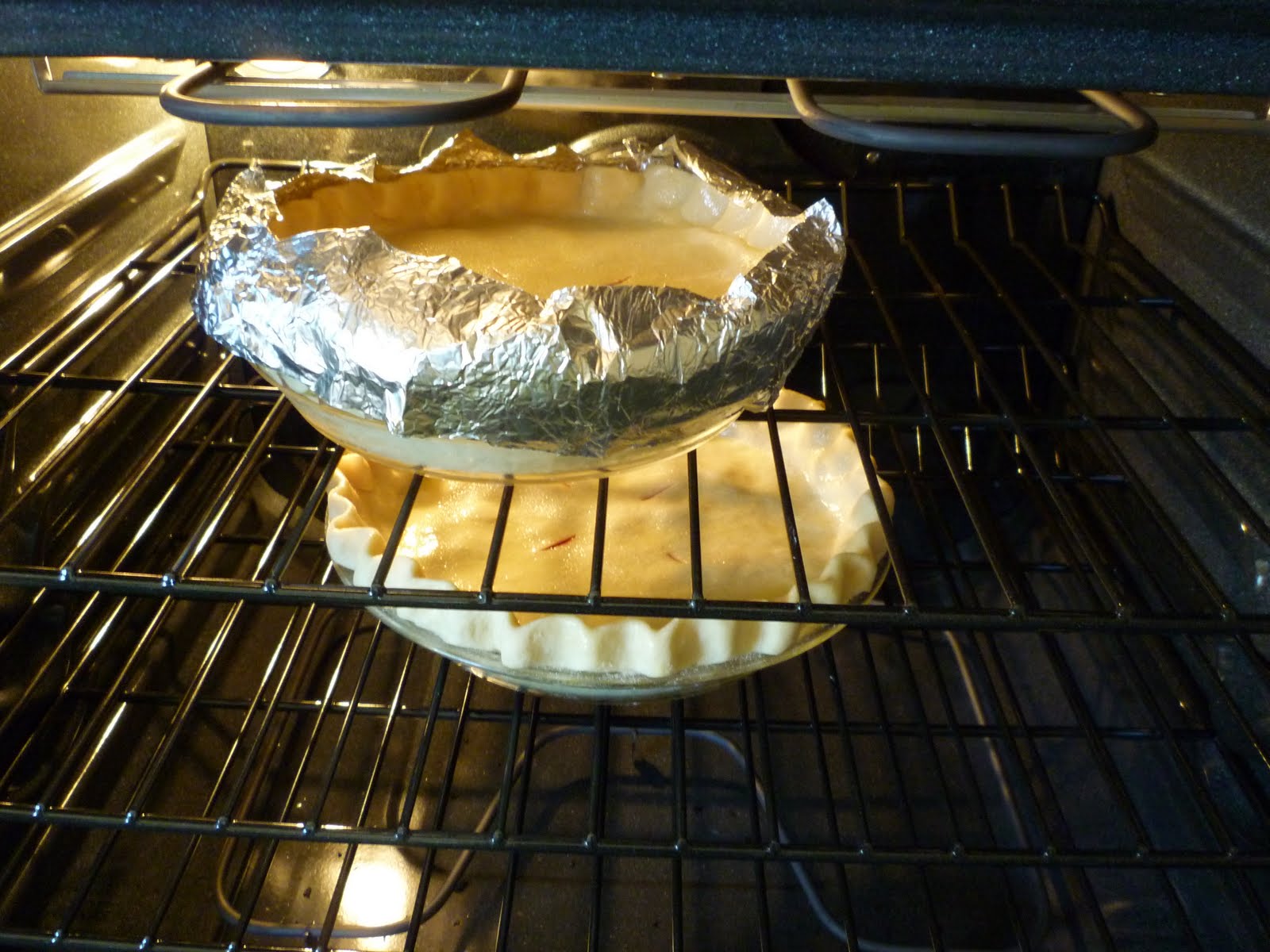
What was really different was baking them in a convection oven. With the first two pies, I experimented and used the foil collar on one and not on the other, and they baked equally, beautifully brown. So I may not use foil collars ever again!
The flavor was excellent, a composite of blackberries (Marionberries, to be precise), blueberries, and raspberries, with butter seeping in from the crust, and a bit of cinnamon with the fruit. I go lightly on the sugar so that the sweetness doesn’t overwhelm the taste buds.
It was a wonderful party the children had for their beloved father, and he was very pleased not to have to go without his pie.
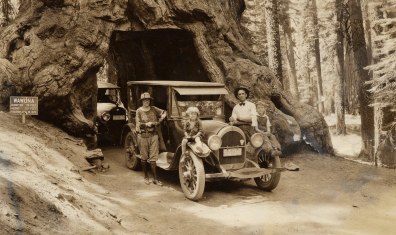
Probably it never happened before this, that we camped in Yosemite two summers in a row. But this year and last, we have been that fortunate. The park is so vast and varied, one could easily stay a month and never get bored; our ancestors often did just that. This old photo from before 1930 shows my mother as a child there.
Farewell-to-Spring
Nowadays there is a one-week limit on camping, and it’s a rare person who can do the phone work and combine it with luck enough to secure a site or a cabin in Yosemite Valley, where whole campgrounds have been eliminated since our little family started camping there in the 70’s. Pippin’s mother-in-law is one of those dedicated and generous people, and this year Mr. Glad and I benefited from her labors and came along as the second set of grandparents, joining Baby Scout and his parents.
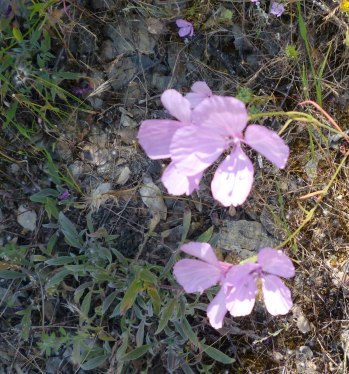
Being there in June meant that we got to see a different batch of wildflowers from those in July. All along the Merced Canyon coming in from Mariposa, the hills and roadsides were covered with these flowers that I am pretty sure are Farewell to Spring, otherwise known as Dudley’s Clarkia, a type of clarkia that reportedly only grows in California. Clarkia is named after William Clark of the Lewis and Clark Expedition, and I wasn’t surprised to learn that it is in the evening primrose family. It reminds me of the Mexican Evening Primrose by my driveway at home.
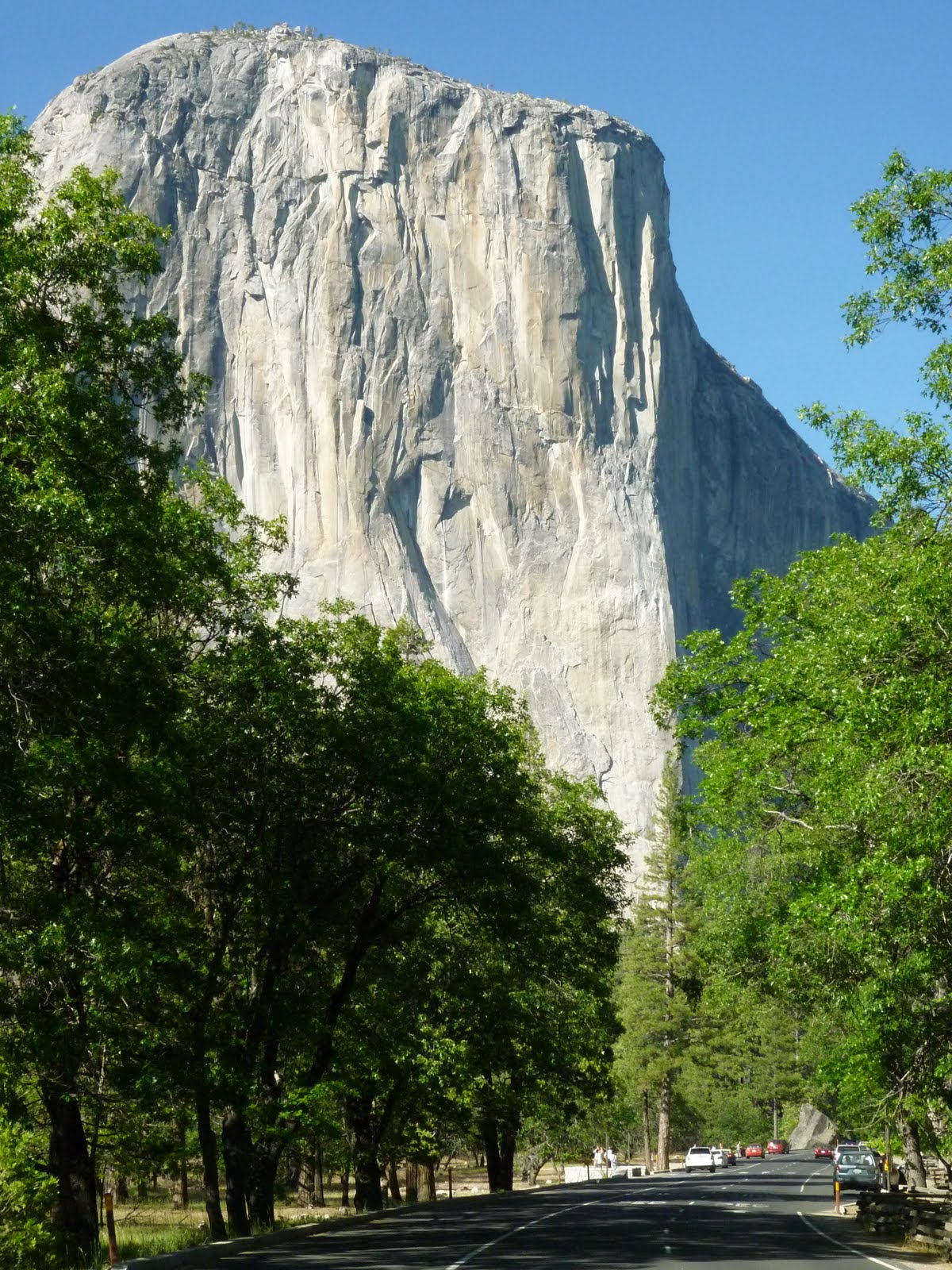
El Capitan
The massive rock that speaks to me of God took my breath away
as we entered the valley, and this time I took my own photo.
All six adults in our extended family group were veteran campers with hearts thankful to the Creator for lavishing such beauty on us. One grandfather prayed thanks for the “familiness” we were enjoying and when I heard the word I knew it would be in the title of my blog.
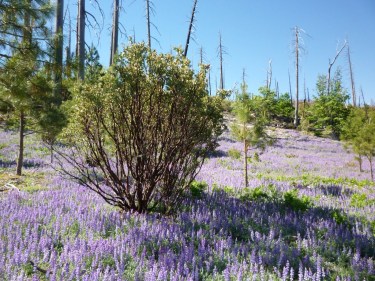
The first day some of us went on an expedition to gather firewood in an area that had been severely burned in 1991. Pippin took pictures of Scout sitting in the middle of acres of purple lupine, and later we went into the woods and found the colorful Harlequin Lupine as well–two sisters in that family group.
That afternoon the same group of us hiked past Mirror Lake to Hidden Falls. The last time I had seen the lake it was just a swamp full of horsetail and other such stuff. But this year every body or stream or fall of water in Yosemite is at its fullest and highest, and many families with children were playing in the sandy boulder-studded water as we tromped past.
Rattlesnakes! We saw two on the trail– One crossed silently, completely ignoring us. But the second one shook his rattle as he slithered into the leaves. I took his picture, too, but he is well camouflaged.
Hidden Falls wasn’t easy to get to, not with my stiff and unreliable joints and sinews. There was much clambering up steep hunks of granite and even some log-walking, but before long we came to the spot on Tenaya Creek where all my senses were bombarded.
There is little dirt in that place; towering all around are trees with thick trunks, growing out of granite slabs and boulders as big as houses. And water, torrents of it this wet year, pouring off the top of more speckled gray rock in falls that remained hidden somewhat behind huge craggy stones. The water’s roar echoed off all the rocks and made talking nearly impossible, and the brightness of the white foamy water glared somewhere out of every photo frame.
Child Pippin some decades ago
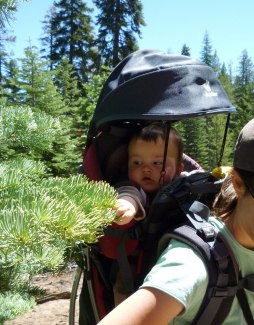
Scout had come along in the backpack. His parents sat him down in a flat place next to the falls and me, while they tried to scramble a little higher, and he started singing and squealing. He liked the excitement in the air, I think, all the fine cold spray and the tempest blast of sound. Clean and fresher than anything.
All the waterfalls are exciting this rainy year of 2010. Mr. Glad and I hiked together part way to Vernal Falls, and I read a book while he completed the ascent to the top of the falls. High steps are cut out of the rock next to the canyon, where spray from the waterfall drenches the hikers on the Mist Trail, some on their way back from the summit of Half Dome.
We have hiked the Mist Trail several times as a family, but this year my knee hurt just thinking about climbing those steps. The photo above right is of Pippin on that trail, aged three, with her papa. It was a new kind of camping for us, in Housekeeping, where you get three walls surrounding beds with mattresses, canvas roofs over your head, electricity in your cabin and patio area, and hot water in the restrooms nearby. Not like our tent camping at Crane Flat in the past, pictured.
Tent camping in Yosemite in the past
Cooking was fun, shared by the three women. I had a new and hot propane canister stove to replace our old one that was of a kind that we had to pump what seemed to be every few minutes, and even then the burner farthest from the tank never got very hot.
Pippin made a version of Power Pancakes with blueberries. No one had brought a large enough bowl for the batter so we made do with a dishpan.
Scout missed his routine, and seemed to get more overtired and cranky day by day. This is a shot of him sleeping early in the week, after being lulled to sleep on a wheeled walk. He often enjoyed his outings in the baby backpack, with its pauses next to trees and rocks where he was given time to feel the textures.
Our last full day in the park Mr. Glad and I went with our daughter to Taft Point. It’s a short hike after you drive up toward Glacier Point for an hour or so. Still, the trail involved a bit of “boulder-hopping” as I heard it described.
The streams are full and the distances between the rocks that stick up sometimes require a leap. It’s not that the water is deep; I could have taken off my shoes and walked across if I wanted to lessen the risk of wet boots or a sprained ankle. I managed without doing that–but on the homeward crossing, it took me about half a minute to coordinate my eyes, legs and courage and figure out how to spring–or lunge.
From Taft Point you look down into Yosemite Valley where the Merced River is snaking along, and across the canyon to perhaps the most thorough view of Yosemite Falls possible. The day before, we had stood at the bottom of that waterfall; the experience from Taft Point is much quieter and drier.
You can also see down to El Capitan, that mass of rock one often sees from the bottom on entering the valley. It’s in the upper center of this photo, sloping down to the trees.
We ate our trail mix and crackers sitting on the rock slabs, and let Scout out of the pack to wiggle his toes in the granite dust.
So many wildflowers up there remain a mystery to me, even though I have prolonged my vacation (Yes, yes, I know, I should finish putting my kitchen back together or prepare for my soon arriving house guests.) researching them online and writing this blog.
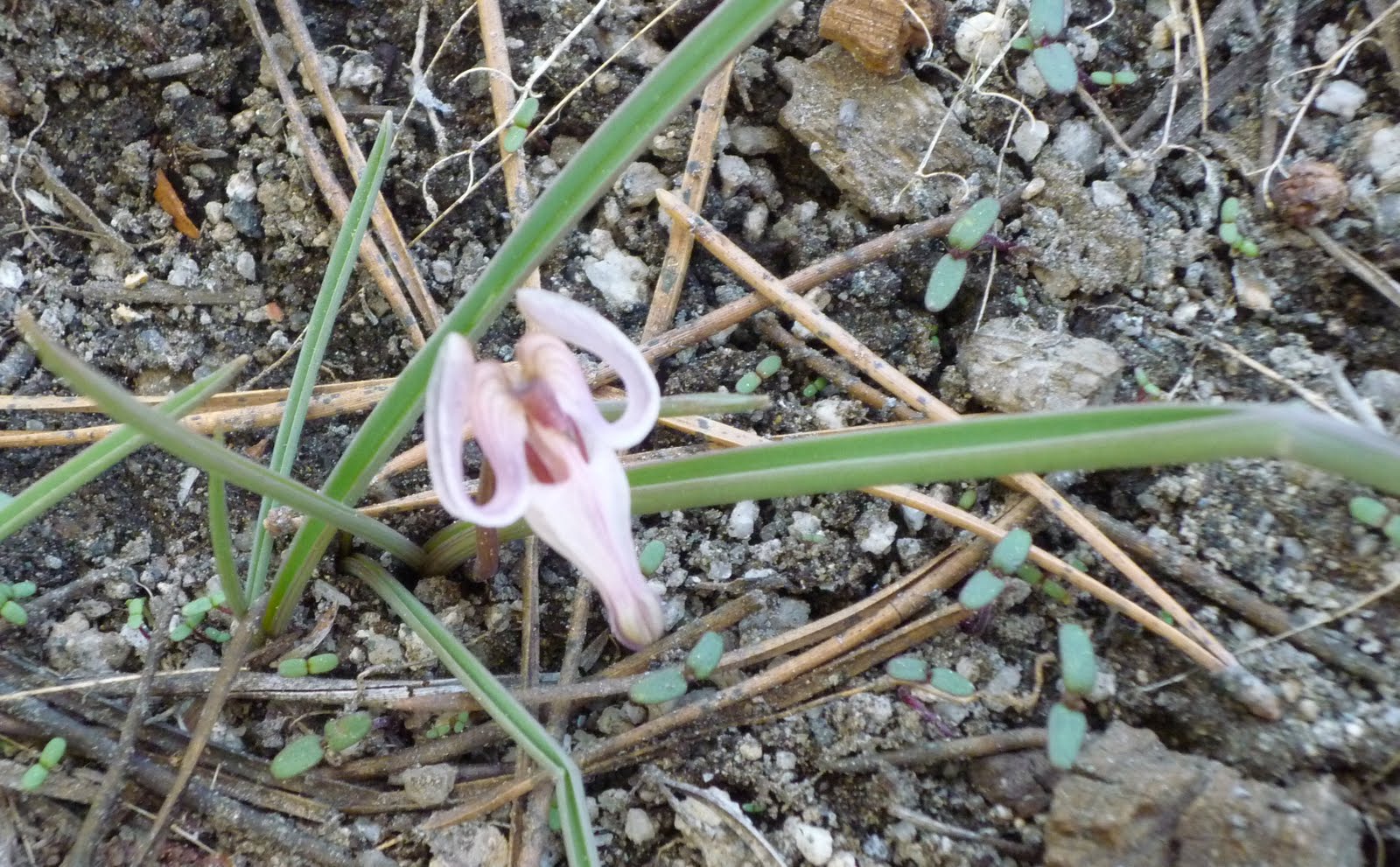
The curious specimen here, for example, has the look of a Longhorn Steershead–the descriptive common name of a flower, Dicentra uniflora–but it doesn’t have the leaves to match that identity, which would be a relation of Bleeding Heart. Is it an imposter steer? How could there be two flowers so similar, that are not at least in the same family? Those blade-like leaves must go to something else…but where are steershead’s leaves? Very odd.
But I can’t let that problem distract me from the main point of this flower: God is amazing!I saw chamomile ready to bloom, and the tiniest alliums: each plant consisted of a single thin stem that I’d have thought was a frail blade of grass sprouting out of the sand up there where there is only wind and rock and sun. But at the tip of a few “blades” were the remains of a half-inch spherical tuft, lying down on the ground at that point because the thin stem couldn’t bear it up.
These leafy plants at left were scattered profusely over the meadows and forests at about 7,000 ft.; when the buds open they will make for a lot of color–we think yellow–and then they will really be attention-getters.
After taking in the views from Taft Point we hiked back to the road and drove on to Glacier Point, the most popular viewing spot in Yosemite National Park. No matter how often I visit the park, I appreciate the broad perspective. You can see where you camped or hiked over the last few days when you were down in the trees.
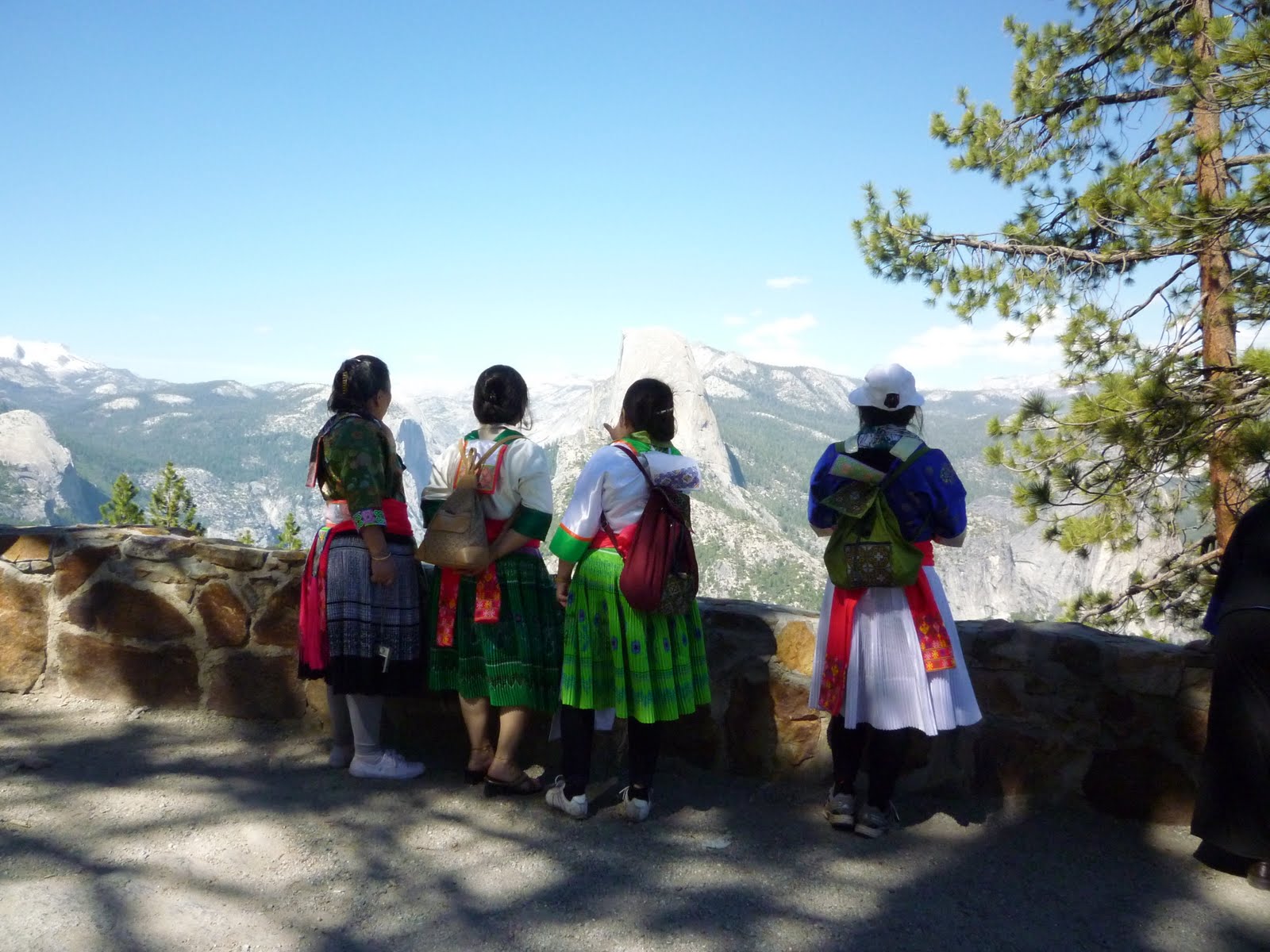
At Glacier Point the people-watching is unbeatable, because the population is international (Yosemite belongs to the world, or the U.N., or something, after all, which doesn’t please anyone I know), and there are so many people. After driving up the mountain all that way they aren’t in any hurry to leave, so everyone can watch everyone else as well as the scenery. We wondered if this pink-and-black woman might be on her honeymoon…anyone have a guess as to the origin of what looks like a traditional costume?
I didn’t know what a ghillie suit was until I asked Moss Boy if I could take his picture, and why he was dressed like that.
Kate as a child
“I love your dress,” I said to the woman with the long yellow costume. It was also quite pretty from the front, as was she.
Kate was dressed in our family’s traditional outdoor clothing when we took this picture of her at Glacier Point nine years ago.
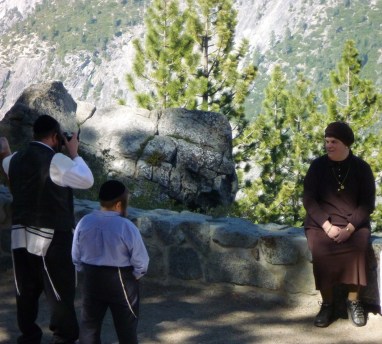
But Glacier Point was not the last view; we always love to see things from Washburn Point as well; it’s just a bend or two of the road back from Glacier Point. Additional exotic members of the Family of Man could be viewed there, like Hasidim taking pictures.
What first caught our ear was a shiny man standing on a prominence and turning to and fro, singing over the treetops an Asian style of chant, a cell phone in one hand and a camera in the other. Two or three other men–one dressed all in black– and four women were singing nearby at the same time, and the women were tapping their feet.
I asked one of the women, when she was finally walking back to the parking lot, what she was singing about. She was beaming smiles as she said, “Oh, I sing to myself.” I didn’t want to pry, but she didn’t seem in a hurry to get away, so I pressed, “What were you singing about?” She was happy to tell me, “About mountains, high, lonely.”
There is no last word that seems to fit after that, unless it would be Psalm 104, revealing to us our Lord,
Who walketh upon the wings of the winds….The mountains rise up and the plains sink down, unto the place where Thou hast established them….He sendeth forth springs in the valleys; between the mountains will the waters run….He watereth the mountains from His chambers; the earth shall be satisfied with the fruit of Thy works….How magnified are Thy works, O Lord! In wisdom hast Thou made them all; the earth is filled with Thy creation….
The last decade of my life has been intense with wildflowers. I tried, before that, to learn some of their names, mostly from my husband, and from nature centers in the forests that we camped in with the children. It seemed too expensive to buy wildflower guides, and the only time I would think of it was on vacation.
Then daughter Pippin turned into a naturalist. Then she got a camera, and we had computers, and wowie, Let the Learning Begin! I now have such a collection of (mostly) her pictures on my computer, taken wherever she may go, but mostly in California. Several times I have been where there were many flowers, and when my husband would let me stop and look at them, so I am learning more.
This summer was a treasury of flowers, and I actually did learn the names of more than three, but to keep this post short I will just tell you about the three that stumped Pippin and me. I looked in six wildflower guides, she looked I don’t know where, and we couldn’t figure them out. My friend Di put me in touch with her friends who live near Yosemite, visit there nearly weekly, and are cataloging the flowers in the park. They knew right away what these three were, so I give credit to them, and when they come out with a book I’ll let you know.
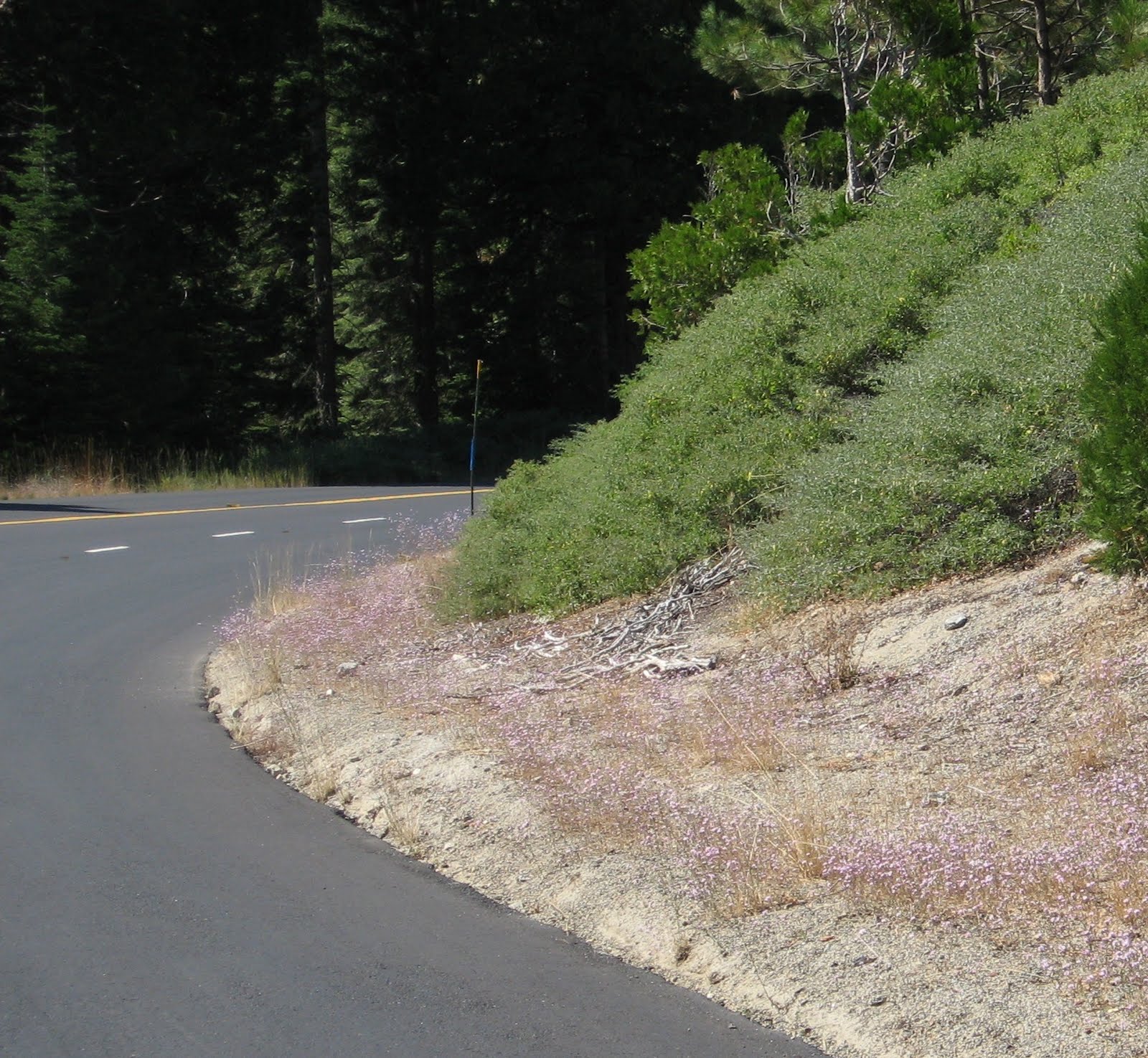
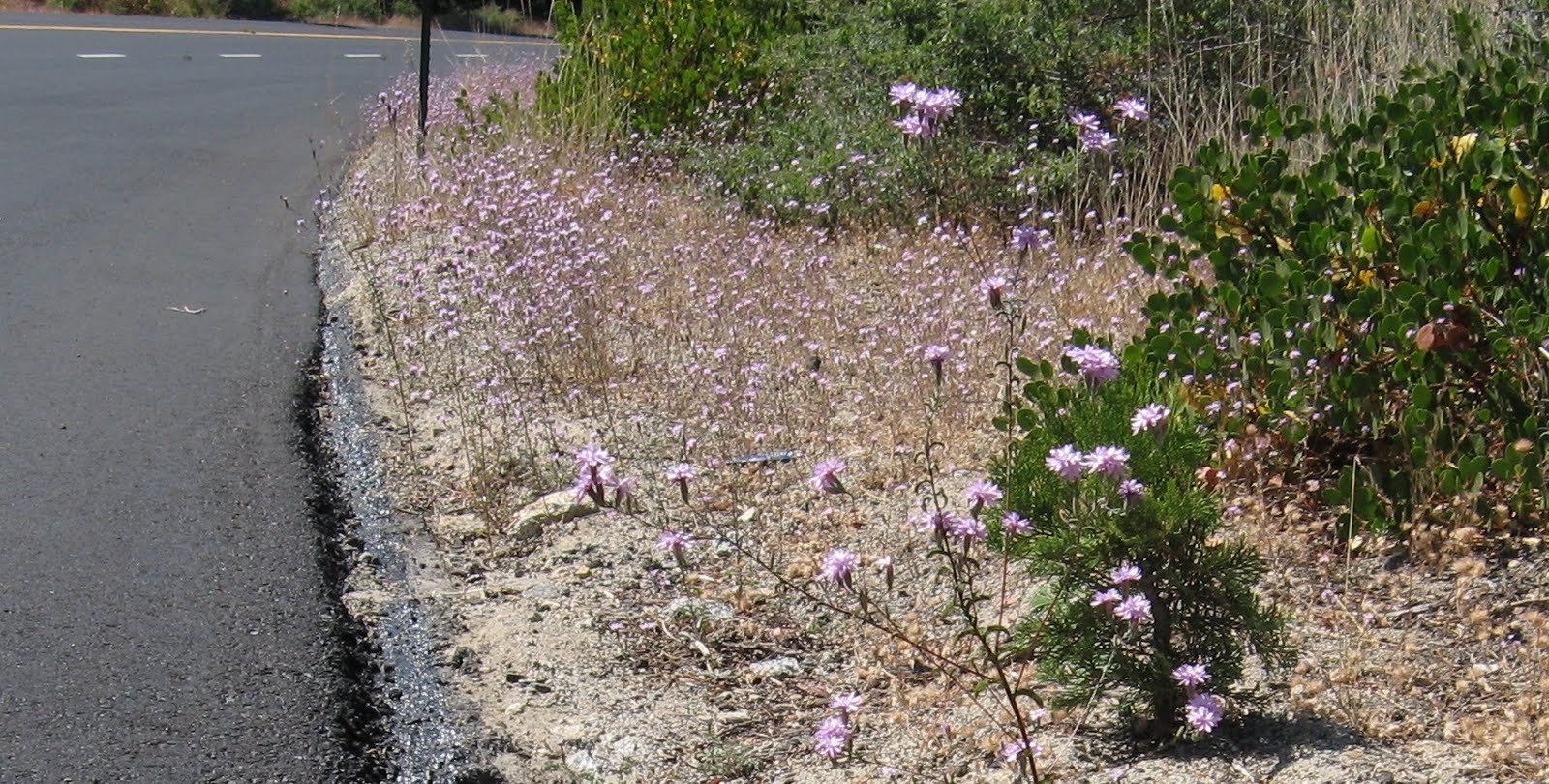
My picture doesn’t do justice to this plant that makes a soft lavender haze along the roadway, breaking the monotony of green trees and and grey pavement. Somehow from your car the impression and depth of color are more intense, though pastel. As you may remember, I called it purple haze or lavender mist. I just saw it last week in the more southern Sierras.
Sierra Vinegarweed
I sent this photo to my experts, and they told me it is Lessingia leptoclada. Wife Expert said that if she were naming flowers she would call it Lavender Groundsmoke. See? we think alike! But the common name, I discovered, is actually Sierra Vinegarweed. Not so appealing.
Sierra primrose
Mr. Glad was the discoverer of this flower on his hike up Clouds Rest in Yosemite. My Experts said it is rare in Yosemite and is Primula suffrutescens or Sierra Primrose. They had just “searched it out” and found it themselves two days before he did, on Polly Dome.
Scarlet Gilia
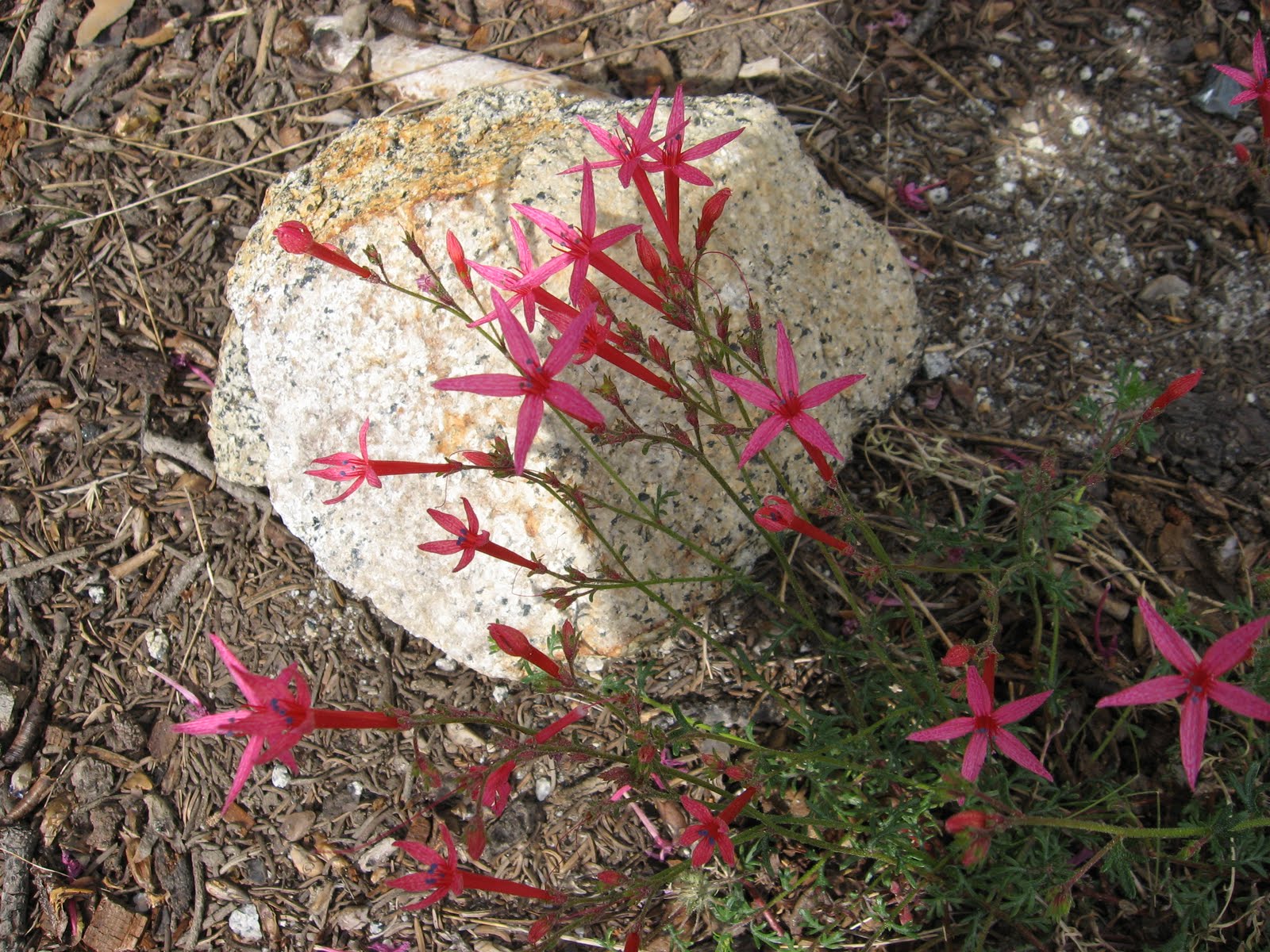
About this bright one they said, “Another favorite of ours…Ipomopsis agregata ssp. bridgesii, Scarlet Gilia (it used to be Gilia aggregata), also called Skyrocket, in the Phlox family. We see it every year along Tioga Road, and it was especially abundant this year.” It’s another one that makes a swath of color along the highway, as in the picture at top.
There you have it, a taste of my beginner’s nature studies.
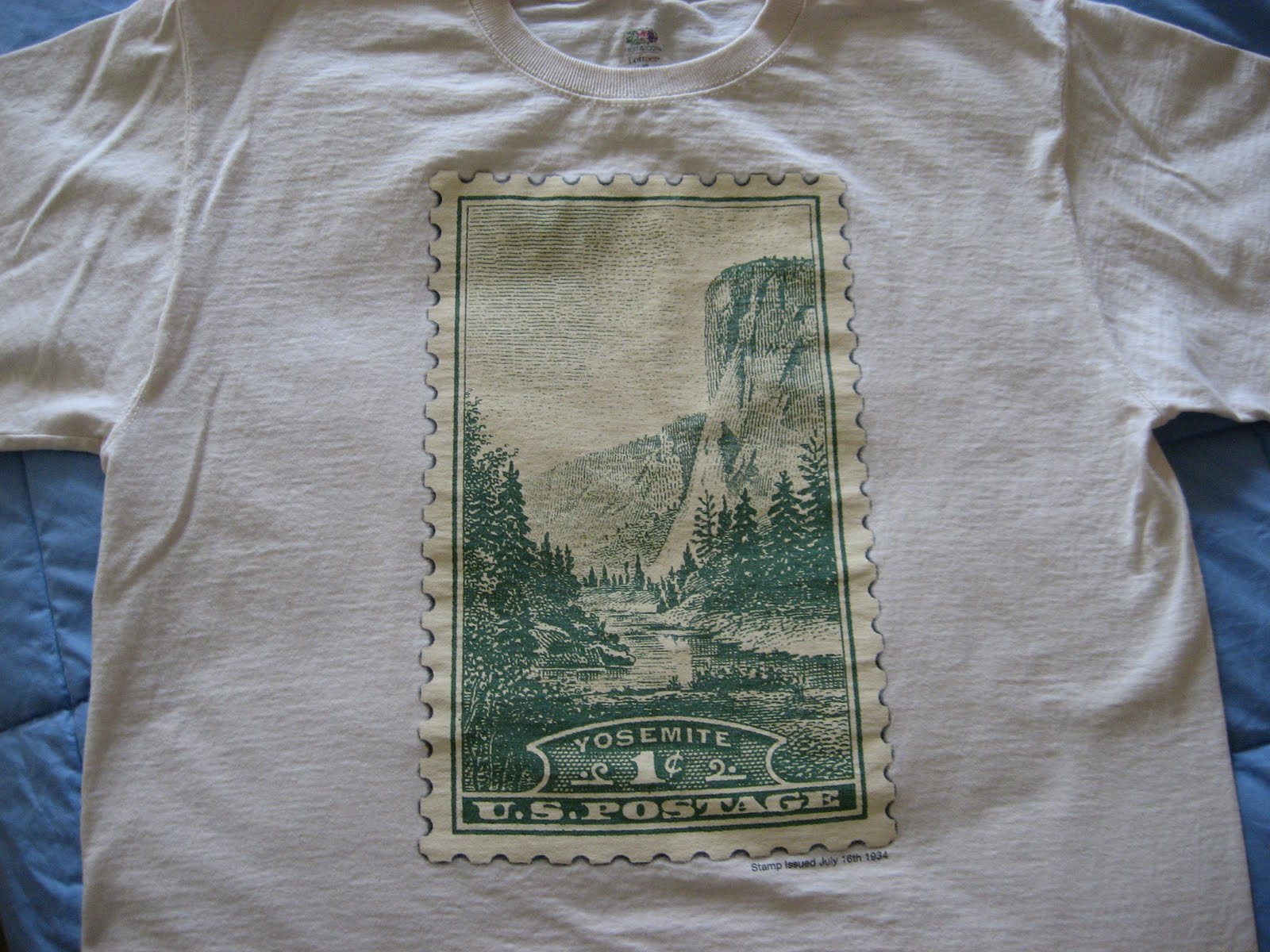
To introduce the postal theme– and for a few moments just forget about the concept of mail that can’t be carried in from the mail box in one’s real hands–I show you this T-shirt we bought in Yosemite last month, at the post office. It was the best clothing deal in the park, and an unusual and historic design: a reproduction of a stamp that was issued in 1936, showing–Yes! my beloved El Capitan! If you have ever beheld that rock I trust you won’t find its frequent appearance here tiresome.
I mostly wanted to tell about postcard-writing, and the shirt isn’t very pertinent to that…though it just occurred to me that one might buy the shirt at the Yosemite post office and then write a postcard sort of message on the fabric before mailing it in its more personalized form. I don’t think I’ll run right back there and pick up a few more, though.
When I was a child, my maternal grandmother would send postcards to me and my siblings from wherever she was traveling. I recall receiving word from Turkey, Norway, Mexico, and Hawaii. She also wrote very entertaining letters from home. As she has been a major role model for me, it’s no wonder that I feel it a natural activity as a human being to share my life in this way with those I love.
It’s easy when on a journey, away from the usual housekeeping duties, to remember friends and family and take the opportunity to let them know I do think of them. A trip just doesn’t satisfy if I haven’t dropped a dozen cards in the letter-box.
This picture was taken at the Grand Canyon. When others in our party were hiking down into the gorge one morning, I walked all over the place looking for a picnic table with a view, from which I might write my cards. That was not to be found, but in a sheltered courtyard I did find a good spot, away from wind and next to a big stone with rain water pooled in a depression on the top. I didn’t notice this rock until I was startled by a raven who swooped down to drink.
Postage “just” went up again. It now costs 28 cents to mail a postcard. On those first envelopes carrying my grandmother’s address in the corner, the stamps on the other corner said “4 cents.” I can’t imagine that a postcard was more than a penny.
One thing I inherited from my father recently was the stamps from his desk drawer. There are some pretty old ones, from when a letter was 25 cents. If they still have stickum on them I use that, and if not, I apply a little Elmer’s glue and save my pennies by using these old stamps.
I also “inherit” stamps from my father-in-law, who gets them (less and less, now that he responds infrequently) from charitable organizations that want him to send donations. They come to him already sticking to envelopes, but I cut them off and glue them on to our own bill payments. Some of my collection are in the photograph above. If you want to see the stamps up close, just click on the picture and you can see an enlarged version.
In California it seems that every town is a tourist town. At least, I find postcards in all the stores. But in some locales, the market has yet to be discovered, and I have to make my own postcards, which I learned to do from Martha Stewart, who gives us this handy template and instructions for using it. I’ve made these one-of-a-kind cards with photos of someone’s backyard, or a lake that is small and unknown, or a town that is seemingly too plain for the professional postcard people.
But why restrict this fun habit to traveling days? I started sending postcards to the grandchildren and friends any old time. A postcard is small enough that I can find time to write a few words while the iron or computer is warming up or perhaps even in the middle of the night when sleep won’t come. I don’t think old-fashioned correspondence of this sort will ever become obsolete or unwelcome.
 It’s traditional for Mr. Glad to have homemade blackberry pie for his birthday, which arrives at the peak of the wild blackberry season here in Northern California. As a young couple we did our first picking up near the Eel River when we were just making hopeful forays northward, thinking about where to move to when our college days were done.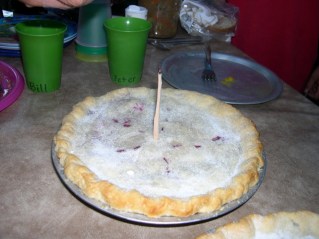

 Probably it never happened before this, that we camped in Yosemite two summers in a row. But this year and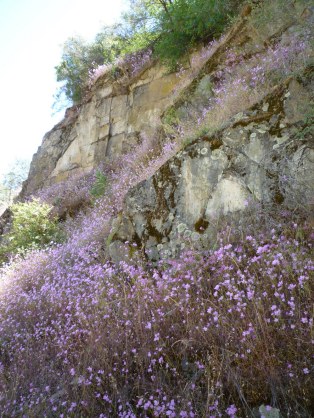

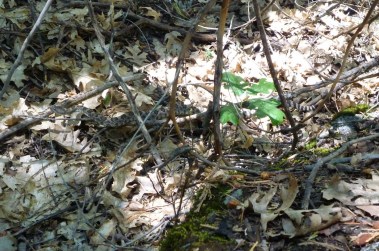


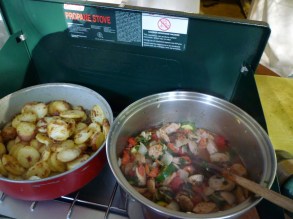 It was a new kind of camping for us, in Housekeeping, where you get three walls surrounding beds with mattresses, canvas roofs over your head, electricity in your cabin and patio area, and hot water in the restrooms nearby. Not like our tent camping at Crane Flat in the past, pictured.
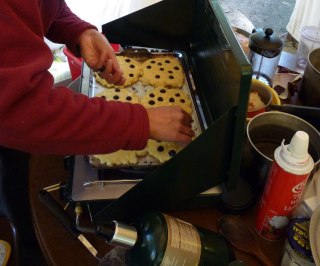

 Scout missed his routine, and seemed to get more overtired and cranky day by day. This is a shot of him sleeping early in the week, after being lulled to sleep on a wheeled walk. He often enjoyed his outings in the baby backpack, with its pauses next to trees and rocks where he was given time to feel the textures.


 After driving up the mountain all that way they aren’t in any hurry to leave, so everyone can watch everyone else as well as the scenery. We wondered if this pink-and-black woman might be on her honeymoon…anyone have a guess as to the origin of what looks like a traditional costume?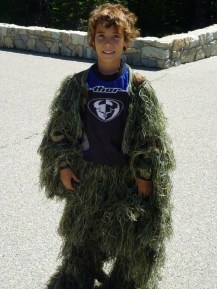







 Gladsome Lights