Monthly Archives: September 2013

I tweak the pudding.

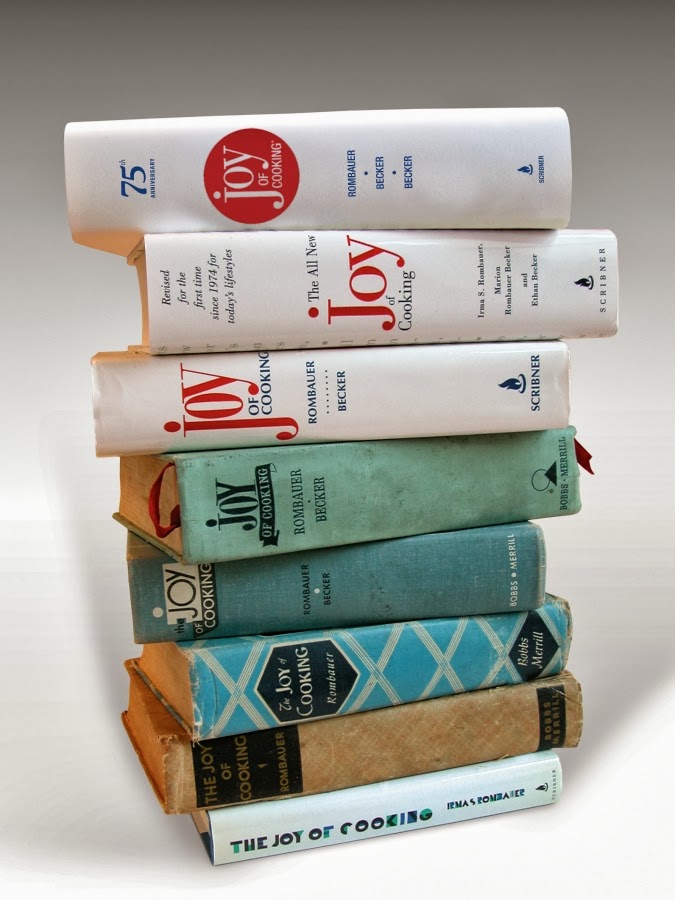
Mine is like the 4th from the top, only dirtier.

In the first decade of my married life my primary cooking teachers were Irma S. Rombauer and Marion Rombauer Becker, in the 1964 edition of Joy of Cooking. That was long before this age when one can find overwhelming amounts of information about any food or recipe at the click of a mouse, and before we watched “Julie and Julia” and found out that the cookbook my mother had given me for a wedding present was suspect.

The women who published the book in various forms beginning in the 30’s were not the same sort of cooks as those we know today, we who have the likes of Julia Child and M.F.K. Fisher to inspire us. Irma was grieving the loss of her husband in 1930 when she followed the advice of others and got busy making a book out of her collection of recipes that had been gathered to teach a class in the 20’s.

Irma S. Rombauer

Marion wrote a biographical sketch of her mother, in which she admits that her mother was not known for her great cooking. To which I add, it really was not the era for that. Many of the households that had the resources to spend on a variety of ingredients had hired help to cook for them, which I noticed early on was the case with the Rombauers, because in my copy they mention conversationally, and give a recipe for, the matchless poultry dressing their cook made. The kitchen help, expert as they might be, would not be in a position to publish cookbooks, so as Marion reasoned, “cookbook writing is too important to be left to the cooks.”

But for women who were increasingly responsible for preparing meals for their own families, and who had time and means to study and learn from books, the Rombauer women did a good service. I like what Christopher Kimball wrote for the Amazon.com listing of the book, about Irma’s “amateur but highly evolved enthusiasm.” After all this revisiting I plan to get a copy of the latest revision and see how it has changed, now that Irma’s descendants are bringing to it their own flair and abilities. On the Joy website I found a likeable personal tone and appetizing recipes, but the cooks don’t give away all of the book’s recipes online.
The Rombauer/Becker Family marked their own favorite recipes in the edition I own with the name “Cockaigne” after the name of their summer home, and that label served me as online reader reviews do nowadays, helping me know that at least a few people really liked that particular casserole or cake or whatever.

While my little children played nearby or took their naps, in the days before I could be distracted by reading or writing blog posts, I sat at the kitchen table and pored over Joy, making a list of all the “Cockaigne” recipes that appealed to me. The only one I remember now without looking it up, perhaps the only thing I tried more than once, was Tomato Pudding Cockaigne.

Kate shows fruit from yesteryear’s garden.

On a recent blog post somewhere I read mention of Scalloped Tomatoes, and I found online many recipes for that dish, which seemed to resemble the tomato pudding I hadn’t made in 20 years. It was labeled as Southern Cooking on many websites. Do all of you southern ladies make scalloped tomatoes?

At first it sounded like the perfect way to use up some of my fresh tomatoes, and perhaps also in the winter, to use some of the bags full that I have been freezing. Except that there seemed to be more bread and sugar than I care to consume in the various versions….eventually I gave up looking at them and went back to my old recipe, which I discovered also calls for quite a bit of sugar — six tablespoons to go with 14 tomatoes — but why? These are garden-ripe, sweet tomatoes I’m bringing in by the bowlful.

Joy’s recipe also didn’t have enough basil for me, and included no garlic. It called for only a small quantity of bread crumbs, and I hoped that if I added a larger quantity of bread the juice would be soaked up faster and the dish might take only two hours instead of three to cook down.

So…here you have it,

Gretchen’s California Tomato Pudding

14 fresh ripe tomatoes, peeled, seeded, sliced

1/3 cup fresh chopped basil leaves

2 tablespoons fresh chopped parsley

1 extra-large clove garlic. minced

1 1/2 tablespoons brown sugar

2 cups fresh sourdough bread crumbs

6 tablespoons melted (salted) butter

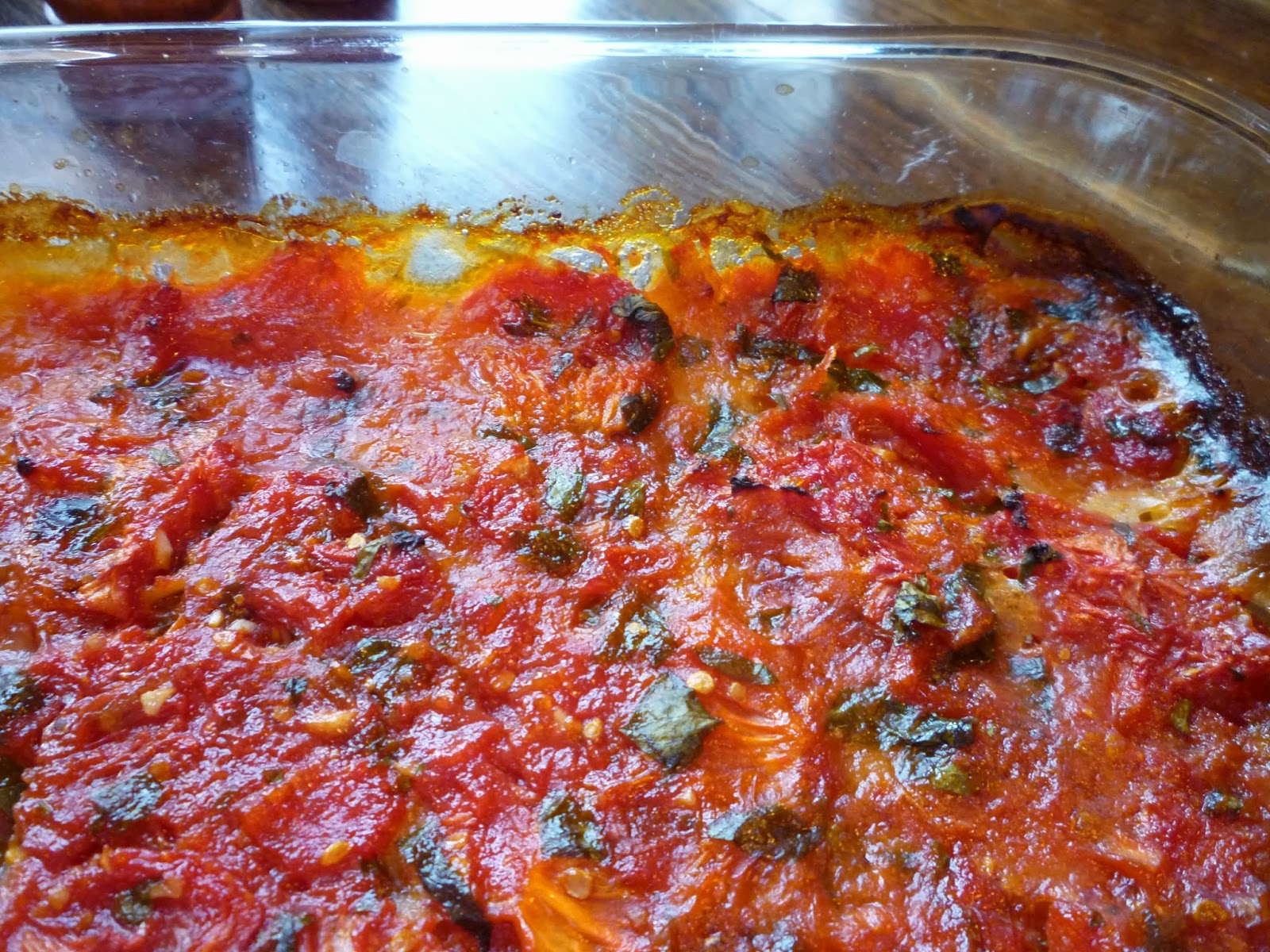
Put the tomatoes in a pan on the stovetop, and heat to the boiling point. Stir in the herbs, garlic, and sugar. Cover the bottom of a 9×12 baking dish with the bread, and pour the melted butter over it. Ladle the tomato mixture on top of the crumbs, and bake uncovered at 350° for about an hour and 15 minutes, or until it is no longer watery. Serve warm.

While my pudding was in the oven I typed out the above, and waited to see if  the finished product would be worthy of sharing. Oh my, yes, it is delectable and so hard to stop eating. I guess my husband and I ate about five tomatoes worth each.

I could further tweak a few things, make it a couple more times to assure consistency and give you a more thorough report, but this is only a blog after all, so I will just say that I’m pretty sure it would be just as good with a little less butter and sugar. I imagine it tasting great made with olive oil, if you prefer vegan fare. But Mr. Glad said, “Whatever you did to make it like this, it was perfect.”

blackberry wine and a white fence

At various spots in our town and country I’m sure I smell the blackberries turning to wine on their bushes – even as I am driving down the street or road that particular scent of summer-into-fall invades my car. I’ve never noticed it before…it’s probably all kinds of fruits breaking down into soil and earth and giving out their last sweetness on the way.

The sweet olive is blooming at the same time, and I must say, this is almost too much deliciousness to absorb in one day. I roasted pimientos from the garden last night, to loosen their skins, and that filled the house with…what shall I call it…Old Mexico? If Autumn has its special atmosphere, it must include all these ingredients in the recipe. We haven’t initiated the wood fires, and I’m wondering if I put off generating smoke, maybe I can prolong these other more subtle experiences. But pretty soon — maybe tomorrow?! — I will be shivering too much to care about that aspect of the season’s loveliness.

And there is plenty of visual feasting to do, with various plants making their seeds now, or putting out the last blooms, the flowers seeming even brighter in the slanted light. They are brave to emerge into the cold mornings when any day now they might get cut down by Jack Frost.

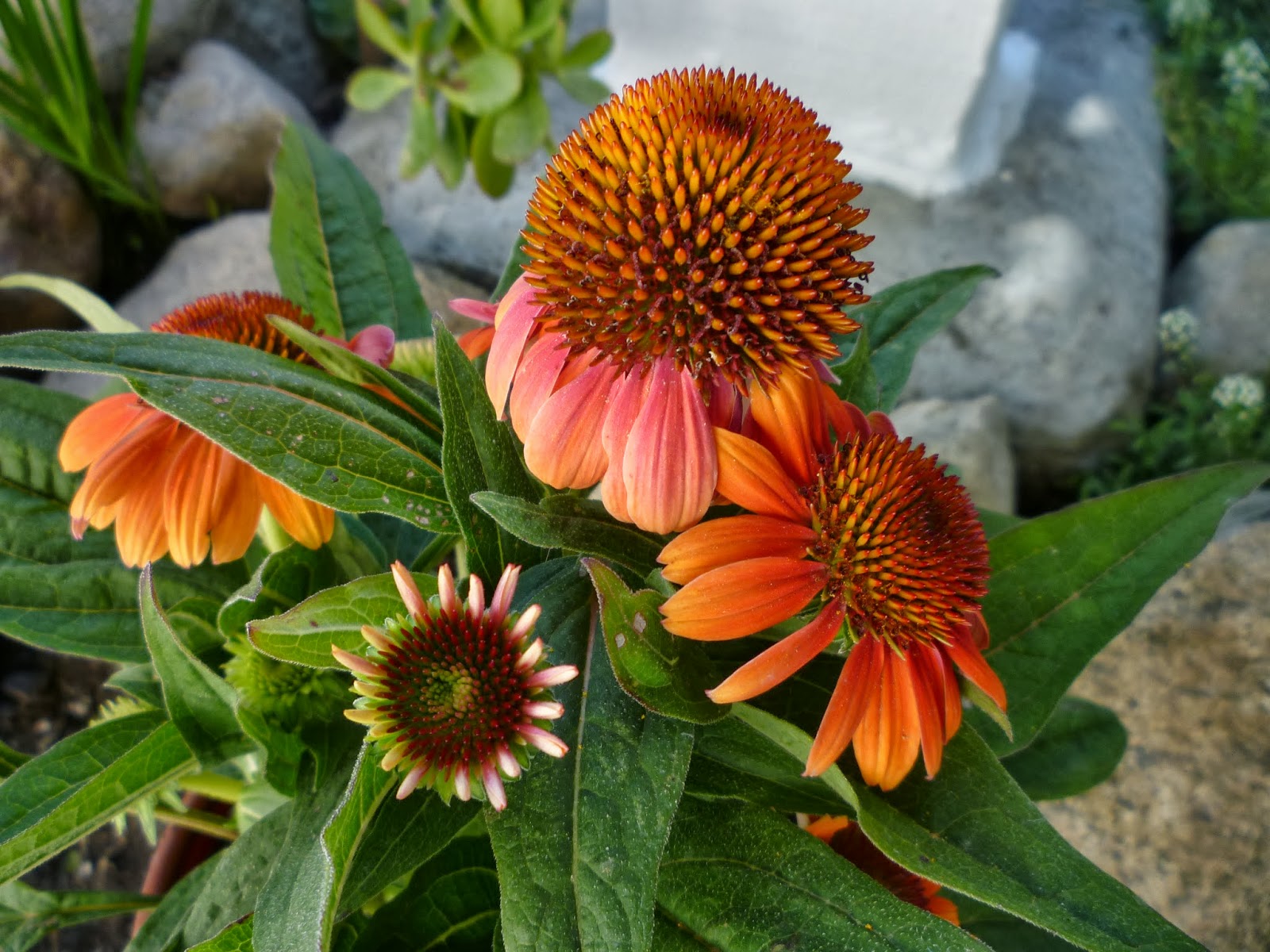
Echinacea Sombrero Hot Coral


October is the best month to plant any kind of peas in our area, and I haven’t had sweet peas in the garden in too long. The excitement of the fall garden is making me feel up to helping the little pea seedlings through the winter, so I went to the nursery to buy some seeds. Look what I found – an Echinacea Sombrero Hot Coral. When Kim at My Field of Dreams found something like this last month I ran to the store to get my own, but found nothing. Is this the name of yours, Kim?

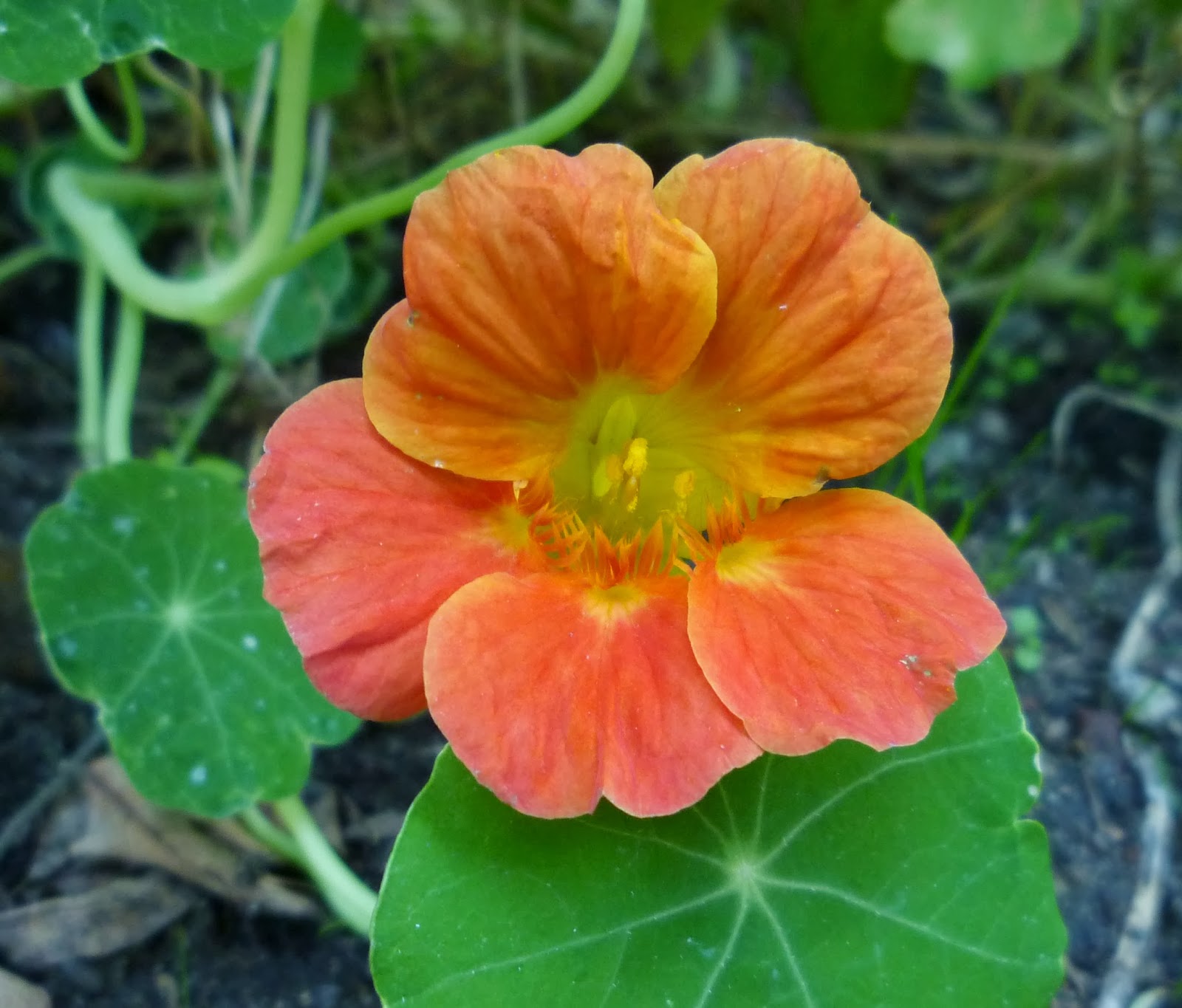
Not all the fall colors are orange. Ground Morning Glory

A few weeks ago we had automatic irrigation installed, in the form of a system of plastic tubes running just under the surface of the ground all over the yard. Little black plastic emitters stick up at various places and cover the soil with a spray of water at whatever time intervals we program into the control panel.

Little fence is in the background near the street.

Not a week had gone by before one emitter very close to the front sidewalk was broken off, so we had the guys return and move that line back a few inches, and Mr. Glad installed pieces of wooden fence with stakes that poke into the ground. The paint was a little thin, so he put another coat over it first. I think it’s cute, and when the plants nearby have grown up bigger the white picket look will complement the foliage and flowers nicely.

This afternoon I’m headed back out to plant that echinacea, and also some stock and snapdragons. I’ll clear the pine needles off the cyclamen and trim the rosemary, and sniff and breathe in all these goodies of my garden.

Bees vs. horrid insects

We have helped our neighbor over the years by pruning her overgrown Asian pear tree, and by picking up the fruit that drops throughout the summer months. Recently she did some of this work herself, and put fifty or so pears into a plastic bag and left it under the tree for a week or two. After a while Mr. Glad couldn’t stand it, and he tried to put the whole lot into the trash, but he found it also contained scads of bees, one of which stung him.

[Correction years later: Those probably were not bees, but syrphid flies; I can’t see any of the images clearly enough to know, this much removed from the event. I didn’t know about syrphids at the time, and even after learning how flies differ from bees, I get them mixed up. But this article has some good information still, so I will leave it up. And maybe it is not a yellow jacket, either, but it is a wasp.]

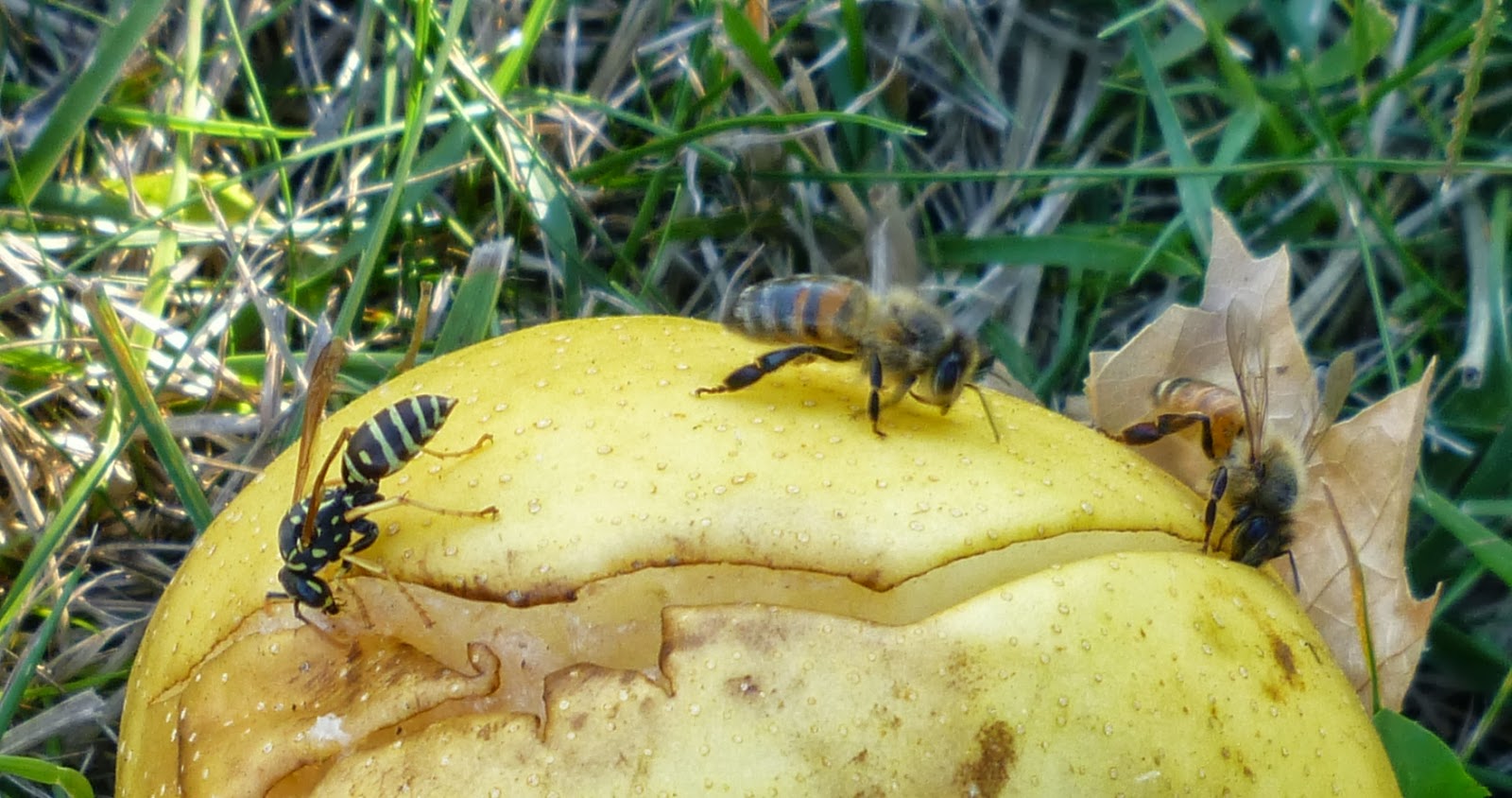
I saw one of those fruits on the sidewalk with 60% of the inside gone, in the process of being excavated by six honeybees. I was so surprised — I didn’t know they would eat fruit. Another day I took pictures of some of the pears lying on the grass, full of bees, and wasps too.

yellow-jacket wasp on left

The few wasps were spending as much time acting aggressively toward the bees as they were drinking pear juice, trying to be king of the mountain. I thought of what I’d read from The Bee Lady, who recently instructed us about the difference in species. She also let us in on the fact that yellow jackets are carnivores, and they will eat bees. I think that is horrid – as if bees didn’t have enough problems already.

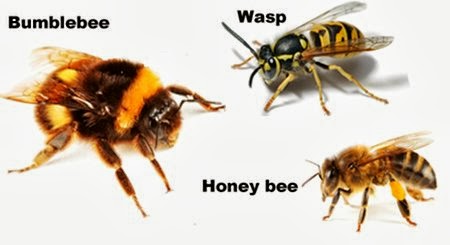
Wasps aren’t bees. Pest removal companies perpetuate the confusion by saying they do “bee removal” when they are talking about both insects. Why can’t they say “Bee and Wasp Removal”? This one has a good chart showing many wasps and bees, even though the company name is not entomologically precise.

To be fair, even wasps do serve a purpose on the earth, as this page points out. I read that one kind of wasp eats black widows, for which I’m sure I must thank the Lord.

wasp and bee getting along in Australia by C. Frank Starmer via Creative Commons

I liked this page, too, that delineates some differences between bumblebees and honeybees. Ants, wasps and bees are related species, but they are different species. I am with The Bee Lady on this one — bees should not have to bear the reproach of their cousins.

Ever since I reviewed all those pictures of the blessing of bees and honey, while telling about the Feast of Transfiguration, my love for bees has grown as has my wonderment at honey and the miracle of it all. I’m even eating more honey, such a beautiful food. Wasps haven’t a clue how to make it.

While I was at the fair…

Last weekend was the giant and truly wonder-full food festival my parish puts on every year. I was on my feet for the better part of 12 hours both days, in church or selling books and T-shirts, or just walking around. I listened to the band and watched the Balkan and Eritrean dancers, but my legs and feet were too tired to dance. I talked to friends I hadn’t seen in 15 or 20 years, trying to stretch out of my introverted self. It all wore me plumb out.

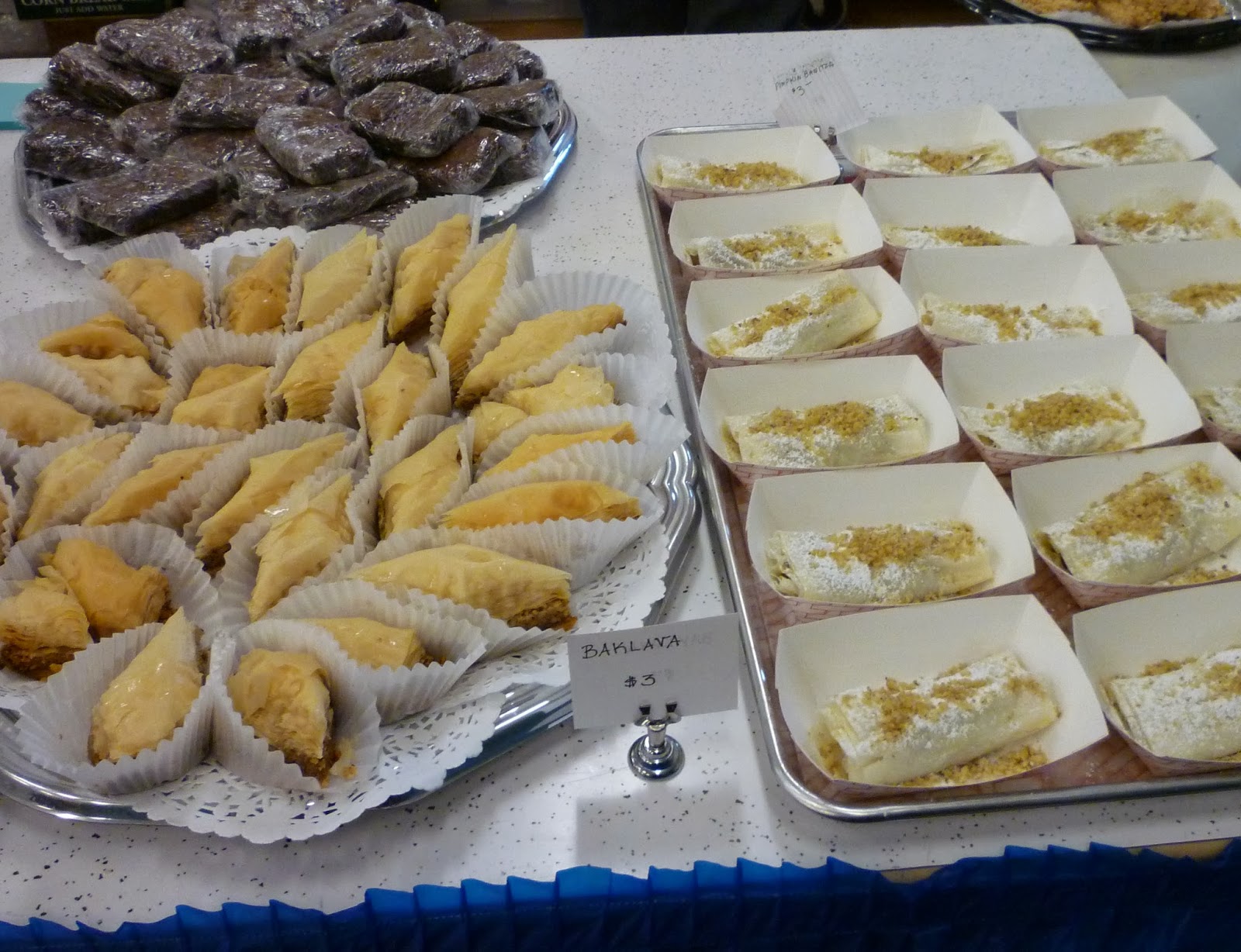
In the week previous I had baked some cakes to sell in the bakery, alongside some of the goodies I told you about last month as we were preparing some of them in advance.

At that time I posted a recipe for Pumpkin Banitsa, which had been stashed in the freezer until the morning of the event, to be baked and served freshly out of the oven and ready to sink teeth into. It’s to the right of the baklava in the photo above.

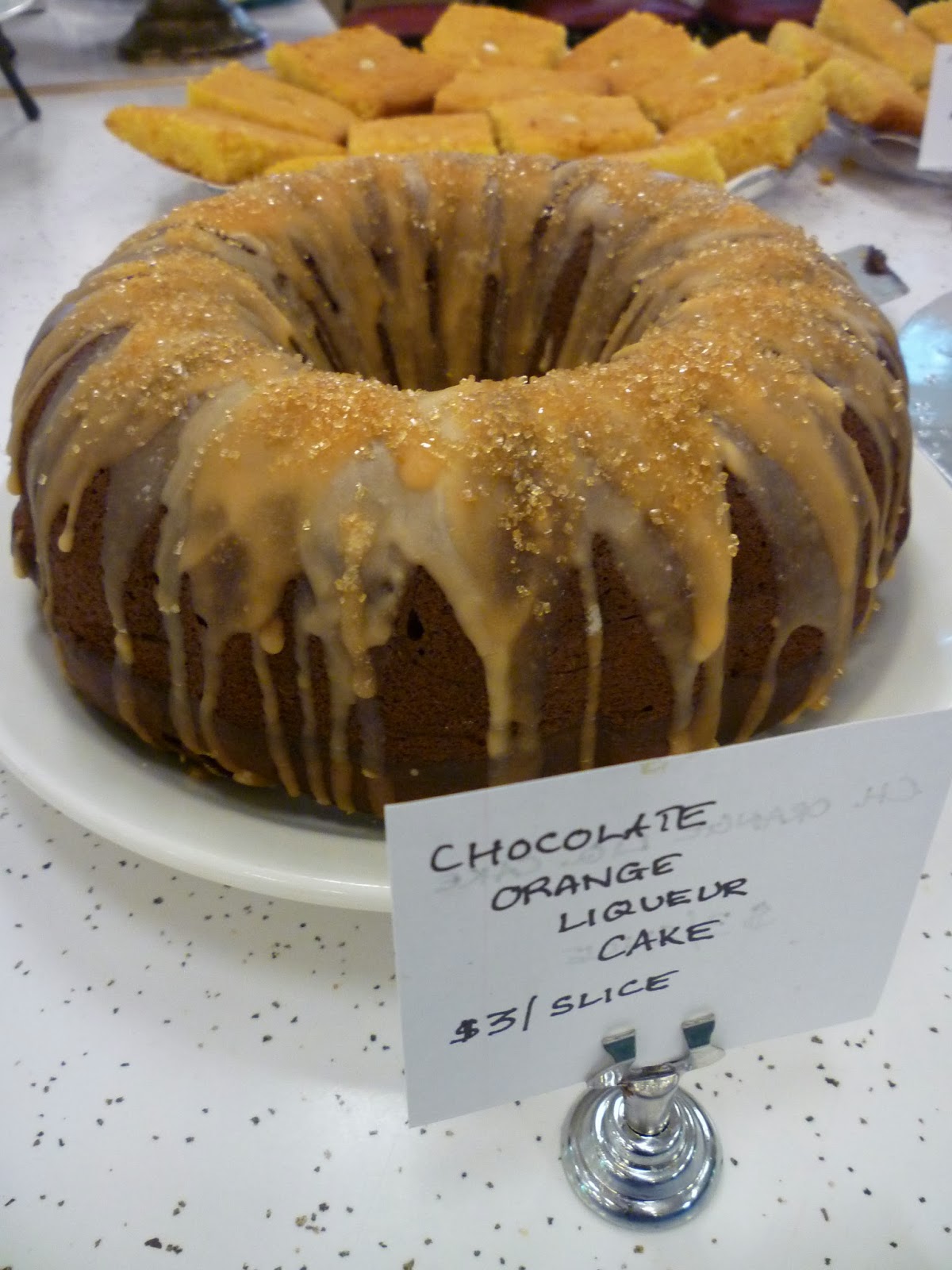
This is one of the three liqueur cakes I contributed to the bakery. My favorite was the mocha cake that I didn’t take a picture of, and which I have made many times. They were all variations on its recipe, starting with a devil’s food cake mix, adding butter, eggs, cocoa and (in the case of the mocha cake) coffee, and coffee liqueur.

The glaze is made from powdered sugar and whichever liqueur is appropriate. I used coffee, chocolate, or orange liqueur in these recent cakes. In the one pictured, I glazed it before freezing, and again the morning it was to be served, with a little food coloring in the second glaze. Then some coarse “natural” sugar went on last.

Monday morning I felt as though I had been away from home on a long trip. I went to the back yard to visit the garden and pick vegetables. I trimmed some spent flowers on my amazing zinnia, and stretched a measuring tape next to it to see just how tall it is – just an inch short of five feet high. Our summery September is predicted to give more 80° days, so I will keep track of the flower that was certainly a good investment of the $4 I paid for a 4″ pot. It’s been one of the constant joys of this summer.