Monthly Archives: February 2014

Let them believe.

It is assumed that the skeptic has no bias; whereas he has an obvious bias in favor of skepticism.

That is the one eternal education:
to be sure enough that something is true
that you dare to tell it to a child.

— G.K. Chesterton

These quotes having to do with teaching and learning remind me of something I read years ago when we were in the middle of our 25 years of homeschooling. It was in John Senior’s book The Restoration of Christian Culture, which I had borrowed and still don’t own, so it may be that I am not remembering it exactly right. I’d love it if any of you know enough to correct me or just articulate more clearly what I am trying to get at.

Dr. Senior warned parents against teaching children what modern educators call “critical thinking,” because it would turn them into skeptics and take away the simplicity of their childhood. They need to be taught to believe, rather than to doubt, and to have their joy and love for the world nurtured. If we teach them to be skeptics we are guilty of stunting their souls.

I thought about these things when I read an article by Ken Myers that was published last summer in Touchstone, titled “Trinity & Modernity” (unfortunately not available online). In it he introduces us to the book The One, the Three and the Many: God, Creation and the Culture of Modernity by Colin Gunton, and Myers discusses the fragmentation of current culture and thought, and the necessity of Trinitarian faith and the Body of Christ if we are to be saved from “modernity’s fatal confusion.”

His introductory paragraphs are what I want to share here, about our universal Christian story:

“We have been told that to be postmodern is to approach metanarratives — the Big Stories that explain Life, the Universe, and Everything — with incredulity. Of course, this raises the question of whether or not this definition of the postmodern temperament is itself a metanarrative…”

“…I do detect among most younger people a yawning indifference to efforts to explain history or theology or ethics or art in terms of grand and arching chronologies or chronicles. I suspect their minds and hearts have been colonized by thousands of what [Jean-François] Lyotard called petit récits, small amounts of highly particular and often idiosyncratic episodes, all blithely disconnected from any framework, all resistant to organization in any structure of meaning. Perpetual exposure to a numbing torrent of bewildering bursts of narrativish fragments — increasingly in fewer than 140 characters — leaves little time or mental space for attending to connections and causality.

“I remain unrepentantly pre-modern in my love of metanarratives. If the gospel has any power, it is only because it tells a great story that explains all things. It is a very particular story and it makes universal claims, which make both card-carrying moderns and postmoderns nervous. It was foolishness to the Greeks as well.

“This fragmentation and lack of understanding was a problem even in Chesterton’s day, but certainly it’s worse in more recent decades, with the giving over of education to a woefully pragmatic vision (Perhaps we do have a metanarrative: Do Whatever You Have To, To Get a Good Job.) and the gazillion bits of information and “communication” of the computer age.”

In my case, I always had Truth to tell to my children, because I knew at heart that Christ was the “yea and amen to all the promises of God,” and God was the Creator and upholder of everything. But in my experience the Protestant Evangelical world lacked cohesion, and certainly the continuity with the historic faith that would make it a true metanarrative.

It was incomplete, fragments that could not explain Everything, and I am sorry that I couldn’t tell my young children the Big Story that I am learning now, now that I am coming to know Christ and His Church. In The Church we have Christ the Head of the body. They go together, and can’t really convey the faith any other way. Christ comes to us in His Church, “the fullness of Him that filleth all in all.”

The intellectual focus of the West — which even we in the Eastern Orthodox Church breathe in the air of the modern world — seems to make it hard for me to avoid skepticism in myself. I can’t see that anything but prayer and sacrament can keep my heart tender and trusting. Let’s pray for the children, too, that they might be saved from the spirit of the age.
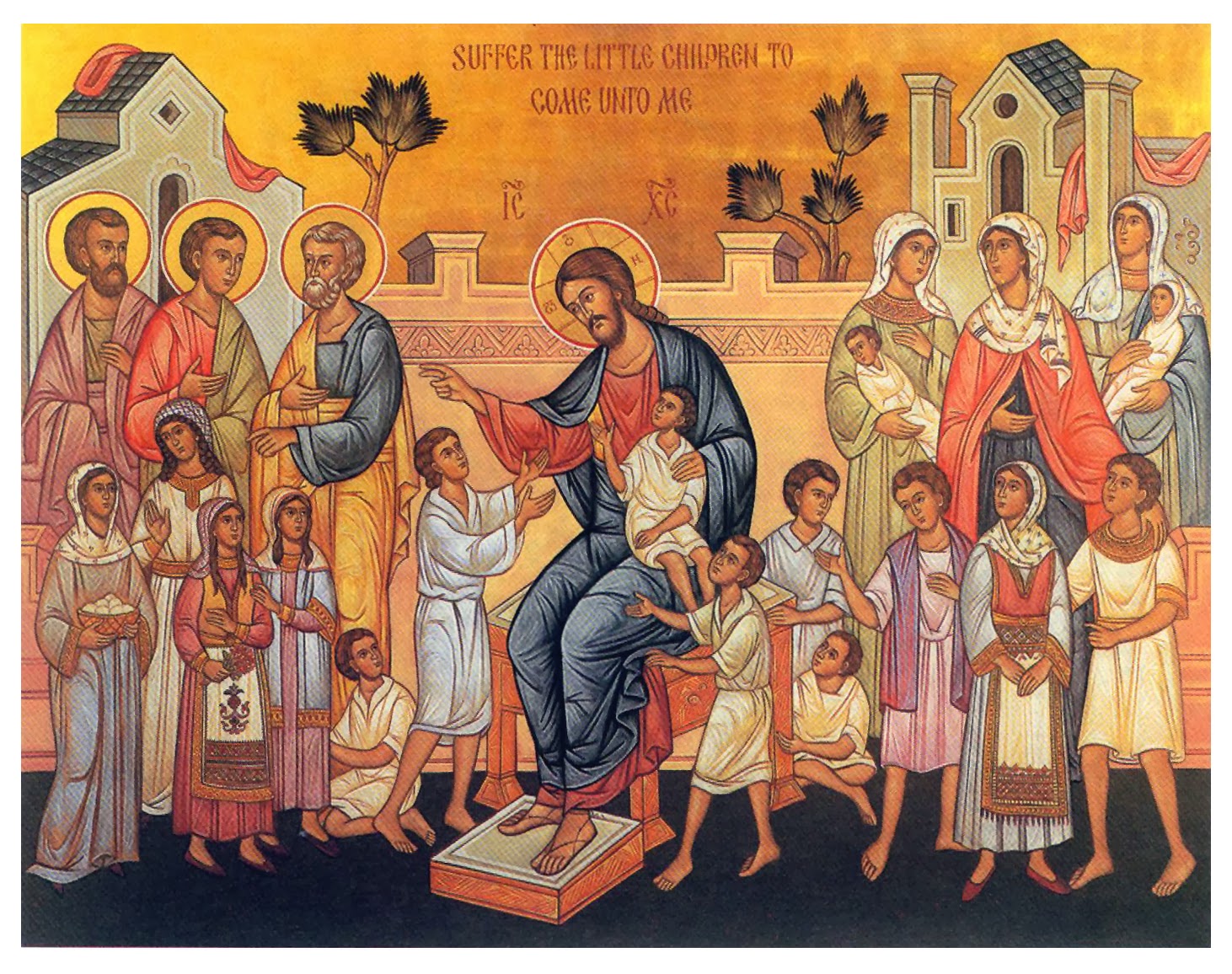
Linking up to Weekends with Chesterton

RFC makes one of nature’s marvels.

In the chapter titled “Living Water” in The Supper of the Lamb, in which we learn how to make Brown Stock and White Stock, Robert Farrar Capon continues, “…you are now ready for the really astonishing part of the exercise.” It’s the lead-in to another of the recipes that are scattered throughout the first two-thirds of The Supper of the Lamb, with more of them concentrated in the recipe section at the back.

Many of the recipes seem a little outdated now, but I doubt I’d have taken to the foods featured in Supper even in 1969 when it was first published, because I was just learning to live on my own and to eat rice and vegetables. Our ferial eating in those days was sparser of meat and wine than RFC could have imagined, and Diet for a Small Planet was the go-to cookbook. It would be another ten or fifteen years before I bought my first leg of lamb.

Nowadays I am well supplied with recipes for most everything I could possibly want to cook, but Capon’s next suggestion sounds so strange and appealing that I think I will have to try it eventually. If I had to choose between meat and butter, two foods at the top of my list of culinary loves, I guess I’m just sensible enough to choose meat, and when RFC tells me I can capture its “heart and soul” in my kitchen, I can’t resist his encouragement to create something of which he also claims, “…you will find yourself whittling off little pieces to dissolve on your tongue at odd times of the day.”

I’ll just give you the whole recipe here, because though we no doubt can find a version online, I naturally like the style of this one. It will be my last “meaty” post on this book, because in my church we are beginning our Lenten fast from meat very soon, and it’s time for me to turn the page.

HOMEMADE MEAT GLAZE
(Meat Extract)

Take the strainerful of bones and scraps [from which you have made the stock] and put them back into the stockpot. Add any scraps of meat you have around: poultry, pork, veal — even leftover hamburger — just stay away from lamb and ham. Meat extract can, of course, be made from the used bones alone, but anything that brings more natural gelatin to the pot is welcome. Cover everything deeply with cold water, adding no salt at all, and boil for two or three hours more.

That done, strain once again, this time into a large saucepan. Discard the bones. (They have been worked to death. Even the dog will look down his nose at them now.)

Boil the contents of the pan hard, skimming the froth from the top now and then, until the liquid is drastically reduced. When it is down to about a pint, transfer it to a smaller pan and boil on, over slightly reduced heat. Continue boiling until it reaches the consistency of a thick, blackish-brown syrup (half a cup, give or take a little). Pour this into a heatproof jar, cool, and refrigerate.

You now have, perhaps for the first time in your life, real meat extract — one of nature’s marvels. It is, of course, highly concentrated gelatin, but it has been imbued with the heart and soul of meat. Its taste is beautiful. Moreover, in spite of the fact that no speck of salt went into all those quarts of water the second time around, it is salted to perfection. Its consistency is, admittedly, a little forbidding; It is not unlike a young and tender shoe heel. Refrigerated, it will keep in this state for weeks; but, obligingly enough, it melts at the temperature of the mouth. If you are any lover of food at all, you will find yourself whittling off little pieces to dissolve on your tongue at odd times of the day.

Use it ad lib. Its general effect is to give a sauce soul and substance without overpowering the proper flavor of the dish. Experiment. It improves almost anything. A tablespoonful melted in warm Hollandaise imparts a certain roundness and resonance to what is sometimes an excessively light and lemony sauce. A piece dropped on top of a hot fried egg (plus a dash of Tabasco, if you are up to it) is delightful. And in the form of Colbert Butter, it is the perfect accompaniment to steaks, chops, fish, or poultry — not to mention a piece of matzoh at three in the afternoon.

RFC considers blood and sacrifice.

I owe you something more, however — something darker — on the subject of meat: The minor leads inexorably to the monumental. Lamb has set our feet in a large room indeed. Man not only dines: he also kills and sacrifices. The room in which he relishes the animal orders lies between slaughterhouse and temple. There are death’s heads at each end of the table of the world.

In The Supper of the Lamb: A Culinary Reflection Robert Farrar Capon introduces what is perhaps the most poetic chapter with this paragraph. He explores our human proclivity to hunting and butchering and the Jewish temple sacrifices in a long poem that I mostly didn’t have the patience for, though I liked its division into sections named for the categories of the car game:

Animal, Vegetable, Mineral;
Testing the textures of creation,
savoring the styles of its coinherence.

After describing the neat and clean Mineral parts of our world, he moves on to the Vegetable, “the kingdom of seed, birth, life….And for the first time,/ the reek of death.” But

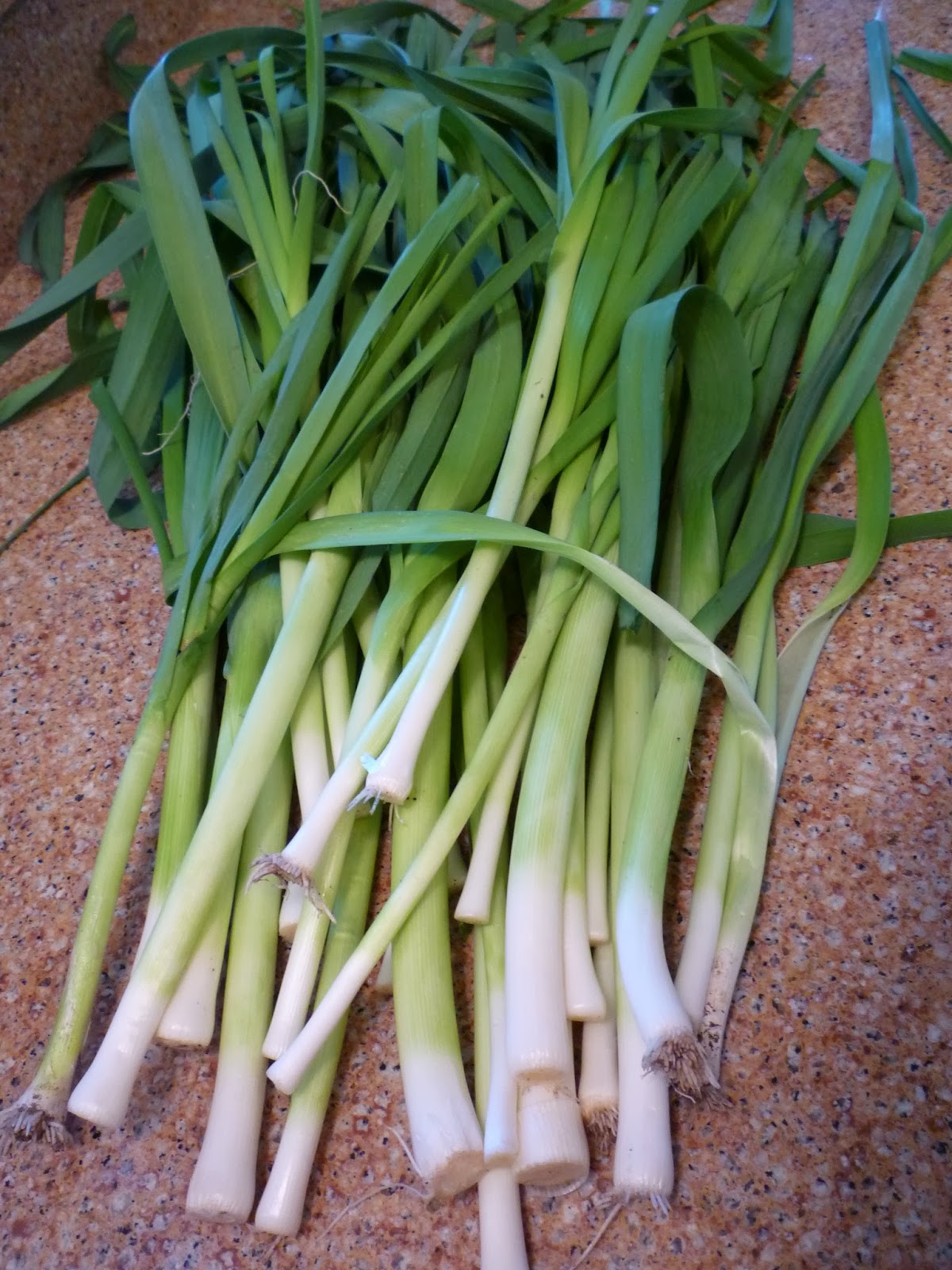
Onions die quietly,
Cabbages shed no blood;
All plants forgive:
By the waters that comprise them
They wash man’s hands
And let him walk away.

Eating vegetables is so innocent. But Capon doesn’t want to ignore the reality of our place as carnivores, so he unapologetically moves on to the Animal kingdom

each man owning the honest interchange by which he steals his livelihood; each woman’s hand intimate with the crack of wrung neck and severed spine….

It is not possible or even desirable to distill the writer’s poem into a fully satisfying theology, but I wanted my readers to know that he does satisfy himself with the mysteries of God’s plan of salvation, of which the temple sacrifices were a foreshadowing of Christ’s sacrifice on the cross.

The world awaits
The unimaginable union
By which the Lion lifts Himself Lamb slain
And, Priest and Victim,
Brings
The City
Home.

Other posts in this series are:
RFC is the man we need.
RFC begins with the meat.