 I came to the end of Irrational Man: A Study in Existential Philosophy, and feel that my engagement with the author and his theses has barely begun. The insights about eternal human longings down through the ages, and even small details about the lives of individual thinkers, will be rattling around in my mind for a long time to come, and I hope to refer to some of them in the future.
In the meantime, I wanted to share here a few paragraphs from the concluding Part 4, “Integral vs. Rational Man.” The goal of the existentialists is here named as integration; not irrationality, as the book’s title might have led us to think. I’m sure the title Integrated Man would not have been nearly as memorable, and unfortunately, at least a couple of existentialists have descended into such irrationality that they were certainly insane.

“Existentialism is the counter—Enlightenment come at last to philosophic expression; and it demonstrates beyond anything else that the ideology of the Enlightenment is thin, abstract, and therefore dangerous. (I say its “ideology,” for the practical task of the Enlightenment is still with us: In everyday life we must continue to be critics of a social order that is still based everywhere on oppression, injustice, and even savagery—such being the peculiar tension of mind that we as responsible human beings have to maintain today.)
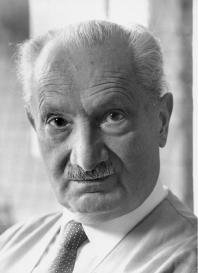
“The finitude of man, as established by Heidegger, is perhaps the death blow to the ideology of the Enlightenment, for to recognize this finitude is to acknowledge that man will always exist in untruth as well as truth. Utopians who still look forward to a future when all shadows will be dispersed and mankind will dwell in a resplendent Crystal Palace will find this recognition disheartening. But on second thought, it may not be such a bad thing to free ourselves once and for all from the worship of the idol of progress; for utopianism — whether the brand of Marx or of Nietzsche — by locating the meaning of man in the future leaves human beings here and now, as well as all mankind up to this point, without their own meaning.
 “If man is to be given meaning, the Existentialists have shown us, it must be here and now; and to think this insight through is to recast the whole tradition of Western thought. The realization that all human truth must not only shine against an enveloping darkness, but that such truth is even shot through with its own darkness may be depressing, and not only to utopians. But it has the virtue of restoring to man his sense of the primal mystery surrounding all things, a sense of mystery from which the glittering world of his technology estranges him, but without which he is not truly human.”
-William Barrett in Irrational Man, 1958
A good portion of the book can be found: here.

 Gladsome Lights