Monthly Archives: August 2023

At home our children are waiting for us.

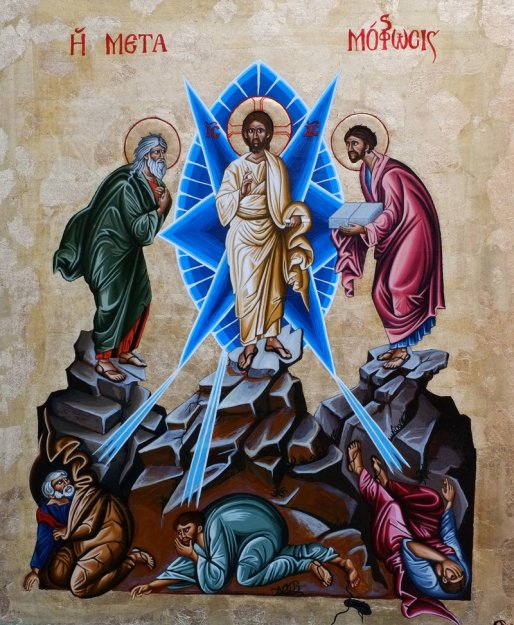
When Jesus and three of his disciples were on Mt. Tabor, and Moses and Elijah appeared as well — before Peter, James and John fell on their faces at the thundering of God’s voice, Peter suggested they build some shelters and stay a while. Just now I read this prayer prompted by that event: “Prayer on the Feast of the Transfiguration.”

“Come to us again, O Jesus—do not listen to Peter! Come down from Tabor and come to our homes, into our hearts! Come here, where we are suffering and laboring for our daily bread! Come here, where we are crucified by people, demons, and passions! If Peter does not want to come down, leave him on the mount and come to us, to our hearts!

“Teach us how to be saved, show us how to endure. Train us to carry our life’s cross. Teach us how to be crucified. Come and suffer for us, Thou Thyself be crucified instead of us, Thyself first taste the cup of death, show us a new way to salvation through suffering.

“O, how we would have liked to stay with Peter on Mount Tabor! But we bear a body, gasping from sickness, lusts and passions. In our breasts are hearts burning with hatred. At home our children are waiting for us, asking us for a piece of bread!…”

-Archimandrite Iachint Unciuleac

You can read the whole prayer: Here

To widen our heart beyond the bearable.

It being the day (2003) that Metropolitan Anthony (Bloom) of Sourozh fell asleep in Christ, I want to share a quote in his memory:

“The Gospel is a harsh document; the Gospel is ruthless and specific in what it says; the Gospel is not meant to be re-worded, watered down and brought to the level of either our understanding or our taste. The Gospel is proclaiming something which is beyond us and which is there to stretch our mind, to widen our heart beyond the bearable at times, to recondition all our life, to give us a world view which is simply the world upside-down and this we are not keen to accept.”

― Metropolitan Anthony (Bloom) of Sourozh

Step back from that gangrenous edge.

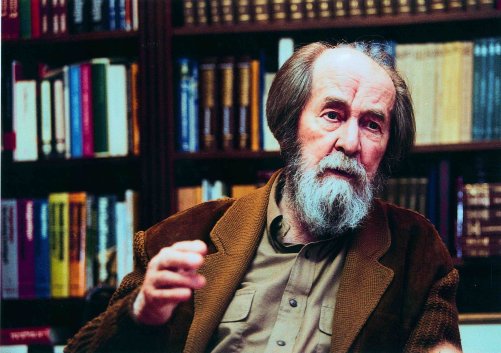
To commemorate the death of Aleksandr Solzhenitsyn, August 3, 2008, this year I give you a link to his essay, “Live Not by Lies,” with an introduction to it, and excerpt from it. The website of the Aleksandr Solzhenitsyn Center has a wealth of the author’s writings and speeches, a list of events and publications related to his legacy, his biography, and more. They have put up a new page dedicated to excerpts of his writings over the course of almost forty years on the topic of Ukraine, beginning with, “Russia and the Ukraine are united in my blood, my heart, my thoughts.” First the introduction to the essay:

On the day Solzhenitsyn was arrested, February, 12, 1974, he released the text of “Live Not by Lies.” The next day, he was exiled to the West, where he received a hero’s welcome. This moment marks the peak of his fame. Solzhenitsyn equates “lies” with ideology, the illusion that human nature and society can be reshaped to predetermined specifications. And his last word before leaving his homeland urges Soviet citizens as individuals to refrain from cooperating with the regime’s lies. Even the most timid can take this least demanding step toward spiritual independence. If many march together on this path of passive resistance, the whole inhuman system will totter and collapse.

by Edward E. Ericson, Jr. and Daniel J. Mahoney, The Solzhenitsyn Reader

Here is one short excerpt from the essay:

“Our way must be: Never knowingly support lies! Having understood where the lies begin (and many see this line differently)—step back from that gangrenous edge! Let us not glue back the flaking scales of the Ideology, not gather back its crumbling bones, nor patch together its decomposing garb, and we will be amazed how swiftly and helplessly the lies will fall away, and that which is destined to be naked will be exposed as such to the world.”

-Aleksandr Solzhenitsyn

It won’t take long to read the whole essay here: “Live Not by Lies.”

Health and healing, water and blessing.

Last weekend I drove a visiting priest to San Francisco, from where he was going to return to his home across the world the following day. But before I dropped him off at the church where he would serve that evening, he asked if we might stop by Holy Virgin Cathedral, where the relics of St. John the Wonderworker reside. I was quite happy to do that!

Every time I visit there, I feel more comfortable and more deeply blessed, but so far, not less overwhelmed by the size of the space, especially the height of the cathedral, and the numerous icons covering the walls and also freestanding around. The names are all in Cyrillic, so there are many who remain unidentified to me, though this time I recognized more of the saints just from having got to know them better elsewhere.

When I tried to get a picture of my companion as he stood praying next to St. John’s casket (he is somewhat hidden behind a palm), I realized that I could include the whole of one of the stained glass crosses in my picture. Later he and I discussed the used of stained glass in Orthodox churches, and I made note of how in the image we were looking at, there were no human figures, so no saints were cut in pieces, as it were, by leaded lines. He liked these examples of stained glass. I guess I still am not used to them.

It was timely that I came away with that picture, because today was our commemoration of the Procession of the Honorable Wood of the Life-Giving Cross of the Lord.

“The origin of this Feast is explained in the Greek Horologion of 1897: ‘Because of the illnesses which occur during the month of August, it was customary at Constantinople to carry the Precious Wood of the Cross in procession throughout the city for its sanctification, and to deliver it from sickness.'”

A service for the Blessing of Water was held this evening, the hymns all about healing; and our rector reminded us that though we may tend to seek medical care when we are ill, we ought always to pray first, especially for the healing of our sin-sick souls.

Today is also the beginning of the Dormition Fast, by which we prepare our hearts to imitate the life of the Mother of our Lord, and we make ready to remember her death, on August 15th. The consideration of her example, and the shortness of our own lives, also help put us in a condition of receptiveness to the healing power of the Holy Spirit.

The Lord is my Light and my salvation; whom shall I fear?
The Lord is the strength of my life; of whom shall I be afraid?

A prayer from tonight’s service:

O Lord our God, Who art great in counsel and wondrous in deeds; Fashioner of all creation, Who preservest Thy covenant and Thy mercy for those who love Thee and keep Thy commandments; Who receivest the compunctionate tears of all who are in need. For this reason Thou camest in the form of a servant, being not afraid of our image, but granting true health to the body and saying, “Behold, you who have become healed; sin no more!” And with clay Thou madest the eyes whole, having commanded them to be washed, at a word making them to rejoice in the light, putting to confusion the floods of passions caused by the enemies and drying up the bitter sea of this life, subduing the floods of sweet things heavy to bear: As the same King, O Lover of mankind, Who hast granted us to clothe ourselves with the garment of snowy brightness, by water and the Spirit, send down upon us Thy blessing by the partaking of and sprinkling with these waters, washing away the filth of passions.