Malcolm Guite has given us a sonnet to turn our remembrance to the origin and meaning of Hallowe’en, and to the saints, known and unknown, those “steady lights undimmed” who are commemorated in the next days. If you go to his site, “Malcolm Guite,” you can read a little related history, and hear him reading his own poem. It’s worth a click.
ALL SAINTS
Though Satan breaks our dark glass into shards Each shard still shines with Christ’s reflected light, It glances from the eyes, kindles the words Of all his unknown saints. The dark is bright With quiet lives and steady lights undimmed, The witness of the ones we shunned and shamed. Plain in our sight and far beyond our seeing He weaves them with us in the web of being They stand beside us even as we grieve, The lone and left behind whom no one claimed, Unnumbered multitudes, he lifts above The shadow of the gibbet and the grave, To triumph where all saints are known and named; The gathered glories of His wounded love.
The morning that I was walking home while looking at the clouds, I took a slight detour to see what was going on at my favorite neighborhood gardener’s front yard. I met her briefly once when I was standing gawking, and learned that she grows nursery stock to sell to local stores. She obviously loves to plant all kinds of things for her own enjoyment as well, such as these poppies I wrote about one May; but last week my focus was on the gorgeous amaranth and its relatives.
I believe these are types of Quail Grass, Celosia argentea, which is in the amaranth family. I read that in some places, especially parts of Africa, it is “cultivated as a nutritious leafy green vegetable.” In Nigeria it is known as “soko yokoto,” meaning that it will “make husbands fat and happy.”
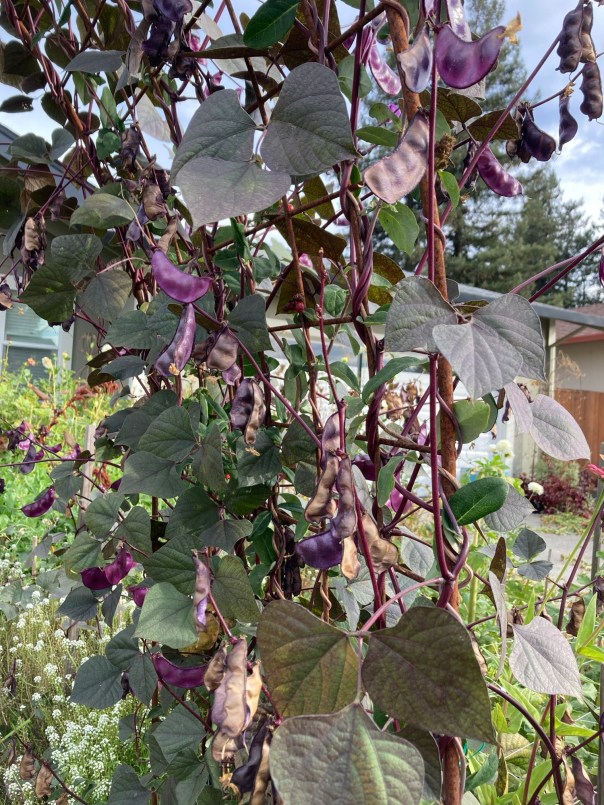
This garden also was lush with perfect dahlias, cosmos blooming extravagantly, and Hyacinth Beans. Do you know about these? The gardener had three arching trellises along the walk going to the front door, each with a different edible plant climbing on it. These are the hyacinth beans, which were on the arbor closest to the sidewalk:
I did manage to sprout amaranth seeds in my planter boxes once, but I think something ate them before they got very big. I wonder if my neighbor collects the seeds to eat? Maybe next year I will experiment by growing the usual amaranth and quail grass, too.
I no longer have a husband to feed, but if I get amaranth growing in my garden, any of you is welcome to come and pick a bunch to try out in your own kitchen and marriage.
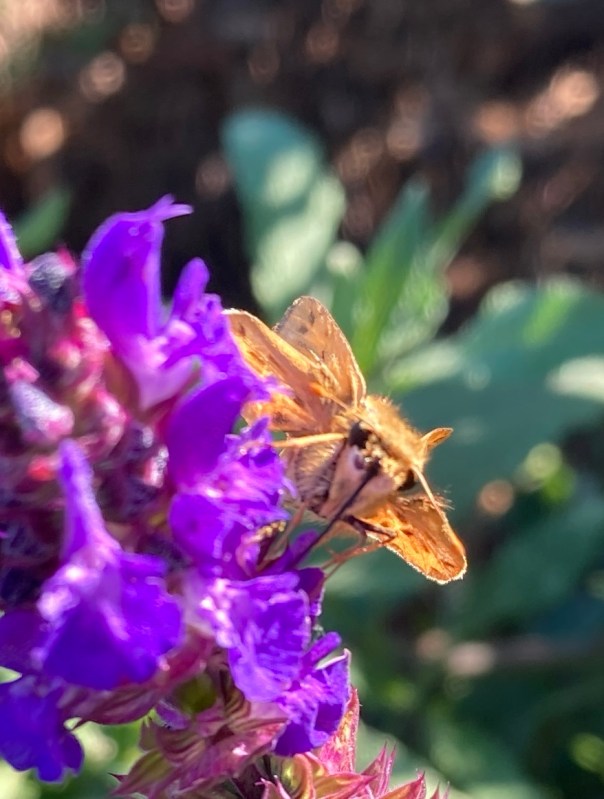
When I was pruning the salvia in front, this skipper was languidly sipping from the same. You can see its proboscis going right down in. The creature was definitely not feeling skippy… I wonder if skippers die in winter? Did it lay eggs somewhere already?
So much is going on in the garden. These irises really should have been divided again — but, already? I’m afraid they will have to wait until next year.
I ended up with so much lemon verbena — what wealth! This is a very nostalgic herb to me, because of when I was in Turkey riding non-air-conditioned buses across Anatolia, and first experienced its delicious scent, though I didn’t know what it was. The bus attendant would walk up and down the aisles every hour or so with a big bottle of something like cologne, and if you held your hands cupped he would sprinkle a tablespoon or so into them. I followed the example of others and quickly splashed it on my face and neck for refreshment. Later, when I returned home, I brought an empty bottle with me and kept it for many years, just so I could take a whiff from time to time.
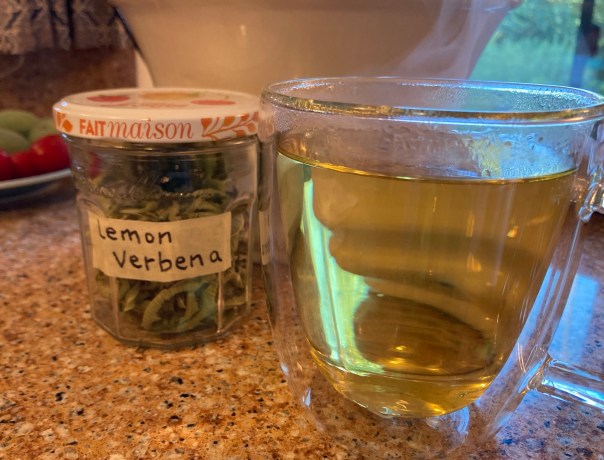
It was decades before I matched that scent to the lemon verbena plant. I mentioned in the summer how I had made lemon verbena paste, and last week I made lemon verbena simple syrup, trying to use a lot of the leaves before they fall off when the bush goes dormant. Now I wish I had just dried them. Making tea is the obvious thing, but for some reason I never did, though I had dried a few leaves last year and they were sitting on the counter. Last week I made a pot of tea with them and loved it. It’s wonderful just “plain.”
A few months ago my neighbor Kim broke a big stem off a plant on her patio and handed it to me. “Stick this in the ground,” she suggested. Instead, I cut the stem into three parts and put them in water, wherre I noticed they had made a lot of roots pretty quickly. One day I spied this huge flower cluster at the back of the jar by the window. Kim says this is a Plectranthus ecklonii, and her plant never gets blooms like that. I don’t know what I will do with it, but I found out that it is not terribly frost tender.
Plectranthus ecklonii
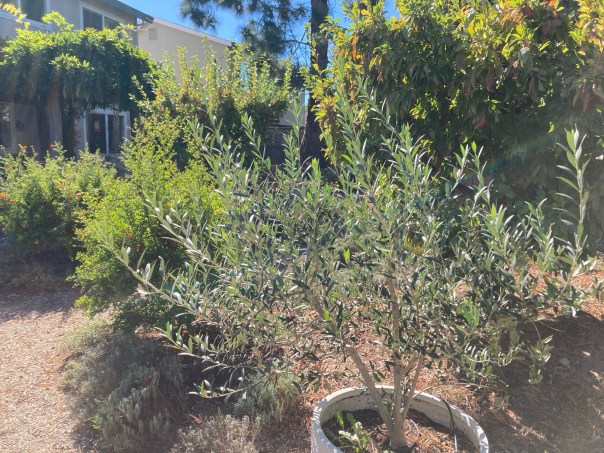
The olive that I repotted with great effort is looking healthy again. I guess my pruning wasn’t too bad, either. I do enjoy pruning, but I’m glad I don’t have to do all of it, or get on ladders anymore for that task. I can just prune the smaller bushes and leave the big ones for my helper.
Recently I did prune all four dwarf pomegranates, in advance of their dormant pruning that will happen later, because my new landscaper consultant told me I should “lift their skirts.” Ahem… is that common parlance in the gardening world? I had never heard the term, but I knew what he meant.
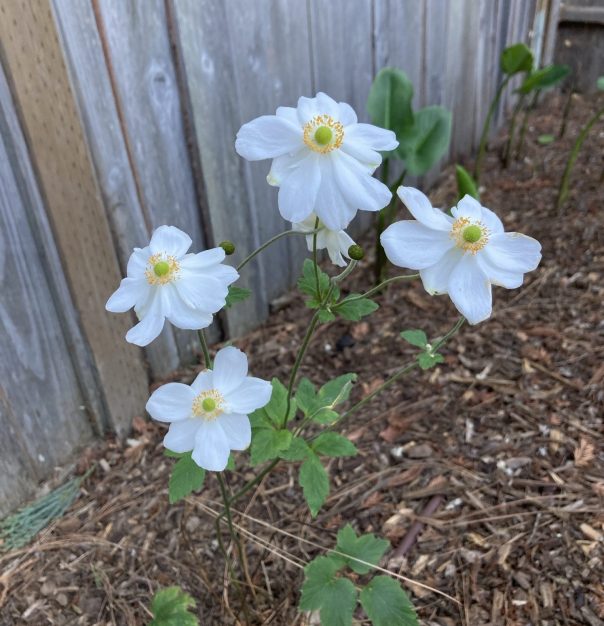
I am thrilled that my Japanese anemones (below) are putting on their best show ever, though they still are not robust — I gave the four of them extra water this year, and they have been getting more sun since the pine tree was thinned. If I feed them a little maybe they will do even better next year.
I have lots more to do before I will feel prepared for winter, but that skipper put me in touch with the reality that I, too, am slowing down. Most likely I won’t get “everything” done. And I guess that will have to be okay!
O hushed October morning mild, Thy leaves have ripened to the fall; Tomorrow’s wind, if it be wild, Should waste them all. The crows above the forest call; Tomorrow they may form and go. O hushed October morning mild, Begin the hours of this day slow. Make the day seem to us less brief. Hearts not averse to being beguiled, Beguile us in the way you know. Release one leaf at break of day; At noon release another leaf; One from our trees, one far away. Retard the sun with gentle mist; Enchant the land with amethyst. Slow, slow! For the grapes’ sake, if they were all, Whose leaves already are burnt with frost, Whose clustered fruit must else be lost— For the grapes’ sake along the wall.





 followed the example of others and quickly splashed it on my face and neck for refreshment. Later, when I returned home, I brought an empty bottle with me and kept it for many years, just so I could take a whiff from time to time.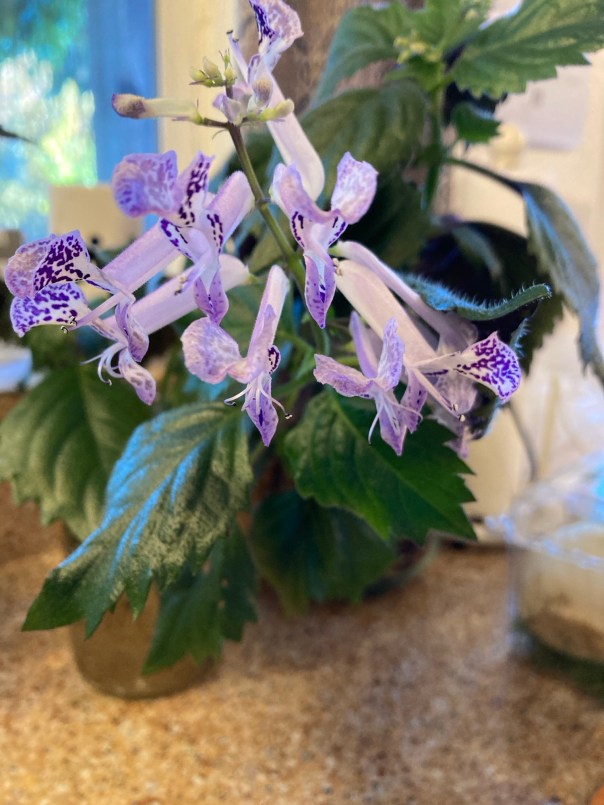
 Gladsome Lights