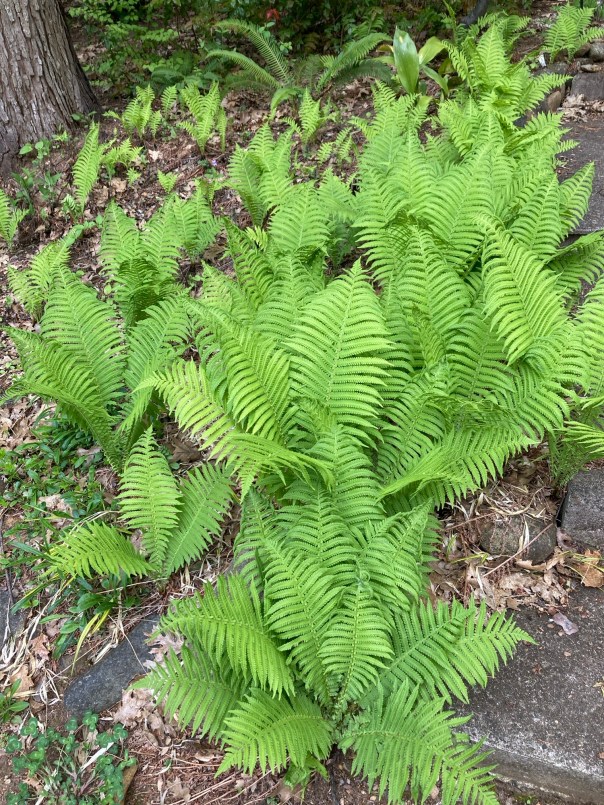
Pippin drove the younger children and me to the same botanical garden we visited two years ago, but several weeks earlier in the spring. Before looking at the plants in the garden itself, we briefly explored an area of the larger park down by the Sacramento River, which is roaring through its narrow channel in the town of Dunsmuir.
On trees growing at the river’s edge, Ivy found dozens of exoskeletons that Seek tells us are of the California Giant Stonefly. They were certainly the giantest fly of any kind I’ve ever seen. Pippin thinks the flies exited these skins last year, because it’s too early in this spring for it to have happened recently.

We saw poison oak and regular oak, and several wildflowers along the riverside path, including annual honesty, which is in the mustard family. And nearby, last year’s seed pod, now a faded moon.


Up the hill, rhododendrons!

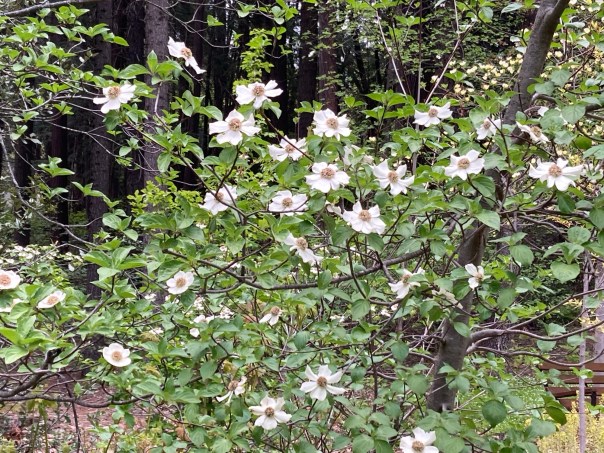
Dogwoods layered with Japanese maples and rhododendrons make a beautiful scene.

The big lawn around which the garden is arranged is a setting for recreational events, and there were lots of poles and wires and big boxes of electrical equipment that interfered with our photography, but not with our appreciation of the display of plants, which included various other shrubs native to the Far East, like this Japanese Andromeda (Pieris japonica):

The other favorite exotic was the Dove Tree, or Handkerchief Tree (Davidia involucrata), native to China:

Behind the dogwoods and smaller trees, tall conifers form a backdrop.

If there had not been a chill breeze blowing up from the river, I might have plopped myself down on that lawn to gaze at dogwood trees for a half hour. I forget about their existence for years at a time, and then am blown away all over again by their beauty. There are at least eight species of dogwoods to enjoy there. From the garden’s website:
Cornus nuttallii, Mountain or Pacific Dogwood, is the emblematic tree of the City of Dunsmuir and the Dunsmuir Botanical Gardens. They are native to the Gardens and the surrounding area. What appear to be flower petals are actually bracts – petal-like modified leaves. The (mostly) inconspicuous true flowers are ringed by four to eight of the showy, white bracts. In fall as the flower ovaries develop and set buds, they turn a bright yellow with red seeds.
At last, we did have to leave.
And I will say good-bye for now
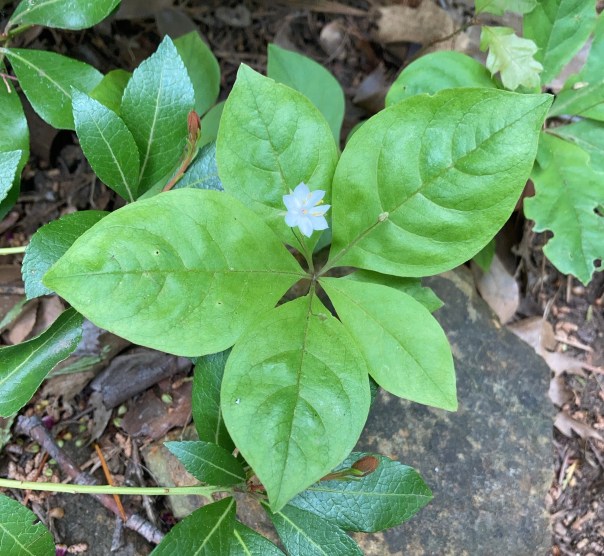
with the simple Western Starflower:
 Gladsome Lights
Lots of pretties here, but that stonefly exoskeleton is the best! When I looked it up to see what the insect itself looks like, I learned that fly fishermen often tie flies that imitate it, since it’s also known as the salmon fly, and fish apparently will bite on it in a flash.
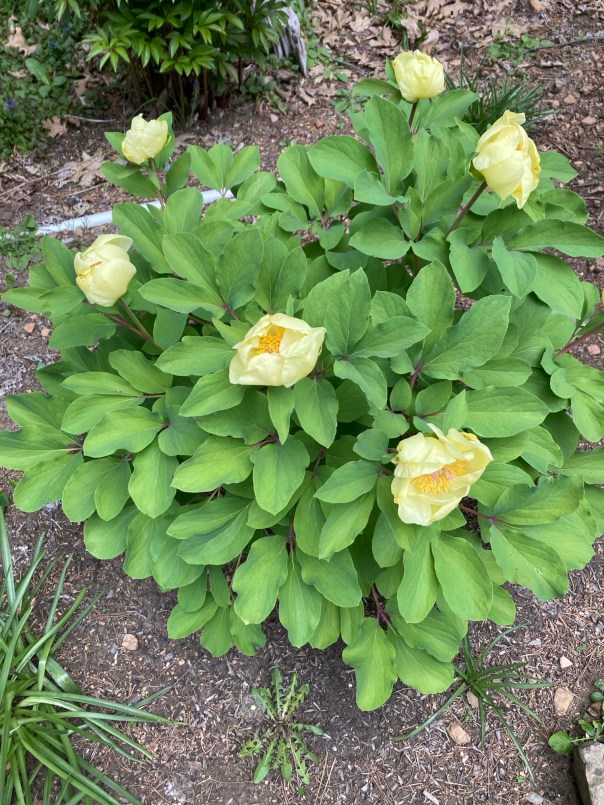
It’s possible your mystery flower at the top is what’s called the tree peony: Paeonia suffruticosa.
LikeLiked by 1 person
It did look more like a peony than anything we could think of. Seek couldn’t identify it, and the leaves were different from Pippin’s peonies. It doesn’t look like the ones that I can see photos of when I search for Paeonia suffruticosa, and the botanical garden website doesn’t include any paeonias in its plant list. At Pippin’s place, the peonies are just emerging and are nowhere near blooming — though admittedly they are a little higher in elevation. But maybe…!
LikeLiked by 1 person
I read on the Missouri Botanical Garden page that “many cultivars of this species have been developed, with a wide range of petal colors including red, pink, purple, white and yellow. Cultivar flower forms range from single to semi-double to double.” Another site mentioned that cultivar leaves can differ from the species: that might explain that. Or not!
LikeLiked by 1 person
Ah, that is helpful to know. I will pass on this information to my daughter. Maybe some of the cultivars also bloom early 🙂 Thank you, Linda!
LikeLiked by 1 person
Pippin found this: https://dancingoaks.com/products/paeonia-obovata-obovate-peony?srsltid=AfmBOoqcgLebvZrD_bxQAhb6LEfXRXcyOKQaQlx76GEWxdaCAGgLkALa It looks very like except for the color, and they are early bloomers!
LikeLiked by 1 person
These are the very ones we have in vases (gifted from green fingered gardeners) here presently! I don’t remember ever seeing the yellow ones, though they certainly have a bit of the peony about them!
Thanks for all the English (and Latin!) names of some plant friends I see around and about the neighbourhood!
LikeLiked by 1 person
I did not know that about the dogwood leaves! How fascinating! Our world is a place of marvels.
Thanks for taking me along on your walk! 😊
LikeLiked by 1 person
what a glorious place to walk. Seeing that stonefly skeleton — wow! Fabulous find. But it’s all beautiful and you saw so much. Well done. Sounds like a perfect time.
LikeLiked by 1 person