
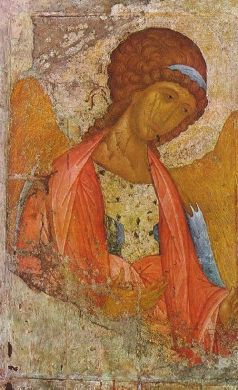
 When the Holy Trinity said, “Let there be heaven and earth,” Thou, O Christ, didst serve as a Thought and a Tongue of the divine Trinity. Choirs of angels formed themselves on Thy voice, receiving their form from the multi-colored light; thereupon many armies, as multi-colored clouds, cried out as an echo of the divine glory and divine blessedness, and stood in ranks around Thee, their Leader, singing the triumphal hymn: Alleluia.
The long poem, Akathist to Jesus Conqueror of Death, by St. Nikolai Velimirovich, contains songs of the nine ranks of angels, of which that above is titled, “The Choir of Angels.” Today in the Orthodox Church we commemorate the Archangel Michael and All Angels, so I will share the second of those songs as well, “The Choir of Archangels”:
Thou hast made us Thy vessels and filled us completely with Thy might and Thy wisdom; of ourselves we are nothing, but in Thy mercy Thou hast made us Thy friends. Lucifer fell from our archangelic rank and dragged all mankind into perdition, but Thou, so as to remove that disgrace from our countenance, hast allowed us to share in Thy victory, the victory over Lucifer, by sending the Archangel Gabriel as herald of Thy descent into battle and Thy victory; thus in gratitude we praise and glorify Thee, singing: Alleluia.

Last year at this time I was trying to learn a prayer song to the Archangel Michael, to teach the little children at church. I had forgotten about the most traditional and easy one that they might already have been introduced to in the past, and spent a long time in finding a hymn (text below) that was really a bit much for the class. But it is my own favorite so far, and I think this is where I learned it:
Father Stephen has written about the legitimacy of praying to angels. About the scripture that says, “There is only one mediator between God and man, the Man Christ Jesus,” he explains:
“…that sense of mediation is a meaning of the word that Christ alone could perform. No angel, no other creature can unite me to God. Only God become man is able to unite man to God.
“But we’re talking about prayer, not union, per se. Can someone else pray for me? I hope so …. Can angels pray for me? (yes they can and they do). Is it wrong to ask them to do so or thank them for it (certainly not)….
“God is the ‘Lord of Hosts.’ He is always surrounded by such a cloud of Angels, saints, etc. He cannot be approached ‘alone.’ This great company of witnesses, as the book of Hebrews calls them, bears witness to my prayers before God, and hopefully improves greatly upon them. They see so much more clearly than what I see. I see and know so little. Thank God someone is praying who knows. God knows, but it is His delight, in the utter humility of His nature, to share that knowledge and to invite us to pray.”
St. Michael the Archangel,
Defend us in battle.
Be our protection against the wickedness
and snares of the devil.
May God rebuke him we humbly pray;
and do thou, O Prince of the heavenly host,
by the power of God,
cast into hell Satan and all the evil spirits
who roam throughout the world,
seeking the ruin of souls.

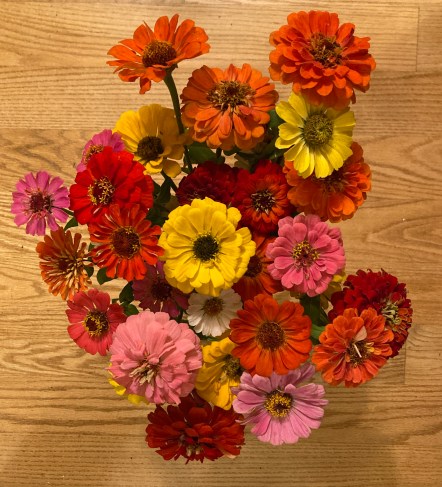
 I have to write it down. It would take even more time if I were to write a letter to the grandchildren about it, so they will have to wait, too.
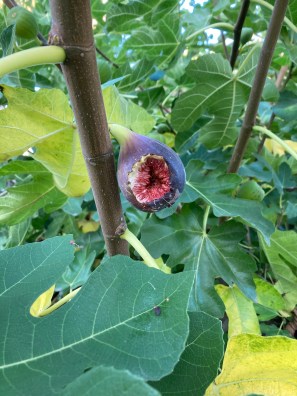 But I have color. My purples are, or should be, my figs. I think this year’s crop is going to be a big loss, because of the relatively cool summer. Yesterday I saw this single fruit ripening. This morning, a meddlesome crow had tasted it and also found it not ready.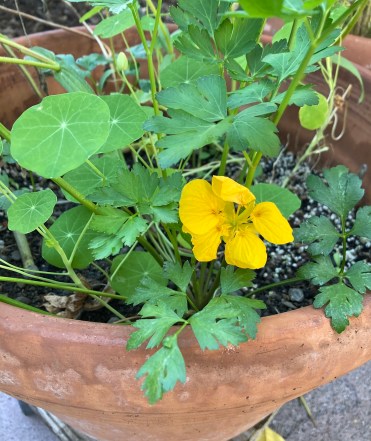


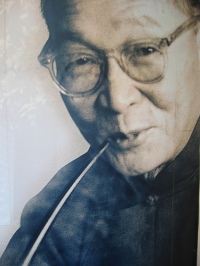
 This post that is very fallish in more than one way, I am sharing again nine years later. It is about Lin Yutang, whose writings my late husband and I were reading aloud together, during the illness that was to end his earthly life only a few months later. Much of what I read during that period is very foggy in my mind at this point, and many of those and other books from the past keep calling me back, especially when I read my own reviews.
 to read in bed. I may have to buy a copy, because in the very first paragraph of the preface I found beautifully written lines that drew me in to his mind and his ruminations:
 seasons of the year.
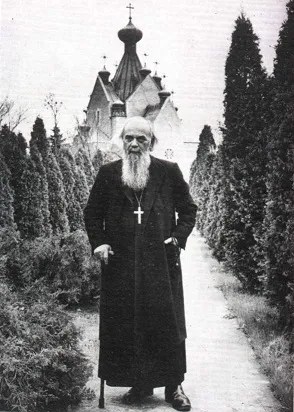 “Theology means the word about God. Theology is therefore ALL or nothing. The whole of nature and the super-nature and the subternature IS ALL theology; all man and every part of him is theology; every meadow and every flower is theology; Sirius and the Milky Way, nebulae and meteors are theology; the history of the planet and the history of the people, the history of radioactivity and the history of every butterfly, and of every grain of sand, and of every drop of water, and of every ray of light are theology.
 Gladsome Lights