
“Your birds awaken me in the morning, and the murmur of the lake lulls me to sleep in the evening. But it is not the birds that awaken me, nor the lake that lulls me to sleep, but You, O Lord, Master of the voice.
“You lend Your voice to the birds and the midnight murmur to the lake. You have lent a voice to every throat, and have put a story into every creature. I am surrounded by Your heralds, as a student by many teachers, and I listen to them tirelessly from dawn to dusk.
“O Lord, Master of the voice, speak more clearly through your heralds!
“The sun speaks to me about the radiance of Your countenance, and the stars about the harmony of Your being. The sun speaks in one language, and the stars speak in a different language, but all the languages flow out of the same vocal cords. The vocal cords belong to You, and You uttered the first sound that began to tremble in the deafness and formlessness of nothingness, and it broke into countless sounds and heralds, as a thundercloud breaks into rain drops….”
-St. Nikolai Velimirovich, from XXVII, Prayers by the Lake
I am pondering St. Nikolai’s plea, that the Lord speak more clearly… If we can’t understand, isn’t the problem that we are hard of hearing? But maybe it is his way of saying, “I am straining the ears of my heart, Lord, to know You better.”
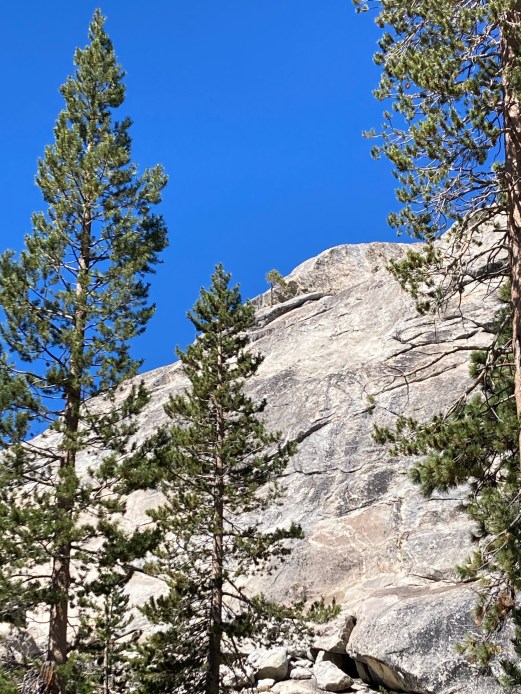
When I found this particular prayer yesterday, it resonated with my own experience here in the mountains, where so much of my attention is focused on the birds, the clouds, and yes, the stars. After a thunderstorm one evening, I went out and found the sky full of them, declaring the glory of God, in their voices that are deep silence.
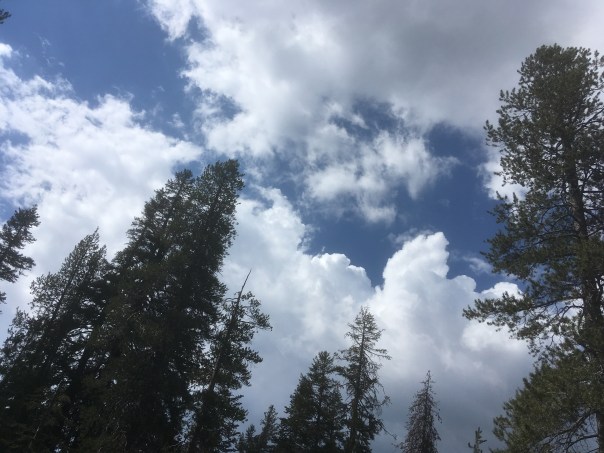
One afternoon when I sat on the deck reading, the silence caught my attention. At home in the suburbs, I have learned not to pay attention to all the neighborhood noises, and the freeway sounds that come on the wind from a mile away. Some hours are quieter than others, but if I listen closely, there is always the ticking of a clock, or the cars in the street. When I noticed that forest silence that my ears are not used to, I concentrated hard, to discover what might be in it. And all that I could take in was the pine boughs moving in the breeze.
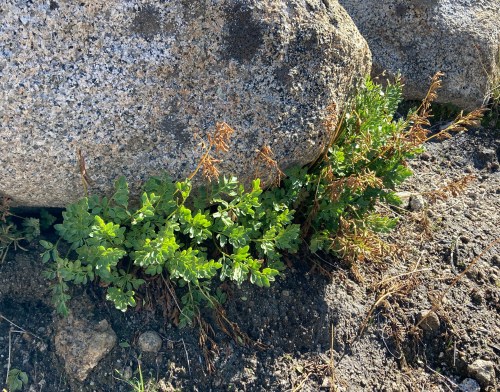
This poem from St. Nikolai’s collection is not really about the voice of God in silence. He goes on past what I quoted to talk about words and stories. It has truly been lovely for me to be slowed down by having fewer matters to attend to; to tune in to the “stories,” as it were, in the activities of the animals here, and to study a few plants. I saw another new-to-me plant not far from lakeside, called an American Parsley Fern:
I could watch the animals all day, I think, from my first-rate viewing perch. Chickadees are plentiful, and a junco made an appearance. I’m thankful that my sister suggested that I bring up some food that the chipmunks would like. This morning two chipmunks came to the slider and ran up and down, peering in with their paws against the glass. Do they know that the seeds come from the other side?

What I have been putting out for them is a mix of seeds and peanuts, and now a gang of Steller’s Jays have come for a share. As many as four at a time were interested.

They are truly handsome birds, with their shiny royal blue feathers. Of course they are greedy, and don’t have pretty voices, but they belong to this place, as it belongs to them. I’m happy that our stories overlapped for a short time, and wouldn’t mind if they did wake me in the mornings — but when I wake everything is still very quiet, and the sky that’s visible between the trees outside my window is turning from gray to pale blue.



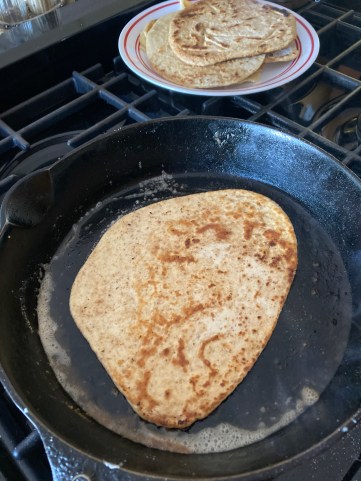
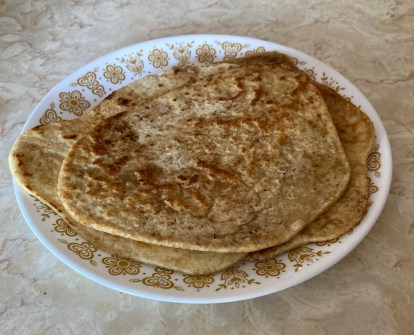
 When I was getting ready to come up here to my high mountain cabin for several days, I didn’t like the idea of leaving my sourdough starter at home with no one to feed it for most of a week. Then I realized, I could bring it with me. That is what is great about road trips — you have lots of flexibility and options. Every experience of air travel makes me love road-tripping more.
 Gladsome Lights