March is the month that my husband fell asleep in the Lord, two years ago now. My experience of bereavement is all over the map, following the topography of the seasons and the holidays and whatever physical ailments fall on me.
Most of the time I am happily swamped by a myriad of plans and activities, and tasks I’m behind on. But sometimes the absence of my husband when I lie down and when I rise up, when I go from room to room or when I come home from a walk, is like a huge and strange presence.
March always features Lent, which is a mercy, because that is an opportunity to focus on prayer, which keeps me in the present, where my husband and I are both living in the Kingdom of God. I can put our marriage in historical perspective and in the context of eternity.
This year once again I cooked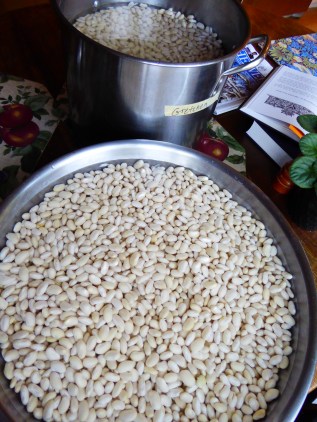 for 100 people, with the help of several dear friends, an agape meal after last Sunday’s Divine Liturgy, as a memorial for my husband. I made the same menu as last year. We had so much fun cooking on Saturday that I completely forgot to take pictures.
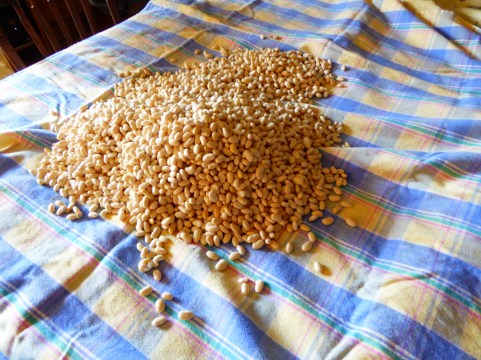
But the night before, I had been soaking 20# of Great Northern beans to make the Greek Beans , and I took pictures of them soaked and being dried off on a tablecloth. They have to be dried off a bit so you can sauté them in olive oil before stewing them. Neither of the photos shows the whole 20#.
I also borrowed some pictures from last year that are pretty much identical to the scene from last week.


Partly because of Lent, March is always very busy. Not all Orthodox churches are able to celebrate a full calendar of services, partly because many parishes have only one priest, and he might also have another job. But God has arranged for me to be where I can be nourished and helped a great deal by praying in church and receiving Communion several times a week during Lent. We have so many services that no one can attend all of them.

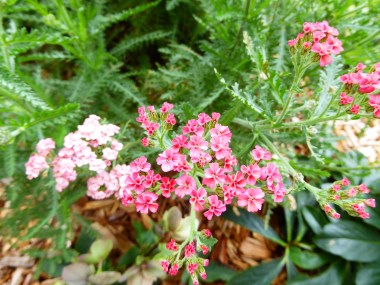
March is when the garden takes off. If I didn’t have my garden, what would my life be like? Would I keep a tidier house? Pray more? Probably neither. I am always happy in the garden – and it’s a good place to pray, without a doubt. Better to have a garden that is somewhat neglected than to have no garden.

I started thinning the lamb’s ears with the help of a kneeling bench
that my cousin Renée gave me.

I used to not like Euphorbia (above),
but now that it is falling over my own garden wall I find I am quite fond of it.


The native currant bushes (ribes) aren’t very bushy,
but they are three times as tall as last year.

The first week of Lent I started out grumpy. But Lent is a good cure for that. I have since been given wonderful gifts of thankfulness. God has let me see how all through my life He has abundantly provided for me, and He continues to do this every day. When I think of the love that has been given me in my childhood, my marriage, my children and my friends – and now the Holy Orthodox Church that is “the fullness of Him that fills all in all,” my cup runs over.
No doubt I will lapse into grumbling and self-pity before long, and have to repent again (That’s what life is for!) but the view of my widow’s world from this mountain on which I stand at the moment is quite beautiful, and it’s a Happy Spring.
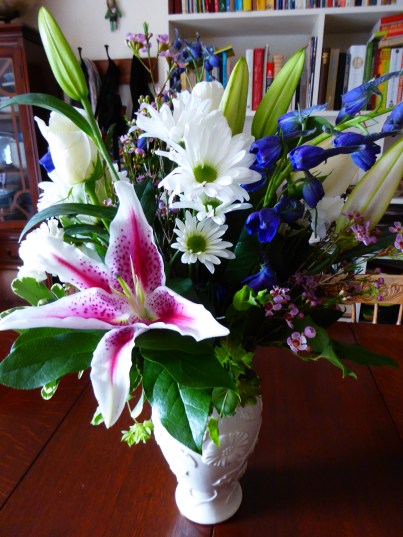
I began this post yesterday, and then went out to pull weeds and deadhead flowers. I was kneeling in the mulch by the yarrow when the florist delivery girl walked up with an elegant vase for “Gretchen.” Lilies, roses, carnations, blue flowers, sweet smells… Before I could get it into the house I started weeping, not being able to guess who would do this – it could be anyone, in God’s world that is full of miracles, and seemingly brimming with people who care about me. But it was my children and their spouses, with an early remembrance of their parents’ wedding anniversary:
“Mama, these are sent in celebration of you and Papa, and with love for you,
from your children.” See what I mean about that landscape?