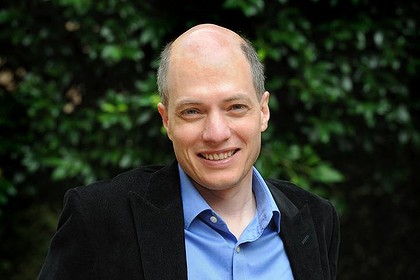
If our lives are dominated by a search for happiness, then perhaps few activities reveal as much about the dynamics of this quest — in all its ardour and paradoxes — than our travels. They express, however inarticulately, an understanding of what life might be about, outside the constraints of work and the struggle for survival. Yet rarely are they considered to present philosophical problems — that is, issues requiring thought beyond the practical. We are inundated with advice on where to travel to; we hear little of why and how we should go — though the art of travel seems naturally to sustain a number of questions neither so simple nor so trivial and whose study might in modest ways contribute to an understanding of what the Greek philosophers beautifully termed eudaimonia or human flourishing.
This paragraph from the first chapter of Alain de Botton’s book The Art of Travel sums up what it is about. The author likes to think about things, and especially about how to have a good life, which naturally is a concern of my own as well. His conclusions and even many of his presuppositions are different from mine, however, which makes the reading of his books into a stimulating discussion with myself as I also haltingly debate with him.
He provokes me to clarify my thoughts on matters I am already familiar with and introduces me to quite a few people I haven’t known well, in a context that helps me engage with their ideas and principles, too. Flaubert, Baudelaire, Van Gogh, and some non-French and/or lesser known personages both real and fictional such as Edward Hopper, Duc des Esseintes and Alexander von Humboldt make appearances in the pages of this book. Wordsworth gushes over the beauties of the Lake District and John Ruskin gives drawing lessons.
These people are “guides” whom de Botton brings along on his philosophical rambles, and whose travels, writings, and works of art help us to think creatively and usefully about our goings-forth. Parts of the book are given to Anticipation, the Exotic, Curiosity, Possessing Beauty, and Habit.
The fact is, this book has got me pondering and arguing on so many topics that I’m going to need several sittings at the keyboard in order to sift through the potpourri and rearrange it to my liking. In my mind and notebook I’ve been taking parts from one chapter to stick in a different place altogether, and making some new categories of my own.
 There are critics at all levels who don’t appreciate de Botton’s style and objectives. For a few, it is because he tells us the obvious. That is a problem some of us have: We speak of what we are thinking about and other people say (hopefully just to themselves), “Well, duh!”
I don’t blame you at all, if you are one of these people. But I count myself among those who enjoy staring back at all of those things that are staring us in the face; we notice how this thing is connected to that one and the other, and the light is bouncing from one facet off the face of another obvious something and caroming all over the place. And we can’t help writing about it.