All posts by GretchenJoanna

Unknown's avatar

About GretchenJoanna

Orthodox Christian, widowed in 2015; mother, grandmother. Love to read, garden, cook, write letters and a hundred other home-making activities.

What was I thinking…

In Ephesians 5 we are told to redeem the time: “See then that ye walk circumspectly, not as fools, but as wise, Redeeming the time, because the days are evil. Wherefore be ye not unwise, but understanding what the will of the Lord is.”

That admonition comes to mind as I read this poem, published just last year in the New Yorker. It’s by W.S. Merwin, whom I mentioned previously here and here in regard to his book The Folding Cliffs, which captivated me and gave me for the first time an interest in visiting Hawaii. By the way, my husband and I will be doing just that next month to celebrate our 40th wedding anniversary, which is one reason I don’t think I will be blogging much until after Easter/Pascha.

But back to the poem — it seems to me it speaks of how we can only make up for lost time by being attentive to the gifts that are coming to us right now, attentive to the presence of God. He is giving Himself in the present moment, and He has given us the lenten season to help us tune into that Reality, to come back to it and to Him.

THE NEW SONG

For some time I thought there was time
and that there would always be time
for what I had a mind to do
and what I could imagine
going back to and finding it
as I had found it the first time
but by this time I do not know
what I thought when I thought back then

there is no time yet it grows less
there is the sound of rain at night
arriving unknown in the leaves
once without before or after
then I hear the thrush waking
at daybreak singing the new song

–W.S. Merwin

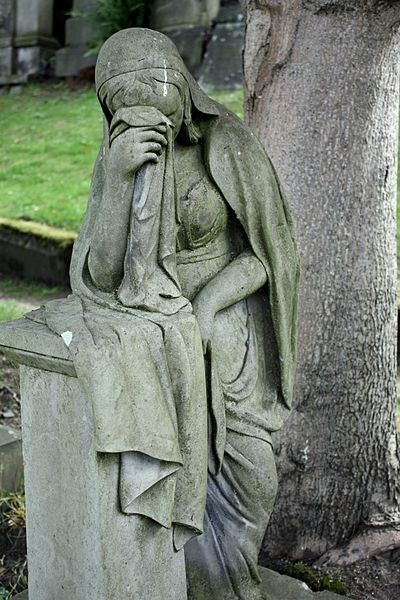
Tears poem

I want to say something to go along with this poem, because I love it so much, though it probably stands better alone. I suspect that most of my crying is for selfish reasons, but the thoughts here make me hope that once in a great while my tears might be an expression of true humanity, or at least have a humanizing effect. We can make our tears a gift to God, when we come before Him with them; He already knows all about the chaos in our souls, if that’s their origin. 

Some church fathers say that tears for whatever reason cleanse the heart. One pastor said it’s because when you are crying it’s impossible to be double-minded. I’ll be mulling over that idea for a long time. But troubling and puzzling as they are, I will thank God for the gift of tears.

TEARS

Tears leave no mark on the soil
or pavement; certainly not in sand
or in any known rain forest;
never a mark on stone.
One would think that no one in Persepolis
or Ur ever wept.

You would assume that, like Alice,
we would all be swimming, buffeted
in a tide of tears.
But they disappear. Their heat goes.
Yet the globe is salt
with that savor.

The animals want no part in this.
The hare both screams and weeps
at her death, one poet says.
The stag, at death, rolls round drops
down his muzzle; but he is in
Shakespeare’s forest.

These cases are mythically rare.
No, it is the human being who persistently
weeps; in some countries openly, in others, not.
Children who, even when frightened, weep most hopefully;
women, licensed weepers.
Men, in secret, or childishly; or nobly.

Could tears not make a sea of their mass?
It could be salt and wild enough;
it could rouse storms and sink ships,
erode, erode its shores:
tears of rage, of love, of torture,
of loss. Of loss.

Must we see the future
in order to weep? Or the past?
Is that why the animals
refuse to shed tears?
But what of the present, the tears of the present?
The awful relief, like breath

after strangling? The generosity
of the verb “to shed”?
They are a classless possession
yet are not found in the museum
of even our greatest city.
Sometimes what was human, turns
into an animal, dry-eyed.

              ~ Josephine Jacobsen

(thanks to Maria)

Tears in Psalms

As we approach Lent, the beautiful hymn “By the Waters of Babylon” is sung at Orthodox services and starts to set the tone for the season in which we cultivate “joy-creating sorrow.”

Psalm 137

By the waters of Babylon,
there we sat down,
yea, we wept, when we remembered Zion.
We hanged our harps
upon the willows in the midst thereof.
For there they that carried us away captive
required of us a song; and they that wasted us
required of us mirth, saying,
Sing us one of the songs of Zion.

Psalm 58:8

Thou tellest my wanderings:
put thou my tears into thy bottle:
are they not in thy book?

Psalm 116:6-8

The LORD preserveth the simple:
I was brought low, and he helped me.
Return unto thy rest, O my soul;
for the LORD hath dealt bountifully with thee.
For thou hast delivered my soul from death,
mine eyes from tears, and my feet from falling.

Psalm 126:5

They that sow in tears shall reap in joy.