All posts by GretchenJoanna

Unknown's avatar

About GretchenJoanna

Orthodox Christian, widowed in 2015; mother, grandmother. Love to read, garden, cook, write letters and a hundred other home-making activities.

At the Heart of Prayer – quote

“When the disciples asked Jesus to teach them to pray, the Lord did not tell them to use their imaginations and express their feelings.  He did not tell them that it really did not matter how they prayed, as long as they were sincere.  And he certainly did not tell them to talk to God in their own words. . .the Lord’s Prayer is at the heart of Christian prayer.  All other prayers of the Church exist in relation to this prayer given by the Master Himself.  They are either abbreviations or elaborations of it.  They are in harmony with it, and cannot contradict it in any way.”
-Thomas Hopko


Venetian Painters

The covered buttons on Ottaviano Grimani’s shirt jumped out at me when I came around a corner and looked up at the huge painting. Of course I couldn’t find a copy online that conveyed the stunning quality of the buttons, but the search was instructive.

This portrait by Bernardino Licinio was in the Masters of Venice show of 50 paintings that came from a collection that the Habsburgs assembled in Vienna, works of Venetian artists of the High Renaissance, mostly the 16th century.

Since I haven’t paid any attention lately to what is going on in San Francisco, I would have missed this opportunity altogether if my friend “Lorica” hadn’t invited me to go just before the show closed.

I loved that it was small and focused — we didn’t visit any of the permanent collection — so that my easily-overwhelmed brain could stay calm and receptive as we slowly moved from one room to another of the De Young Museum. The time flew, as Lorica elaborated and added to the information posted near the paintings. I am woefully ignorant, and she was the perfect guide for someone like me, who can’t chew very big auditory bites.

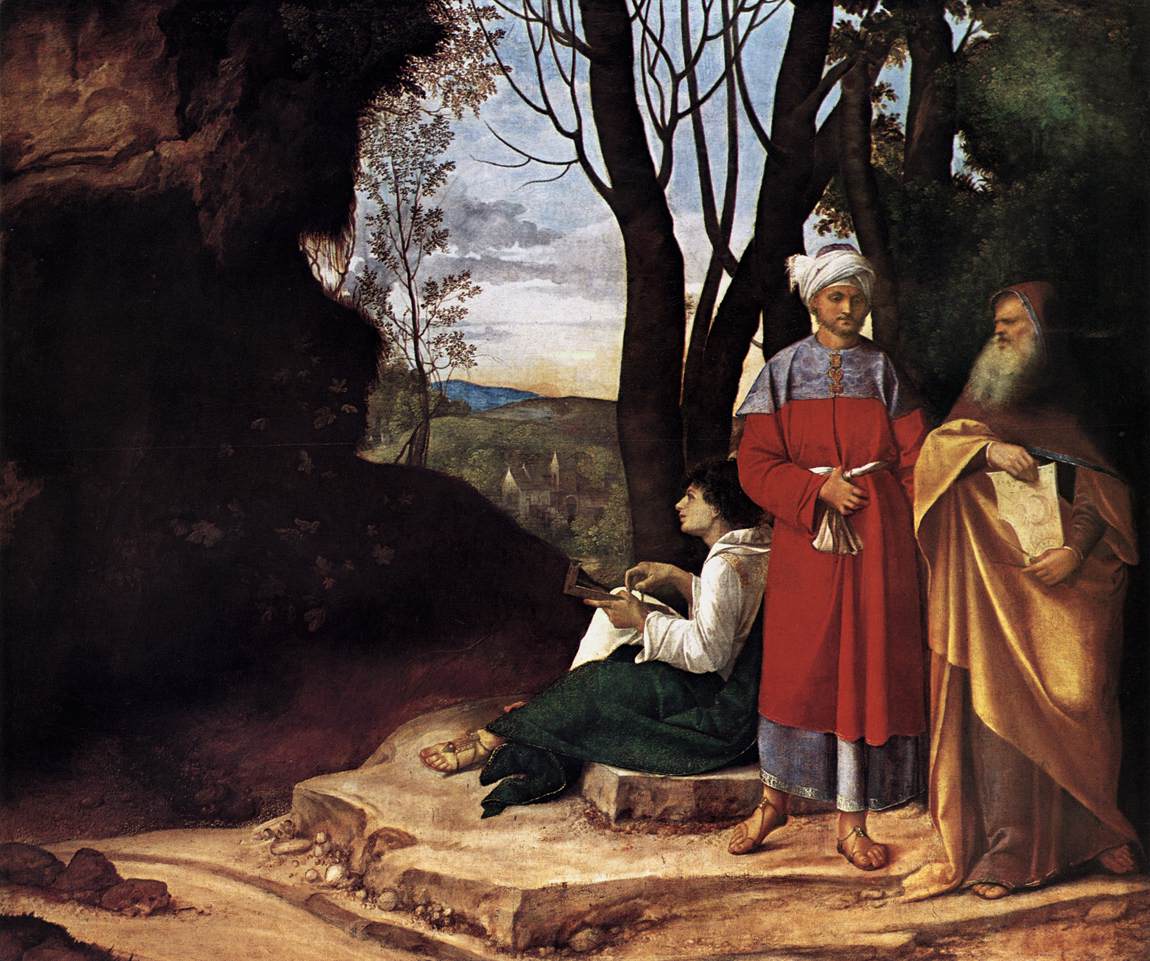
Giorgione’s Three Philosophers

It seems somehow shameful, but I am doing it anyway: posting some of my favorites here in truly pathetic versions of themselves. As soon as I came home I looked for them on the Internet so I could show my husband, and as it had been only a couple of hours since I’d seen the masterpieces in their glory, I was terribly saddened to see that aspects of the originals that had given me so much pleasure were flattened to the point of extinction.
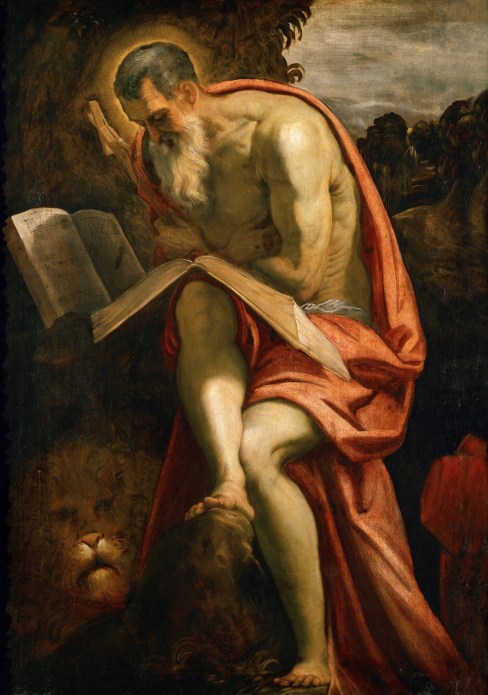
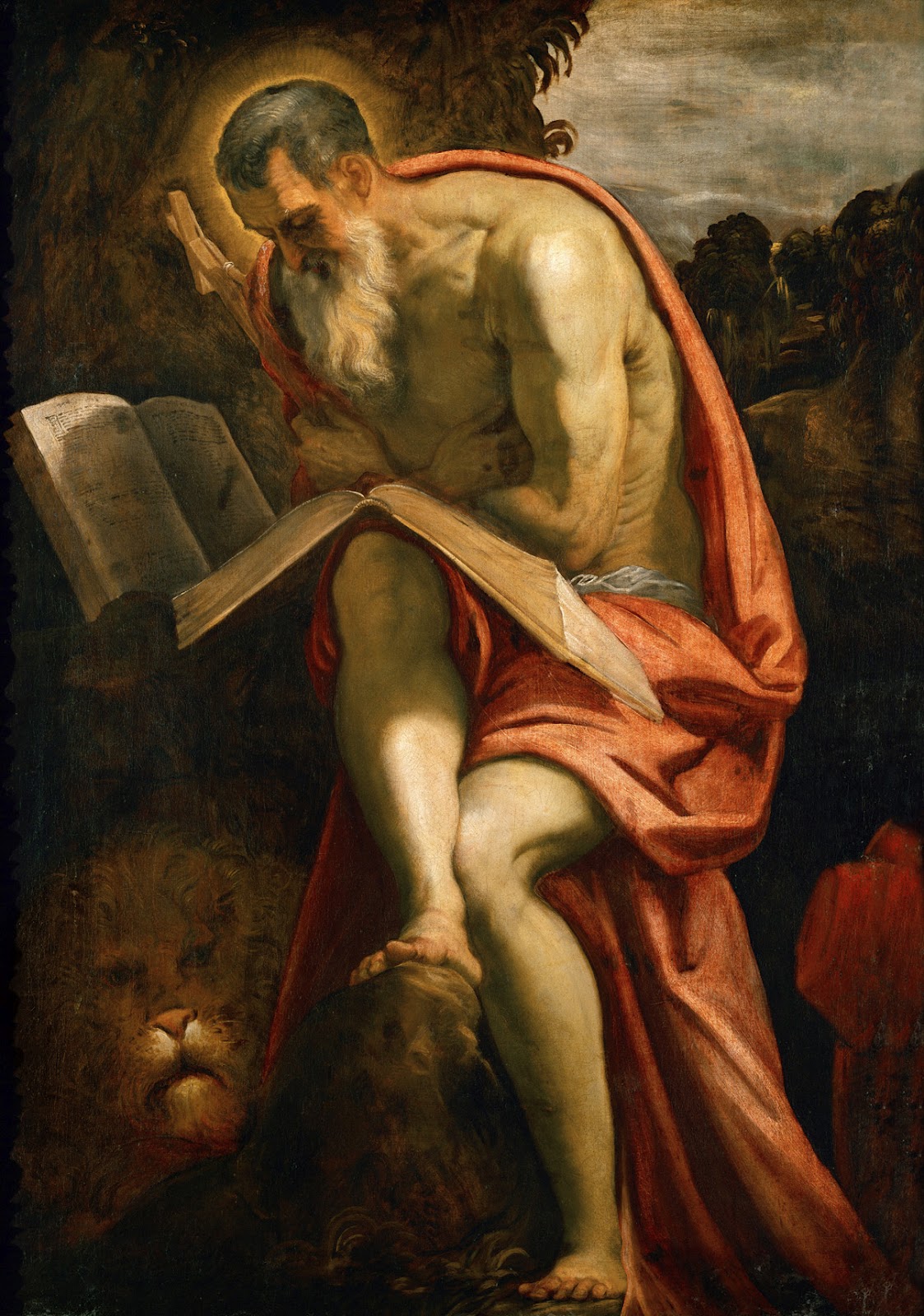
St. Jerome by Tintoretto

That was an Aha! moment, as I contemplated the truly 3-D nature of paintings. And I realized why one would want to visit a show like this several times — because looking at the little postcards one can bring home is a sorry substitute for Being There.

The first thing I noticed about St. Jerome, who translated The Vulgate, was his smiling eyes. He must have been so happy to be reading God’s Word. (Lorica told me that he was known to be grouchy.) And the face of the lion was lovely, Aslan-like. Neither of those endearing features comes through in this little copy.

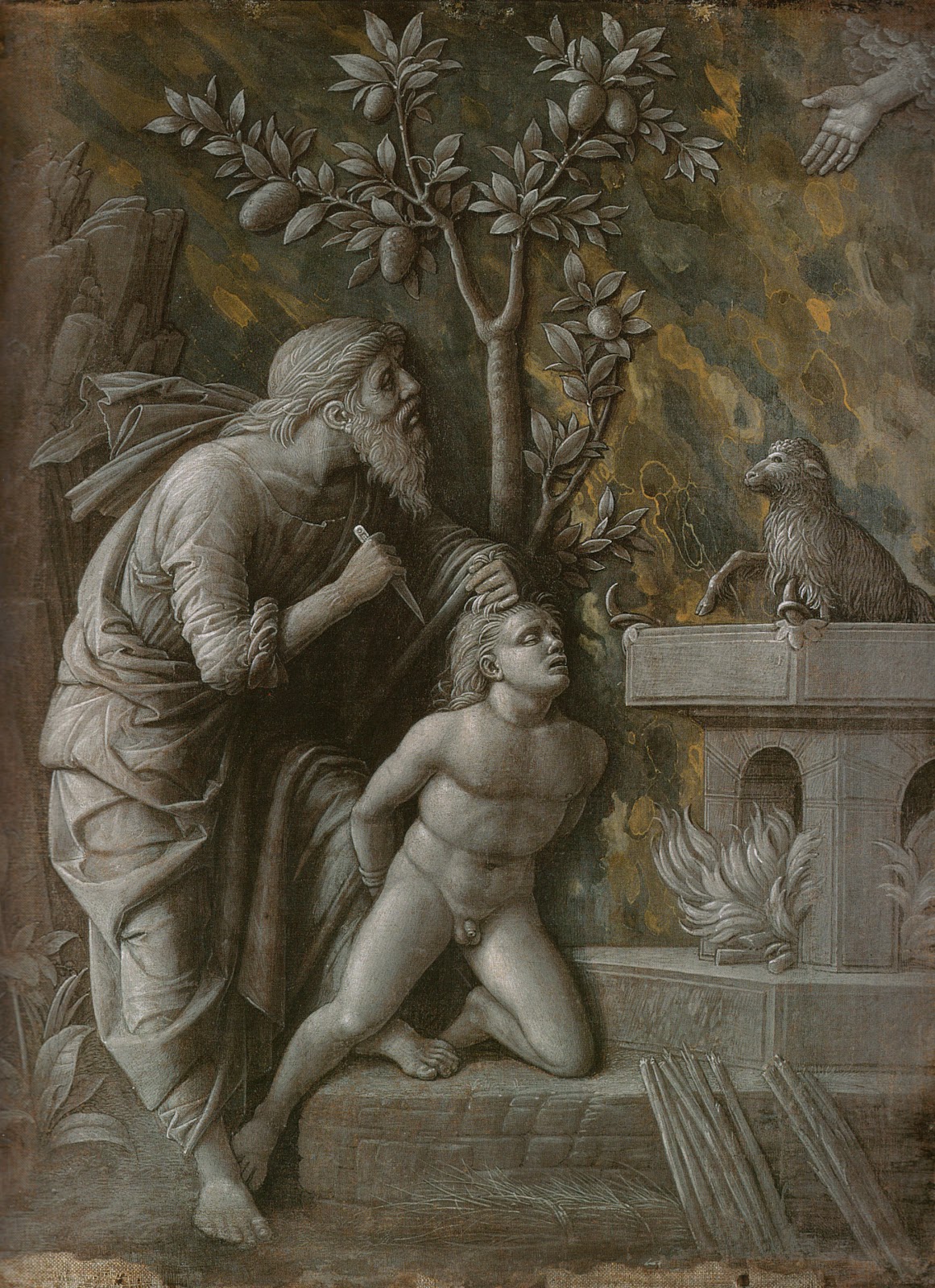
At left is The Sacrifice of Isaac by Mantegna, which I loved. The whiteness and statue-like quality of the painting was new to me, and the whole composition so complete in its portrayal of the event, and with beautifully “carved” figures. The little ram presenting itself, God’s hand presenting it….

One painting of which I could only find a decent representative online a few years after writing this post was Titian’s Entombment of Christ. I have inserted it in an update. My guide pointed out to me that it seems to be all about Mary, as she and her richly blue cape are the focal point of the composition.

Titian entombment 1200px-Entierro_de_Cristo_(Tiziano)

Another Biblical scene, Adoration of the Magi, by Bassano the Younger. I think it’s charming in the way it depicts the bustling arrival of the worshipers and how the man in green wastes no time in getting as close as possible to the Christ Child.

Some of the other artists whose paintings we saw were Veronese and Bordone, and Pordenone, whose Christ With the Cross (below) admittedly a very Italian version of our Lord, is still quite arresting, and keeps my thoughts on the Love of God.

Looking at the little pictures here, remembering the great works that I had so recently wondered at — it all made me think I hadn’t been paying enough attention while we were in the museum. After all, it was the chance of a lifetime, and I had been so casual, strolling around dully as though I could just hop over to Vienna anytime I wanted and see the paintings again.

One can see that I need to get to the art museums more often, and that my education in art appreciation has barely begun.

On today’s theme, about spending time

In honor of the day, a favorite love poem by Richard Wilbur. All our loves flow from the Holy Trinity — Happy Valentine’s Day! 


A Late Aubade

You could be sitting now in a carrel
Turning some liver-spotted page,
Or rising in an elevator-cage
Toward Ladies’ Apparel.
You could be planting a raucous bed
Of salvia, in rubber gloves,
Or lunching through a screed of someone’s loves
With pitying head,
Or making some unhappy setter
Heel, or listening to bleak
Lecture on Schoenberg’s serial technique.
Isn’t this better?
Think of all the time you are not
Wasting, and would not care to waste,
Such things, thank God, not being to your taste.
Think what a lot
Of time, by woman’s reckoning,
You’ve saved, and so may spend on this,
You who had rather lie in bed and kiss
Than anything.
It’s almost noon, you say? If so,
Time flies, and I need not rehearse
The rosebuds-theme of centuries of verse.
If you must go,
Wait for a while, then slip downstairs
And bring us up some chilled white wine,
And some blue cheese, and crackers, and some fine
Ruddy-skinned pears.
–Richard Wilbur

Love and Language

Over my car’s radio yesterday morning I caught the end of an interview with an author talking about her husband’s aphasia and recovery from it. As I drove into the Target parking lot the women were still talking, and I hadn’t heard any names of books or people yet, so I sat in the car a little longer, digging around in my purse to find a tiny black notebook to write in.

Eventually the host mentioned that we were listening to Diane Ackerman talking about her book 100 Names for Love, which tells the story of her husband Paul West’s recovery from a stroke, and the ways in which she was able to help him in the process, though their relationship was challenged and changed. The 100 names were the new pet names he came up with for his wife, when he could not recover the old ones. One of them that she mentioned was My Bucket of Hair. (She has a good head of it.) Many of the nicknames were as unusual and poetic, like My Remains of the Day, and My Residue of the Night.

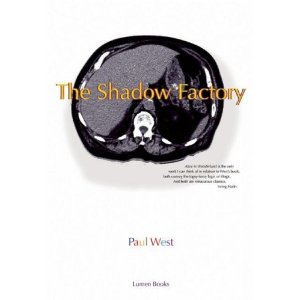
I have tried reading Ackerman before, and there is too much about her prose and perspective that makes her tedious, but the things she said on the radio about love and care-giving and language recovery made me think I really wanted to read this particular book. I came home and put it on my Amazon list, but then I went on to read about Paul West, and found an excerpt online from the book he himself wrote, The Shadow Factory.

In the interview Ackerman had shared that, when he was depressed about not being able to write — and writing had been his profession — she suggested that he write a book about his experience, and he agreed to dictate to her as he labored to find each word and phrase in the rubble that was his brain. The following day he would rework the text, and the whole project became a huge part of his rehabilitation both emotionally and mentally.

I heard Ackerman describe her husband’s book as a “free associative dream version” of how it felt to have a stroke and to heal from it. Those words gave me the impression of it as the type of writing that I find hard to endure. But now that I’ve read this small part, I’m not sure I agree with her description. Here are a couple of paragraphs from the article I link to:

There was a bewildering assortment of false starts and incomplete sentences for the mind only. I no sooner thought of something to say to myself than I forgot it, and I was lucky to get beyond the second or third imagined word. Of course no one in his right mind overheard any of this, the dumb speaking to the silent in a reverse image, so no one was upset. But if this happens 50 or 60 times, one wants a little revenge of some sort. Of course, one was in all probability speaking no kind of written English, so this meant that whatever you said was relevant and you could not say anything irrelevant.

…

Reading, at which I used to be no slouch, now gave me the most incredible, disheveled experiences of my print-bound life. Now print jigged toward me, then it hung back. The one part of it that was readable swam backward or forward to render the reading experience at best incomplete, or subject to the vilest, maddest vagaries of a proofreader’s nightmare.

So far I am thoroughly enjoying West’s post-stroke prose, and find it much more focused and readable than Ackerman’s, so perhaps I’ll be content with having heard her radio voice, which seems to absorb better, and in my Amazon shopping cart I’ll trade her book for The Shadow Factory.