Category Archives: agriculture

We shake the monastery olives.

The nuns at a nearby monastery needed some help with their yard work. We didn’t know anything more specific, or that there would be some sadness involved, when Mr. Glad and I signed up to be on the crew for a Saturday work session. I had gardened here one spring day a couple of years ago and was looking forward to another chance to visit, this time doing fallish tasks.

What a bright and shining day it was, too, as we drove over the hill. Recent rains had washed all the earth and air, and high winds pretty much shook them out to dry. The humidity was only 10%.

When the head gardener Sister Xenia led our team of five to the clump of olive trees we saw that they were loaded with black fruit.

Then came the bad news: All of this harvest could not be used in any way, because it was infested with Mediterranean fruit flies. The trees needed to be stripped of olives, and the fruit that had fallen on the ground must be raked and swept up, and all of it taken to the dump.

In a month or two an arborist will prune the trees and some kind of spray will be used to inhibit the growth the the flies next spring. Whether there is hope of them being controlled in one year’s time I don’t know.

The olives were no good, not even the fat and shiny ones that were hanging on these lovely silvery trees with the light shimmering through.

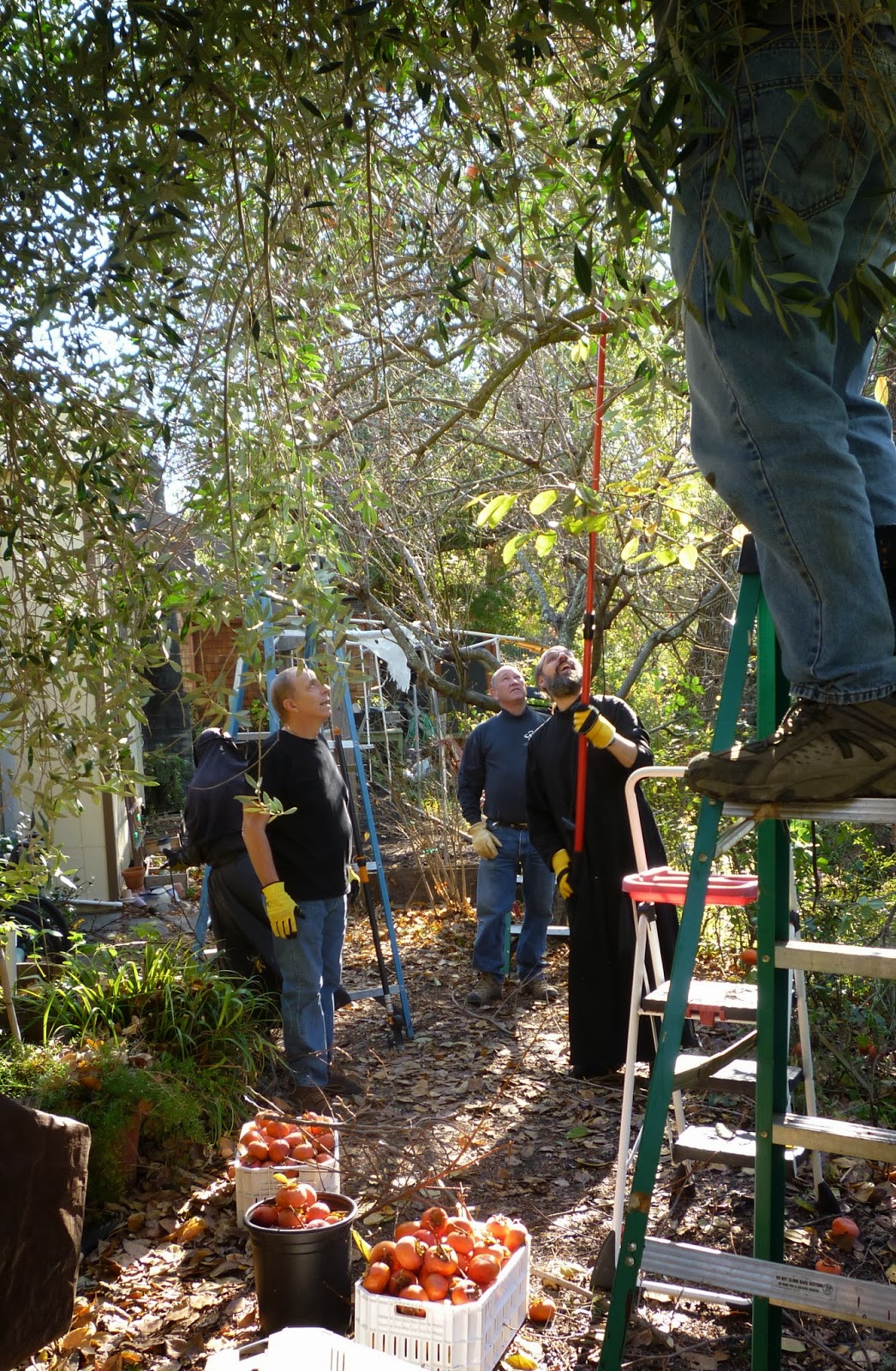
So the men shook the trees and brought showers of fruit down on our heads. Mr. Glad climbed on the roof of a little house to reach higher branches of one tree, and then he climbed into the tree itself.
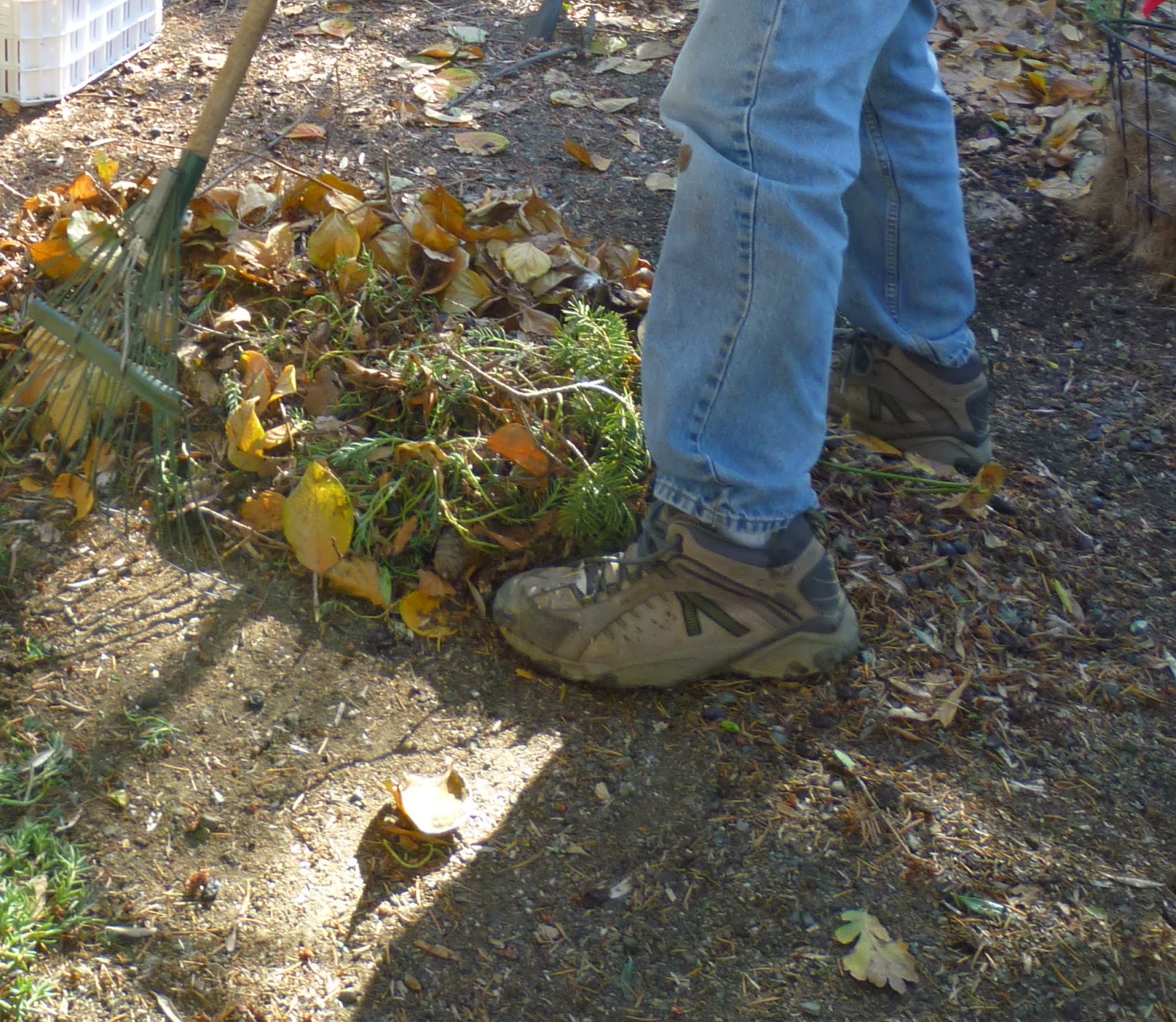
You can see olives on the ground in the shade.

Rosebushes that had grown leggy in the shade were snagging the guys when they were stretching up to shake and pick, so I ended up spending the first hour pruning the canes out of the way.

Bright orange fruit hung from the nearly bare branches of a Fuyu persimmon tree, the variety that is crunchy when ripe, and never puckery. At least this tree was healthy, and that was some consolation for the olive disaster.

We picked and pruned that tree, and Sister Xenia encouraged us to take some persimmons home, so I tucked a few into my gardening tote and am planning to use them like apples in baking.

Before we knew it, our work party was coming to an end, and we had been invited to eat the midday meal with the sisters.

Dining room all ready

But first there were prayers of the Sixth Hour, in the monastery chapel, and a few minutes of leisure for walking around the grounds.
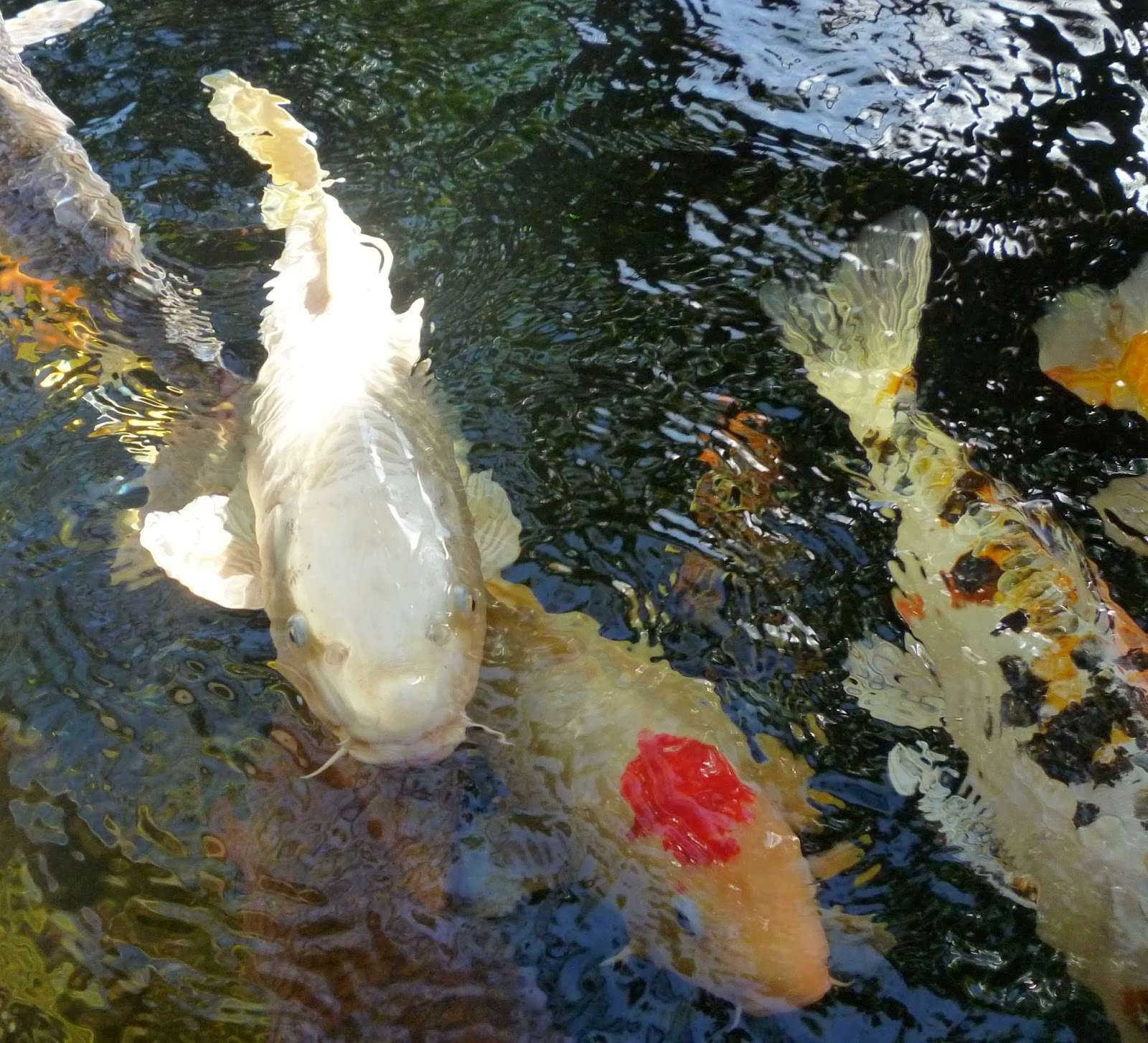
I had been anticipating seeing the elegant koi again, and they did not disappoint. We found them gliding soundlessly in their long deep pond, swimming close for a few moments when I leaned over with my camera, until they sensed they weren’t getting any food from us. A father and son were visiting them too, and happily chatting in Russian.

The monastery has a nice set of bells under a shake roof, with benches to sit on when the bells aren’t being rung. They were used to announce the hour of prayer, but for the call to dinner Sister Marguerite walked all around the property shaking a little hand bell to ring a daintier and less commanding message.

The small amount of work we did seemed a puny offering considering all that we received by spending a few hours at the monastery. We were well fed with the most delicious fasting meal I’ve ever had, and we went home with armfuls of persimmons, having soaked up quite a lot of love and peace.

Of course I want to go back soon.

Oregon – Granite Man, Pennyroyal, and Deer Brush


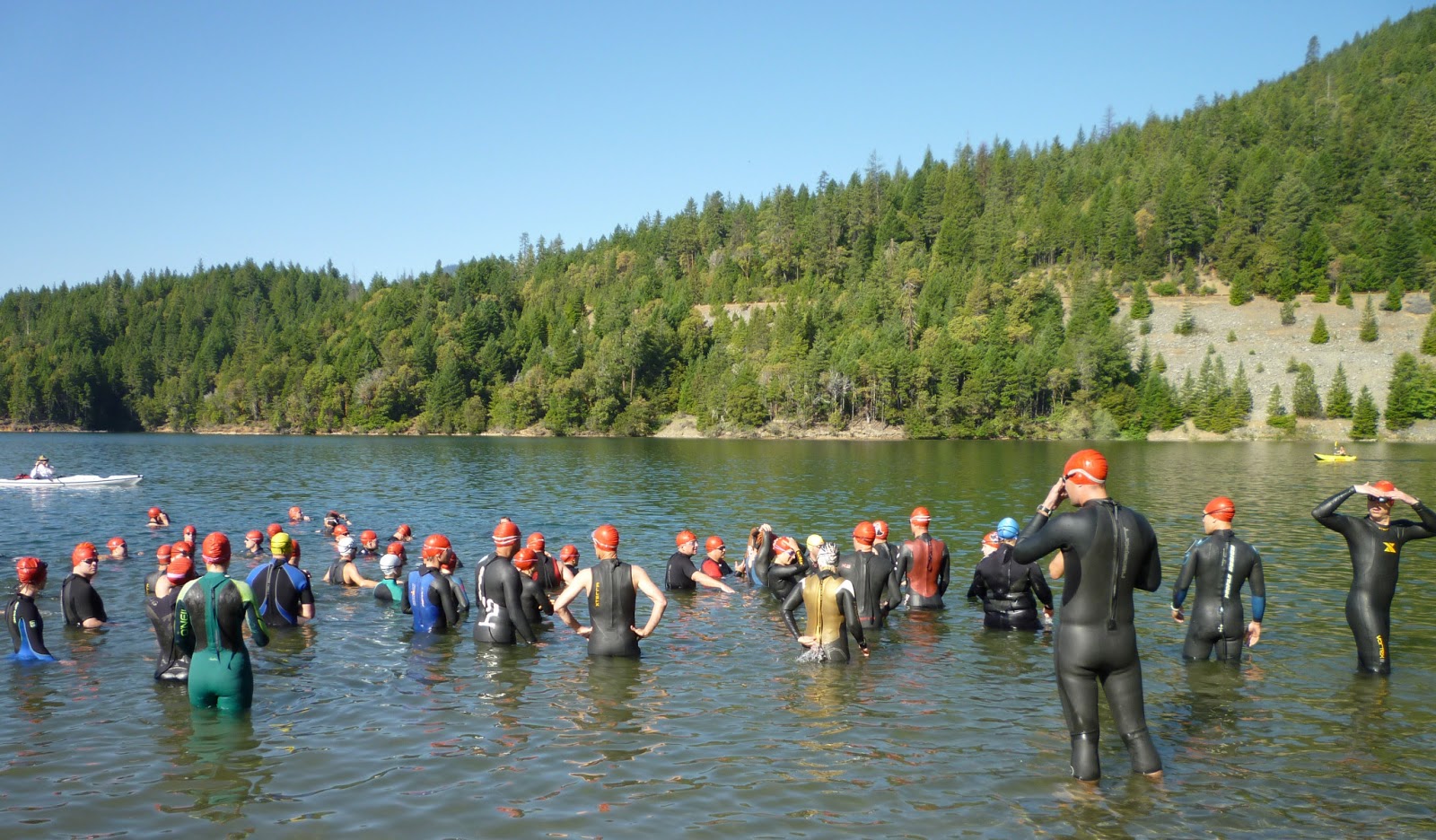
An hour before the race began

On the first of June Mr. Glad competed with other members of the family in the Granite Man Triathlon in southern Oregon. It was one of several events and meetings that formed the outline of a little trip around our neighboring state.

My husband was doing the swimming leg, as was the other grandpa of our Oregon grandchildren, and the two of them were the team captains. Our son and three grandsons made up the remainder of the teams, with the younger athletes compensating somewhat for the slowness of their elders. We womenfolk and some out-of-town kin were the support crew and also played with the baby (cute boy even if he isn’t one of my grandchildren).

My favorite swimmer left of center with his hands on his hips

Perfect weather, and a lovely setting, with trees leafing out, flowers beginning to bloom. As we stood around on the grassy slope of Applegate Lake waiting for the race to start with the swimmers’ portion, I had my first botanical experience of the trip. It started with a smell that only gradually broke into my consciousness enough to make me look down and search out what source my feet were tramping on.

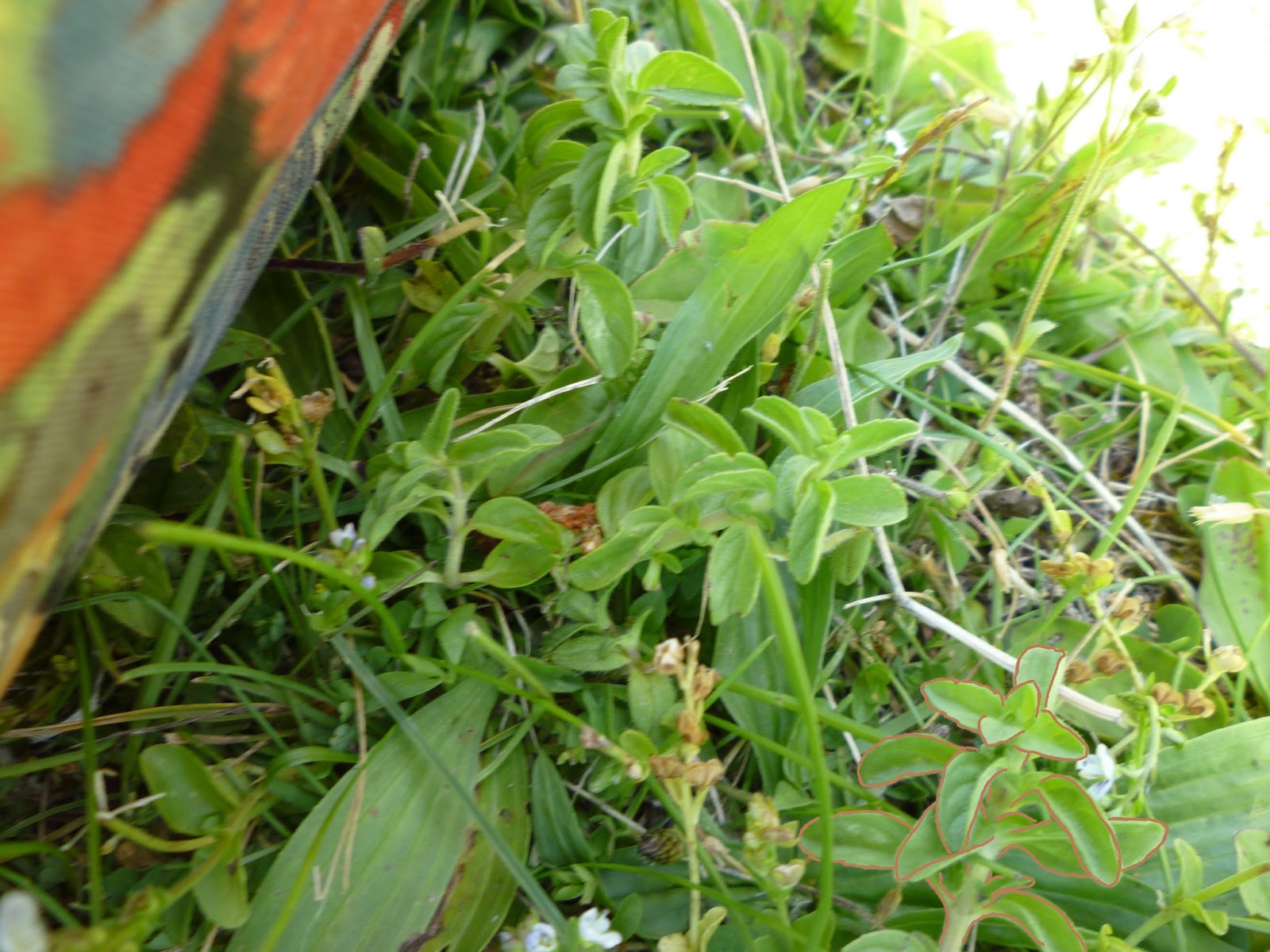
pennyroyal – or not?

Pennyroyal was my first thought, as I picked off some of what was growing in the wild lawn, and in case you aren’t familiar with it, I outlined one cluster faintly in red, in the photo above, in the lower right corner. Even so, you may have to click on the photo to see it.

But it doesn’t exactly look like pictures of Mentha pulegium, though that pennyroyal is considered mildly invasive in California and Oregon. It doesn’t even look like pictures of the Oregon “field mint” Mentha arvensis, which I looked at in case my sniffer is not able to distinguish between members of the mentha family.

Pennyroyal has what I’d call a sharper aroma than most mints, and this one under my feet had that distinctive smell that I have met many times in my life, often in the mountains. Was I mistaken? Its leaves do look in some ways more like Monardella odoratissima, whose common names include “Mountain Pennyroyal” – but not exactly.

This Applegate Lake variety looks like a cross between it and another mint, as I study it further. And that impression might not be too far from reality, because it turns out that pennyroyal has an ability to hybridize with other mint species, adding to its troublesome weediness. It may crowd out native plants and even threaten Oregon’s commercial peppermint and spearmint crops, as I read in this article.

I learned a new word while reading it: allelopathy: a biological phenomenon by which an organism produces one or more biochemicals that influence the growth, survival, and reproduction of other organisms. I am familiar with this kind of influence from my experiences in gardening, but I didn’t know the name for it. The latest instance is the way nothing much grows under my manzanita bush because of its negative allelopathic qualities. The authors of the article experimented by treating seeds of a rare Oregon plant with a weak extract of pennyroyal root, and found that the germination rate dropped.

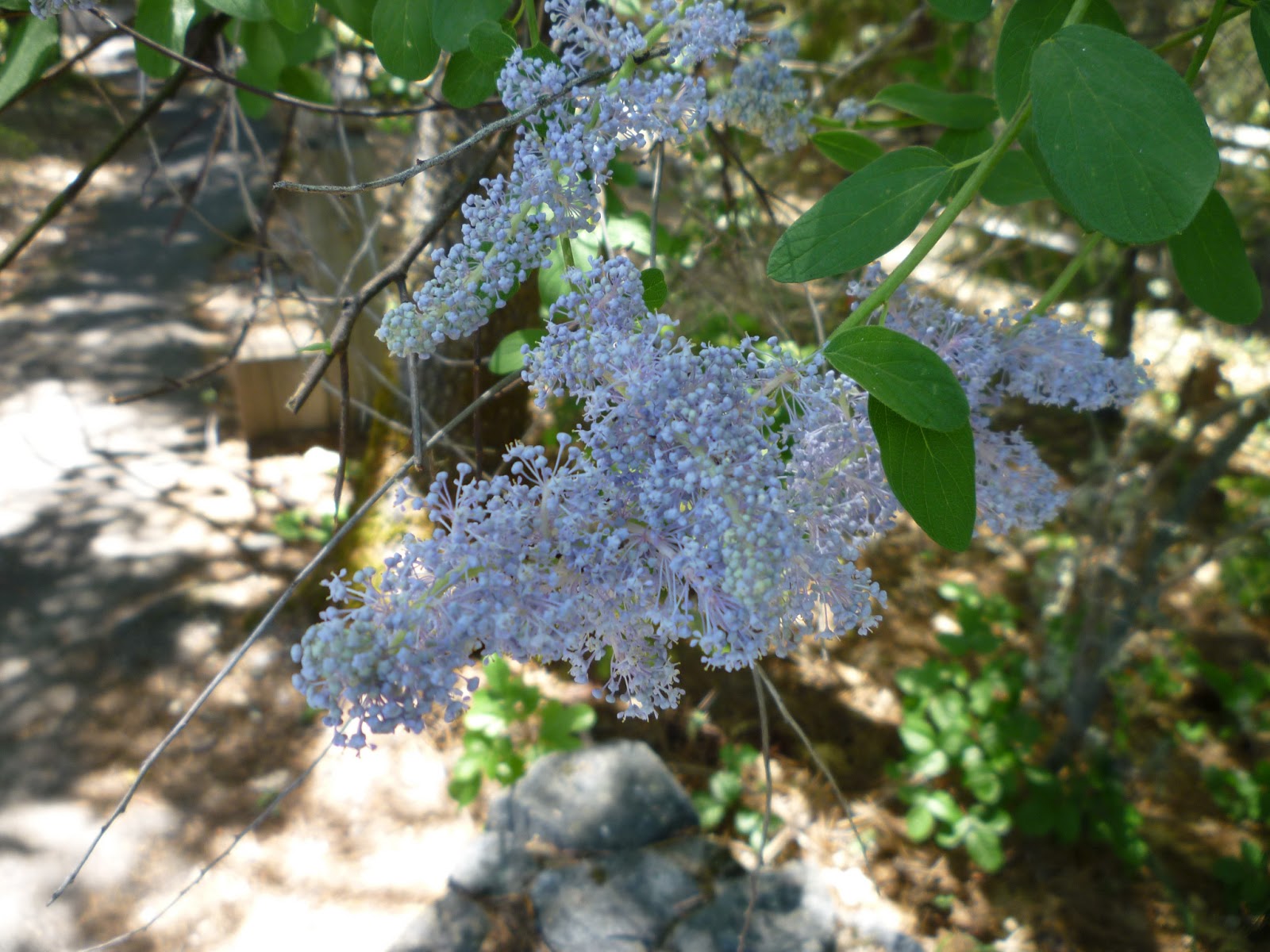
Deer Brush near Applegate Lake, Oregon

I didn’t know all of this bad stuff when I was lolling about in such a bucolic place; I was only pleased to have found a plant to check on as soon as I got home.

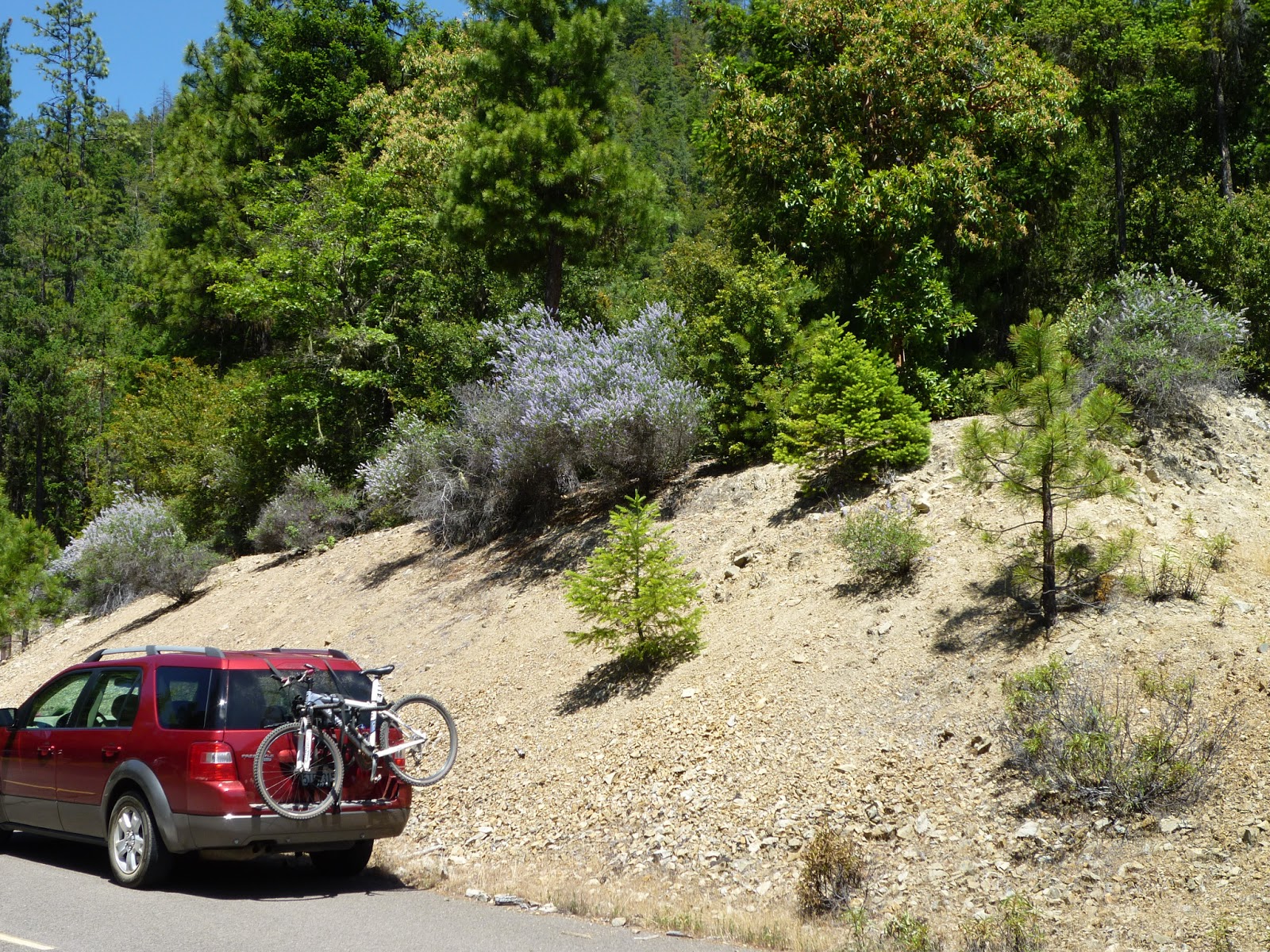
When we went out to the parking lot after all our guys were done (and some were done-in) I found another, a bush covered with honey-scented flowers. I thought it might be a type of Ceanothus, and I was right. But about the common name, I was wrong. I guessed Mountain Lilac, and it is in fact called that by some people, but maybe by mistake…? It’s officially known as Deer Brush.

The flowers come in shades of light blue and white, mostly, and it’s native to the western states. All of its uses are positive: animals eat it, the Indians made baskets from it, and it fixes nitrogen in the soil. Everybody likes this one!

Ceanothus integerrimus

Sweet Dreams and Blue Eyes

I relived one of the literally sweetest experiences of my childhood yesterday and I didn’t even have to journey the five hours back “home” to the groves my father used to tend so lovingly. We Glad gardeners visited a local nursery just to get one replacement plant for our project of last fall.

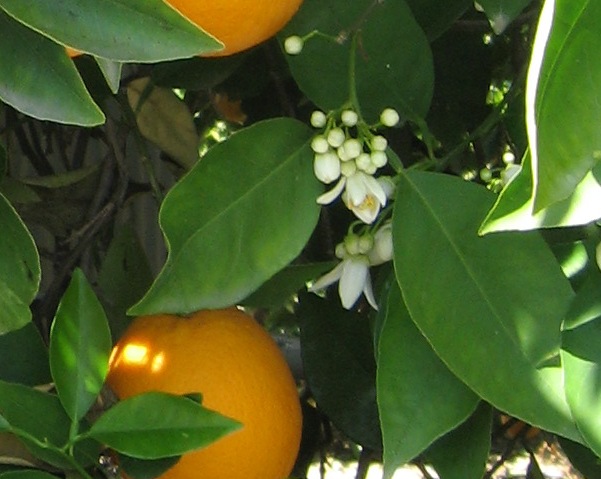
navel oranges in bloom

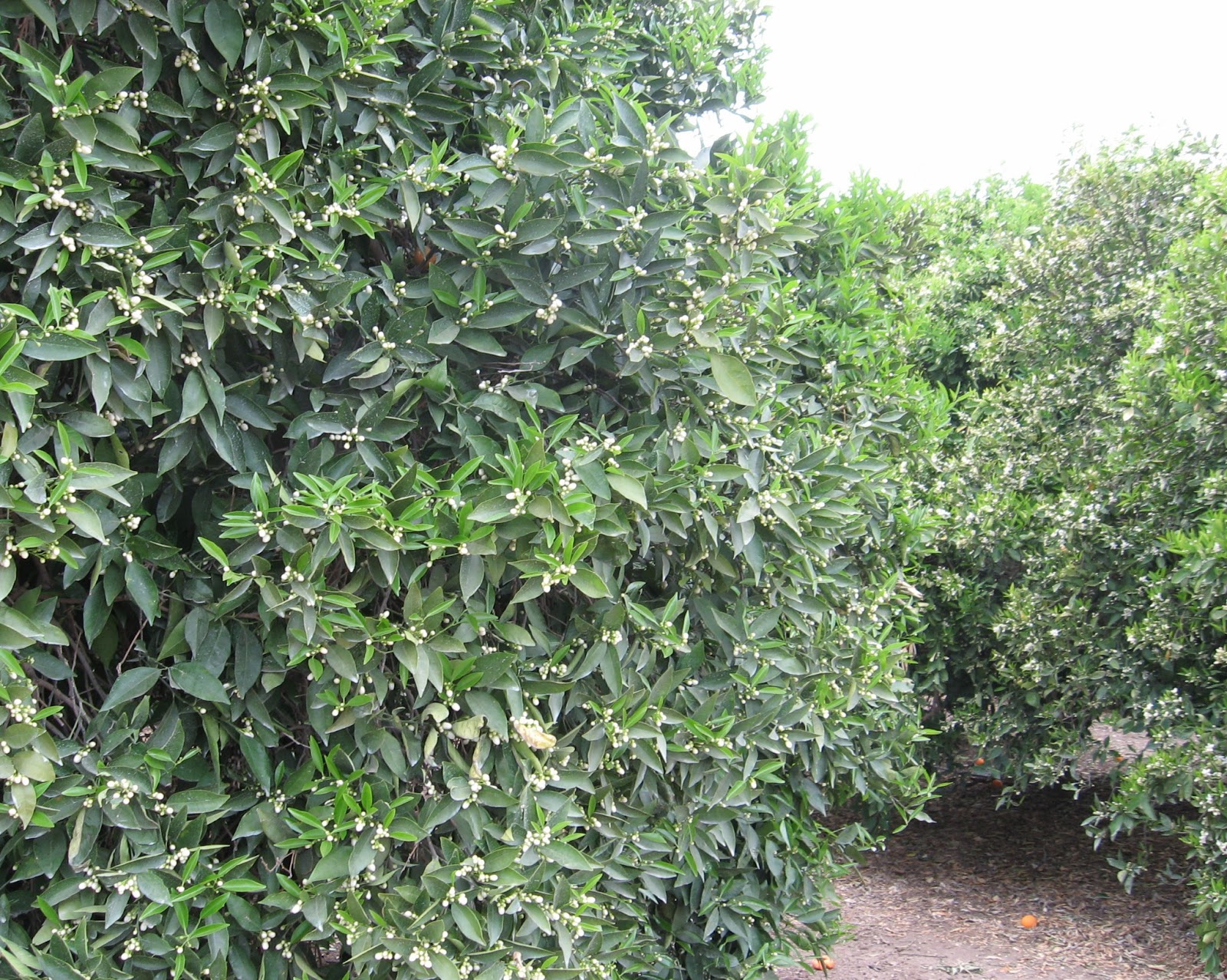
We were looking for a helianthemum, and they are in the area in back of the store, so we passed through the breezeway and were suddenly enveloped, not in a breeze but in a stillness heavy with fruit and flowers.

Overlapping rows of pots containing various citrus trees, including many oranges and mandarins, lined the alley and were exhaling their essence into that space. For me it was a whiff of the deep past, springtimes slowed down to a dream — orange trees taking their sweet time and confusing the mind, because isn’t springtime when everything and everyone is waking up and getting busy…?… but this air is like a drug that makes me want to lie on the grass and let my eyelids droop.

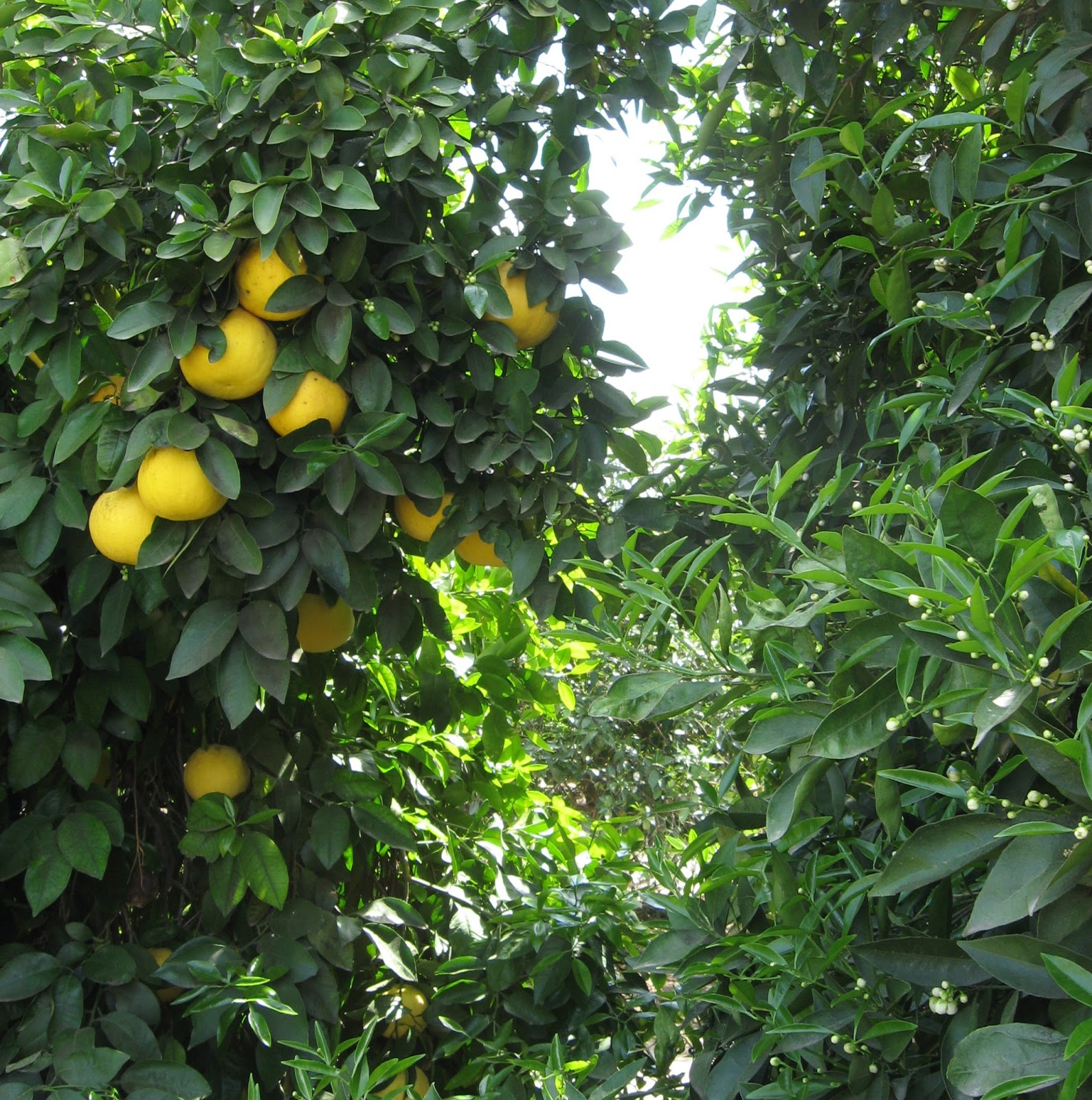
grapefruit and orange trees side-by-side

Our house was surrounded on all sides by orange trees, so that for many weeks every year we walked around in our own tropical island of scent. Can you imagine living in that house and being allergic to orange blossoms? Two family members were — and I pity them mightily, because orange blossoms are one of the happiest things in the data bank of my senses.

My husband and I had only a few minutes to find our plant, so I couldn’t linger, I quickly pushed on through to the shelves of California native plants and other drought-tolerant species. Our first choice wasn’t there, but we found this:

I had luckily forgotten my Western Garden Book in the car so I had to make two more passes through the little paradise to retrieve it. Then we read a bit together about the above plant and some other offerings.

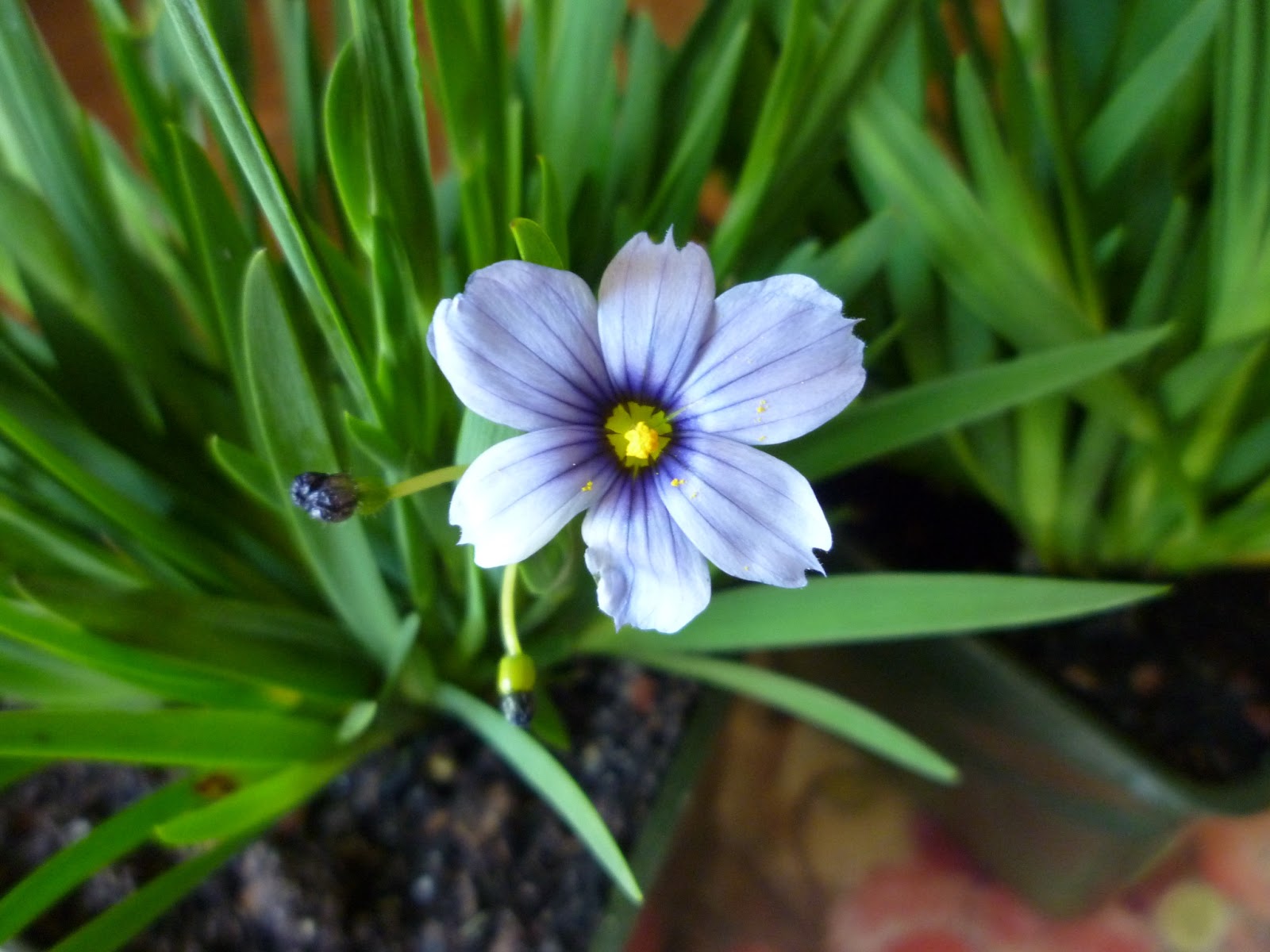
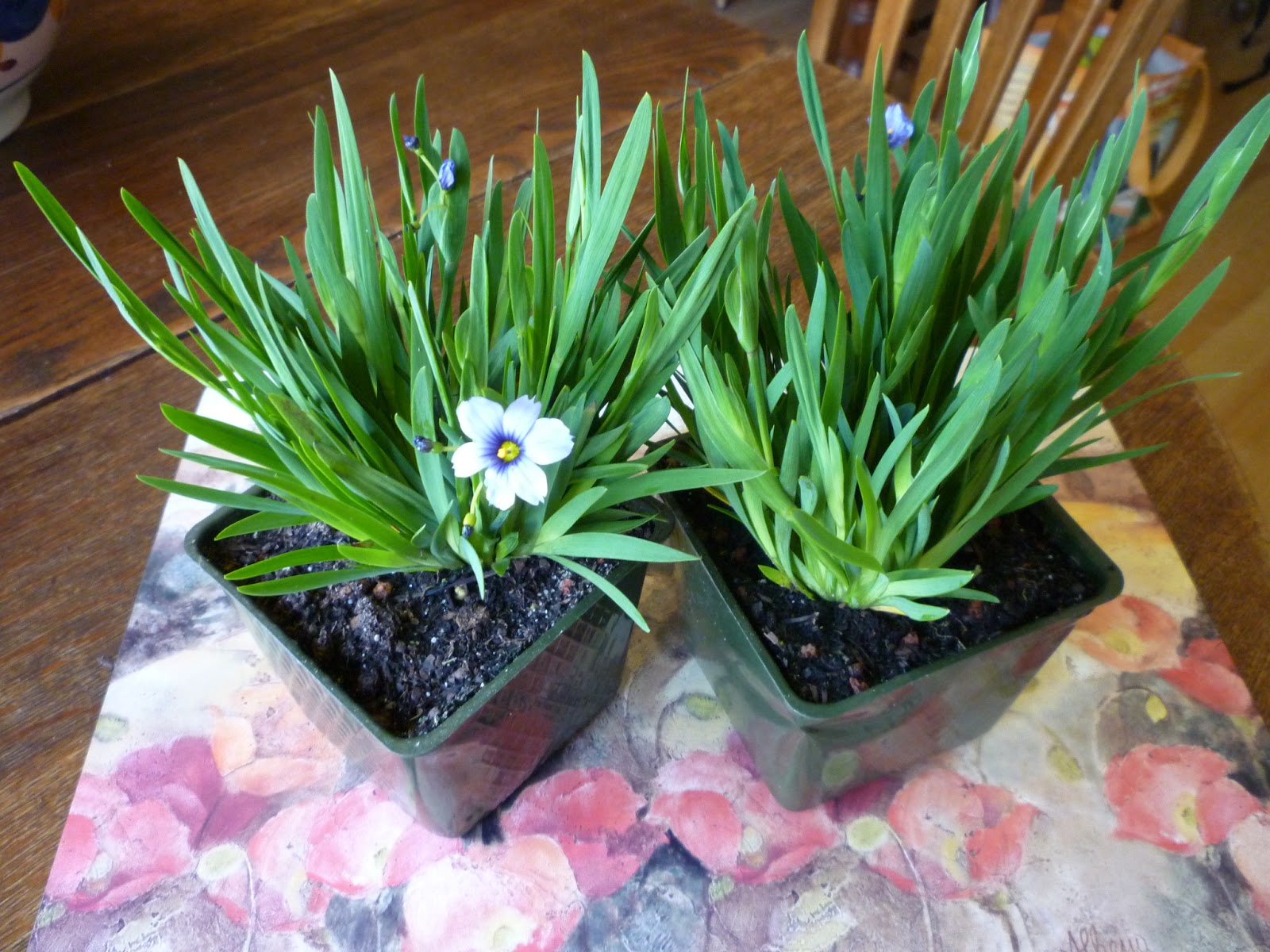
In the end we did decide on this dear low-growing plant, a newish species of Blue-eyed Grass, developed from a California native, and sufficiently xerophytic for our needs. I remember my friend May showing me one of these wildflowers decades ago as we hiked in the Coast Ranges of our state. They aren’t really grasses but are actually in the Iris family, which seems obvious now that I know it.

new planting last October

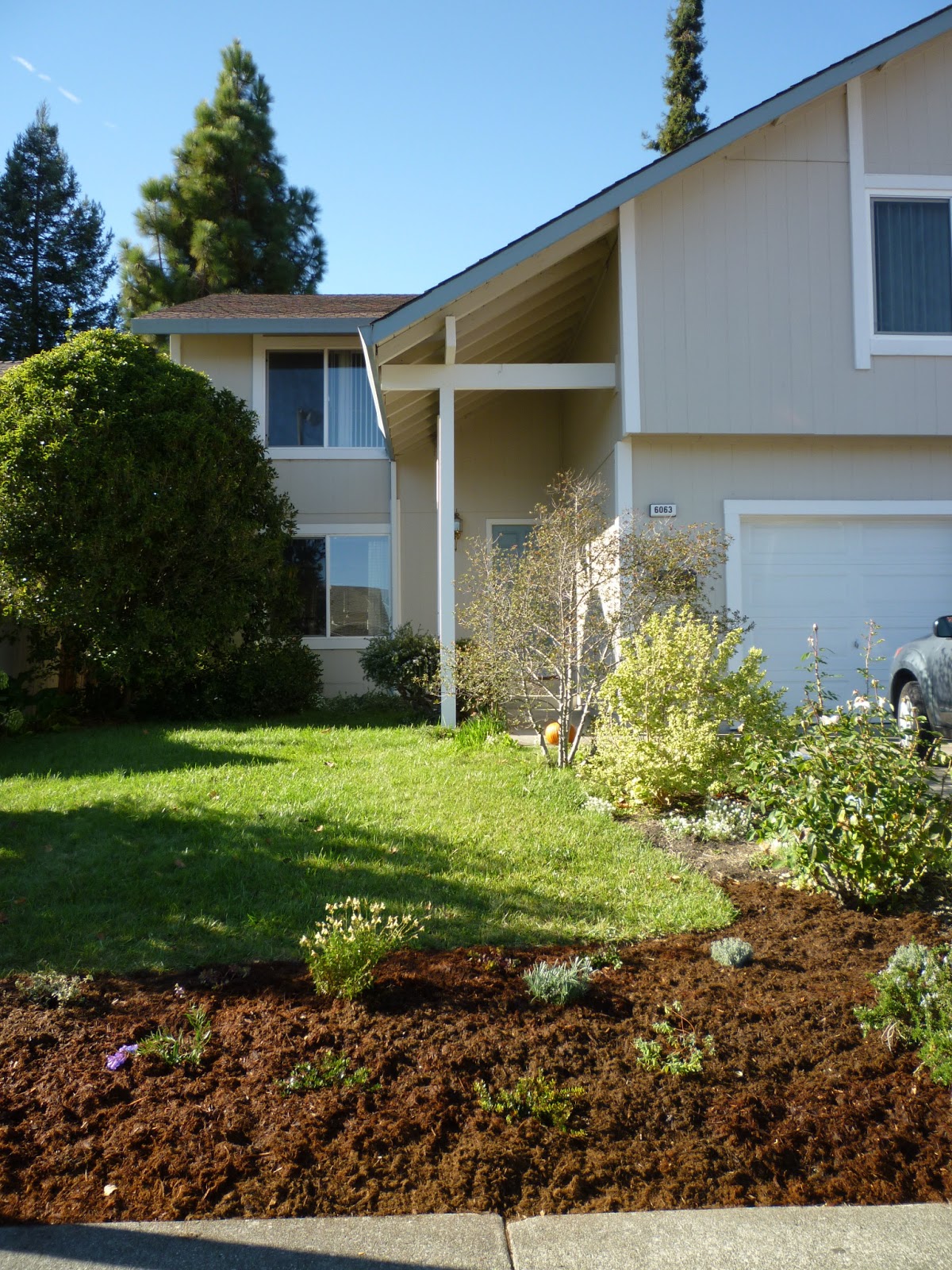
Except for the one that died, all the plants of our project shown at right are bigger now, but there’s still a lot of space to be filled in.

I can’t settle on which is more fun as a name, Sisyrinchium or Blue-eyed Grass. This is the first we’ve ever had them in our yard, and as you can see, we bought two, because they are small. I planted them tonight, where a blue penstemon, actually two, one after the other, had died last year. I hope to have nice photos of them and the whole bed to show in the future.


And before the citrus bloom is past I will return to that nursery when I have time enough time to wander. I’ll consider the snapdragons in the back, and then the perennials in the front, and I’ll go back and forth through the citrus tree lane at least a few times. I’ll walk slowly each time past the mandarins and Meyer lemons and orange trees and sip my sweet daydream.

Christmas Cookies for Show-and-Eat

The new favorite cookie this year was Salted Toffee. This was a happy accident sort of thing. We had come by a bag of mini Heath Bars, not something we normally would buy, and I didn’t want to end up eating them one-by-one, so after we ate a few I thought I would make cookies with the rest.


I’d seen recipes online for Heath Bar cookies, and I used one of them that didn’t have nuts. My version had a little less Heath ingredient, since we had snacked it down. The specialness I added was to combine some large-crystal sugar (Demerara) and coarse sea salt and roll the tops of the cookie-dough balls in that before baking.

Everyone loved these cookies. If that bird were real, he would have eaten the whole cookie by now. But he is painted on a pretty tray that May gave me for Christmas.

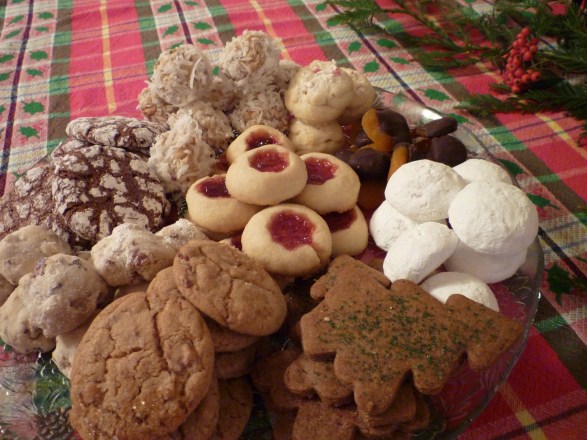
Soldier’s Joy brought the darlingest delicious thumbprint cookies that were filled with strawberry and rhubarb, and some chocolate-dipped dried apricots that combined to add to the visual appeal of the cookie platters.

Those bright-white round cookies are our only store-bought item, Pffernusse from Trader Joe’s that Mr. Glad wanted to try in memory of the cookies his German grandmother used to make.

The coconut-y balls are Date Delights, for which I’ll give you the recipe here. They are another chewy toffee-ish experience we have been creating ever since my grandma gave our family a tin full of them one Christmas past.

Date Delights

1 cube butter
1 cup cut-up pitted dates
1 beaten egg
1 cup sugar
2 teaspoons vanilla
1 cup chopped walnuts
2 cups Rice Crispies
sweetened coconut flakes, about 7 oz.

In a 9×12 baking pan mix the walnuts and Rice Crispies. Set aside. In another bowl put the coconut flakes. 

In a saucepan melt the butter, and add the dates, egg and sugar. Stir all together in the saucepan and boil over medium heat for 5 minutes, stirring constantly.
Remove from heat and beat in the vanilla, and immediately pour the candy mixture over the walnuts and cereal. Stir well. As soon as the mixture is cool enough to handle, form into balls and roll them in the coconut flakes. Cool.

The red squares in the foreground are Cranberry Jellies. I adapted a recipe from a past Sunset Magazine to make a treat that Pippin and I especially like. It’s refreshingly lacking in any fat except for walnuts, and is a nice chewy way to get your cranberry fix and add color to the display.

Cranberry Jellies

3 cups Trader Joe’s Cranberry-Orange Relish (2-16 oz. tubs)
2 1/2 cups sugar
1 1/2 cups water
13 envelopes plain gelatin
3 cups chopped walnuts

Combine the first three ingredients in a bowl (I used a stand mixer) and while the paddle is turning, gradually add the gelatin. When thoroughly mixed transfer to a saucepan and heat just until the gelatin is dissolved. Stir in the walnuts and pour the mixture into a 9×12 pan. Refrigerate until firm. Cut into small pieces and dust lightly with cornstarch. I don’t refrigerate them after this point.

Many times I’ve told myself that I must make fewer cookies at Christmas, but this year I realized that it’s one of my favorite things to do. I have so much fun thinking of the collage of different flavors and forms of the little sweets that I don’t even feel the need to eat them. It was long after Christmas Day that I even tried one of the new Peppermint Cream Cheese cookies I made this year.

But now by what is the Seventh Day of Christmas, as I finish up this post, and also New Year’s Eve, I’ve expanded the festive feelings by eating lots of cookies, too! They all taste as good as they look, or better. The last red plateful will go out of here this evening — I wish I could bring one to your house when I say Happy New Year!