Category Archives: church

Annus est Christus.

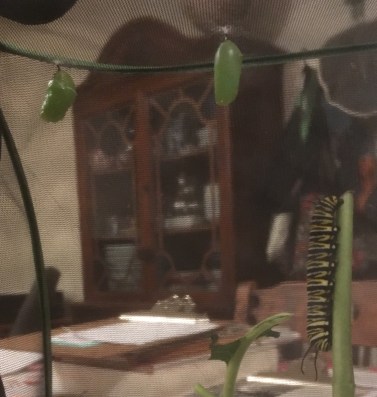
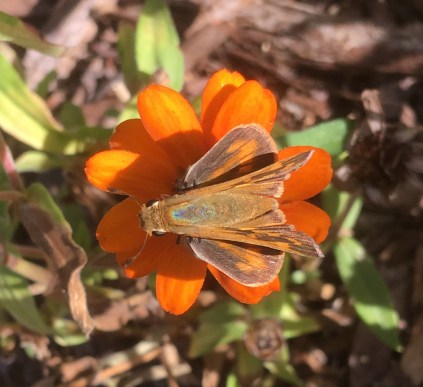
Much earth and earthiness, fruitfulness, and aromas from it all, here on September 1st. I have been gardening a lot, soaking up the heat, collecting seeds, and ripping out vegetables that are done in by “pests,” those other hungry creatures who enjoy my garden. In a few days, God willing, my Monarchs will emerge from their delicate green chrysalises. In the meantime, other insects have been patiently posing for me.
I keep buying plants, and sticking them in the ground or in pots. Lots of perennials that will go dormant in a few months, but then they will be beautiful in the spring. I’m planning for another year in the garden, but who knows what tomorrow might bring?

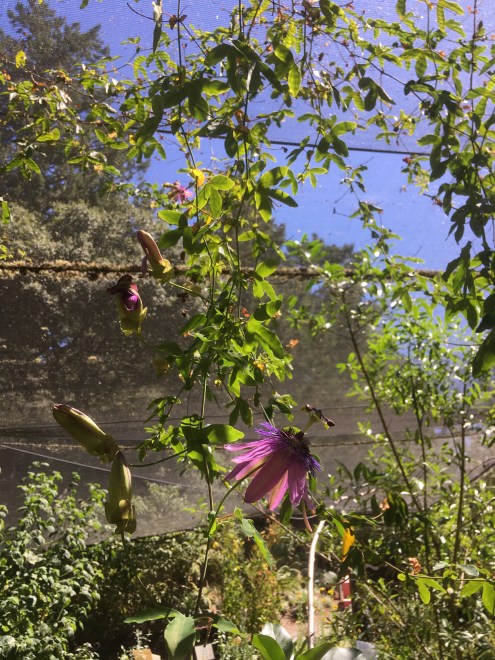
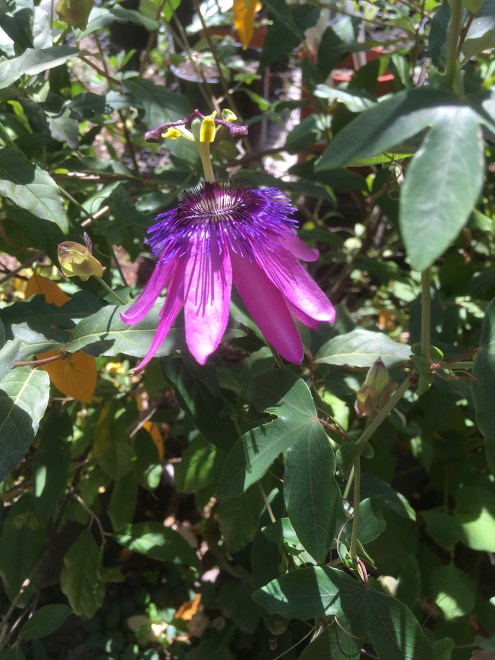
This nursery in the country that I rarely visit, I managed to drive to yesterday; they specialize in edible perennials and pollinator plants. I bought five unusual plants, which I’ll have to tell about in a separate post. One lovely thing  I saw but didn’t buy was this passion flower that has decided to grow all over the mesh ceiling of the nursery.

In my own space, Alejandro spent a couple of hours trimming the lamb’s ears back to the steel edging of the paths. If we let it, it would grow all the way across the path, living a dry existence in the bark mulch, waiting for winter rains. I like to have my helper come at a time when I also can be working in my garden, and for some reason we seem to get more than double the work done. The other day he told me that my plum trees seem very likely to bear next year, judging from all the fruit spurs on them. 🙂

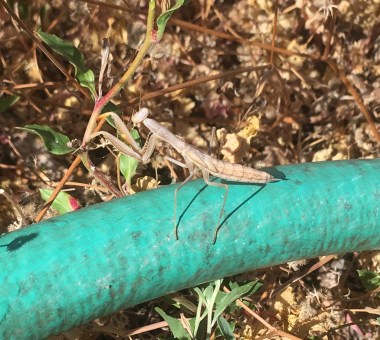
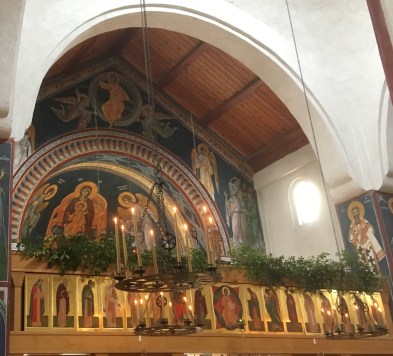
That mantis praying makes me want to tell you that it’s the beginning of the church year! Why, you may ask, does it start now? Why, because of Rosh Hashanah! I had been thinking a lot about this special day in preparation for teaching 7th-10th graders this morning, and then in today’s homily we were given a heavenly vision of this church calendar year and its cycles within cycles, with Christ at the center.

One book I used to prepare my lesson is The Year of Grace of the Lord by A Monk of the Eastern Church. He says, “The liturgical year forms Christ in us, from his birth to the full stature of the perfect man. According to a medieval Latin saying, the liturgical year is Christ himself, annus est Christus.”

Our homilist taught us about how we humans, along with angels, were made to live in a created eternity, something different from the unchanging, eternal nature that characterizes the Holy Trinity. But since the fall of mankind into sin, we find ourselves in a linear, world time, a fallen time that carries death in it; we are born, grow old, and die.

But we don’t have to live there exclusively; in the Church Christ gives us Himself by many means, including the daily, weekly and yearly cycles of prayers and hymn-filled services, feasts and saints’ days. The calendar brings the heavenly realm down and puts it into fallen time, where it is possible for us to enter in and live. We often get a taste of this kind of life at Pascha, but it is happening all the time.

I love the church calendar, and have always reckoned it a great gift — that is, since I found the Orthodox Church. It was August twenty years ago that I was invited to a women’s retreat at a monastery, and the brief immersion into the daily, weekly and festal cycles of worship — eleven services! — made me feel that I’d found my true home. Here was a way to live with Christ!
It’s more helpful to think of the church calendar not as the paper type with boxes for each day, but as circles and cycles and rhythms, some following the cycles of the sun or the moon, some celebrations fixed on the linear calendar and some moving with the changes of the earthly seasons. Jesus Christ entered our linear time, where He lived through 33 years of Jewish festal seasons; through the church calendar we can follow Him through His life, death, Resurrection, and the birth of His Church, and use it all to unite ourselves to Him day by day. 

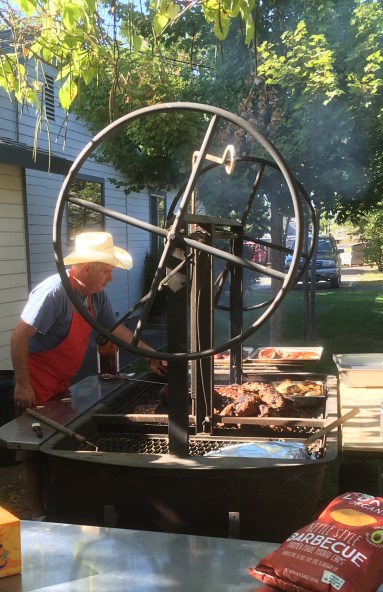
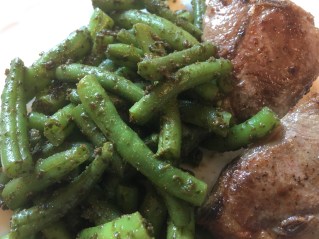
I think August and September might be my favorite months of the year. We’ve had other traditional, seasonal events, like barbecues at church – yum! Green beans from my garden slathered with pesto from my garden, and Gravenstein apples, harbingers of fall. September is the month that I love most to go to my cabin in the mountains, but this year is full in ways that prevent that. It’s really a year of preparation of my house, so that I can, if possible, live here for a long time to come, and continue to make it a hospitable place for my family and others whom the Lord brings.

“We can only see a short distance ahead,
but we can see plenty there that needs to be done.”
~ Alan Turing

Now you are light in the Lord.

The Monday after Pentecost Sunday, we Orthodox celebrate Holy Spirit Day.

When He came down and confused the tongues,
the Most High divided the nations;

but when He distributed the tongues of fire,
He called all people to unity.

Therefore, with one voice, we glorify the most-Holy Spirit.

(Hymn of the Feast)

For you were once darkness, but now you are light in the Lord. Walk as children of light (for the fruit of the Spirit is in all goodness, righteousness, and truth), finding out what is acceptable to the Lord.  And have no fellowship with the unfruitful works of darkness, but rather expose them. For it is shameful even to speak of those things which are done by them in secret. But all things that are exposed are made manifest by the light, for whatever makes manifest is light. Therefore He says:

“Awake, you who sleep,
Arise from the dead,
And Christ will give you light.”

(From the epistle for the day, Ephesians 5)

The sun and a spider mite.

The sun up above does feel like the ball of fire it is, today when the thermometer stands at 100 degrees. Summer caught up with itself and arrived with stored up (solar) energy!

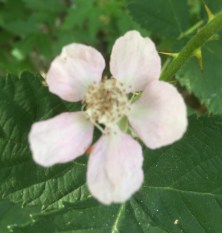
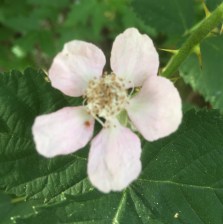
It was too late to take a walk, on a day like this, but I did it. Maybe it was the heat that made the phrase “ball of fire” come to my mind as I watched a spider mite racing around on a blackberry flower, never stopping. What can a mite accomplish if it never pauses? It’s the little smudge appearing in a different spot in each of the shots below.

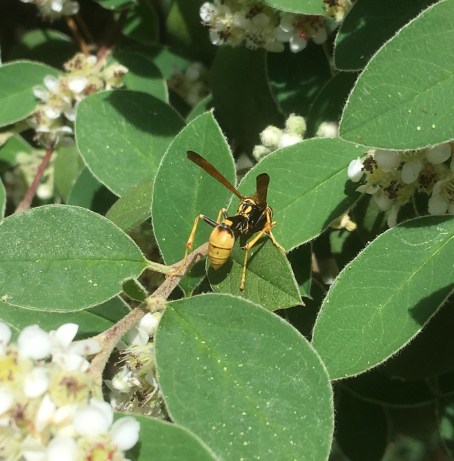
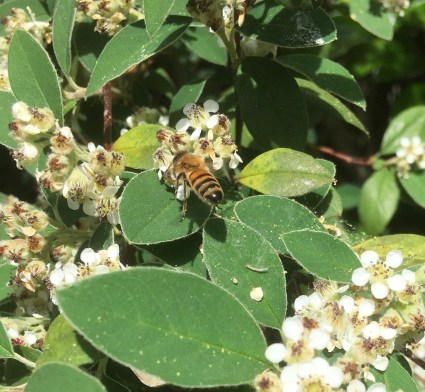
I also looked at the bees and flowers. I saw a syrphid fly and had to learn all over again when I got home that it was not a bee. In the process I learned that in the United States alone there are 4,000 species of bees. Here is another insect I don’t know… Is it a wasp or a fly? At least, I know it’s not a bee. [A year later, my Seek app thinks it’s a Western Paper Wasp.] (below)

I also can’t remember what this shrub is that all three insects are posing on. [So fast! My first commenter reminded me that it is cotoneaster.] Maybe I never have known. But I didn’t really want to spend today doing insect or plant identification. I need to wash the dishes and strip the bathroom floor! So if any of you know about my insect or shrub perhaps you can tell me.

syrphid fly

Most of the salsify have scattered their seeds, but some flowers are still opening.

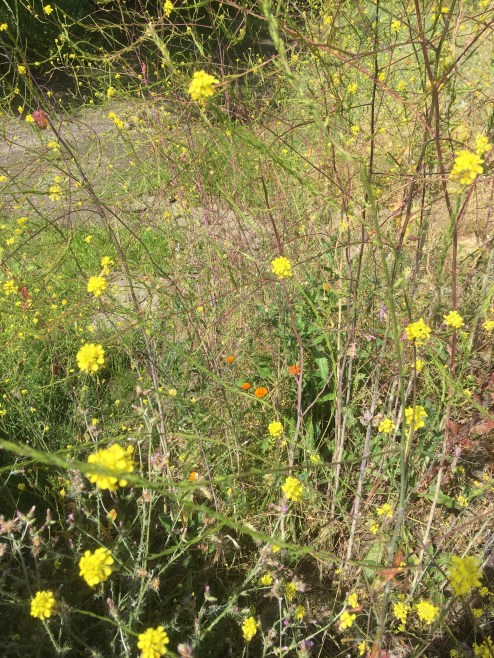
Mustard plants eight feet tall are growing out of the drying-up creek, along with lots of thistles. What is that orange spot that catches the eye…? Not a piece of trash, surprisingly, but California poppies! I’ve never seen them down there before.

All of this life, in many colors, pushing forth. I wondered… if I focus my camera on one small part of the very ugliest thistle, might I see something pretty? I did:

Last night at church we had a thanksgiving service for a couple celebrating their 50th wedding anniversary. When the husband retired from being a professor and a full-time Orthodox priest in Michigan, they moved from Michigan to California to be near their children. The wife said it was as though she had died and gone to heaven. 🙂 Since then they have been part-time participants in three parishes, and from all three of them people came to congratulate and rejoice with them.

I had been to only one other Moleben of Thanksgiving ever before, which was prayed for my husband and me in thanks and praise for God’s faithfulness during our 40 years of marriage. That was already seven years ago! This service was a joy – I was so happy to be part of it and to pray with them.

I had mixed up the time and arrived an hour early, which was kind of nice because I got to chat with the husband and his son a bit. The son was getting the barbecue ready for the party that would happen after the service. We were enjoying the shade of this beautiful catalpa tree whose flowers smelled like the fancy dessert was baking in the oven nearby. But this picture shows what my daughter told me about iPhone cameras, that they distort the sides of the image. Do you see how the buildings on the sides are both leaning in? Okay, now go back and enjoy the tree.

Before I go to my housework, I will have a tall glass of water, and before that, I’ll give you a little lotus weed in warm summery tones. I’ll meet you back here on a slightly cooler day.

The almond, the light and the glory.

christ forgiving resurrection 2Until a recent vocabulary expansion, I knew little Italian beyond pizza and zucchini. Now I know mandorla, which means almond. In the language of iconography, it means a background shape, often an almond shape but not always, which conveys meaning having nothing to do with the nut.

In this article “Within a Mandorla” I read that “Revealed in the context of a mandorla is that which we know by the revelation of Scripture but which might not have been witnessed by the human eye – or – if witnessed – somehow transcended the normal bounds of vision.

“Mark says that [Christ] was “carried up into heaven and seated at the right hand of God.” This last formula is a creedal confession – but not an eyewitness description. That Christ was taken up and that He is seated at the right hand of the Father is the faith and dogma of the Church. But the Church knows this in a mystical manner and not in the manner of a newspaper reporter.”

And from a different source:

“Sometimes a star – but the usual elliptical shape gives it the name mandorla, which is Italian for the nut. The almond tree is the first plant to flower in Greece, sometimes as early as mid-January, and as such is a symbol of new life and fertility. Ancient Greek myths also link almonds, and the almond-shape, with new life; yet preceding all these in time, and succeeding them in importance, is the story of Aaron’s rod, which blossomed forth not only flowers, but almonds (Numbers 17:8)”

The mandorla can represent light that was actually seen by those present at an event, but it often also symbolizes the majesty and glory that is beyond our earthly vision or ability to put into words.

From Wikipedia: “These mandorla will often be painted in several concentric patterns of color which grow darker as they come close to the center. This is in keeping with the church’s use of apophatic theology, as described by Dionysius the Areopagite and others. As holiness increases, there is no way to depict its brightness except by darkness.”

The story of what the disciples of Jesus saw with their own eyes is told in the first chapter of the Book of Acts:

“So when they had come together, they asked him, ‘Lord, is this the time when you will restore the kingdom to Israel?’ He replied, ‘It is not for you to know the times or periods that the Father has set by his own authority.  But you will receive power when the Holy Spirit has come upon you; and you will be my witnesses in Jerusalem, in all Judea and Samaria, and to the ends of the earth.’ When he had said this, as they were watching, he was lifted up, and a cloud took him out of their sight.  While he was going and they were gazing up toward heaven, suddenly two men in white robes stood by them.  They said, ‘Men of Galilee, why do you stand looking up toward heaven? This Jesus, who has been taken up from you into heaven, will come in the same way as you saw him go into heaven.’”

  This year we Orthodox celebrate the Ascension of Christ on June 6.

The Lord has ascended into heaven
that He might send the Comforter to the world.
The heavens prepared His throne, and the clouds His mount.
Angels marvel to see a Man high above them.
The Father receives Him Whom He holds, co-eternal, in His bosom.
The Holy Spirit commands all His Angels:
“Lift up your gates, ye princes!
All ye nations, clap your hands:
for Christ has gone up to where He was before!”