The nuns at a nearby monastery needed some help with their yard work. We didn’t know anything more specific, or that there would be some sadness involved, when Mr. Glad and I signed up to be on the crew for a Saturday work session. I had gardened here one spring day a couple of years ago and was looking forward to another chance to visit, this time doing fallish tasks.
What a bright and shining day it was, too, as we drove over the hill. Recent rains had washed all the earth and air, and high winds pretty much shook them out to dry. The humidity was only 10%.
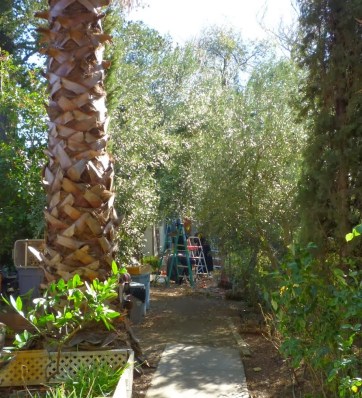
When the head gardener Sister Xenia led our team of five to the clump of olive trees we saw that they were loaded with black fruit.
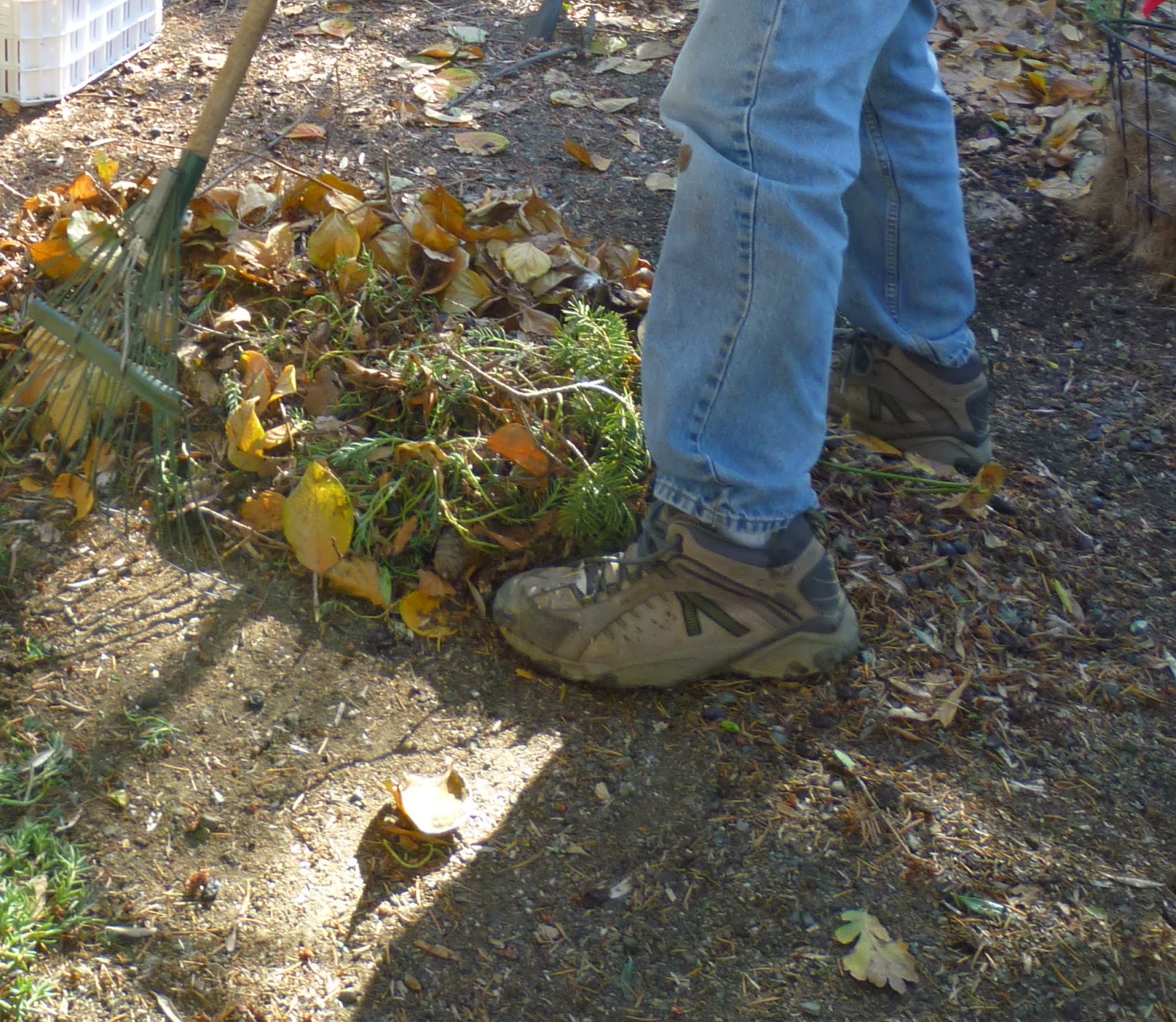
 Then came the bad news: All of this harvest could not be used in any way, because it was infested with Mediterranean fruit flies. The trees needed to be stripped of olives, and the fruit that had fallen on the ground must be raked and swept up, and all of it taken to the dump.
In a month or two an arborist will prune the trees and some kind of spray will be used to inhibit the growth the the flies next spring. Whether there is hope of them being controlled in one year’s time I don’t know.
The olives were no good, not even the fat and shiny ones that were hanging on these lovely silvery trees with the light shimmering through.
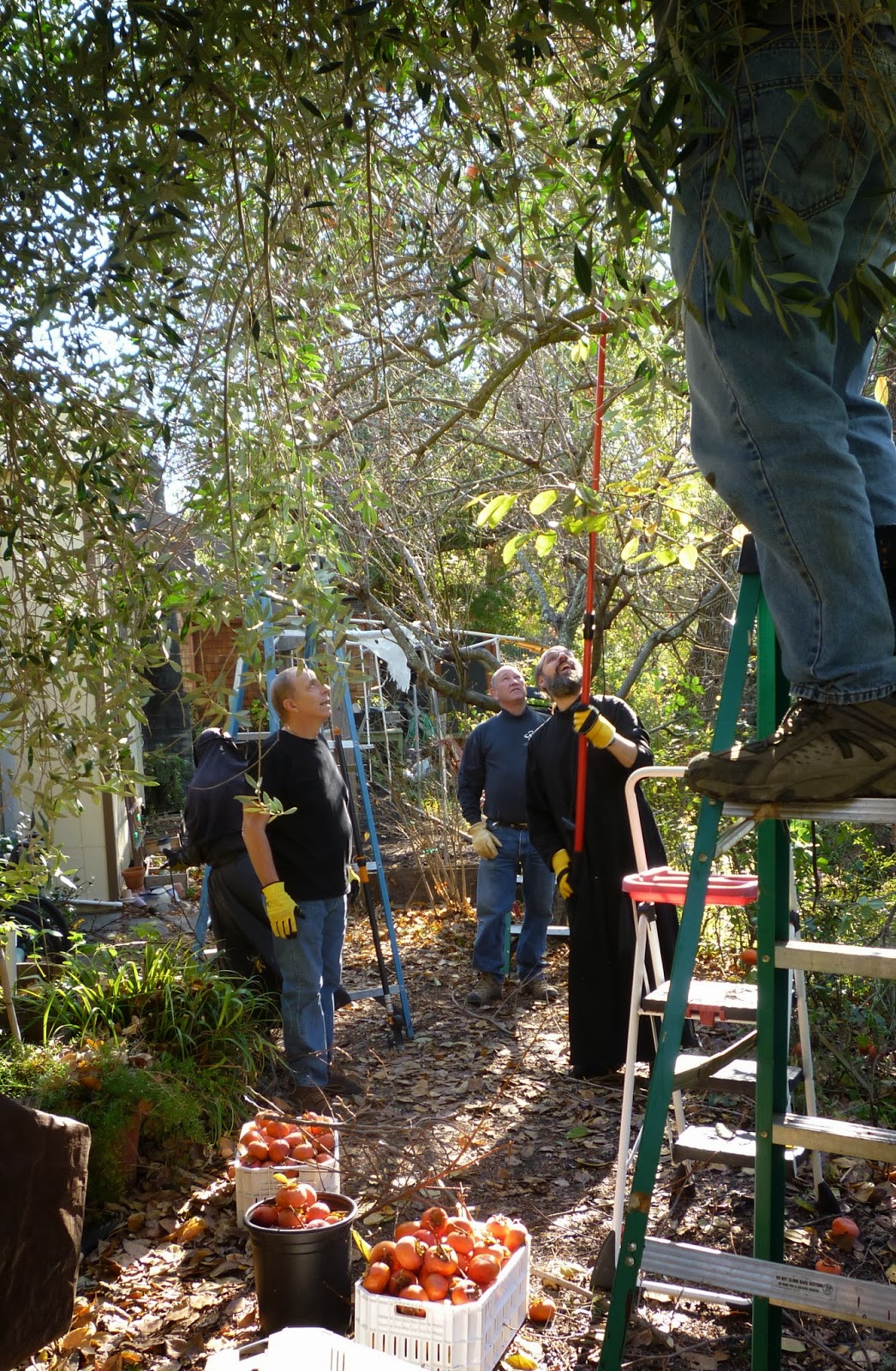
So the men shook the trees and brought showers of fruit down on our heads. Mr. Glad climbed on the roof of a little house to reach higher branches of one tree, and then he climbed into the tree itself.
 |
| You can see olives on the ground in the shade. |
|
|
Rosebushes that had grown leggy in the shade were snagging the guys when they were stretching up to shake and pick, so I ended up spending the first hour pruning the canes out of the way.
Bright orange fruit hung from the nearly bare branches of a Fuyu persimmon tree, the variety that is crunchy when ripe, and never puckery. At least this tree was healthy, and that was some consolation for the olive disaster.
We picked and pruned that tree, and Sister Xenia encouraged us to take some persimmons home, so I tucked a few into my gardening tote and am planning to use them like apples in baking.
Before we knew it, our work party was coming to an end, and we had been invited to eat the midday meal with the sisters.
 |
| Dining room all ready |

But first there were prayers of the Sixth Hour, in the monastery chapel, and a few minutes of leisure for walking around the grounds.

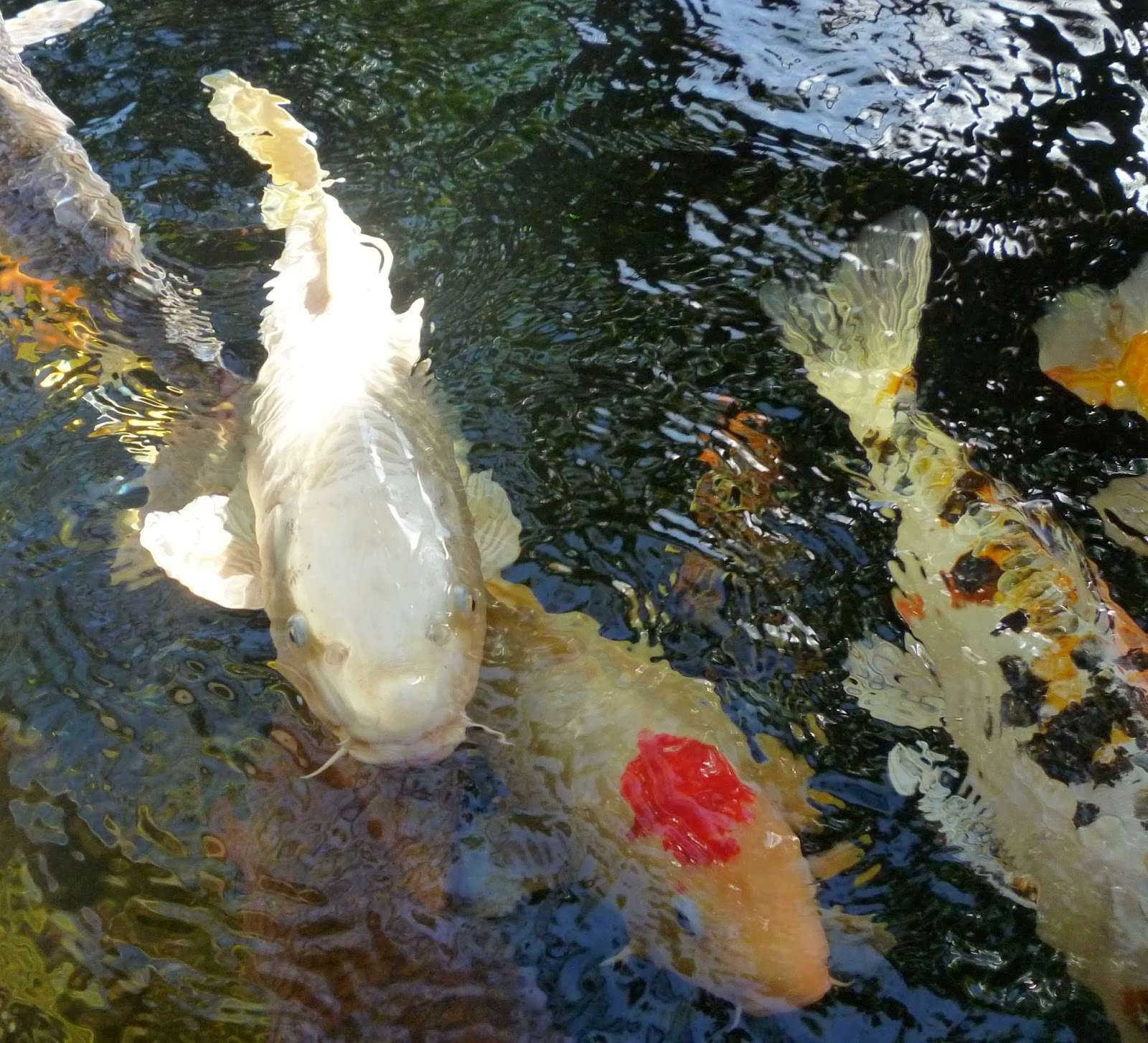
I had been anticipating seeing the elegant koi again, and they did not disappoint. We found them gliding soundlessly in their long deep pond, swimming close for a few moments when I leaned over with my camera, until they sensed they weren’t getting any food from us. A father and son were visiting them too, and happily chatting in Russian.
 The monastery has a nice set of bells under a shake roof, with benches to sit on when the bells aren’t being rung. They were used to announce the hour of prayer, but for the call to dinner Sister Marguerite walked all around the property shaking a little hand bell to ring a daintier and less commanding message.
The small amount of work we did seemed a puny offering considering all that we received by spending a few hours at the monastery. We were well fed with the most delicious fasting meal I’ve ever had, and we went home with armfuls of persimmons, having soaked up quite a lot of love and peace.
Of course I want to go back soon.