Who has not found the heaven below
Will fail of it above.
God’s residence is next to mine,
His furniture is love.
-Emily Dickinson
Who has not found the heaven below
Will fail of it above.
God’s residence is next to mine,
His furniture is love.
-Emily Dickinson
Kate’s family has been visiting for almost a week; this morning we drove south and walked around a slough. The rain had just stopped, so everything was wet and clean.


Much of the slough has dried up into big fissures during the summer, and now those areas are turning to mud. Raj poked and petted the California mud, saying again and again how he liked touching it. He and little Rigo both loved running back and forth over a bridge we came across.


I recognized a toyon tree along the path (above). But the most interesting plant I saw was a Lemonade Berry, so the Seek app told me – rhus integrifolia. The only reason I wonder about it is, this plant is said to be frost tender, and native not to Northern California, but southern. The bushes here were big and healthy looking, so they evidently have made it through a few winters without being killed.


The air was soft and mild; the sun shone really hot at times. The boys got in a lot of running around a two-mile loop, and are now down for naps. I’m in a dreamy sort of state, having these dear people around whom I hadn’t seen in a year (including the parents!), loving just having them in the house and looking right into their faces, not at a screen. It’s so normal.

Truly, it seemed that I had posted more than enough pictures of mountains and children and drying-up flowers seen on my travels with family. But when the Professor shared one of his own captures of a moment in a place, I said, “Now I will have to write at least one more post about this trip.” You can skip to the end to see it if you are in a hurry.
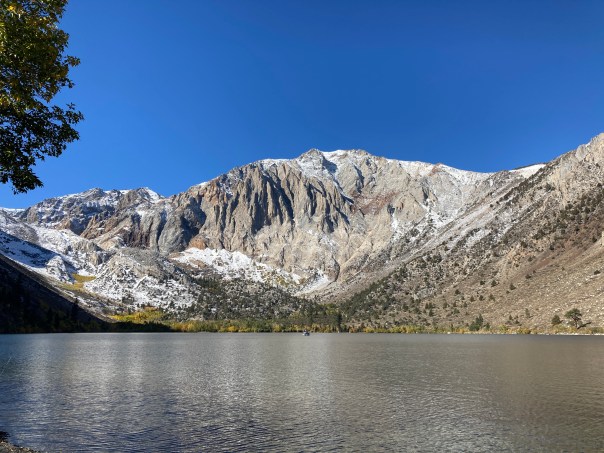
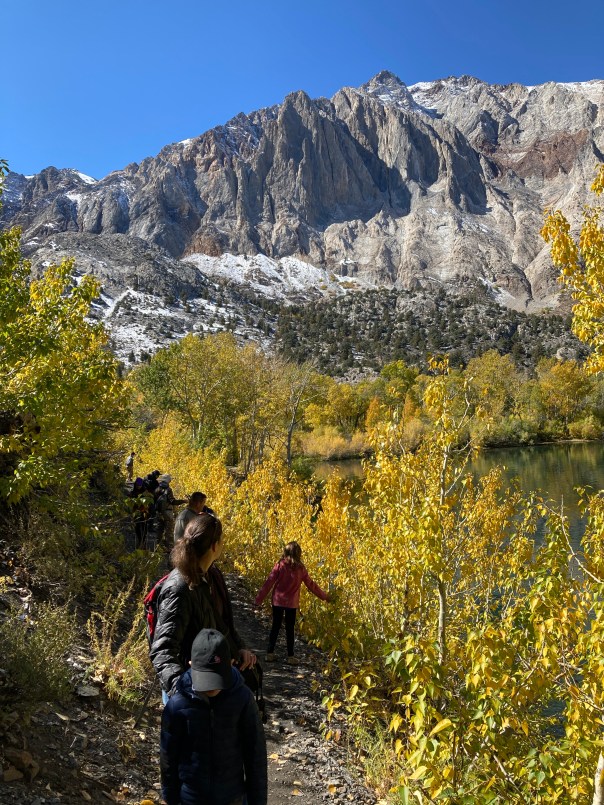
The day after my last post, we went to Convict Lake in the morning:
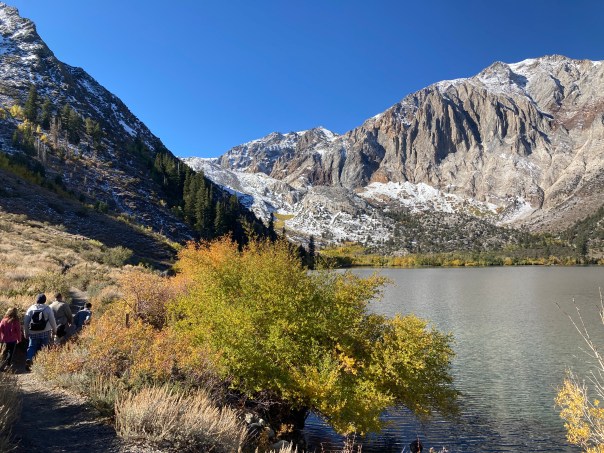
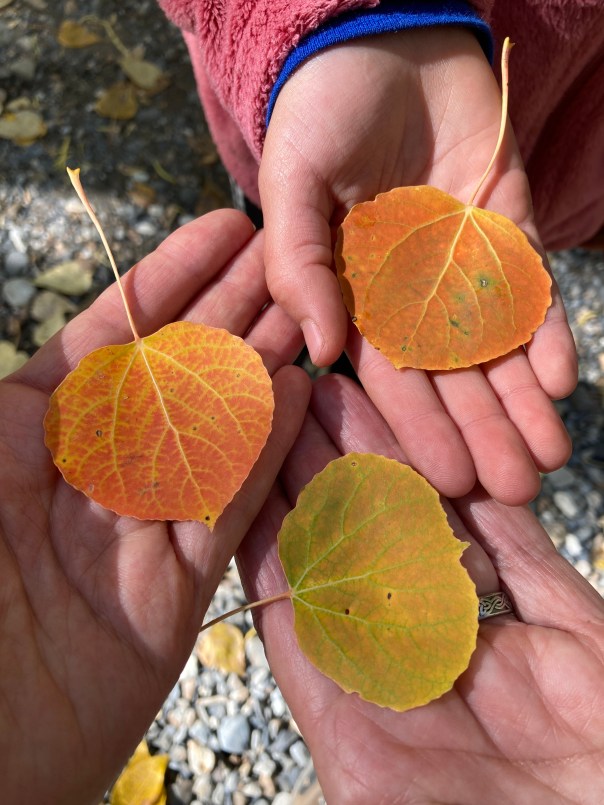
At the end of the lake where Convict Creek comes in, there is The Enchanted Forest, of aspens and cottonwoods.

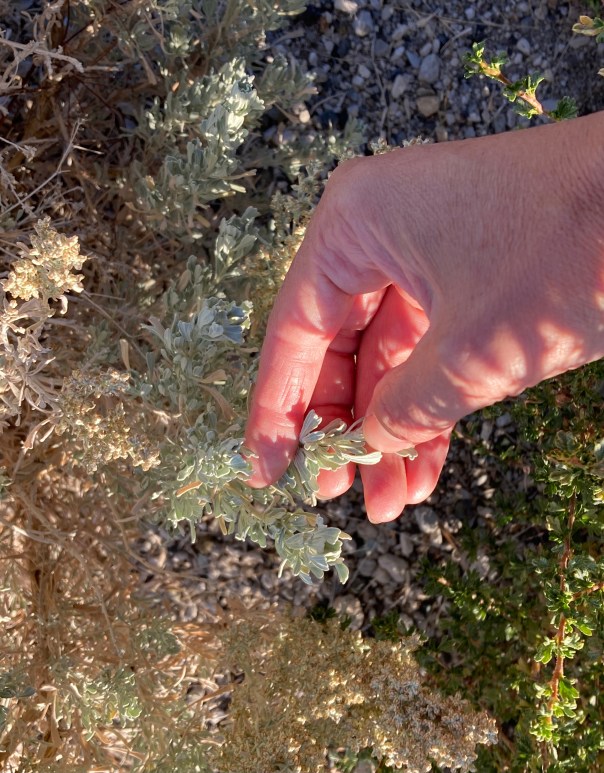
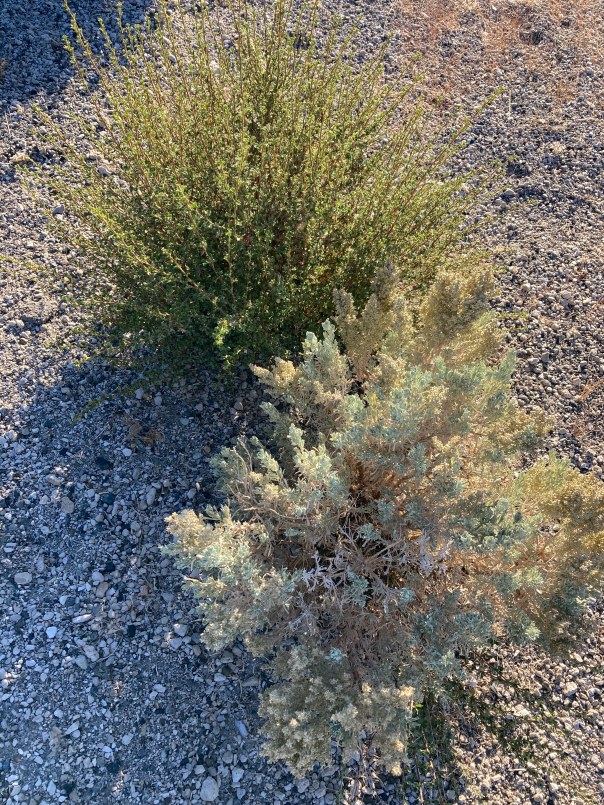
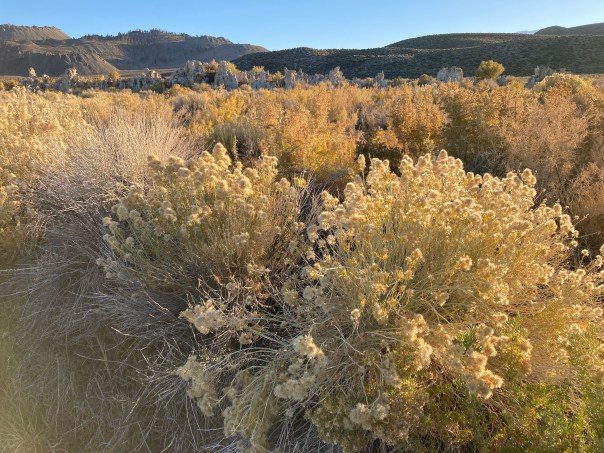
In the afternoon we drove north to Mono Lake, with a brief detour to get closer to the Mono Craters, where some red form of “wild buckwheat” was adding splashes of color to that area. (I don’t have a picture of the craters.) Pippin and I compared Antelope Brush and Common Sagebrush, and found the two growing close together, which was helpful. Sage has softer leaves.
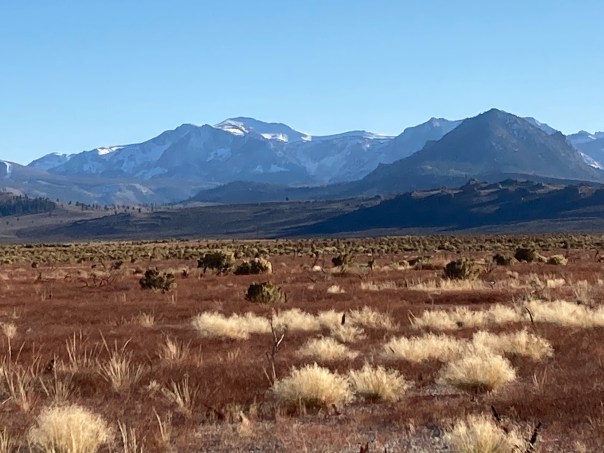
Ivy persuaded me to collect sand out there for my collection, which I will label “Mono Crater Vista.”

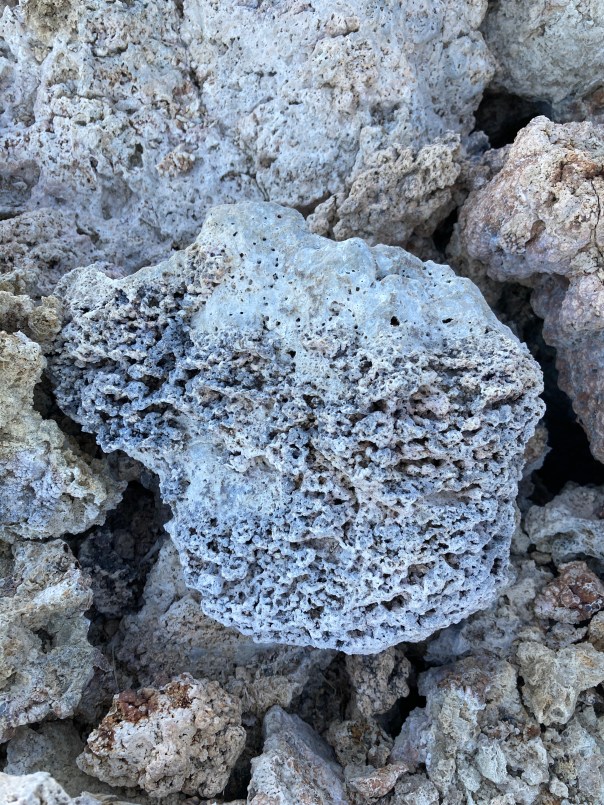
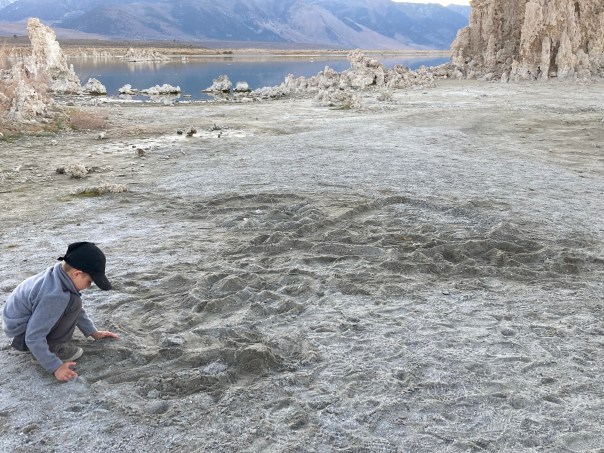
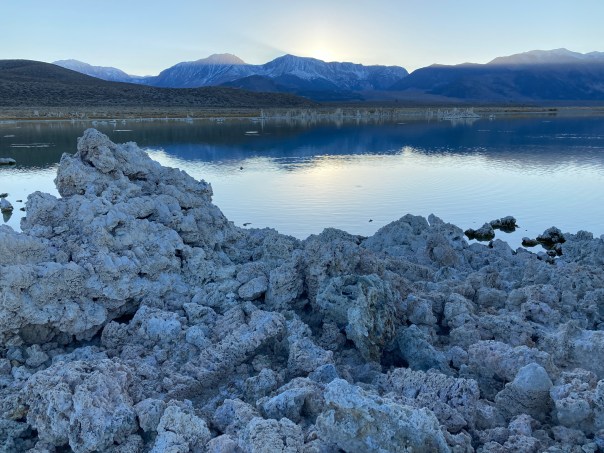
At the lake, we saw the tufa and the beautiful rabbitbrush and sage at dusk:

I’m in a bit of a rush to finish this wrap-up post, before I get home and too busy. It turns out it will not be the last post about my trip after all; I had a great adventure at the end, after I parted ways with the family.
But to return to the Enchanted Forest, the Professor took this picture of my daughter and me, which shows the mood and the glory and the specialness of our time together. To God be the glory and the thanks and the praise for all these people and experiences and beauty. Thank you, Lord.

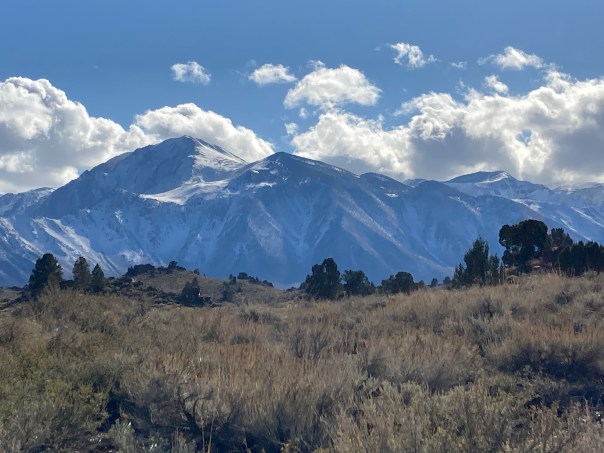
We arrived in California and settled in our lodging (together) in Mammoth Lakes, on the east side of the Sierra Nevada. The next morning was pretty cold, requiring several layers of clothing as we set off for a hike in the Little Lakes Basin, along Rock Creek and to Marsh Lake. The trailhead was already over 10,000 ft in elevation, which meant that we were enjoying a very high mountain experience with minimal effort.


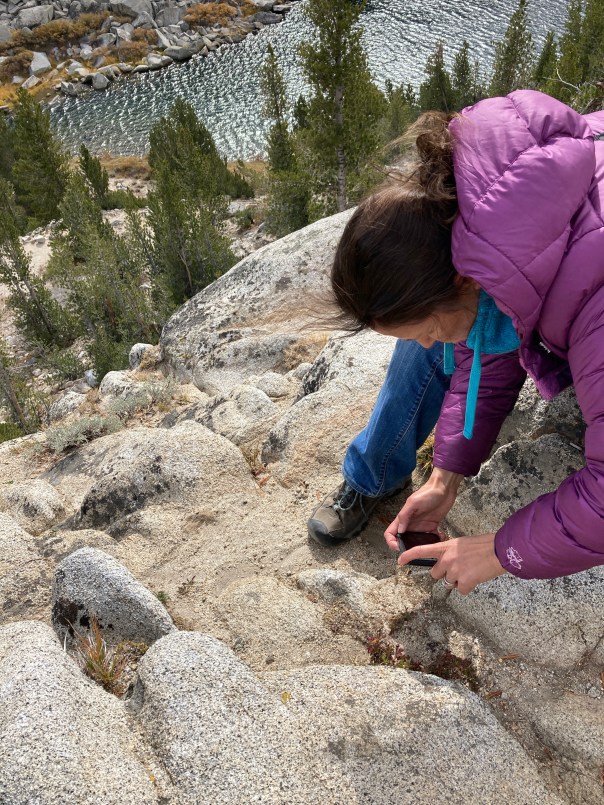
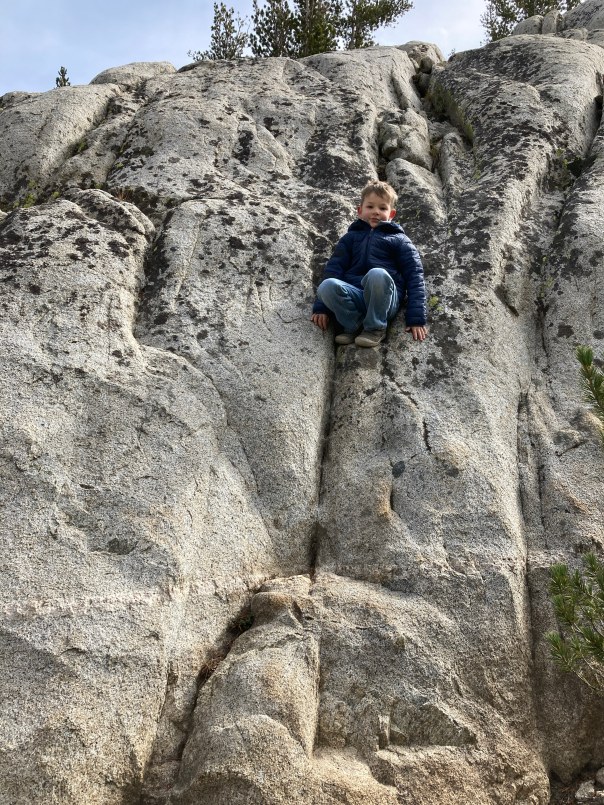
There was ice in several places along Rock Creek, which just made for more fun for Jamie. Three of us reveled in expansive or micro views in our camera viewfinders, and the youngest ones scampered like goats up and down boulders and cliffs.


On the western side of the Sierras, you start from the Central Valley, nearly at sea level, and have to climb through foothills and lower ranges before you get to the high elevations. But on the east side, the valley is already at 4,000 feet elevation, and from there the mountains rise up immediately, and startle you.


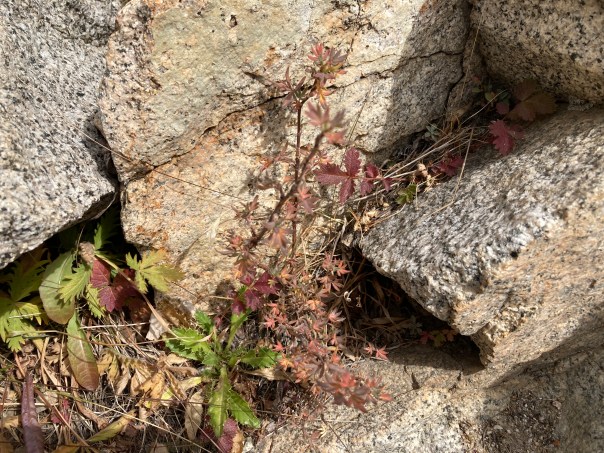
Above, you can see three species of cinquefoil that Pippin and I encountered all along the trail. In this spot they were all in close proximity to one another, though one is hard to see back there in the shade. They are Slender Cinquefoil, Sticky Cinquefoil, and Shrubby Cinquefoil, not necessarily in that order. I gave up on keeping them straight.


This weathered Whitebark Pine got my attention; the Professor identified it for me:
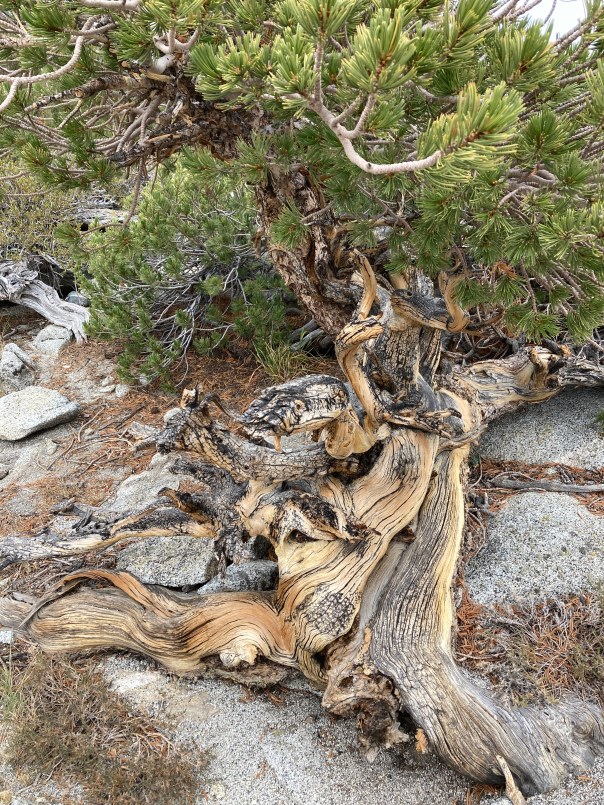

We had arrived in town just before a snowstorm, we could see it coming on our phones’ weather app, and anticipated having to stay mostly indoors the next morning at least, because we have no snow gear with us.
And that’s how it turned out. While the snow was falling thickly for a few hours, we ate rice pudding for breakfast, built a fire in the woodstove (fires hadn’t been allowed in the campgrounds) and read or did creative projects. I tried sketching one of the images from the day before, in a tiny notebook I had brought, using Jamie’s and Ivy’s colored pencils. Both Jamie and Ivy got into writing stories, picking out the words on my laptop, their first time at a keyboard.
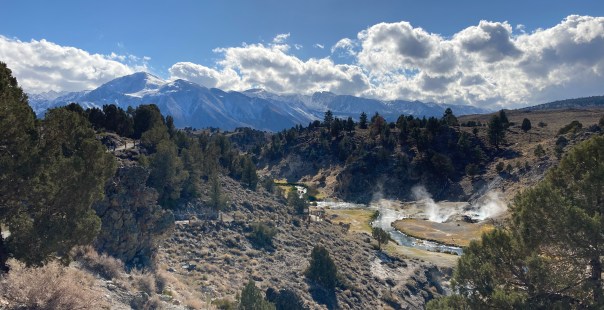
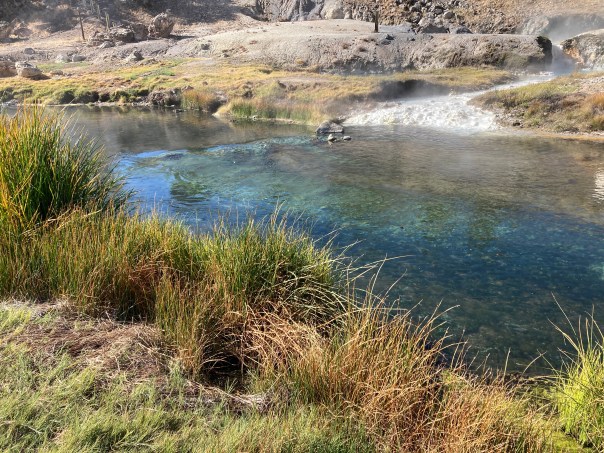
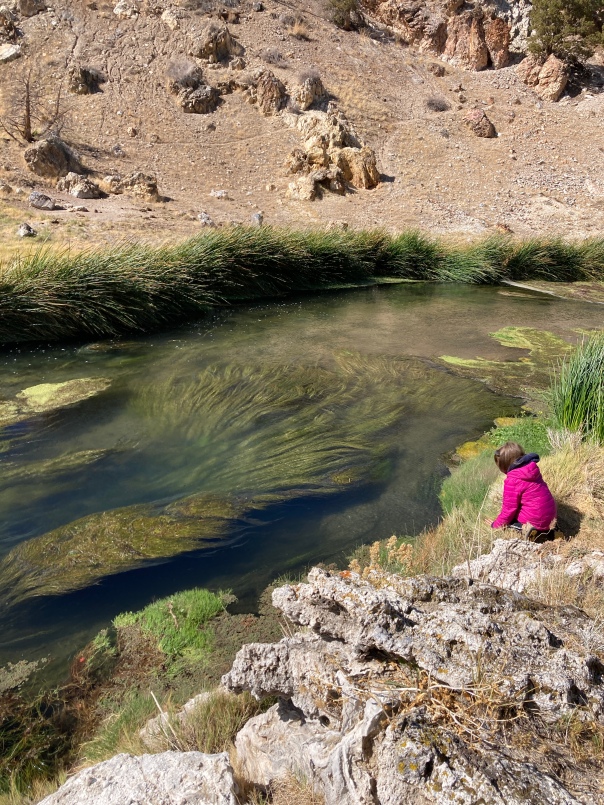
Then the snow stopped, and after lunch we drove to Hot Creek to ramble and explore. This is a place in the lower part of Mammoth Creek where the water spurts from hot springs under the surface of the creek, and its name is changed. We all found so much to look at, and Scout fished.


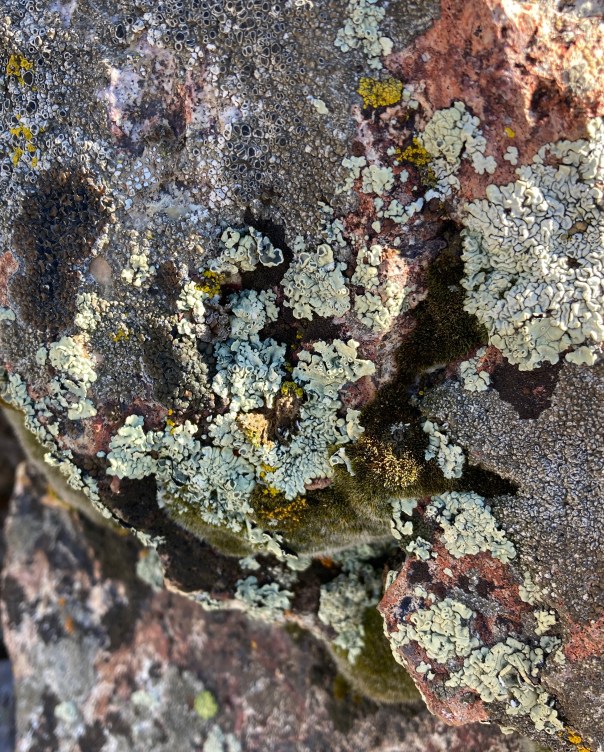
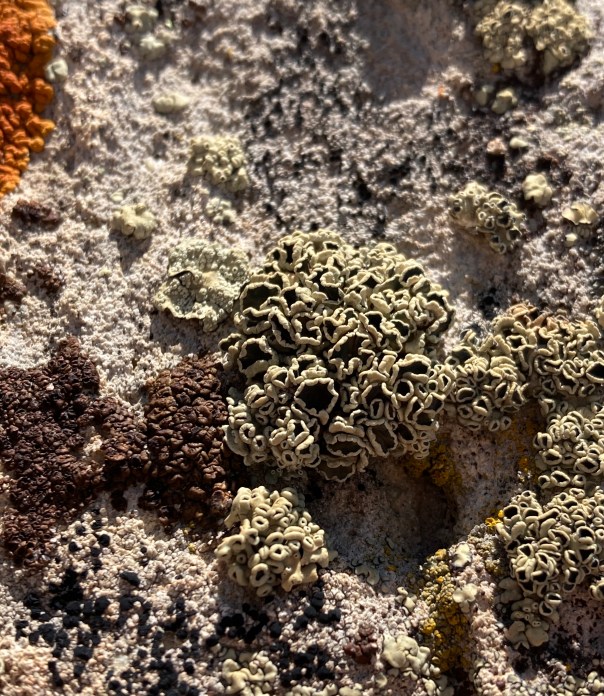
Lots of types of lichens grow on the “moonscape” rocks. Two of my favorites were growing together in this group captured by Pippin:
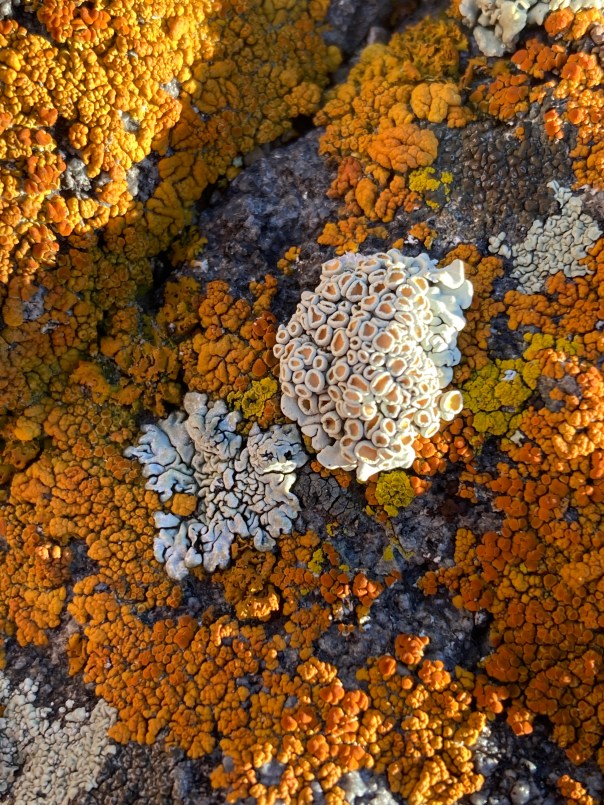
And more:


I was pleased to discover many bushes of ephedra or Mormon Tea growing near the creek.


We dipped our fingers in the water in several places, and were surprised that tiny fish were swimming in it, it was so like bath water. In many places along the bank just above you could put your hand in a hole or crack and feel the warm and humid air. The smell of sulfur was strong in places, too.
Ivy had an encounter with nettles. She said with great feeling, “I thought it was lemon balm but it was a baby nettle!” Her mother managed to find some purslane leaves which she reluctantly chewed, and put the poultice on her skin. Either the poultice worked, or the taste of it distracted her; in any case, she was not frowning for long.
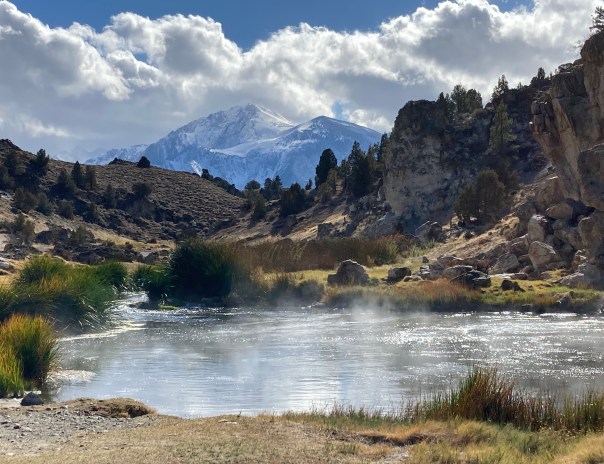

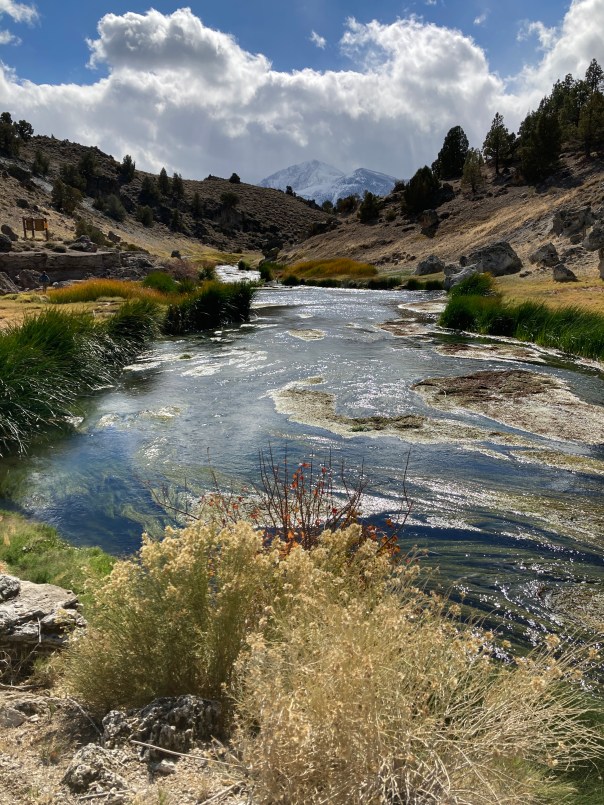

When we walked back up out of the creek channel, there the mountains stood, like gods.

Considering these mountains, and all the wonders that have surrounded me in the last week, Isabella Bird well expresses my feeling:
“I have found a dream of beauty at which one might look all one’s life and sigh.”

